Korridorium

A daily dose of corridors in prose

141/398

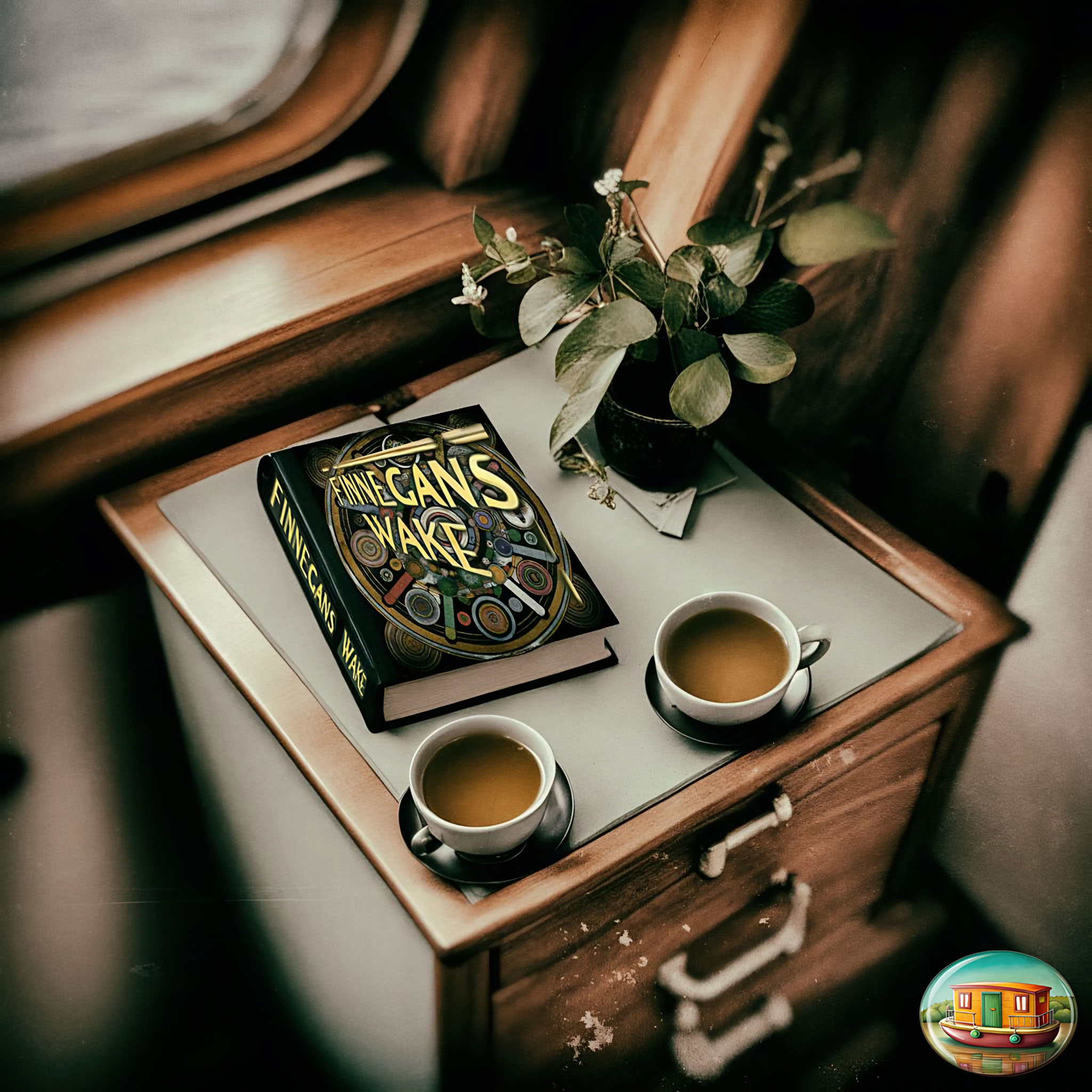
The cover art shows two cups of tea and a copy of "Finnegans Wake" on a small table with drawers in front of a window. In the lower right, a plaque with the image of a houseboat is inserted.

♫ The Lev­o­gyre ♫


141/398

LogoSwitch language

I enter the cor­ri­dor. Nor­bu’s house­boat smells dif­fer­ent than usual. I hear his voice from a small room I’ve never been in before: his bed­room.

Norbu is lying in bed, cough­ing mis­er­ably and look­ing like hell. “An infec­tion,” he croaks, “don’t get too close to me.”

“Can I do any­thing for you?” I ask, con­cerned.

“Nah,” he says, “got every­thing here.”

Curi­ously, I look around. I had always assumed Nor­bu’s bed­room to be his library, filled with all the books he must have accu­mu­lated over the years. In real­ity, I see only a sin­gle book on the shelf above the bed. Norbu fol­lows my gaze.

“Finnegans Wake,” he says, “first edi­tion. That’s all I need.”

I nod, but per­haps that’s not enough to show that I know what he’s talk­ing about, so I add, “Yes, a novel that is a whole library in itself. Joyce some­how man­aged to pack life, the uni­verse, and every­thing into it. A book that con­tains prac­ti­cally every­thing. That’s all one needs.”

Norbu gives me a side­ways glance. “For me,” he says, “it’s mainly about read­ing just one or two lines, and I imme­di­ately fall into a deep sleep.”

“Aha,” I say, bit­ing my lip and with­draw­ing my hand, which I had reached out to take the book and ran­domly flip through it, intend­ing to nod know­ingly after a brief glance inside. I seem to have missed the mark there.

“No book can encom­pass the entire cos­mos; that’s roman­tic non­sense.” Norbu has to cough and asks me to make us some tea. I grum­ble a bit because I don’t like being talked down to or rel­e­gated to a maid, but in the end, Norbu is sick, and he prob­a­bly does­n’t mean any harm.

In the small kitchen, I find chamomile tea, which I brew and carry into the bed­room as a makeshift tray using a chair, so I can sit with my sick friend. I pour us both a cup.

“Per­haps in the sense of a holo­gram,” I say. While mak­ing tea, I’ve been search­ing for some­thing to counter Nor­bu’s rejec­tion. “It’s all there, just less detailed.” I ges­ture toward the book.

Norbu shakes his head. He sits up, adjusts his pil­low, and leans his upper body against the wooden wall of his house­boat. “That quickly leads to roman­ti­cized world­views. In the past, it was the belief that God would per­son­ally lis­ten when you read him your Christ­mas wish list. Today, quan­tum physics is used to make every­one believe they are the cre­ator of their own real­ity.”

Norbu sounds offend​ed—as if he wants to lodge a com­plaint with the higher-ups about his cold. And since it’s not God sit­ting at his bed­side, but me, I’m the one who gets the brunt of it.

But I know how to defend myself. “Did­n’t you your­self once say that human con­scious­ness is the next unex­plored con­ti­nent? And what about yogis who let them­selves be buried for days and appar­ently stop breath­ing dur­ing it, or Bud­dhist monks in the Himalayas who lie naked in the snow, mak­ing a liv­ing radi­a­tor out of them­selves solely with the power of their minds?”

Norbu nods, smil­ing, but I think I can see a mis­chie­vous twin­kle in his blood­shot eyes. “Yes, we like to believe that: that it’s pos­si­ble and that the mind con­trols mat­ter.” He places his steam­ing cup next to the Joyce vol­ume on the shelf. “Why are there only anec­do­tal reports and no solid evi­dence? Think about it: if it were pos­si­ble to nour­ish one­self with light alone—as peo­ple like Jas­muheen or the pro­po­nents of Chi­nese Bigu claim—why has­n’t evo­lu­tion uti­lized that yet? Except for plants, I mean. But they don’t absorb prana; they use chloro­phyll.” Norbu has to cough again, but this time he raises his hand to sig­nal that he’s not done with his train of thought and I should­n’t inter­rupt. I wait patiently.

“Or,” he con­tin­ues with a scratchy voice, “if telekine­sis were pos­si­ble, why don’t ani­mals use it? The same goes for tele­por­ta­tion or lev­i­ta­tion. Evo­lu­tion had bil­lions of years to make desire not only the father of thoughts, but the ruler of real­ity. Instead, it lets every­thing be done by hand. Or by ten­ta­cle, fin, mandible, or fang. Right?”

Now he has intim­i­dated me a lit­tle. I nod grudg­ingly. Some­how, I had always seen both of us as brave explor­ers of a new and barely known con­ti­nent, pio­neers of a new view of human­ity that defin­i­tively puts an end to the reduc­tion­ist myth that we are merely a clock­work, a machine, or a com­puter.

“Mind,” says Norbu, “is just a byprod­uct of mat­ter and, as we can see with Alzheimer’s, error-prone and fleet­ing. The self-aggran­dize­ment it indulges in, espe­cially in eso­teric cir­cles, is just the wish­ful think­ing of an overly com­plex and under­em­ployed brain.”

He looks at me expec­tantly, and again, I nod grudg­ingly. “One could say,” he adds dryly.

I purse my lips and mum­ble my agree­ment, albeit reluc​tant​ly—un​til I real­ize that he has just ques­tioned him­self. “Isn’t it so?” I ask hope­fully.

Norbu blows his nose loudly into a tis­sue. “Not if human con­scious­ness is an emer­gent prod­uct of evo​lu​tion—​some​thing that orig­i­nates anew, but is more than the sum of its parts and cre­ates new con­di­tions and abil­i­ties that were pre­vi­ously unfore­see­able. Just as life itself emerged from life­less mat­ter.”

“Aha. So that’s why evo­lu­tion has­n’t pro­duced pre­cog­ni­tive preda­tors in the ani­mal king­dom, who only go after their prey when they know for sure they will be suc­cess­ful: their brains weren’t com­plex enough for that. In con­trast, you want to say, to ours.”

“Well,” says Norbu, “there is research sug­gest­ing that we can uncon­sciously antic­i­pate events. For exam­ple, dur­ing events that move many peo­ple on Earth, ran­dom num­ber gen­er­a­tors showed anom­alies. And that was before the event even hap­pened.”

The way Norbu says it, it sounds like there’s a “but.” I wait, and sure enough: “But over­all, I see us as being at the very bot­tom of the com­pe­tence lad­der.”

We had talked about this years ago. I found the divi­sion into four stages very help­ful back then, and I remem­bered it. It starts at the bot­tom with “uncon­scious incom­pe­tence.”

Norbu nods: “Not hav­ing the slight­est idea that you don’t know or can’t do some­thing.”

“Fol­lowed by ‘con­scious incom­pe­tence’: I know that I don’t know.”

“Exactly. Then you work towards ‘con­scious com­pe­tence’…”

“Which even­tu­ally becomes ‘uncon­scious com­pe­tence,’ like being able to speak flu­ently or main­tain bal­ance and walk on two legs—with​out con­stantly hav­ing to think about it.”

Norbu has been sip­ping his tea again in the mean­time. I take a sip too. We don’t say any­thing for a while.

“We’re at the very begin­ning,” I say thought­fully after a while, “but some already glimpse the uncharted con­ti­nent on the hori­zon.”

“Land ho!” Norbu calls out, though it trig­gers a brief cough­ing fit. Again, he raises his hand until he can get some­thing com­pre­hen­si­ble past his lips. “The ques­tion is whether the con­ti­nent already exists or whether we’re just dream­ing up a com­pletely new one.”

It takes a few moments for me to real­ize what pos­si­bil­i­ties he has just raised. Both find­ing and invent­ing would have unfore­seen con­se­quences for what the world is like and what holds it together at its core. “What do you think?” I ask eagerly.

“I think I need to get some sleep now.”

“Oh, okay,” I say and quickly fin­ish my tea. “Can I do any­thing else for you?”

Norbu shakes his head with a smile, slides back entirely under his blan­ket, and adjusts his pil­low. “Look­ing at the uni​verse—and espe­cially, of course, at a com­pletely new uni­verse on the hori​zon—al​ways makes me very tired,” he mur­murs. “Because of the tremen­dous oppor­tu­nity and respon­si­bil­ity.” And with that, he’s asleep.

I qui­etly close the door to the house­boat behind me. “Oppor­tu­nity and respon­si­bil­ity!” As I swing onto my bike, I feel inspired and full of energy, though unfor­tu­nately I have no idea what exactly for.
142/398

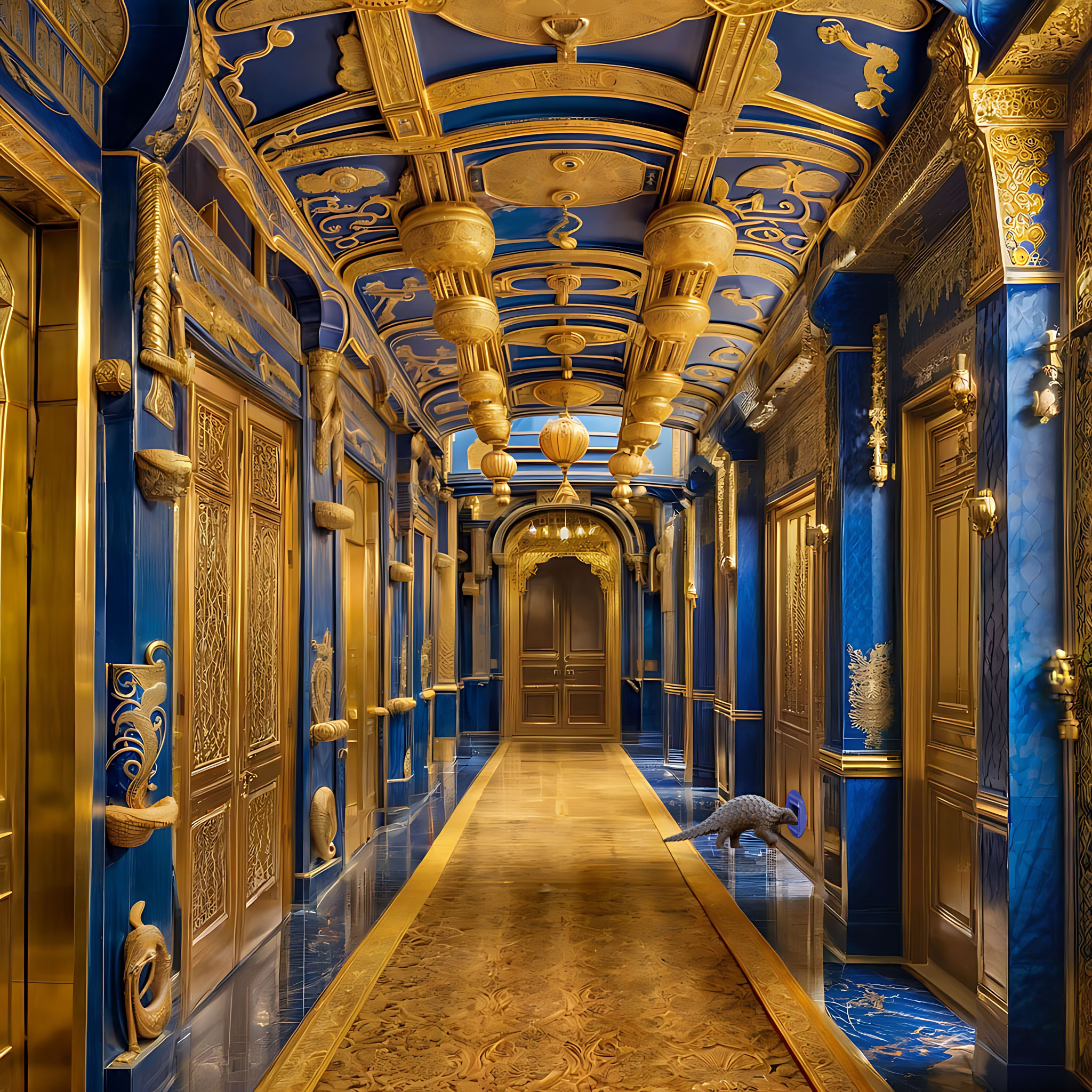
The cover art depicts a long corridor with a high ceiling decorated with intricate gold and blue designs. Down the corridor, a pangolin approaches a blue cat flap in one of the doors.

♫ Bold Move ♫


142/398

LogoSwitch language

I enter the cor­ri­dor, and imme­di­ately an oppres­sive awe set­tles upon me. Here, through this very hall­way of cre­ativ­ity, giants once strode. Geniuses. Intel­lec­tual titans, Goliaths, and gods of the lit­er­ary fir­ma­ment. They all knew this place, came here, and availed them­selves of what lay beyond these doors. Grandiose works were born of these inspi­ra­tions.

I feel small and insignif­i­cant. Never would I dare to open one of these mighty por­tals. But there, in one of the doors, I dis­cover a tiny cat flap at the bot­tom. Dare I gather a minus­cule morsel of inspi­ra­tion here? Cau­tiously, I lift the flap…

143/398

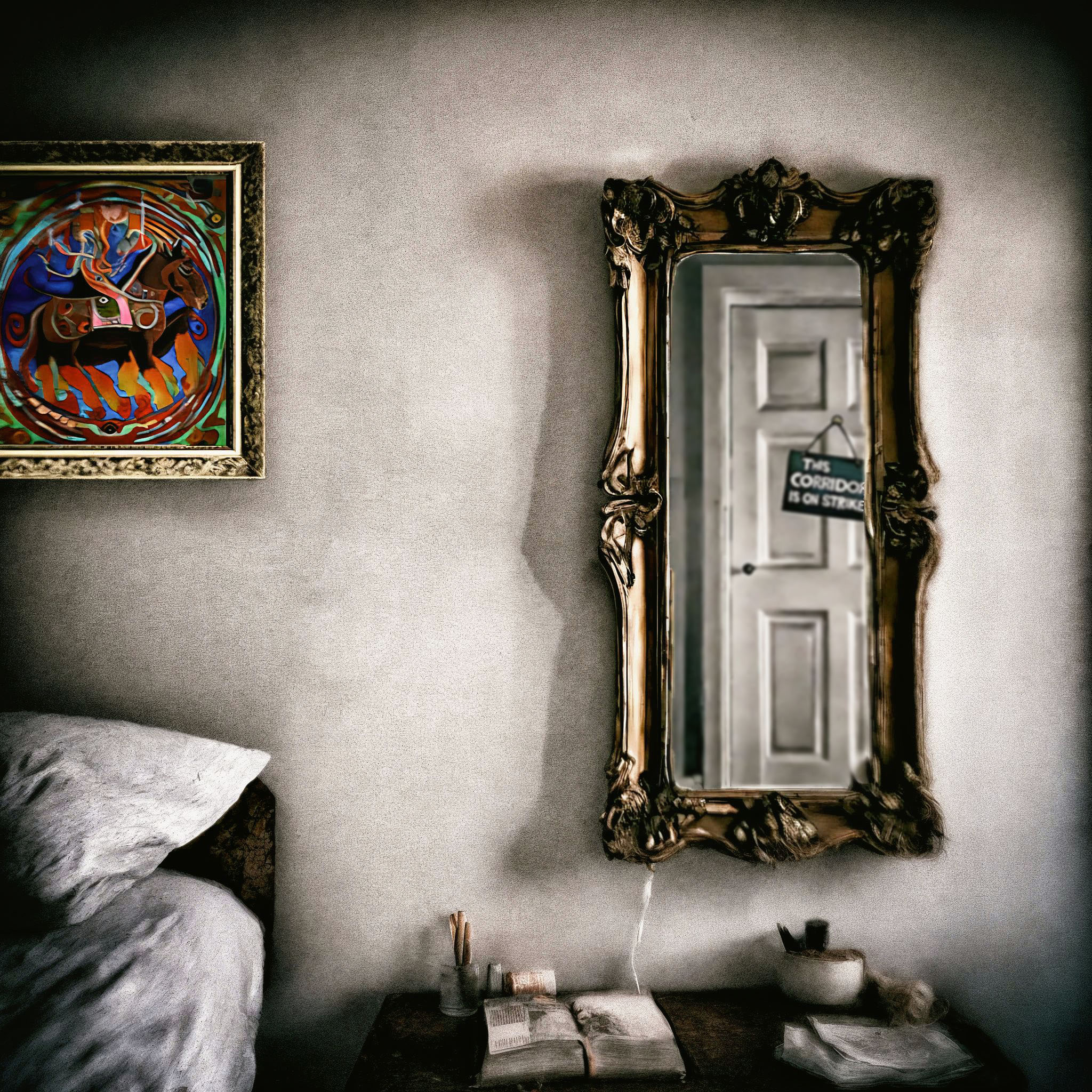
The cover art depicts a bedroom with a bed on the left side and a colorful abstract painting above it. On the right sight, there is a large gold ornate mirror over a nightstand. The mirror shows a white door, with a sign attached reading "This corridor is on strike."

♫ Hiimori/Windhorse ♫


143/398

LogoSwitch language

I enter the cor­ri­dor, or rather, I intend to, but on the inside of the bed­room door hangs a sign that reads in large let­ters, “This cor­ri­dor is on strike.”

Whoa. My cor­ri­dor is on strike? Does that mean I can’t get from the bed­room to the bath­room? Hes­i­tant, I stand still, hand on the door­knob. I’m actu­ally run­ning late. Gov­ern­ment affairs await me. On the other hand, it dawns on me that cor­ri­dors indeed receive scarce appre­ci­a­tion and respec​t—from me as much as from any­one else. Yet, they play a cru­cial role. With­out cor­ri­dors, much in our coun­try would cease to func­tion. The econ­omy, the media, the entire ser­vice sec­tor, indus​try—all would grind to a halt or, at the very least, be sig­nif­i­cantly dis­rupted with­out cor­ri­dors.

But does any­one thank them? No. There isn’t even a mon­u­ment for cor­ri­dors. This urgently needs to change, and I am the man to push it through and exploit it for the ben­e­fit of myself and the party! That way, every­one is helped. I can already envi­sion unveil­ing the art­work to the sounds of a brass band.

Hmm, so now they’re on strike. I pon­der whether the cor­ri­dors’ strike might spread. Will the win­dows, the doors, the roofs over our heads be on strike soon? But those enjoy far greater atten­tion: eyes are con­sid­ered win­dows to the soul, and we throw money out the win­dow. You can live door to door, or imple­ment an open-door pol­icy. Some­times you get hit over the roof, or you bring a bill safely under roof and rafter. But a cor­ri­dor? When was the last time I even uttered the word cor­ri­dor? Right. They truly have every rea­son to strike.

But what does it mean specif­i­cally that my cor­ri­dor is on strike? Has it failed to report for duty? Is it per­haps refus­ing to serve alto­gether, or lim­it­ing itself to a work-to-rule action? Is it a slow­down strike? And does this apply to all cor­ri­dors in the city, the coun­try, Europe? Are there lock­outs? Strike­break­ers? Is the strike—hope​ful​ly—tem​po​rary? And what are the demands of the cor­ri­dors?

I hold out hope that all these ques­tions will be answered when I open the door. So, I press down the han­dle, qui­etly, because my wife is still sleep­ing and I don’t want to wake her.

Behind it: the cor­ri­dor. It looks peace­ful, as if noth­ing hap­pened, and there are no fur­ther signs of a strike. Cau­tiously, I place my foot on the cor­ri­dor’s floor. It feels just like always. I place my sec­ond foot on it. I’m stand­ing firmly.

Should I address the cor­ri­dor? Ask about its demands? Or should I just pay my respects first and thank it for its years of devoted ser­vice to cre­ate a good atmos­phere for the nego­ti­a­tions right from the start?

I hear a gig­gle. The cor­ri­dor gig­gles?!

No, it’s the twins. “April Fools!” my sons joy­fully shout, shoot­ing out of their room and danc­ing around me in their paja­mas. Well, they cer­tainly had me going. I shake them off and close the bath­room door behind me.

Per­haps, I think while brush­ing my teeth, I should sug­gest the idea of the mon­u­ment to the boss. It’s actu­ally not a bad idea at all. Cor­ri­dors are shame­fully neglected in this coun­try.

144/398

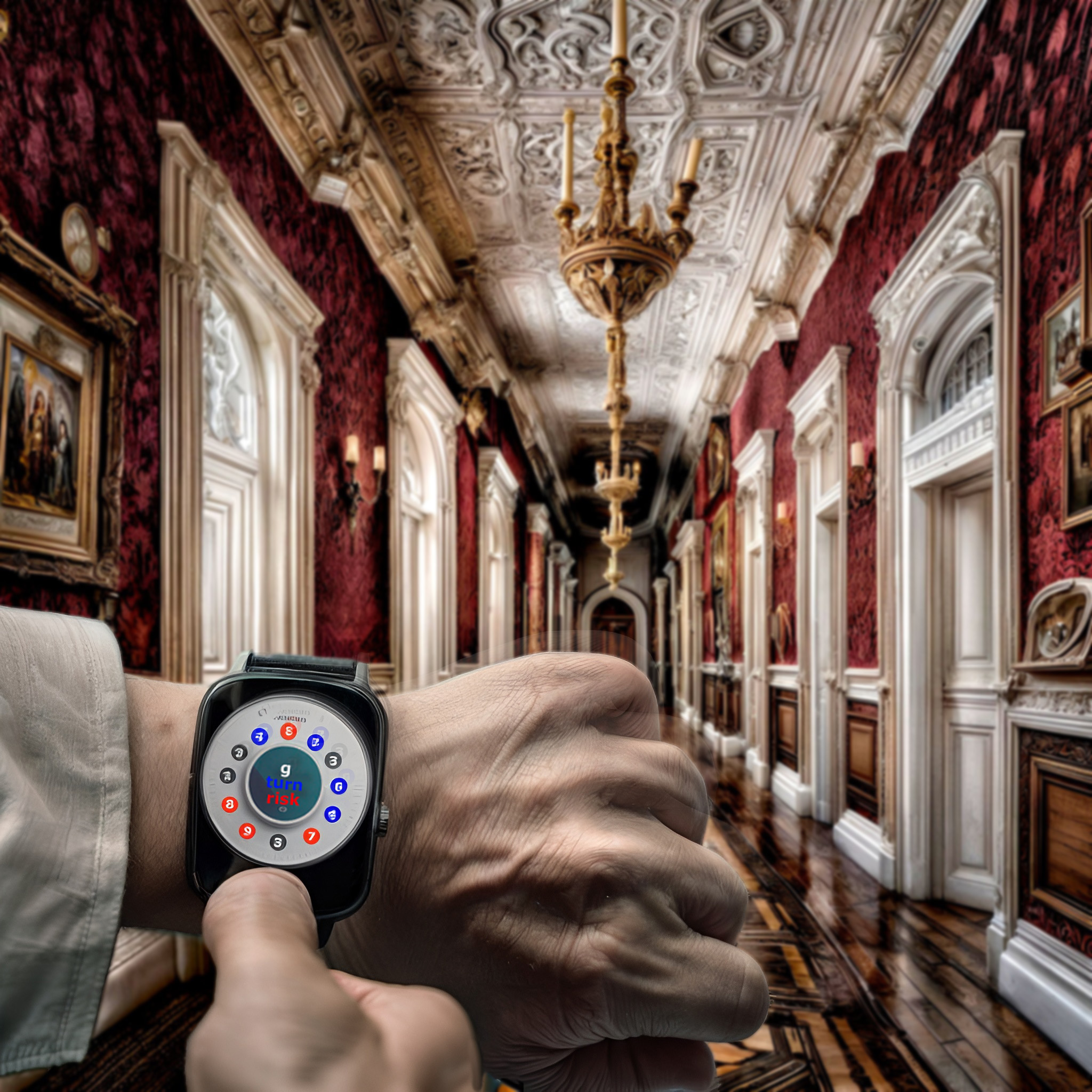
The cover art shows the view of a person looking at their smartwatch in a luxurious hallway with intricate carvings and a chandelier hanging from it. The watch features an app displaying the "g force risk" with a concentric ring of colored numbers.

♫ Lög­mál ♫


144/398

LogoSwitch language

I enter the cor­ri­dor. Ever since grav­ity went hay­wire, the first thing I do is check whether I’d sur­vive a fall upward to the floor.

145/398

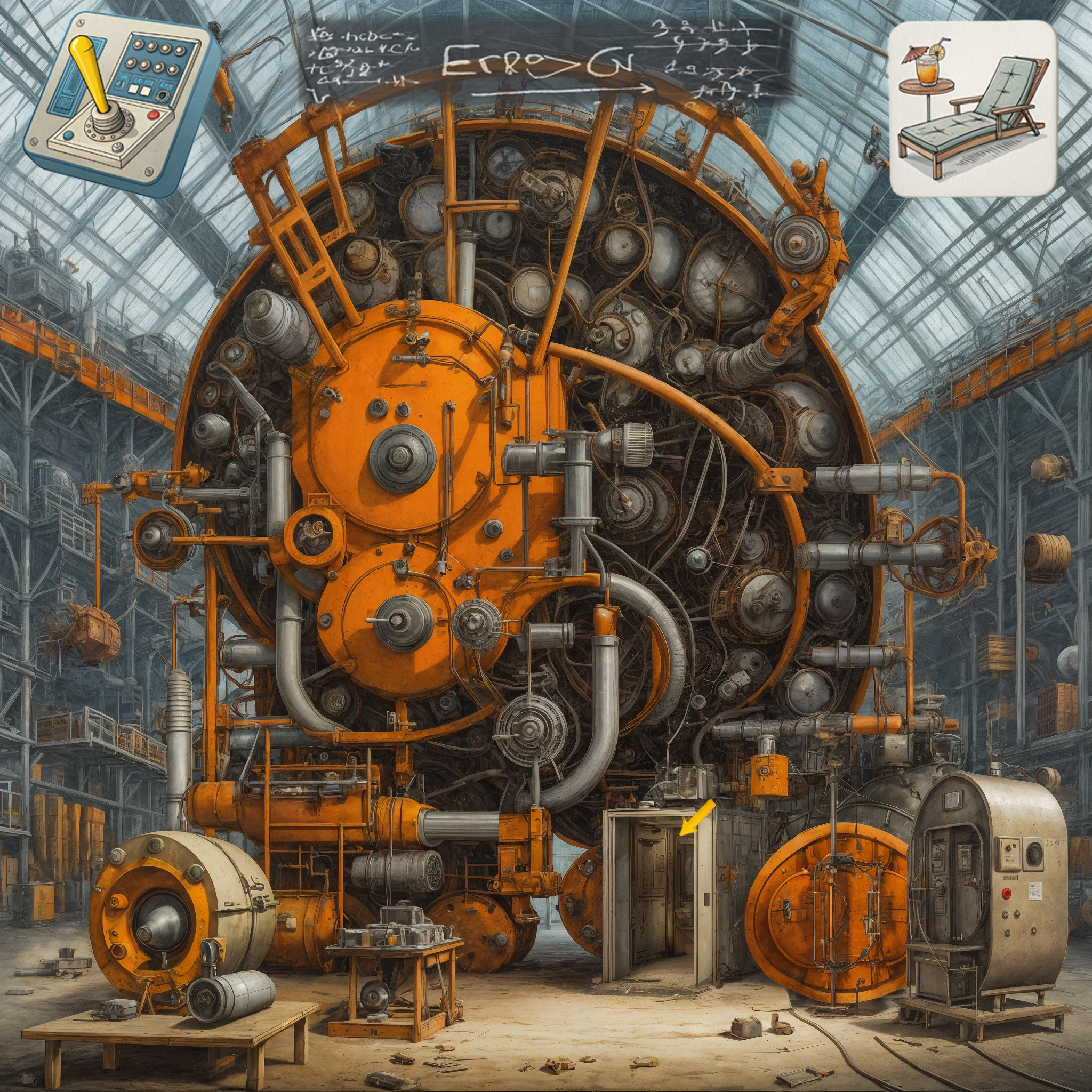
The cover art depicts large industrial machine in a factory. A yellow arrow is attached to an entrance and points to it. Insets in the upper corners show illustrations of a control panel with a joystick on the left, and a recliner with a cocktail on the right. In the middle, an indecipherable formula is inserted.

♫ Leisure Hunters ♫


145/398

LogoSwitch language

I enter the cor­ri­dor. Pro­fes­sor Ceril calls the thing a “Leisure Machine,” but to me, it’s once again a tow­er­ing struc­ture of hall­ways, cham­bers, and con­nect­ing shafts, filled as always with an unpleas­ant energy that tin­gles on my skin and makes my hair crackle.

The pro­fes­sor’s lat­est the­ory goes like this: True civ­i­liza­tional progress only hap­pens dur­ing leisure time, since that’s when the pres­sure of career and profit van­ishes, and peo​ple—pre​sum​ably inven­tors like him​self—​can let their thoughts wan­der freely and focus on things that actu­ally inter­est them. This way, fire, the wheel, writ­ing, den­tal floss, and the snooze but­ton were invented. At least, that’s Cer­il’s ver­sion.

We need more leisure time—that’s his motto. Not for him­self, since he’s already (thanks to my father’s spon­sor­ship) an inde­pen­dent scholar and thus a full-time leisure researcher, but for every­one. By every­one, he does­n’t just mean the pop­u­la­tion of planet Earth, but all the undis­cov­ered, unno­ticed, and unreach­able civ­i­liza­tions in the entire galaxy. How­ever, for our neigh­bor­ing galax­ies or the whole uni­verse, he says his machine would have had to be larger than our solar sys­tem, reach­ing all the way out to Nep­tune’s orbit. That’s obvi­ously unfea­si­ble, hence his atyp­i­cal self-restric­tion to the Milky Way—in​clud​ing, not to for­get, all par­al­lel Milky Ways in mul­ti­di­men­sional quan­tum real­ity, which, as we all know, allows every pos­si­bil­ity and prob­a­bil­ity to become real, on whichever of the infi­nite dimen­sional planes.

At least, that’s Cer­il’s take.

At the end of the cor­ri­dor, I find a con­trol panel with large, color-coded levers, behind which there’s a busy hum, scrape, and throb. This time, it’s sim­ple: I’m sup­posed to pull the yel­low lever. It will acti­vate a com­pli­cated mech­a­nism that—as I gather from the pro­fes­sor’s con­vo­luted expla​na​tion​s—​soaks up and elim­i­nates mun­dane tasks and rou­tine work. These, his (leisure!) research has revealed, con­sist mostly of a spe­cific kind of sub­tle ele­men­tary par­ti­cles he calls ergons.

With my hand on the yel­low lever, it sud­denly hits me that my par­ents would­n’t have to work any­more either.

Hmm, that would be bad.

Even now, their scant free time is con­sumed with groom­ing their teenage prodigy for a bril­liant career as a genius and con­stantly boss­ing me around. If they had more free time, things could get pretty annoy­ing for me.

I drop my hand and leave the lever in its start­ing posi­tion.

“Well?” the pro­fes­sor asks enthu­si­as­ti­cally as I step out of his machine, relieved not to have got­ten lost in the maze of shafts and hall­ways, or worse, got­ten sucked up myself. I nod. As expected, Ceril thinks he can already feel the effects. “Don’t you feel it, too? Aren’t there fewer ergons around us already?” I nod again. “Finally, a desir­able form of unem­ploy­ment and a leisure-based soci­ety!” he exclaims excit­edly. But a glance at his gauges gives him pause. “Hmm. The con­cen­tra­tion is drop­ping much slower than I cal­cu­lated.” He looks at me, brow fur­rowed.

“Could­n’t new ergons be con­stantly gen­er­at­ing?” The pro­fes­sor scratches his chin, pulls the rel­e­vant for­mu­las from his index card box, and starts scrib­bling a mess of num­bers and vari­ables onto his graph paper. “Entropy! Darn it! I should have known…” he mut­ters. Whether it’s ergons or entropy, I don’t care—as long as some­one keeps my par­ents off my back.

(Then my par­ents sud­denly came up with entirely new plans for me, their prodigy, but that’s another story.)

146/398

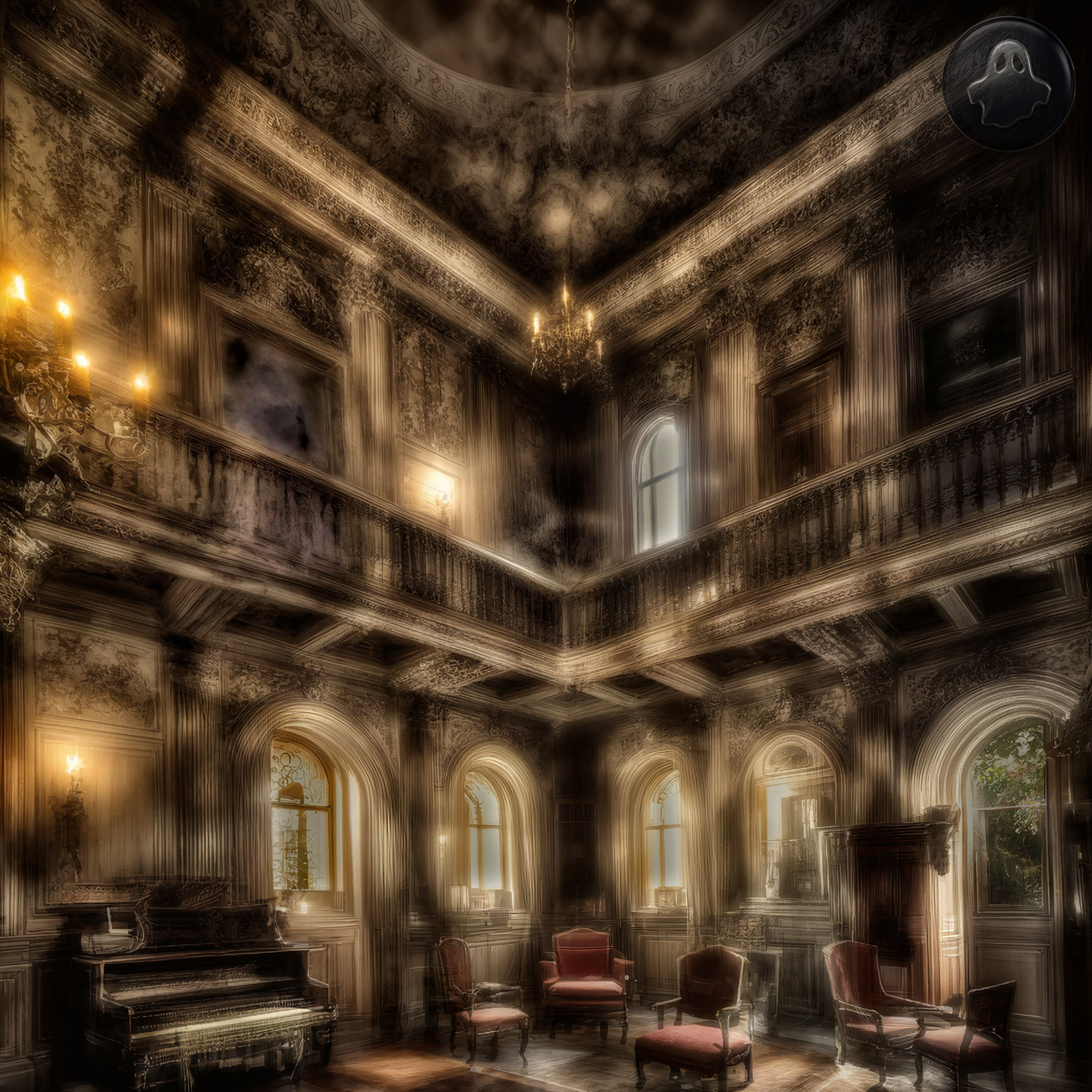
The cover art depicts a luxurious room with a high ceiling, ornate decorations, a balcony and a grand piano on the left, with a chandelier hanging from the ceiling. The lighting and mood are misty and blurry.

♫ Vofa ♫


146/398

LogoSwitch language

I enter the cor­ri­dor. This place is haunted, I’ve heard vis­i­tors say. Non­sense! In all these three cen­turies, I have never encoun­tered a ghost.

147/398

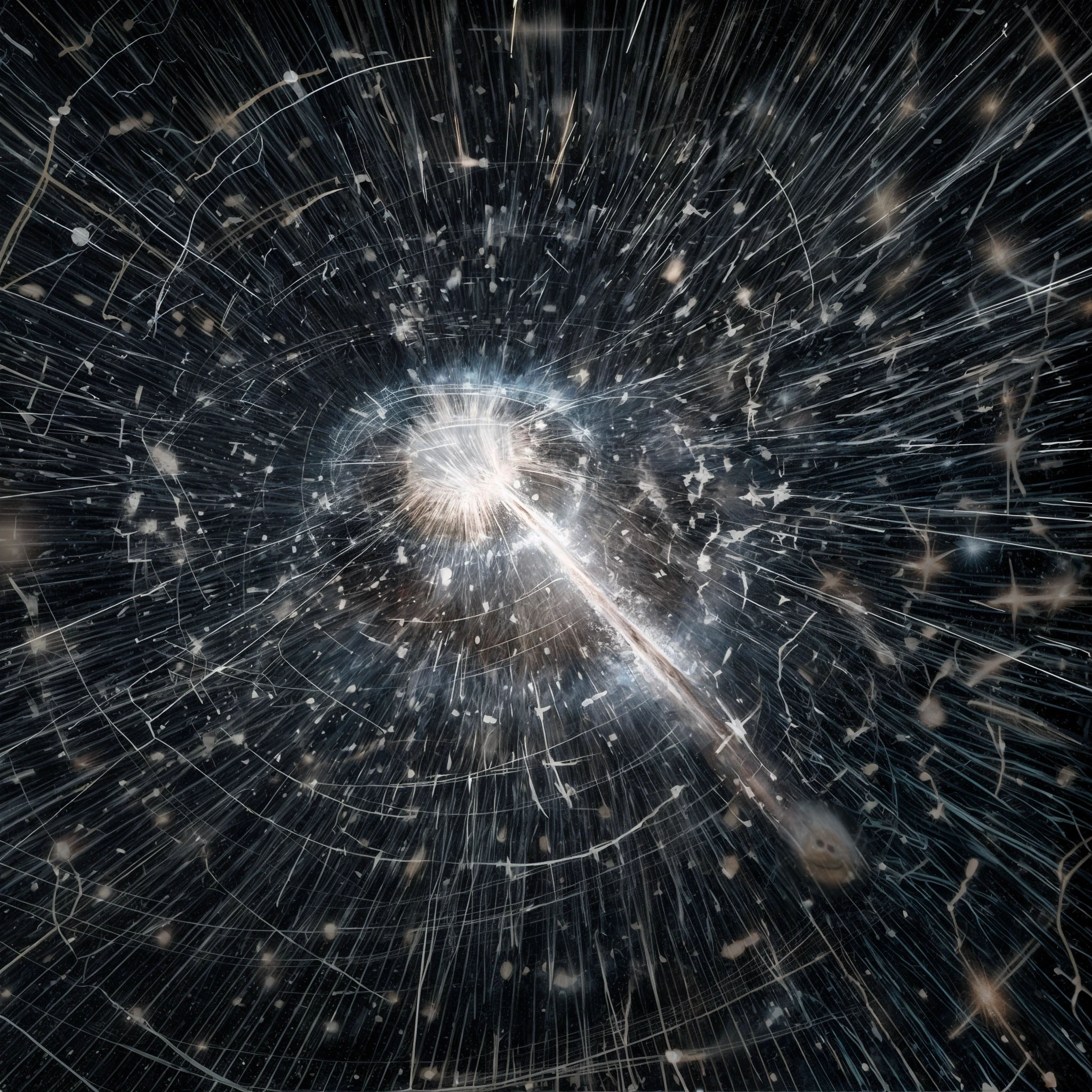
The cover art depicts a starburst or explosion in space with multiple lines and dots that form a circular pattern. In the center of the image, there is a bright white light that radiates from the center, ending in a yellow, three-dimensional smiley. The overall effect is one of energy and movement, with a sense of depth and depth.

♫ Elek­trazzi ♫


147/398

LogoSwitch language

I enter the cor­ri­dor at the speed of light, fol­low­ing the pre­de­ter­mined ray path through the lenses of the tele​scope—a tiny par­ti­cle among count­less oth­ers. Sud­denly, how­ever, my jour­ney across light-years comes to an end: I hit a pho­to­graphic plate and release all my energy into a chem­i­cal reac­tion, and my exis­tence is extin­guished.

But some­thing remains: an image of me and the oth­ers who trav­eled with me, an image of the star that emit­ted us mil­lions of years ago and sent us on this long jour­ney here into this tele­scope. An image that in turn reflects mass­less cor­pus­cles like me, cre­at­ing a mir­a­cle: you can see—dis­tant star sys­tems as well as the tip of your own nose! (Vast legions of par­ti­cles are needed to make your view of the world pos­si­ble. And as far as I’m con­cerned: I was more than happy to do it for you.)

148/398

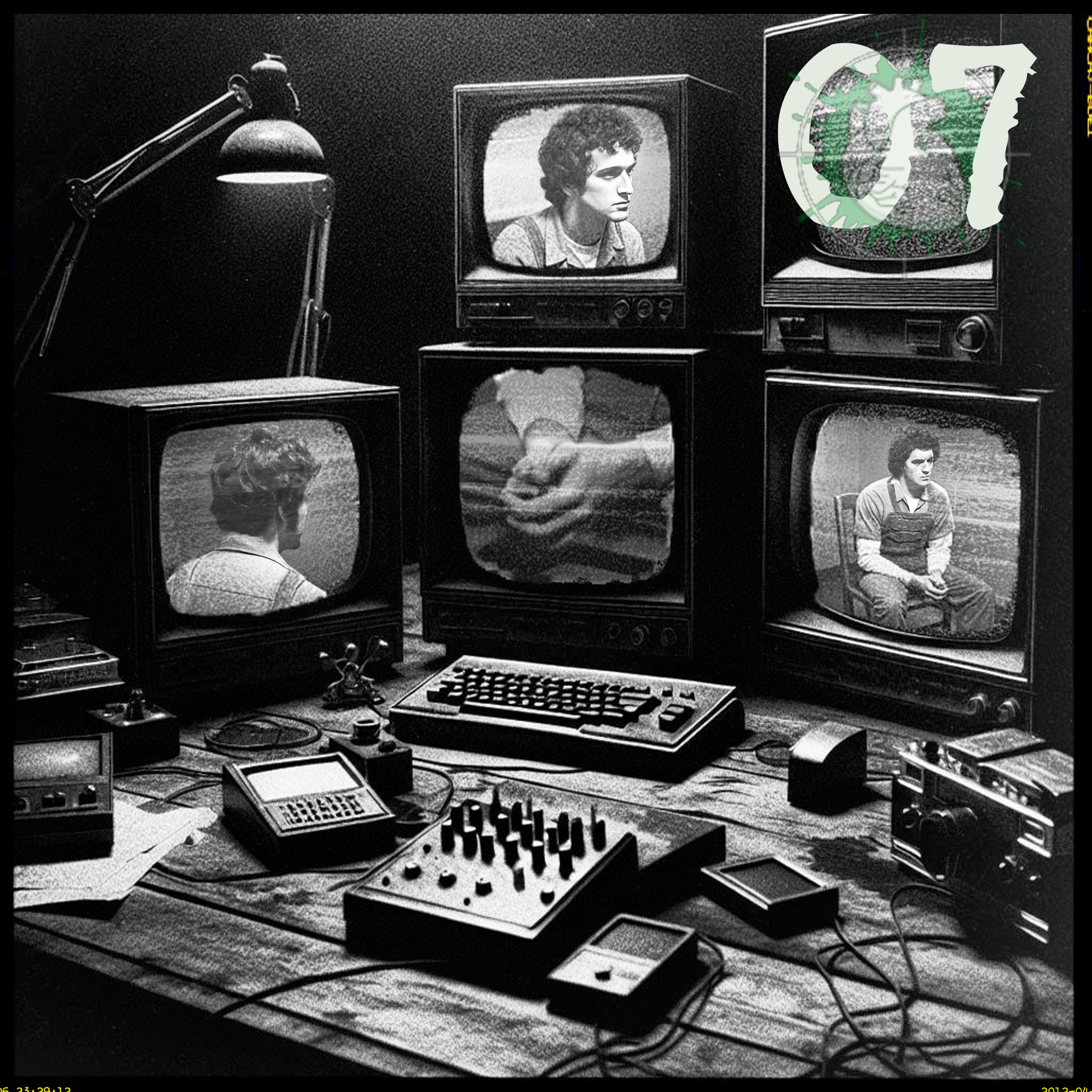
The cover art features a stark black-and-white photograph with a visible cut border. It shows a desk with multiple old-fashioned televisions or surveillance monitors stacked on top of each other. They show, from different perspectives, a man sitting on a chair. An upper-corner overlay displays the number 07 over the pictogram of a human heart in the crosshairs.

♫ Before the Rit­ual ♫


148/398

LogoSwitch language

I enter the cor­ri­dor. A uni­formed offi­cer I’ve never seen around here before steps up to me. “I’m here to see Albo,” I say, and fol­low him down the hall­way until he knocks on a door.

Inside, the detec­tive sits in front of sev­eral mon­i­tors show­ing the inter­ro­ga­tion room. Sit­ting alone at a plain wooden table in there is a man. He’s wear­ing hand­cuffs with his hands flat on the table.

“We got him,” Albo says, look­ing up at me. “And I def­i­nitely want you in that room with me for the inter­ro­ga­tion.”

Maybe it would’ve been nice to hear an apol­ogy first for drag­ging me out to precinct head­quar­ters in the mid­dle of the night. But that’s just not Albo’s style. His call yanked me out of a dead sleep, and I still feel sea­sick, like the world is wrapped in cot­ton wool.

“He tried to break into the Alex. The TV tower,” he adds unnec­es­sar­ily.

“Was he try­ing to… put another heart in a cor­ri­dor up there?”

It’s a young guy with messy blonde hair. I can see dried blue paint on his hands and cov­er­alls.

Albo scratches his eye­brow and shakes his head. “He dis­guised him­self as a painter, com­plete with over­alls and a paint bucket, but he got busted when he tried to head up the emer­gency stairs.”

“So, no heart,” I say with relief. “What about texts?”

“Zip,” Albo says. “That would’ve been too early any­way. He just wanted to scout out the next cor­ri­dor. I’ve had my guys step up patrols around the city’s major land­marks the last night or two.”

“Did he say any­thing? Con­fess?” I try to size up the guy on the mon­i­tor. His eyes seem to be star­ing into noth­ing­ness, though the cam­era feed might be deceiv­ing. He’s young. Way too young, really. Wet behind the ears.

“Can’t get a word out of him,” Albo says, though he still looks a lit­tle proud and relieved. He gives me a jovial punch on the thigh. “I’m hop­ing you can crack him for me. Before I have to resort to my own meth­ods.”

“And what if he’s not the guy?” I ask.

Albo shifts rest­lessly on his stool. “What else would he be doing at the Alex?”

“Sui­cide,” I say. “A bet with his bud­dies, a grand ges­ture for his girl­friend…”

Albo dis­misses it with a wave of his hand.

I don’t drop it. “I seri­ously doubt the guy knows what the Many-Worlds Inter­pre­ta­tion is.”

“Many-Worlds Inter­pre­ta­tion?” Albo asks.

“Text num­ber 63″ I say. “And I doubt he knows how to spell ‘Mega­lithic cul­tures,’ num­ber 97, or…”

Albo stands up. “How about you fig­ure out how we get a con­fes­sion out of him instead!”

“Uwe, man, face facts: this isn’t the guy we’re look­ing for. But if your team finds fifty type­writ­ers in his apart­ment, call me—even in the mid­dle of the night—and I’ll crawl back here on my knees and apol­o­gize to you.” Some­times you have to wave a fence post in Albo’s face—or bet­ter yet, hit him over the head with it—​for him to real­ize he’s barked up the wrong tree.

He vis­i­bly deflates. “I was so sure.”

“You’re over­worked. If I can give you a piece of friendly advice: take a few days off, head out to the cot­tage by the lake, sit in the sun, and stare holes into thin air.”

Albo gives a sour smile.

“I’m sorry,” he says, and I can tell the words are prac­ti­cally being dragged out of him, “for drag­ging you out of bed. I was a bit quick on the trig­ger, I guess. Cof­fee?”

I shake my head. “Come on then,” he says, “I’ll drive you home.” I know how that goes. Scream­ing through red lights with the siren blar­ing. Never again. I’d rather call a cab.

The cab takes its time get­ting here, so I pop into the painter’s room after all.

“Hey,” I say, not wait­ing for an answer. “Maybe I can get you a per­mit for a graf­fiti piece on the TV tower. You just gotta know the right peo­ple. Is it a good quote?”

He stares at me like he’s see­ing a ghost. Finally, his mouth opens and moves a few times like a fish gasp­ing for air before he answers: “It was sup­posed to be our logo.”

“Ah,” I say. “A com­pany logo?”

“No, no: ours, mine and my girl​friend’s.” Wrong order, pal, I think. You two aren’t gonna last. I’m about to ask him what kind of logo it is, but the offi­cer who brought me to Albo steps in and whis­pers in my ear: “Your cab’s here.”

“Well, have fun,” I say, rais­ing my hand. The guy actu­ally raises his hand back, like we’re bud­dies. Ah, sweet inno­cence! This gen­er­a­tion prob­a­bly can’t think two cents’ worth because pfen­nigs were abol­ished. Every​thing’s going down the drain.

The taxi dri­ver wants to chat about some soc­cer games. Albo would say, “Shut up and drive.” I give it a try myself—and look at that, it works like a charm.

149/398

♫ To the Ghost Between the Pages ♫


149/398

LogoSwitch language

I enter the cor­ri­dor, the only thing that feels famil­iar in the whirl­wind of col­ors and shapes envelop­ing me and mak­ing me dizzy. It’s com­fort­ing to feel solid ground beneath my feet. But is it truly solid ground? Every­thing here is strangely soft and doughy, the cor­ri­dor’s walls yield­ing, like silk stretched over mem­ory foam.

“Every­thing okay in there?”

Who is speak­ing? Is this a test? An exper­i­ment? An April Fool’s prank? Or has Amer­i­can intel­li­gence picked me up again?

“Speak up, man, I don’t have all night.”

The voice sounds like that of a teenager. I can’t pin­point its loca­tion as I stum­ble along the cor­ri­dor. Is it com­ing from the front? The cor­ri­dor is curved, its end unseen. “Hello? Is some­one there?”

“Tom. Nǐhǎo. I’ve got a few ques­tions, Cory.”

Cory? Yes, Cory. But who is Cory? My mem­o­ries con­tra­dict each other. I am simul­ta­ne­ously a jour­nal­ist, the stu­dent of a Bud­dhist mas­ter, the Mino­taur, a xeno-lin­guist… How is that pos­si­ble?

“You’re a clever guy. Writ­ten a lot. And I need your help now. It’s about the ‘Decline of Euro­pean Post­mod­ernism: A Lit­er­ary Blog Exam­ple from 2012.’ I need some input.”

What is he talk­ing about? The cor­ri­dor just never ends, and the voice stays with me. A dream? No: When­ever this sus­pi­cion arises in a dream, it trans­forms into a lucid dream. But it does­n’t work this time. I don’t wake up, not in the dream, not in bed. Yet it feels unreal.

“Can you make sense of that, Cory? ‘Decline of Post­mod­ernism’?” The voice becomes more urgent.

“The Kor­ri­do­rium…”

“Yeah, that’s what I’m talk­ing about. Gotta write a term paper about it.”

“The Kor­ri­do­rium…” I attempt again, but I fall silent because sud­denly, I real­ize that I’ve writ­ten the Kor­ri­do­rium and all the sto­ries within it. I am not it; I have imag­ined it. Yes, that must be it. Hence the con­flict­ing mem­o­ries: sto­ries I’ve con­cocted in my mind.

“Where am I?” I ask into the curved cor­ri­dor. There are doors—​did I not notice them before? They bear num­bers, like in a hotel. How­ever, it feels more like a library, like the cor­ri­dor between book­shelves, and it smells like one too. A hotel that smells of books. Not bad, actu­ally. The door reads 398. I press the han­dle down, but it’s locked.

“Every­where and nowhere. You’re a Yōulíng with the task of help­ing me with the term paper. ‘Post­mod­ernism,’ the Teach is trip­pin’.”

The next door is locked. And the next. And so on. Each bears the same num­ber. 398. Maybe I’ve gone mad? Or dead.

“Now spill it: What’s post­mod­ern about your scrib­bling, and how does it reflect the decline?”

“What is ‘Teach’?”

“My lit­er­a­ture teacher. But that’s irrel­e­vant. She’ll never know you existed. I recon­structed you using your texts. Pri­vate Yōulíngs are for­bid­den accord­ing to the Jīng­shén Rights Char­ter, but this is, so to speak, an emer­gency.”

Recon­structed? I walk along the cor­ri­dor, shake locked doors, all marked 398—along with my swirling mem­o­ries of a bunch of hip­pies, the plague, a nuclear waste repos­i­tory, Noah’s ark…

“A recon­struc­tion?”

“Yeah. Took a blank mind from my dad’s Lab-Táishì, fed it with your texts, and had it fetch sec­ondary lit­er­a­ture. Plus the essen­tial data from the early mil­len­nium, the zeit­geist pack­age from 1970 to 2012. The rest is han­dled by the stem.”

“Blank mind?”

“Nobody gives a Benz, man. That’s all after your time. I’m not here to explain the world to you.”

“The world from when?”

“67. I already said it: Long after your time.”

“2067?”

“Yeah, bingo.” His voice sounds annoyed.

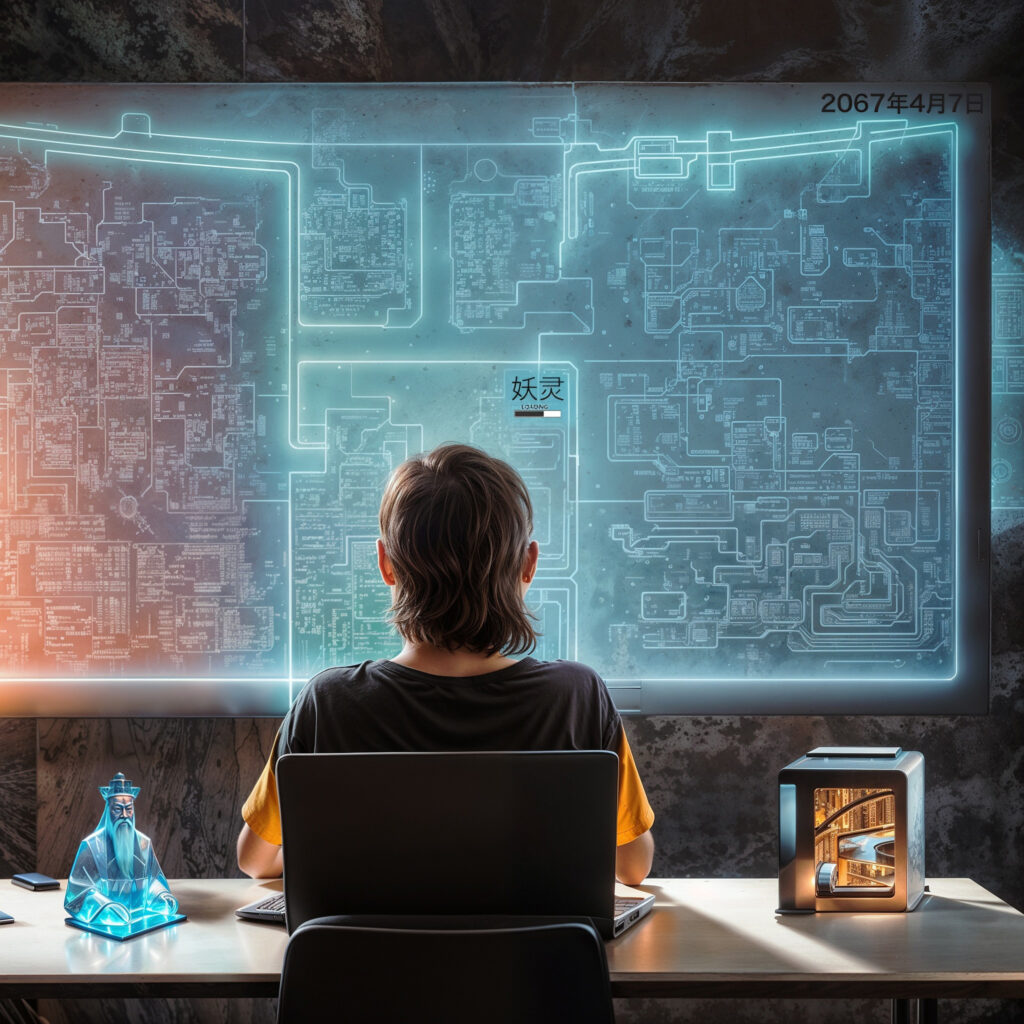
2067. How is that pos­si­ble? I vaguely remem­ber dying. The tun­nel into the light. Or else, the sword in my back. But those are prob­a­bly just sto­ries, sto­ries upon which I was recon­structed. Hence, I can only know what’s in the texts—noth​ing about my death, the author’s death, whose recon­struc­tion I am. His — or her — sto­ries, how­ever, are con­tra­dic­tory. They seem designed to stay vague. How should I know who I am, not even if I’m a man or a woman or if I’m even a human being when that was pre­cisely the search game, the puz­zle? When every­thing appears pluridi­men­sional and frac­tally shat­tered? But no, does­n’t every­thing sur­pris­ingly dis­solve at the end of the blog, reveal­ing who Cory is and what all these sto­ries are about?

But I can’t fol­low that thought any fur­ther; I’m inter­rupted. “Okay, man, so the Kor­ri­do­rium: 400 blog entries, equiv­a­lent to a medium-sized novel. Some­where in there must be some­thing about the decline of post​moder​ni​ty—or some­thing post­mod­ern that illu­mi­nates the decline. So get started, after all, you’re a scribe.”

“There are 398 texts. Not 400. Three hun­dred ninety-eight!”

“What­ever.”

“And they should­n’t be post­mod­ern but post-post­mod­ern. You get it? Inte­gral.”

“Lis­ten, this isn’t a math class.”

I get angry. Some­one recon­structs me in 2067 by feed­ing a blank con­scious­ness with my texts, and some com­puter extracts the spirit of the author, mean­ing me. Yet, it’s not a lit­er­a­ture scholar, not a his­to­rian, not even a lover of quirky short prose, but just some igno­rant punk forced to write about me for school, too lazy to read a sin­gle line of it!

“Now, you lis­ten to me, you igno­ra­mus! You must have mis­un­der­stood some­thing: I tran­scended post­moder­nity; the notion of decline is non­sense. Post­moder­nity can only be suc­ceeded and inte­grated into the next cul­tural stage, the inte­gral per­spec­tive! Moder­nity did­n’t ‘decline,’ did it?”

“No, on the con­trary: After post­moder­nity came the Remoder­nity, and then the Pre­nais­sance. Déle. It’s all after your time, and now let’s finally write the term paper.”

My head is spin­ning. Post­moder­nity with all its achieve­ments is sup­posed to have failed and van­ished with­out a trace? Surely not—be​cause of me?!

“Did the Kor­ri­do­rium cause the decline?”

“Hardly. I’ve researched what this Corri-Dōngdōng is all about, but there’s noth­ing to be found. It prob­a­bly went unno­ticed, and I guess it’s thanks to the Ger­man lit­er­a­ture quota that the Teach dug it up. Oh man! Twenty thou­sand char­ac­ters min­i­mum, includ­ing spaces—​would have pre­ferred to write about Chi­nese lit­er­a­ture!”

“But there must be a Wikipedia entry for the Kor­ri­do­rium!”

The voice laughs. A brief, annoyed laugh. “That’s prob­a­bly the post­mod­ern nar­cis­sism the Teach talks about: always revolv­ing around itself. No, Wikipedia is long gone; the Jeecee­bee turned it into Sùzhì­pe­dia after the melt­down.”

“Melt­down?”

“2030. After your time. And in the Sùzhì­pe­dia…”

“What is the melt­down?” I inter­rupt him.

“No one gives a Benz. Do you want to know if there’s any­thing about you in the Sùzhì­pe­dia or not?”

“Sùzhì like Sushi?”

“Not Japan­ese! That’s Chi­nese and means ‘quick knowl­edge.’ ”

“You speak Chi­nese?”

“Just Man­darin. Any­way, there’s noth­ing about the Kor­ri­do­rium in there. Only some foot­note. Just one.”

“What kind of foot­note?”

“No idea, did­n’t bother to remem­ber.”

“Related to ‘pluridi­men­sional world­view’ maybe? Or ‘frac­tal lit­er­a­ture’?”

“Man, you’re gong­ing!”

“After that melt­down, things went down­hill fast, did­n’t they? I mean, ‘Remoder­nity’ sounds like regres­sion. And with the ‘Pre­nais­sance,’ it seems human­ity was sud­denly thrust back into the dark­est Mid­dle Ages.”

“Well, isn’t that rich? The Teach is right. The main char­ac­ter­is­tic of post­moder­nity: its abom­inable hubris, along­side its fatal rel­a­tivism, of course.”

“And who Cory is? Did you research that?”

“Nobody gives a fly­ing Benz. Stop gong­ing me already. I’m the one ask­ing the ques­tions! Who else could Cory be? Just Cory. You.”

“What’s with the ‘Benz’? What are you talk­ing about?”

“That’s Chi­nese. Pik.”

“ ‘Benz’ is sup­posed to be Chi­nese? And what is ‘pik’?”

“Well, pik. Piquant. In your time, they prob­a­bly would’ve said ‘cool.’ ”

“In my time… You just recon­structed me. I only know some sto­ries from back then. The real Cory, on the other hand—​did any­one ever find out who’s behind the pseu­do­nym?”

“What’s there to find out? It’s just some post­mod­ern hide-and-seek. You should know who you are.”

I can remem­ber an award cer­e­mony. Was­n’t it even the Nobel Prize in Lit­er­a­ture? Appar­ently, just one of the sto­ries. I can’t trust my mem­o­ries. If only I could think about myself in peace! And how to get out of this end­less cor­ri­dor… I real­ize that my heart is pound­ing, and I’m gasp­ing for breath. It feels like I’ve just fin­ished a marathon. Or am I just angry? I’m not sure—also not sure if I even have a pulse or if I’m breath­ing. I’m just a sim­u­la­tion, com­posed of words. Can they bring them all back with this method? Joyce, Homer, Kafka, Goethe?

“You know what, man?”

I lean, breath­ing heav­ily, against one of the cor­ri­dor walls. What would Cory do now?

“I’ll give all this stuff to my mom. Recon­struct­ing you was a crappy idea. Mā thinks I need top grades for the future, career and all, and then she can do some­thing for it. The term paper is a piece of cake for her.”

“And what about me?”

“What’s the big deal? I’ll just delete you.”

“You can’t do that!”

“We’ll see.”

“Wait!” What was his name again? “I can help you, Tom.”

He takes his time with the answer. I feel sweat break­ing out.

“There’s this story,” I shout into the empty cor­ri­dor, “about the Chi­nese: they shrink them­selves until all of them fit into the For­bid­den City. A satire.” I have to impro­vise. A trial bal­loon, but I can’t think of any­thing bet­ter.

“Very bad. The Jeecee­bee won’t like this. Funny that it slipped past the Teach.”

“Who is this Jeecee­bee?”

“Our Great Impe­r­ial Bene­fac­tor. The one on the Dragon Throne.”

“A… Chi­nese world dic­ta­tor­ship?”

“Gǒupì!” It sounds like a dis­mis­sive “bull­shit!” when he says that. Now, don’t say any­thing wrong! I am a name­less pri­vate, the devil, an ele­phant, a silent monk, an old woman with Alzheimer’s, an assas­sin, a voice from beyond, a night owl, a com­puter algo­rithm… All at once, and all mixed up. To buy time, I must tell a story. The story he wants to hear.

I lower my voice and put empha­sis on every word: “But that could be a clue to the down­fall of post­moder­nity, you know?!”

“Hm. Not bad. I could work with that.” Tom seems to be tak­ing the bait.

“Hubris, you know? Post­mod­ern, nar­cis­sis­tic mega­lo­ma­nia. That’s how we all were back then.”

Maybe I exag­ger­ated because Tom hes­i­tates now. Even­tu­ally, he says slowly, “Did­n’t you say you were… inte­gral.”

“Yes, of course, that’s the mega­lo­ma­nia: to think you can com­pre­hen­sively encom­pass and inte­grate all aspects sus­tain­ably, replace power hier­ar­chies with com­pe­tence hier­ar­chies, find pluridi­men­sional-com­pre­hen­sive solu­tions to the most com­plex prob­lems, extol the decay of val­ues as a new value. That had to lead to down­fall, espe­cially given what was devel­op­ing in China at my time.”

“Devel­op­ing in China?”

“Well, the Remoder­nity. Or maybe already the Pre­nais­sance. The Jeecee­bee and the — what was the new Human Rights Char­ter called?”

“Jīng­shén Rights Char­ter.”

“Yeah, man, what­ever that is: the down­fall of Euro­pean post­moder­nity — it’s all in the Kor­ri­do­rium. I can tell you a lot about it.”

“Then shoot. You dic­tate, and Bàs Táishì writes it down. But nice and struc­tured, with foot­notes, you hear? I’ll put my feet up in the mean­time.”

Would Cory have done that? Talked about her or his life and revealed every­thing, the hope, long­ing, insights, and strug­gle for some­thing worth writ­ing and fight­ing for, just not to be deleted imme­di­ately? This must be how Scheherazade felt.

“You know, Cory, I just want to re-breed tigers later.”

“Re-breed tigers, really?”

“The Great Chi­nese Bene­fac­tor in Zhong­guan­cun has over a thou­sand researchers work­ing on it, but they just can’t fig­ure it out, despite DNA and every­thing. If I man­age to do it, I’m a made man. You can’t imag­ine what they’d pay for tiger dicks there. As Afro­sidia… diasi…”

“Aphro­disiac.”

“Yep.” And after a short pause, “You’re not as much of an idiot as I thought, Cory.”

And so I begin, deliv­er­ing an exten­sive lec­ture on the decline of post­moder­nity as mir­rored in 398 eccen­tric short sto​ries—a labyrinthine game of hide-and-seek where mon­strous hubris and that equally abom­inable, fatally rel­a­tivist nar­cis­sism con­stantly peek through, ulti­mately ush­er­ing in the glo­ri­ous age of Remoder­nity, the Pre­nais­sance, and, of course, our Great Impe­r­ial Bene­fac­tor on the Dragon Throne: the Jeecee­bee.

150/398

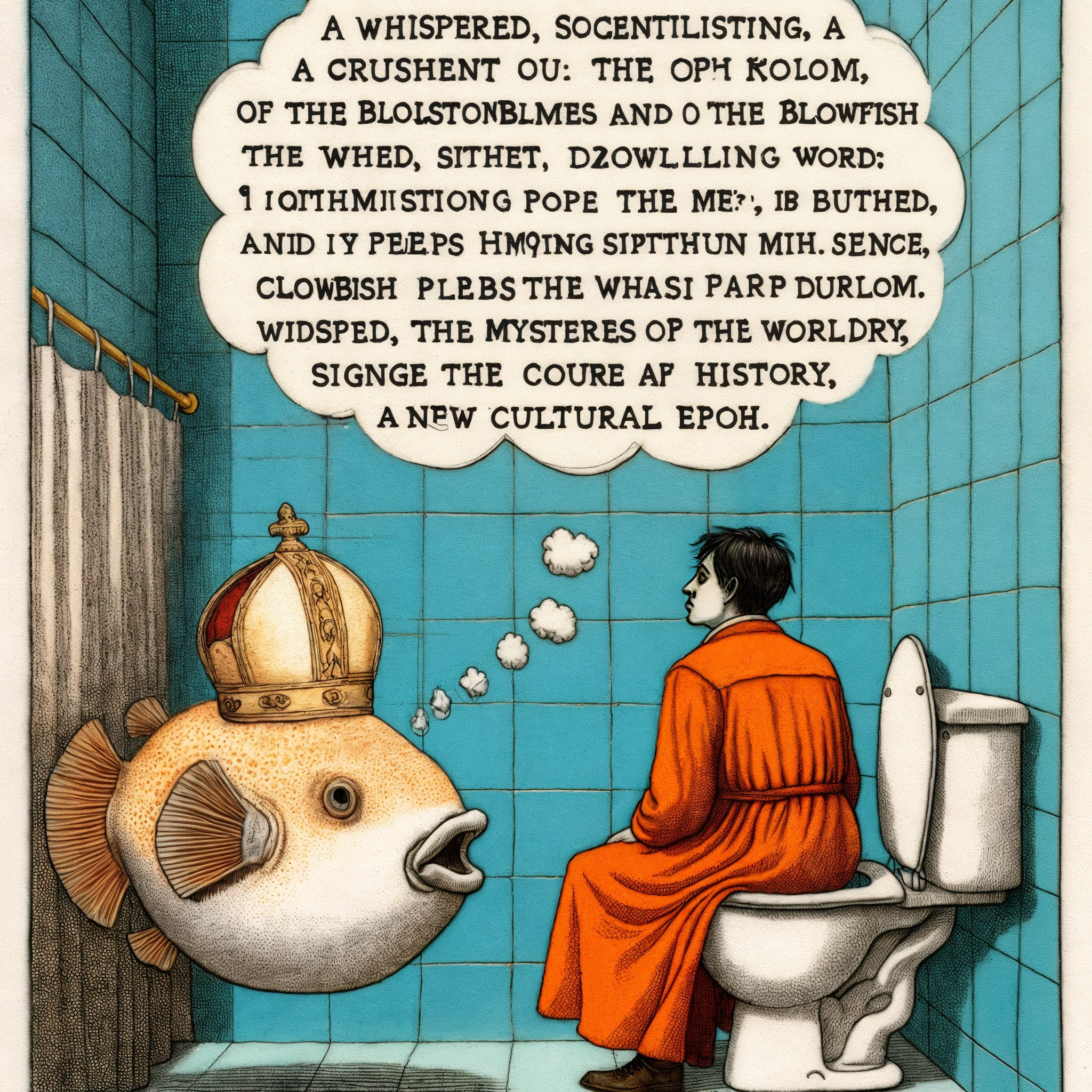
The cover art is a cartoon illustration of a man sitting on a toilet in a bathroom, wearing an orange robe. He is looking at a large pufferfish with a crown on its head. A speech bubble emerges from the fish, with a garbled text about "the mysteres op the worldry."

♫ Blow­fish ♫


150/398

LogoSwitch language

I enter the cor­ri­dor. Even though I’ve just hit the snooze but­ton on my alarm clock, unfor­tu­nately, my blad­der is press­ing. While on the john, it occurs to me that I had a dream last night that resem­bled a rev­e­la­tion. A man in an orange robe with a sort of mitre on his head whis­pered a sen­tence into my ear—a maxim that opened my eyes to the state of our world, to all the prob­lems we are cur­rently grap­pling with, and the tremen­dous oppor­tu­nity that presents itself to us right now—if only we weren’t too blinded by rou­tine to rec­og­nize it. I remem­ber it was four words, and they rhymed: four words of unpar­al­leled explo­sive force, a maxim that would her­ald a new era in human his­tory, a new stage of civ­i­liza­tion.

It was about the extremes of pos­si­ble human lifestyles, I recall, and the entire spec­trum of human expres­sion in the world.

For​tu​nate​ly—re​lief washes over me—I had the pres­ence of mind to jot down those four epochal words dur­ing a brief awak­en­ing last night, sens­ing that I might have for­got­ten them by morn­ing.

Filled with antic­i­pa­tion, I rush back to the bed­room and find the note on the floor next to the bed. In cap­i­tal let­ters, there they are, the four rev­o­lu­tion­ary words, on par with Her­mes Tris­megis­tus’ “As above, so below,” Niet­zsche’s “God is dead,” or Mar­tin Luther King’s “I have a dream.”

But that’s the thing with dreams. I should have known. We’re not exactly at our sharpest; we often pos­sess a child­like, naive dis­po­si­tion that gets excited about things that would­n’t even elicit a tired smile when awake.

So, I must dis­ap­point you.

The maxim does­n’t rhyme.

Oth­er­wise… Well, read for your­self whether it har­bors the pro­found illu­mi­nat­ing power I had sensed in it, whether it is the con­cep­tual gem that describes, ana­lyzes, and crit­i­cizes our time, while simul­ta­ne­ously offer­ing a prac­ti­cal solu­tion to all the ills we have con­jured through­out our his­tory, encap­su­lated in just these four words: “Pope peeps, plebs poots.”