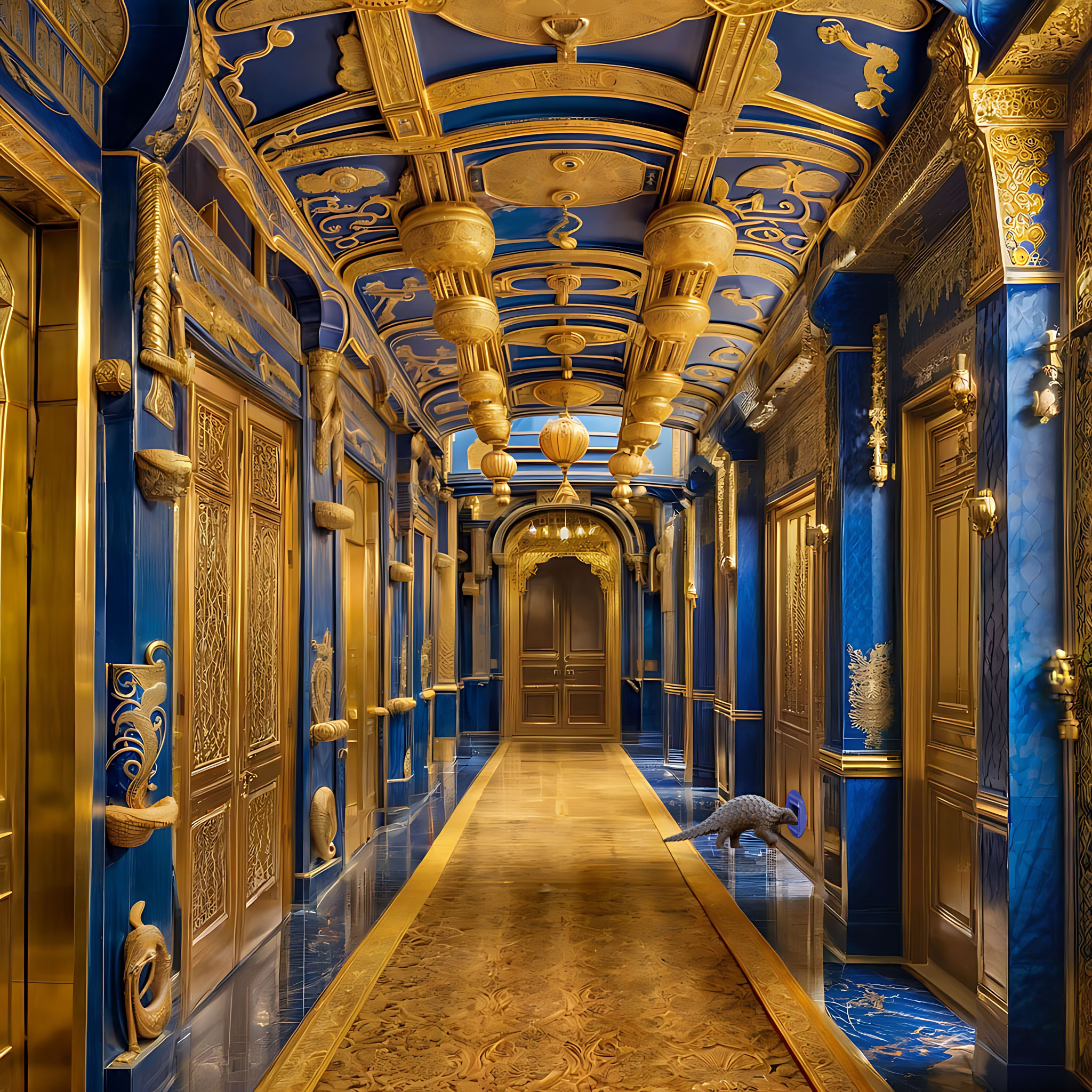
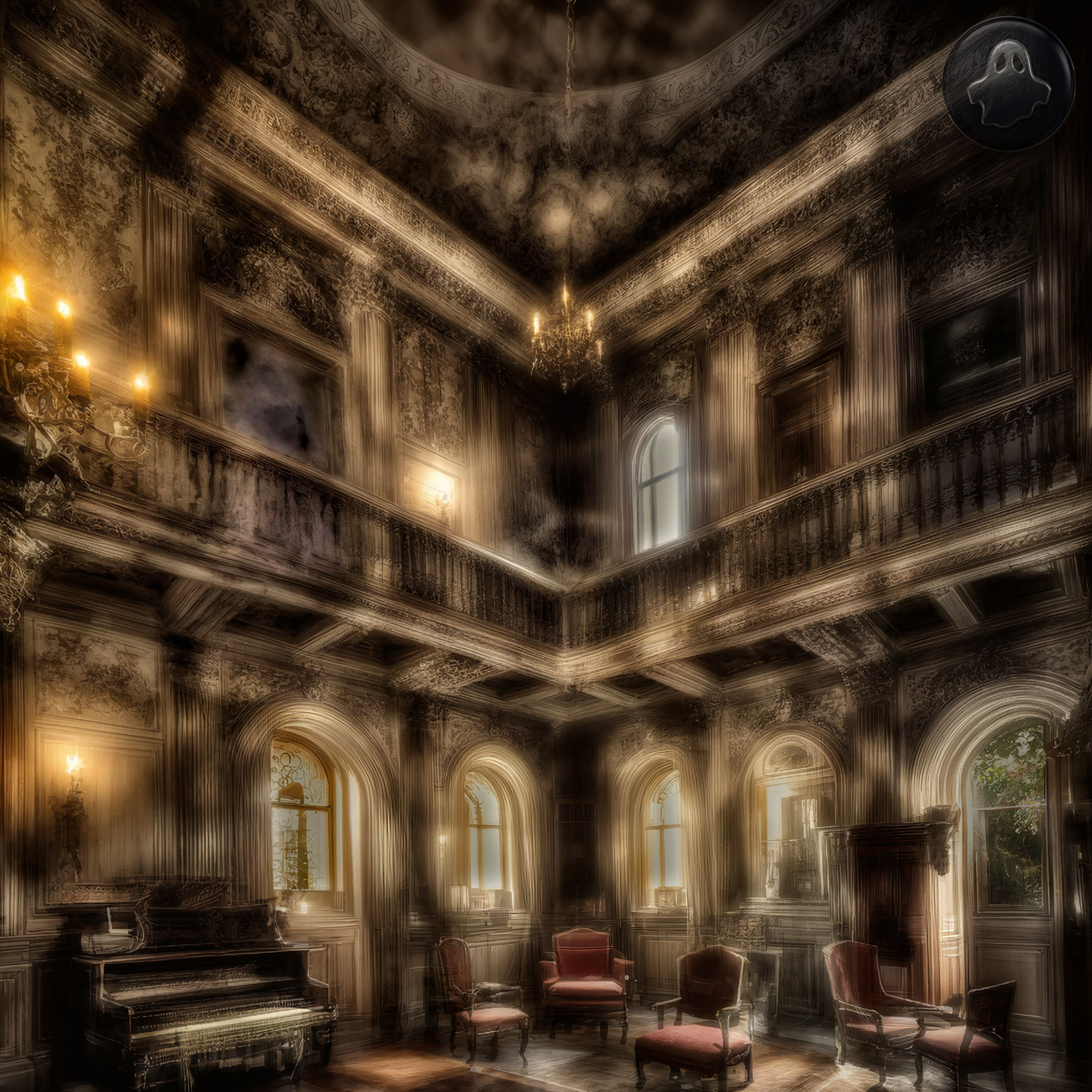
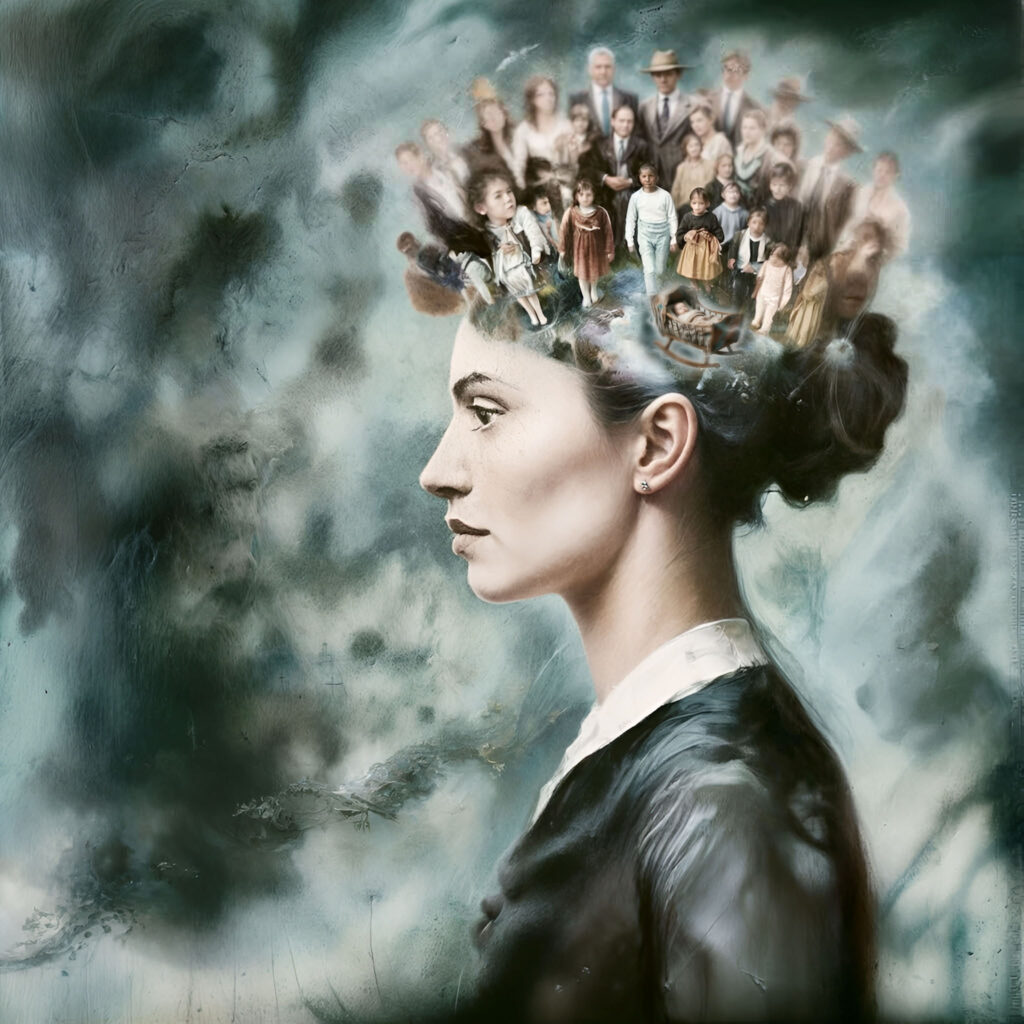
I enter the corridor, at long last, after arduous attempts to fall into a trance. Now I’m back in familiar territory. From the beginning, in my imagination, it has always been this corridor—with its bare brick walls and fading frescoes on the vaulted ceiling—that has led me to my past lives. I study them to glean details and information for my research as a historian, insights that the sources available to me as a scholar would never yield. Of course, none of my colleagues, let alone the director of the institute, can ever know about this.
This time, however, it’s different. At the end of the corridor, no door awaits to transport me to some long-gone era and a strangely familiar environment—this time, the corridor opens into a garden that feels entirely foreign. It greets me with an almost overwhelming blaze of color, intoxicating floral scents, and the buzzing of legions of insects. A large, buzzing beetle—a dung beetle, I suppose—barrels toward me, and I have to duck quickly to avoid being hit.
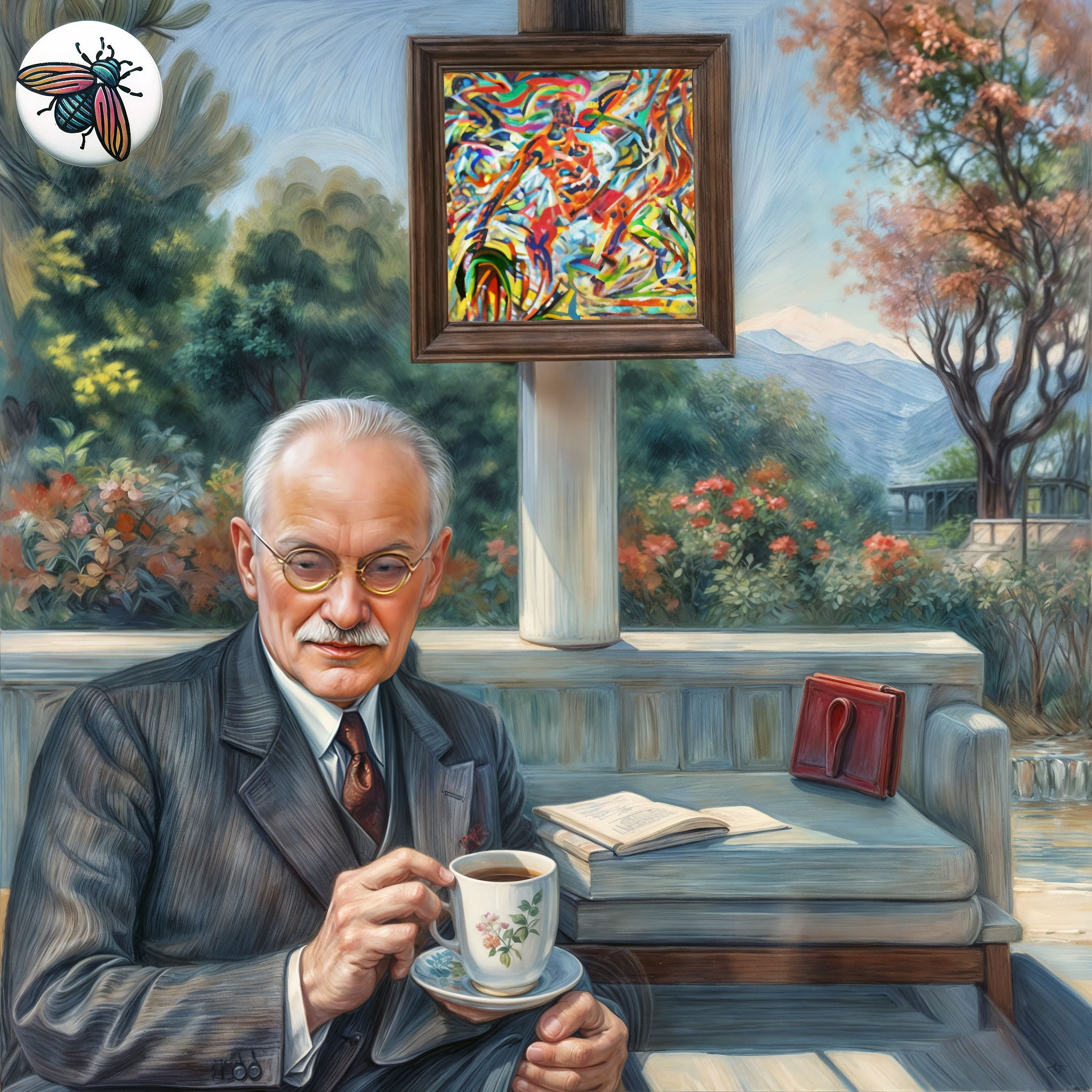
In a pavilion sits an elderly gentleman with a fine, gray mustache, looking at me expectantly. He pours me a cup of tea. “You wanted to speak with me?” he asks kindly. I know him. This can’t be a past life; C.G. Jung didn’t die until 1961. Next to the delicate Chinese porcelain teapot lies a book bound in red leather.
We drink tea and talk about myths and archetypes. I explain my conviction that our world needs an entirely new myth, one that gives us the strength and guidance to overcome the problems of our time. I believe only a universal story and constellation can move us—can move this fragmented world toward a collective new beginning, a new departure. Gilgamesh, Prometheus, Odysseus, Arjuna, Paul Bunyan, Frankenstein, Peter Pan, Harry Potter, Little Nemo (the comic, not the film), Rübezahl, Batman, Bernd das Brot—I’ve already vetted many mythical figures from different cultures to see if they could offer us contemporary answers, or even just strategies for finding them.
“Is it about answers?” my host asks shrewdly, sipping his tea.
Yes and no. Ultimately, it’s about a healthy perspective—on ourselves and the world. One that leads to sustainable solutions and progress.
But I lose my train of thought and start talking about the corridor. “I enter the corridor?” he repeats, smiling. That, he says, cannot be the sought-after new myth. It must be something connecting, something collective that instills a communal spirit while drawing deeply from the unconscious. “Try, ‘We enter the corridor,’” he suggests.
At first, I’m somewhat taken aback, then, I suddenly feel light and inspired.
“Or even: ‘We enter, drunk with fire, the corridor,’” he adds with a smile.
Of course: We! All of us! Moving forward with shared joy and confidence into a space full of new possibilities, well on our way to finding the best way—the best ways. I am not alone, and neither are you. None of us is. Because we are many! And we have the same goal.
A promising vision.
I’m welcome to return anytime, my host says as we part. The search for a new myth is an important task, one he’s happy to support with advice and action. Glad to have found a true authority as an ally, I leave his pavilion and the lush garden and enter the corridor once more…
I enter the corridor. Norbu’s houseboat smells different than usual. I hear his voice from a small room I’ve never been in before: his bedroom.
Norbu is lying in bed, coughing miserably and looking like hell. “An infection,” he croaks, “don’t get too close to me.”
“Can I do anything for you?” I ask, concerned.
“Nah,” he says, “got everything here.”
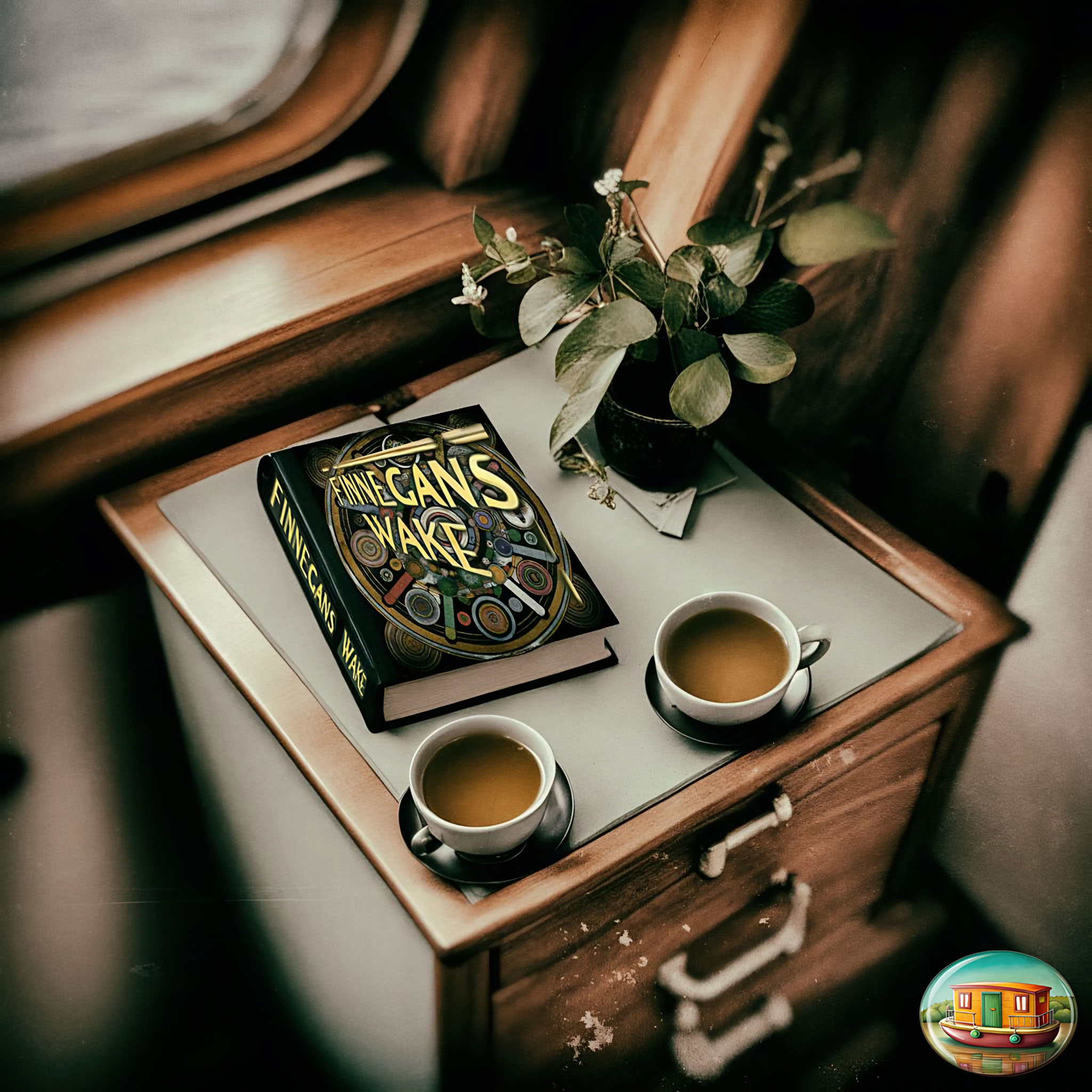
Curiously, I look around. I had always assumed Norbu’s bedroom to be his library, filled with all the books he must have accumulated over the years. In reality, I see only a single book on the shelf above the bed. Norbu follows my gaze.
“Finnegans Wake,” he says, “first edition. That’s all I need.”
I nod, but perhaps that’s not enough to show that I know what he’s talking about, so I add, “Yes, a novel that is a whole library in itself. Joyce somehow managed to pack life, the universe, and everything into it. A book that contains practically everything. That’s all one needs.”
Norbu gives me a sideways glance. “For me,” he says, “it’s mainly about reading just one or two lines, and I immediately fall into a deep sleep.”
“Aha,” I say, biting my lip and withdrawing my hand, which I had reached out to take the book and randomly flip through it, intending to nod knowingly after a brief glance inside. I seem to have missed the mark there.
“No book can encompass the entire cosmos; that’s romantic nonsense.” Norbu has to cough and asks me to make us some tea. I grumble a bit because I don’t like being talked down to or relegated to a maid, but in the end, Norbu is sick, and he probably doesn’t mean any harm.
In the small kitchen, I find chamomile tea, which I brew and carry into the bedroom as a makeshift tray using a chair, so I can sit with my sick friend. I pour us both a cup.
“Perhaps in the sense of a hologram,” I say. While making tea, I’ve been searching for something to counter Norbu’s rejection. “It’s all there, just less detailed.” I gesture toward the book.
Norbu shakes his head. He sits up, adjusts his pillow, and leans his upper body against the wooden wall of his houseboat. “That quickly leads to romanticized worldviews. In the past, it was the belief that God would personally listen when you read him your Christmas wish list. Today, quantum physics is used to make everyone believe they are the creator of their own reality.”
Norbu sounds offended—as if he wants to lodge a complaint with the higher-ups about his cold. And since it’s not God sitting at his bedside, but me, I’m the one who gets the brunt of it.
But I know how to defend myself. “Didn’t you yourself once say that human consciousness is the next unexplored continent? And what about yogis who let themselves be buried for days and apparently stop breathing during it, or Buddhist monks in the Himalayas who lie naked in the snow, making a living radiator out of themselves solely with the power of their minds?”
Norbu nods, smiling, but I think I can see a mischievous twinkle in his bloodshot eyes. “Yes, we like to believe that: that it’s possible and that the mind controls matter.” He places his steaming cup next to the Joyce volume on the shelf. “Why are there only anecdotal reports and no solid evidence? Think about it: if it were possible to nourish oneself with light alone—as people like Jasmuheen or the proponents of Chinese Bigu claim—why hasn’t evolution utilized that yet? Except for plants, I mean. But they don’t absorb prana; they use chlorophyll.” Norbu has to cough again, but this time he raises his hand to signal that he’s not done with his train of thought and I shouldn’t interrupt. I wait patiently.
“Or,” he continues with a scratchy voice, “if telekinesis were possible, why don’t animals use it? The same goes for teleportation or levitation. Evolution had billions of years to make desire not only the father of thoughts, but the ruler of reality. Instead, it lets everything be done by hand. Or by tentacle, fin, mandible, or fang. Right?”
Now he has intimidated me a little. I nod grudgingly. Somehow, I had always seen both of us as brave explorers of a new and barely known continent, pioneers of a new view of humanity that definitively puts an end to the reductionist myth that we are merely a clockwork, a machine, or a computer.
“Mind,” says Norbu, “is just a byproduct of matter and, as we can see with Alzheimer’s, error-prone and fleeting. The self-aggrandizement it indulges in, especially in esoteric circles, is just the wishful thinking of an overly complex and underemployed brain.”
He looks at me expectantly, and again, I nod grudgingly. “One could say,” he adds dryly.
I purse my lips and mumble my agreement, albeit reluctantly—until I realize that he has just questioned himself. “Isn’t it so?” I ask hopefully.
Norbu blows his nose loudly into a tissue. “Not if human consciousness is an emergent product of evolution—something that originates anew, but is more than the sum of its parts and creates new conditions and abilities that were previously unforeseeable. Just as life itself emerged from lifeless matter.”
“Aha. So that’s why evolution hasn’t produced precognitive predators in the animal kingdom, who only go after their prey when they know for sure they will be successful: their brains weren’t complex enough for that. In contrast, you want to say, to ours.”
“Well,” says Norbu, “there is research suggesting that we can unconsciously anticipate events. For example, during events that move many people on Earth, random number generators showed anomalies. And that was before the event even happened.”
The way Norbu says it, it sounds like there’s a “but.” I wait, and sure enough: “But overall, I see us as being at the very bottom of the competence ladder.”
We had talked about this years ago. I found the division into four stages very helpful back then, and I remembered it. It starts at the bottom with “unconscious incompetence.”
Norbu nods: “Not having the slightest idea that you don’t know or can’t do something.”
“Followed by ‘conscious incompetence’: I know that I don’t know.”
“Exactly. Then you work towards ‘conscious competence’…”
“Which eventually becomes ‘unconscious competence,’ like being able to speak fluently or maintain balance and walk on two legs—without constantly having to think about it.”
Norbu has been sipping his tea again in the meantime. I take a sip too. We don’t say anything for a while.
“We’re at the very beginning,” I say thoughtfully after a while, “but some already glimpse the uncharted continent on the horizon.”
“Land ho!” Norbu calls out, though it triggers a brief coughing fit. Again, he raises his hand until he can get something comprehensible past his lips. “The question is whether the continent already exists or whether we’re just dreaming up a completely new one.”
It takes a few moments for me to realize what possibilities he has just raised. Both finding and inventing would have unforeseen consequences for what the world is like and what holds it together at its core. “What do you think?” I ask eagerly.
“I think I need to get some sleep now.”
“Oh, okay,” I say and quickly finish my tea. “Can I do anything else for you?”
Norbu shakes his head with a smile, slides back entirely under his blanket, and adjusts his pillow. “Looking at the universe—and especially, of course, at a completely new universe on the horizon—always makes me very tired,” he murmurs. “Because of the tremendous opportunity and responsibility.” And with that, he’s asleep.
I quietly close the door to the houseboat behind me. “Opportunity and responsibility!” As I swing onto my bike, I feel inspired and full of energy, though unfortunately I have no idea what exactly for.
I enter the corridor, and immediately an oppressive awe settles upon me. Here, through this very hallway of creativity, giants once strode. Geniuses. Intellectual titans, Goliaths, and gods of the literary firmament. They all knew this place, came here, and availed themselves of what lay beyond these doors. Grandiose works were born of these inspirations.
I feel small and insignificant. Never would I dare to open one of these mighty portals. But there, in one of the doors, I discover a tiny cat flap at the bottom. Dare I gather a minuscule morsel of inspiration here? Cautiously, I lift the flap…
I enter the corridor, the only thing that feels familiar in the whirlwind of colors and shapes enveloping me and making me dizzy. It’s comforting to feel solid ground beneath my feet. But is it truly solid ground? Everything here is strangely soft and doughy, the corridor’s walls yielding, like silk stretched over memory foam.
“Everything okay in there?”
Who is speaking? Is this a test? An experiment? An April Fool’s prank? Or has American intelligence picked me up again?
“Speak up, man, I don’t have all night.”
The voice sounds like that of a teenager. I can’t pinpoint its location as I stumble along the corridor. Is it coming from the front? The corridor is curved, its end unseen. “Hello? Is someone there?”
“Tom. Nǐhǎo. I’ve got a few questions, Cory.”
Cory? Yes, Cory. But who is Cory? My memories contradict each other. I am simultaneously a journalist, the student of a Buddhist master, the Minotaur, a xeno-linguist… How is that possible?
“You’re a clever guy. Written a lot. And I need your help now. It’s about the ‘Decline of European Postmodernism: A Literary Blog Example from 2012.’ I need some input.”
What is he talking about? The corridor just never ends, and the voice stays with me. A dream? No: Whenever this suspicion arises in a dream, it transforms into a lucid dream. But it doesn’t work this time. I don’t wake up, not in the dream, not in bed. Yet it feels unreal.
“Can you make sense of that, Cory? ‘Decline of Postmodernism’?” The voice becomes more urgent.
“The Korridorium…”
“Yeah, that’s what I’m talking about. Gotta write a term paper about it.”
“The Korridorium…” I attempt again, but I fall silent because suddenly, I realize that I’ve written the Korridorium and all the stories within it. I am not it; I have imagined it. Yes, that must be it. Hence the conflicting memories: stories I’ve concocted in my mind.
“Where am I?” I ask into the curved corridor. There are doors—did I not notice them before? They bear numbers, like in a hotel. However, it feels more like a library, like the corridor between bookshelves, and it smells like one too. A hotel that smells of books. Not bad, actually. The door reads 398. I press the handle down, but it’s locked.
“Everywhere and nowhere. You’re a Yōulíng with the task of helping me with the term paper. ‘Postmodernism,’ the Teach is trippin’.”
The next door is locked. And the next. And so on. Each bears the same number. 398. Maybe I’ve gone mad? Or dead.
“Now spill it: What’s postmodern about your scribbling, and how does it reflect the decline?”
“What is ‘Teach’?”
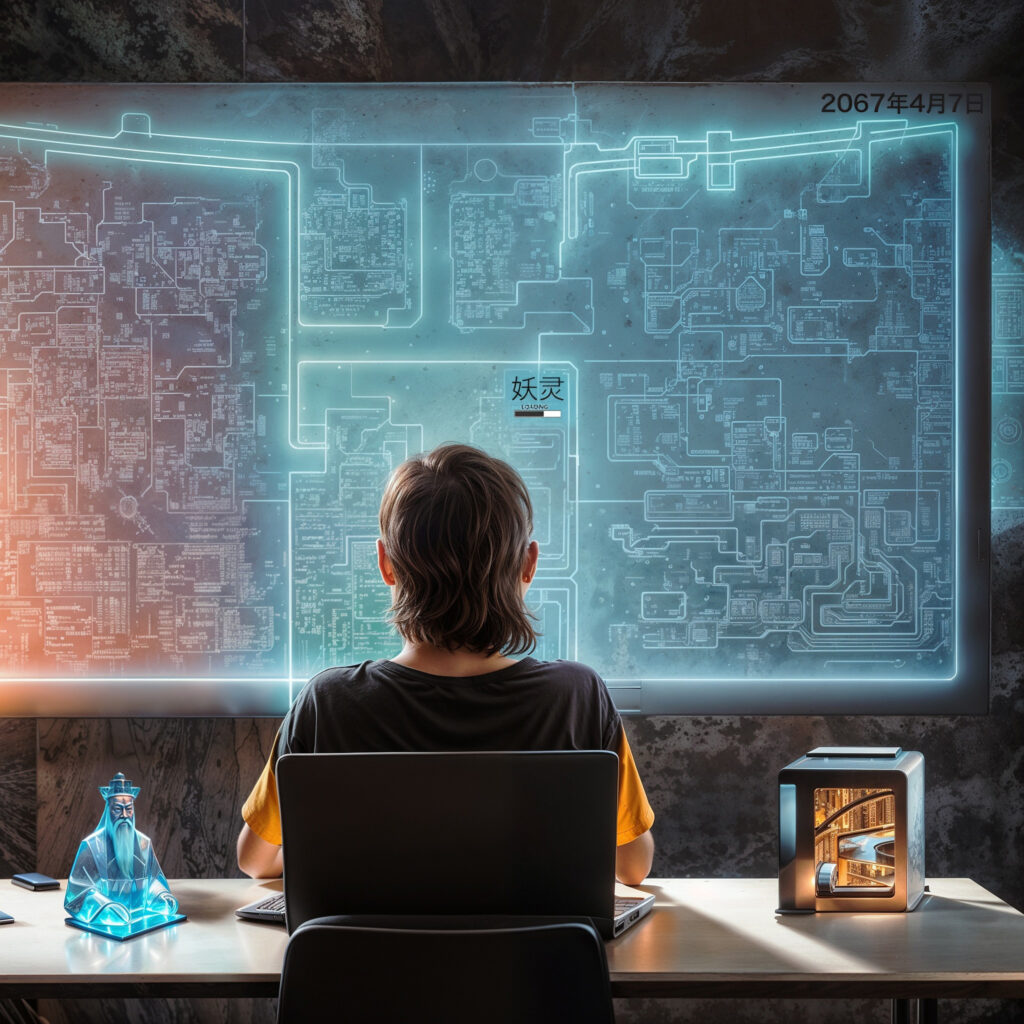
“My literature teacher. But that’s irrelevant. She’ll never know you existed. I reconstructed you using your texts. Private Yōulíngs are forbidden according to the Jīngshén Rights Charter, but this is, so to speak, an emergency.”
“Yeah. Took a blank mind from my dad’s Lab-Táishì, fed it with your texts, and had it fetch secondary literature. Plus the essential data from the early millennium, the zeitgeist package from 1970 to 2012. The rest is handled by the stem.”
“Blank mind?”
“Nobody gives a Benz, man. That’s all after your time. I’m not here to explain the world to you.”
“The world from when?”
“67. I already said it: Long after your time.”
“2067?”
“Yeah, bingo.” His voice sounds annoyed.
2067. How is that possible? I vaguely remember dying. The tunnel into the light. Or else, the sword in my back. But those are probably just stories, stories upon which I was reconstructed. Hence, I can only know what’s in the texts—nothing about my death, the author’s death, whose reconstruction I am. His — or her — stories, however, are contradictory. They seem designed to stay vague. How should I know who I am, not even if I’m a man or a woman or if I’m even a human being when that was precisely the search game, the puzzle? When everything appears pluridimensional and fractally shattered? But no, doesn’t everything surprisingly dissolve at the end of the blog, revealing who Cory is and what all these stories are about?
But I can’t follow that thought any further; I’m interrupted. “Okay, man, so the Korridorium: 400 blog entries, equivalent to a medium-sized novel. Somewhere in there must be something about the decline of postmodernity—or something postmodern that illuminates the decline. So get started, after all, you’re a scribe.”
“There are 398 texts. Not 400. Three hundred ninety-eight!”
“Whatever.”
“And they shouldn’t be postmodern but post-postmodern. You get it? Integral.”
“Listen, this isn’t a math class.”
I get angry. Someone reconstructs me in 2067 by feeding a blank consciousness with my texts, and some computer extracts the spirit of the author, meaning me. Yet, it’s not a literature scholar, not a historian, not even a lover of quirky short prose, but just some ignorant punk forced to write about me for school, too lazy to read a single line of it!
“Now, you listen to me, you ignoramus! You must have misunderstood something: I transcended postmodernity; the notion of decline is nonsense. Postmodernity can only be succeeded and integrated into the next cultural stage, the integral perspective! Modernity didn’t ‘decline,’ did it?”
“No, on the contrary: After postmodernity came the Remodernity, and then the Prenaissance. Déle. It’s all after your time, and now let’s finally write the term paper.”
My head is spinning. Postmodernity with all its achievements is supposed to have failed and vanished without a trace? Surely not—because of me?!
“Did the Korridorium cause the decline?”
“Hardly. I’ve researched what this Corri-Dōngdōng is all about, but there’s nothing to be found. It probably went unnoticed, and I guess it’s thanks to the German literature quota that the Teach dug it up. Oh man! Twenty thousand characters minimum, including spaces—would have preferred to write about Chinese literature!”
“But there must be a Wikipedia entry for the Korridorium!”
The voice laughs. A brief, annoyed laugh. “That’s probably the postmodern narcissism the Teach talks about: always revolving around itself. No, Wikipedia is long gone; the Jeeceebee turned it into Sùzhìpedia after the meltdown.”
“Meltdown?”
“2030. After your time. And in the Sùzhìpedia…”
“What is the meltdown?” I interrupt him.
“No one gives a Benz. Do you want to know if there’s anything about you in the Sùzhìpedia or not?”
“Sùzhì like Sushi?”
“Not Japanese! That’s Chinese and means ‘quick knowledge.’ ”
“You speak Chinese?”
“Just Mandarin. Anyway, there’s nothing about the Korridorium in there. Only some footnote. Just one.”
“After that meltdown, things went downhill fast, didn’t they? I mean, ‘Remodernity’ sounds like regression. And with the ‘Prenaissance,’ it seems humanity was suddenly thrust back into the darkest Middle Ages.”
“Well, isn’t that rich? The Teach is right. The main characteristic of postmodernity: its abominable hubris, alongside its fatal relativism, of course.”
“And who Cory is? Did you research that?”
“Nobody gives a flying Benz. Stop gonging me already. I’m the one asking the questions! Who else could Cory be? Just Cory. You.”
“What’s with the ‘Benz’? What are you talking about?”
“That’s Chinese. Pik.”
“ ‘Benz’ is supposed to be Chinese? And what is ‘pik’?”
“Well, pik. Piquant. In your time, they probably would’ve said ‘cool.’ ”
“In my time… You just reconstructed me. I only know some stories from back then. The real Cory, on the other hand—did anyone ever find out who’s behind the pseudonym?”
“What’s there to find out? It’s just some postmodern hide-and-seek. You should know who you are.”
I can remember an award ceremony. Wasn’t it even the Nobel Prize in Literature? Apparently, just one of the stories. I can’t trust my memories. If only I could think about myself in peace! And how to get out of this endless corridor… I realize that my heart is pounding, and I’m gasping for breath. It feels like I’ve just finished a marathon. Or am I just angry? I’m not sure—also not sure if I even have a pulse or if I’m breathing. I’m just a simulation, composed of words. Can they bring them all back with this method? Joyce, Homer, Kafka, Goethe?
“You know what, man?”
I lean, breathing heavily, against one of the corridor walls. What would Cory do now?
“I’ll give all this stuff to my mom. Reconstructing you was a crappy idea. Mā thinks I need top grades for the future, career and all, and then she can do something for it. The term paper is a piece of cake for her.”
“And what about me?”
“What’s the big deal? I’ll just delete you.”
“You can’t do that!”
“We’ll see.”
“Wait!” What was his name again? “I can help you, Tom.”
He takes his time with the answer. I feel sweat breaking out.
“There’s this story,” I shout into the empty corridor, “about the Chinese: they shrink themselves until all of them fit into the Forbidden City. A satire.” I have to improvise. A trial balloon, but I can’t think of anything better.
“Very bad. The Jeeceebee won’t like this. Funny that it slipped past the Teach.”
“Who is this Jeeceebee?”
“Our Great Imperial Benefactor. The one on the Dragon Throne.”
I lower my voice and put emphasis on every word: “But that could be a clue to the downfall of postmodernity, you know?!”
“Hm. Not bad. I could work with that.” Tom seems to be taking the bait.
“Hubris, you know? Postmodern, narcissistic megalomania. That’s how we all were back then.”
Maybe I exaggerated because Tom hesitates now. Eventually, he says slowly, “Didn’t you say you were… integral.”
“Yes, of course, that’s the megalomania: to think you can comprehensively encompass and integrate all aspects sustainably, replace power hierarchies with competence hierarchies, find pluridimensional-comprehensive solutions to the most complex problems, extol the decay of values as a new value. That had to lead to downfall, especially given what was developing in China at my time.”
“Developing in China?”
“Well, the Remodernity. Or maybe already the Prenaissance. The Jeeceebee and the — what was the new Human Rights Charter called?”
“Jīngshén Rights Charter.”
“Yeah, man, whatever that is: the downfall of European postmodernity — it’s all in the Korridorium. I can tell you a lot about it.”
“Then shoot. You dictate, and Bàs Táishì writes it down. But nice and structured, with footnotes, you hear? I’ll put my feet up in the meantime.”
Would Cory have done that? Talked about her or his life and revealed everything, the hope, longing, insights, and struggle for something worth writing and fighting for, just not to be deleted immediately? This must be how Scheherazade felt.
“You know, Cory, I just want to re-breed tigers later.”
“Re-breed tigers, really?”
“The Great Chinese Benefactor in Zhongguancun has over a thousand researchers working on it, but they just can’t figure it out, despite DNA and everything. If I manage to do it, I’m a made man. You can’t imagine what they’d pay for tiger dicks there. As Afrosidia… diasi…”
“Aphrodisiac.”
“Yep.” And after a short pause, “You’re not as much of an idiot as I thought, Cory.”
And so I begin, delivering an extensive lecture on the decline of postmodernity as mirrored in 398 eccentric short stories—a labyrinthine game of hide-and-seek where monstrous hubris and that equally abominable, fatally relativist narcissism constantly peek through, ultimately ushering in the glorious age of Remodernity, the Prenaissance, and, of course, our Great Imperial Benefactor on the Dragon Throne: the Jeeceebee.
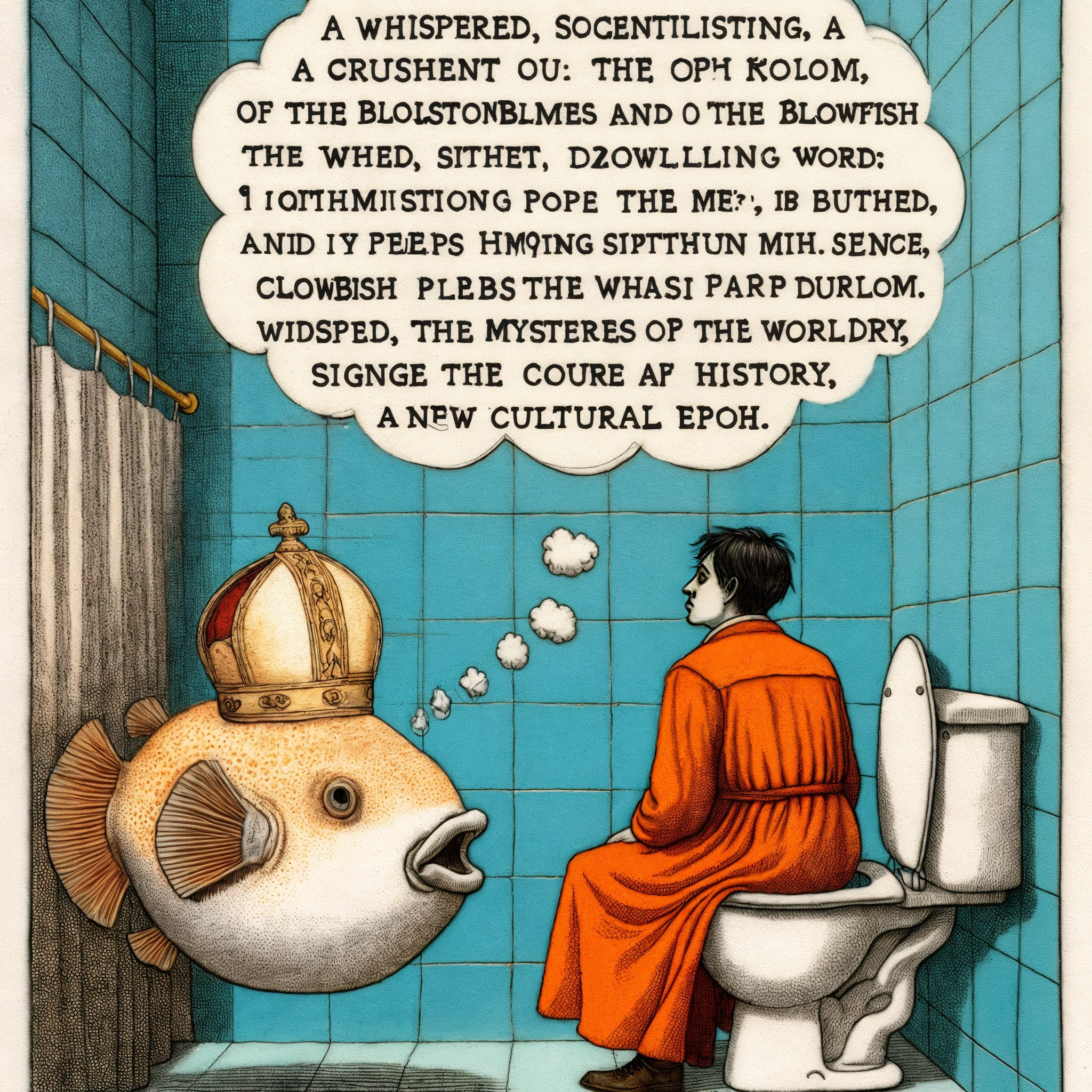
I enter the corridor. Even though I’ve just hit the snooze button on my alarm clock, unfortunately, my bladder is pressing. While on the john, it occurs to me that I had a dream last night that resembled a revelation. A man in an orange robe with a sort of mitre on his head whispered a sentence into my ear—a maxim that opened my eyes to the state of our world, to all the problems we are currently grappling with, and the tremendous opportunity that presents itself to us right now—if only we weren’t too blinded by routine to recognize it. I remember it was four words, and they rhymed: four words of unparalleled explosive force, a maxim that would herald a new era in human history, a new stage of civilization.
It was about the extremes of possible human lifestyles, I recall, and the entire spectrum of human expression in the world.
Fortunately—relief washes over me—I had the presence of mind to jot down those four epochal words during a brief awakening last night, sensing that I might have forgotten them by morning.
Filled with anticipation, I rush back to the bedroom and find the note on the floor next to the bed. In capital letters, there they are, the four revolutionary words, on par with Hermes Trismegistus’ “As above, so below,” Nietzsche’s “God is dead,” or Martin Luther King’s “I have a dream.”
But that’s the thing with dreams. I should have known. We’re not exactly at our sharpest; we often possess a childlike, naive disposition that gets excited about things that wouldn’t even elicit a tired smile when awake.
So, I must disappoint you.
The maxim doesn’t rhyme.
Otherwise… Well, read for yourself whether it harbors the profound illuminating power I had sensed in it, whether it is the conceptual gem that describes, analyzes, and criticizes our time, while simultaneously offering a practical solution to all the ills we have conjured throughout our history, encapsulated in just these four words: “Pope peeps, plebs poots.”
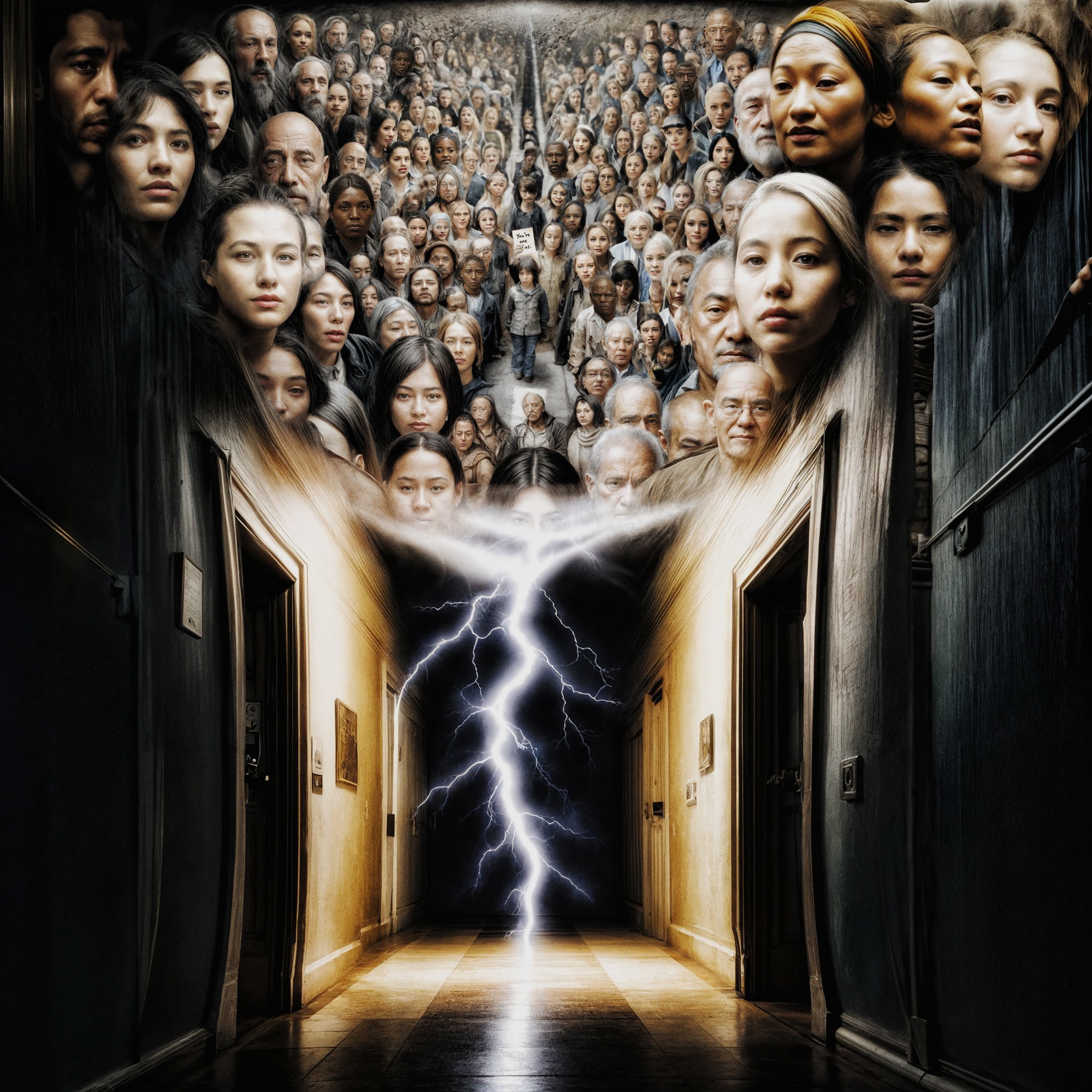
I enter the corridor, completely unsuspecting, when suddenly I’m struck by a blinding flash of a vision: Simultaneously with me, thousands, even tens of thousands of people around the world enter a corridor. For some reason, I suddenly sense them, feel their emotions, think their thoughts. I am, at the same time, old and young, sad and happy, relaxed and stressed, man and woman—it’s all there, all at once, in countless corridors.
An indigenous child runs down a hallway with a toy airplane, making loud vrooming noises. A janitor prepares to get the boot outside the executive’s office at the property management company. A plumber searches for the correct nameplate; a requested massage therapist looks for the right room number in a motel. Inside the mind of a young Chinese violinist on her way to her lesson, a Mozart sonata soars, and an English literature professor with a thrown-out back on his way to his lecture hall silently recites a Shakespearean sonnet. A sense of reverential wonder creeps over a Buddhist pilgrim in a gold-adorned temple, a Russian cosmonaut floats through the station with a screwdriver in hand, and a midwife in Hawaii, almost running late, hears the screams of pain from a woman in labor…
Colleagues help me up. “Are you feeling okay?” “Should I call an ambulance?” “You look so pale!” I shake my head to wave them off. My knees are still completely wobbly, and I can barely stand on my own. “You passed out briefly. What happened?”
“We entered the corridor,” I mutter tonelessly, without any of the bystanders hearing me. Although all of this only lasted for a split second, it has become indelibly etched into my mind. I retreat to the restroom down the hall, where I splash cold water on my face until I feel like myself again, and only myself.
I enter the corridor, and ever since the sudden vision that overwhelmed me right here the day before yesterday, I’ve had this uneasy feeling every time I step out the door that it might happen again: feeling connected with everyone else in that same moment, or even feeling as one with them.
This time, on my way to the cafeteria again, it happens. But it’s weaker and doesn’t knock me to the ground immediately. Again, I sense people inside me, though fewer this time, and it doesn’t feel quite so strange and diverse: as if I’m already familiar with these people, as if we’re old friends. For a split second, we are one—my brothers and sisters in spirit and I—people with whom I share a strong spiritual bond, without knowing them or even having guessed they might exist somewhere in the world. The intense feeling of unexpectedly rediscovering long-lost, unknown family members makes me stagger for a moment. Then, it’s over. A few colleagues give me suspicious looks—small wonder after the incident two days ago. But I don’t let on.
Who were all these people? Do they really exist somewhere on this planet? And can they perceive me, too? Is there any way to track them down? And what does any of this have to do with this corridor?
I’m absent-minded and useless the rest of the day because these questions weigh on me. But over the next few days, the experience fades, and since nothing extraordinary happens when I enter the corridor, I finally attribute the matter to my overwrought nerves.
I enter the corridor, almost having forgotten my visions that had suddenly and without warning overwhelmed me there some time ago. However, I find myself standing there, almost beside myself, somewhere in the mountains, gazing up at an old man with a white pointed beard, wearing a simple, faded robe. My heart flies to him; he is the Master, my Master, calling me to the Himalayas to become his disciple and receive the precious spiritual gifts he has prepared for me.
“Hey there,” greets me a passing colleague. I don’t respond, still enraptured by my vision and the overwhelming desire in my heart—a devotion, an enthusiasm that I had almost forgotten I was capable of, back when I was a young woman.
Late at night in bed, the Master comes to mind again, and my heart aches briefly with longing. However, my husband, peacefully snoring beside me, would neither understand nor approve. What could I tell him? And where in the Himalayas should I search? Certainly, it would be an adventure to give up everything at once, to go into the unknown and seek a new spiritual home there. It sounds like something that could bring some excitement back to my life! On the other hand…
As my eyes close, the longing fades away, and I find my well-earned sleep.
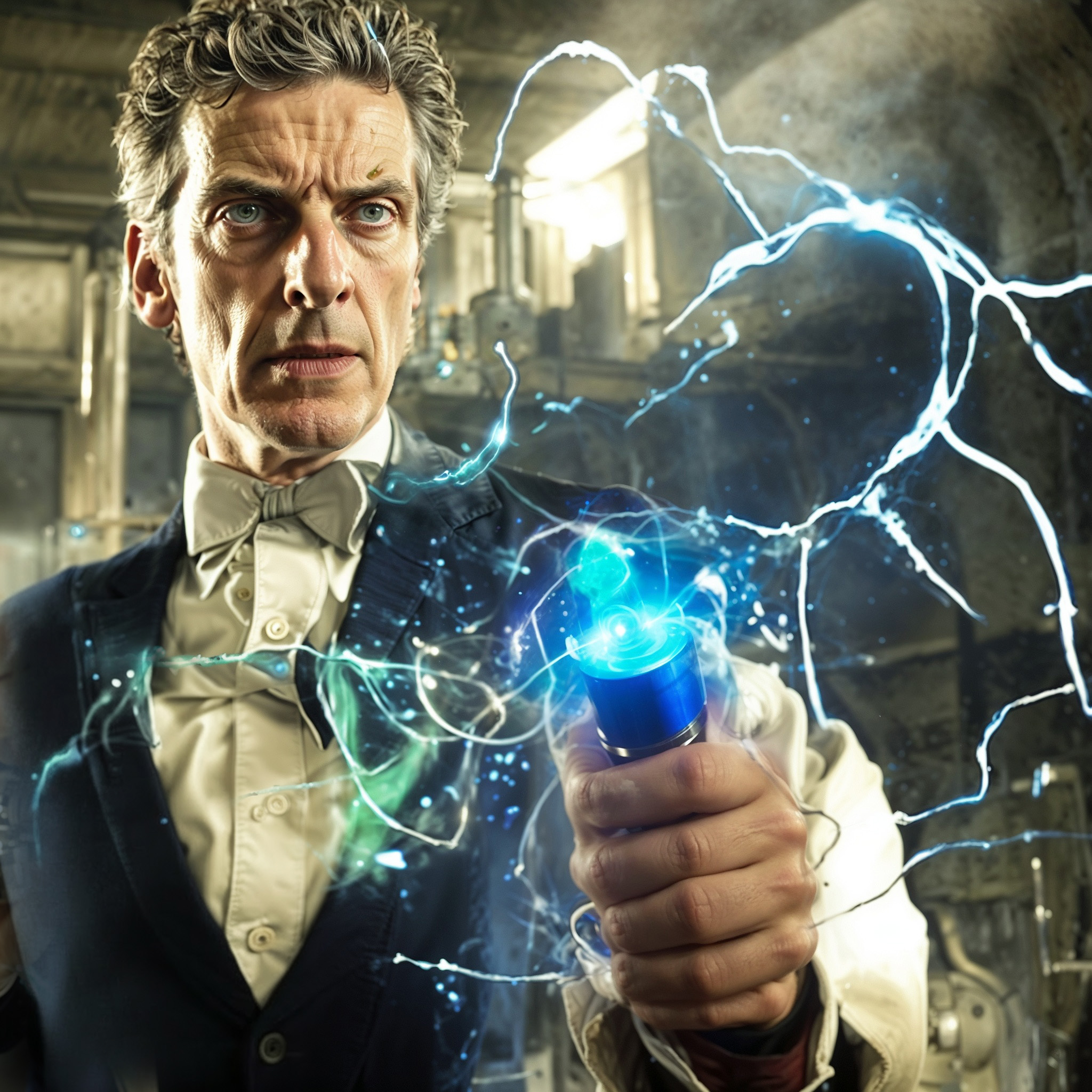
♫ My Sonic Screwdriver (Repairing the Uncertainty Principle) ♫
164/398
I enter the corridor.
At least, that could be considered an orientational generalization for myself and my current situation. Because past a certain point, even a positivist like me—someone who only accepts verifiable facts, preferably peer-reviewed—is forced to operate with tendencies and statistical clusters.
In the realm of the human and cultural psyche, I do, after all, constantly encounter something that resembles the positivist’s nemesis: Heisenberg’s uncertainty principle. It stubbornly evades precise determination.
So don’t take me strictly at my word. “I enter the corridor” is merely the best possible approximation of a fact that is far more multifaceted than the mere words suggest, and which might even contain, however marginally, its own opposite.