“I enter the corridor,” you write, dear S., “and although I run with all my might, I never reach the other end, though I long for it so much. What is this meant to tell me?”
Dear S., we all know such dreams in which an unknown force prevents us from reaching our goals. A corridor could represent our life path, the side doors or passageways symbolize possible or already missed opportunities, and the desired end of the corridor might signify our greatest wish, our “golden dream” that guides us through life.
But do we ever reach it?
A corridor in a dream without doors could mean that external circumstances or other people are forcing you to follow a certain path, leaving you with no alternatives.
A corridor with many doors that are locked might convey the message to you: Stay focused on your current path and do not deviate from it.
And a corridor where you simply can’t seem to make progress might symbolize a period in your life where everything feels stagnant.
Your dream, dear S., seems to be saying to you: No matter how hard you try, you will never reach your goal.
So, is it hopeless for you? Is your dream self telling you to finally give up because you don’t stand a chance? I think not. On the contrary, I believe that your dream self is trying to show you a way to achieve your goals even despite all your futile efforts.
You try to run. But perhaps your dream corridor gets longer and longer the faster you run. Or it’s like in Lewis Carroll’s Alice Through the Looking Glass:
“ ‘Well, in our country,’ said Alice, still panting a little, ‘you generally get somewhere else if you run very fast for a long time as we have been doing.’ ‘A slow sort of country!’ said the Queen. ‘Now, here, you see, it takes all the running you can do, to keep in the same place. If you want to get somewhere else, you must run at least twice as fast as that!’ ”
So, running twice as fast? That would be bad advice. Your dream seems to signal to me: Pause; take a break; linger for a while.
Dreams are full of magic: Perhaps your dream corridor will shorten, and the other end will come within reach, so that you only need to stroll leisurely, or perhaps even take a single small step!
It’s worth a try—in both life and dreams, isn’t it?
In any case, thank you very much, dear S., for your question. Similar dream experiences affect many people, and often the interpretation and solution is similar to yours. Keep us updated, and write again if a shift in mindset leads to new and completely different dream experiences.
I enter the corridor, feeling for a niche in the wall with one of my tentacles and pulling my body in after me. By adopting the color of the background, I am now barely recognizable to eyes that do not perceive ultraviolet light.
We came to the strangers’ ship to welcome them to our planet. As the theologian of our delegation, I was meant to speak with them of universal mysticism and cosmic love. Instead, they hunt us, culling us without mercy. Only my student and I remain.
One of them enters the corridor. He is heavily armored and carries one of their deadly weapons. When he is very close, I ask the question, but I do not wait for the answer; instead, I immediately morph one of my tentacles into a sharp, hard stinger. I would have so liked to speak with him about God. Then it must be done this way.
I enter the corridor between two incompatible statements—a mental exercise I’ve practiced for years to make use of my morning tooth-brushing routine. Today: “Homeopathy is pseudoscientific nonsense” versus “Like cures like, even in high dilution.” At first glance, both statements appear irreconcilable, thesis and antithesis; but upon closer examination and reflection, I begin to discern connections between these contradictions. A corridor takes shape, one that I mentally venture into to explore further, at which point it usually quickly expands, unfolds, and branches out…
Just as I contemplate whether the human imagination—when reduced to the so-called placebo effect—might be criminally underestimated, my four antinomy-minutes are already up. So, I place my electric toothbrush back on the shelf above the sink and turn my attention to the pressing questions and challenges of the day.
I enter the corridor where, behind a massive glass pane at the end, the one who summoned me is supposed to be. I’ve been x‑rayed, scanned, patted down, had blood drawn, and was interrogated for hours. They’ve archived a cotton swab with my DNA, and my fingerprints. Now that the security checks are behind me, our encounter is imminent. The limited information they gave me suggests that only one of the original five extraterrestrials the US military picked up in the last seventy years remains. And he specifically requested me!
Why the intelligence agency honored the alien’s request is beyond my understanding. Probably a deal. Secret, of course. It can’t have been easy to track me down. The officer who just briefed me treated me with cold disdain. “They communicate telepathically with the scientists,” he said. “Most can’t handle it and go crazy, despite years of training to prepare them for something utterly foreign invading and tampering with their minds.” But if he really asked for me, it probably wasn’t to turn me into a case for the loony bin. I hope.
As far as I can make out in the twilight behind the glass, he is small and wrinkled like E.T. Before I consciously register any details, an explosion in my head hurls me to the ground. While I lie there, twitching helplessly, the detonation turns into massive, glowing symbols that mercilessly sear themselves in all areas of my brain like branding irons. It’s not a voice but a cosmic thunder that tells me to write something down, a message for the world, an unprecedented manifesto, a beacon, and it should begin with… I lose consciousness.
I wake up at home in my bathtub, with a five-day beard, a pounding headache, and nothing but my memories of the security procedures and the telepathic bomb in my head. I’m missing a few days, and even the leap day this year can’t make up for them. The intelligence agency probably planned it that way from the start: I have no evidence in my hands, and no one will believe my tall tale of being abducted, let alone who I faced in a secret military base in southern Nevada.
But that doesn’t really matter.
I try to write down the message, over and over again. Should it really start like this, with this sentence? Did I truly understand it correctly? My mind is probably too weak and fragmented to capture the manifesto’s full significance and world-altering impact on paper. Nevertheless, even if I might be the wrong person picked up by the intelligence agency, or if he overestimated me, it’s the only chance. Again and again, I start anew.
I enter the corridor without knowing what awaits me on the other side. Behind me, a world is collapsing—or rather, the house of cards I had cobbled together from my beliefs about the world: namely, that knowledge is power and reason is superior to emotion; that everything boils down to an energy exchange centered on the right ratio of investment to profit; and that quality will ultimately prevail.
A castle in the air, apparently; a pure figment of my imagination. This belief system had been crumbling from within for some time; it developed cracks and, finally, began listing dangerously. Just before it all fell apart, I sought refuge in this corridor. Now, I hope that at the other end, a new edifice of thought will take me in. A modest hut would suffice. It won’t hurt as much when that, too, eventually turns to rubble and ash.
I board the Korridorium bus and pay the fare to the driver. She has red hair and a Berlin accent. I don’t dare to ask if she might be Cory d’Or, the author of the Korridorium blog. Instead, I inquire whether there are texts from the blog available to listen to. She advises, “Dunno for sure. Let yourself be surprised.”
The bus is an old double-decker, traveling across the countryside, offering a “mobile meditative music journey” that is meant to last the entire night. Its windows are veiled, and I enter the partitioned passenger compartment from the driver’s cabin through a heavy curtain. At first, I see almost nothing. As the bus starts moving again, my eyes slowly adjust to the darkness. Soft ambient music mingles with the sounds of the journey.
“The number two, upstairs and the third one on the left,” the driver had told me. By now, I can discern the staircase and the individual bunks lining the aisle. The leaflets explained that this is a concert meant to be experienced lying down. I can’t make out how many of the bunks are occupied.
As I climb the stairs, I must be passing close to a loudspeaker, because a voice whispers in my left ear, “Who am I (and why not straight away)?” I can’t hear the brackets, of course, but that’s how it was written on the program sheet. This is what this nocturnal journey is about, so to speak, the title and the offering of the concert: meditating on it.
The bus takes a turn, and I have to hold on. In the dim light between the bunks, I encounter a woman who is the spitting image of the driver, and she offers me tea from a large thermos with a welcoming gesture. Are they twins? As I accept the cup from her, she whispers in my ear, “Who are you—and why not straight away?” I can’t think of a suitable answer. But the night is still young.
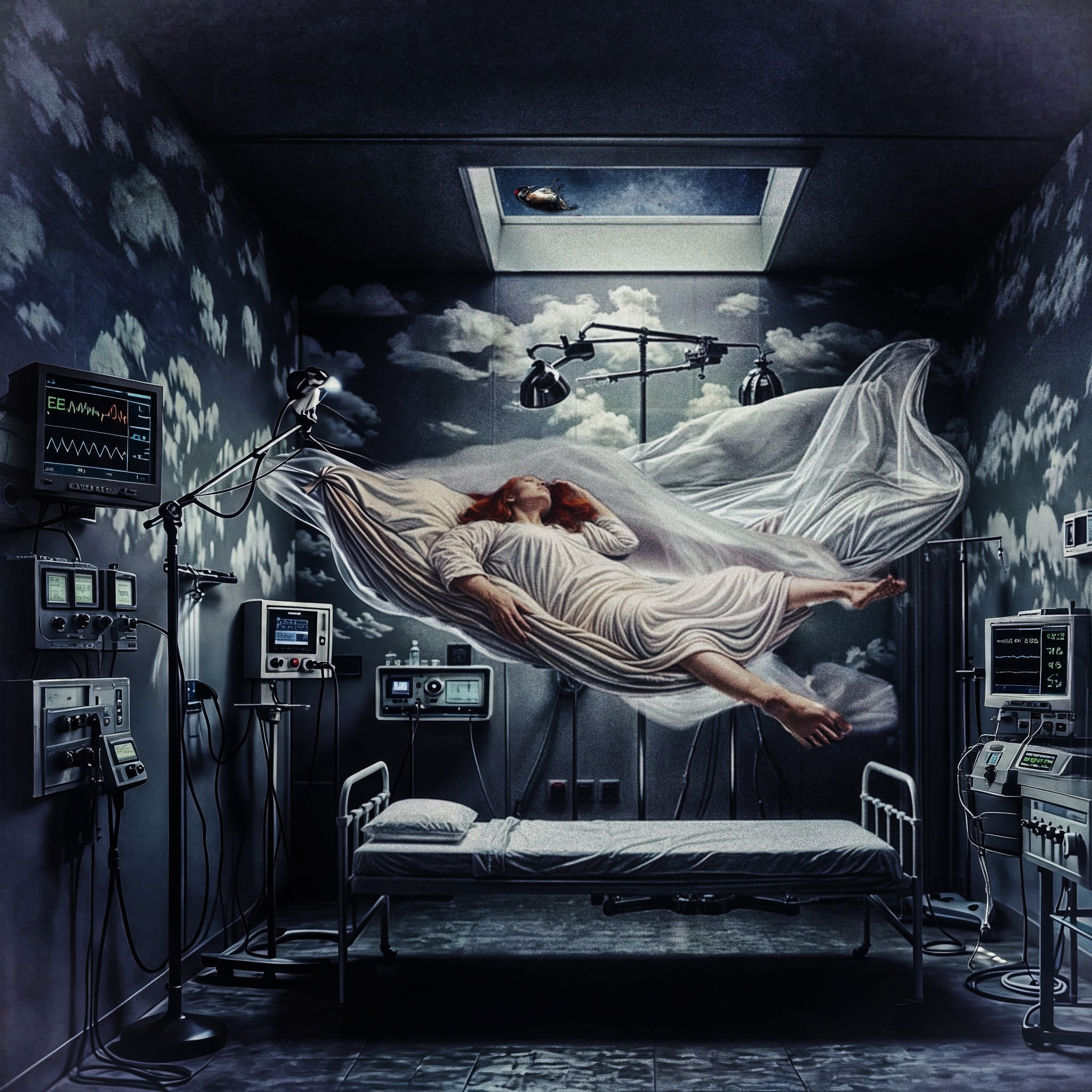
I enter the corridor after far too little sleep. But that’s how it is here in the sleep lab: the work mostly happens at night—the subjects sleep, the researchers stay awake and collect data. This time, I’m attempting to communicate with a subject who has mastered lucid dreaming. I step into our control room, from which we can observe the narrow bedrooms through one-way mirrors on three sides. Only one bed is occupied.
When the EEG indicates that the student is dreaming, I trigger three bright red flashes to illuminate her small room—a prearranged signal to help her achieve lucidity within the dream, a kind of knock to let her know we want to make contact. She’s one of our most experienced lucid dreamers.
The movements of her eyeballs, as shown on the corresponding monitor, now form a recognizable pattern. First, eight jerks to the left, then five, then twelve, then twelve again, then fifteen. A simple code: she’s just said “Hello.”
Through the intercom, I ask if she can hear me. The EEG shows she is asleep and dreaming. Nevertheless, she signals with her eyes: “Yes.” – “Then let’s go!” I say. She knows her task. She is to—while dreaming and without waking—levitate her body until she is above the cabinet in her room and relay to us what drawing she sees. We placed it up there without knowing what it was ourselves, as it is selected at random.
A short time later, she signals to me with our somewhat cumbersome but simple code: “dead bird.” I hurry to the cabinet, full of anticipation.
It’s not a dead bird, but a letter-number combination: F‑B3T-42. I’m a bit disappointed, but as a scientist, I must not be guided by expectations; I have to stick to the facts. And the facts suggest that while she dreamed of performing the task, she only did so in her imagination rather than during an out-of-body experience. Our subject later reports having seen a woodpecker, but she said the word seemed too long to transmit via eye movements.
A week and a half after this experiment, I happen to see our caretaker in the courtyard outside the low-rise building that houses our labs, holding dead woodpecker in his hand. I ask him about it, and he explains that since our two chimneys were clad in polished chrome, birds occasionally break their necks on the roof, mistaking the reflection for the sky. I have him show me the spot on the building’s floor plan. Sure enough: the dead bird lay directly above the cabinet where we had placed our random drawings. Only a few meters higher, on the roof.
The caretaker, a man accustomed to all sorts of nonsense from us researchers, examines the woodpecker more closely at my request, pokes a finger under the feathers, and says: “Sure, coulda been layin’ up there for a week and a half. But what’s the difference, anyway?” I leave him without an explanation.
We had already discontinued the study because we couldn’t achieve significant, repeatable results. Was it too hasty? I don’t tell my colleagues about the dead bird. With an anecdote like that, we’d only be a laughingstock in scientific circles.
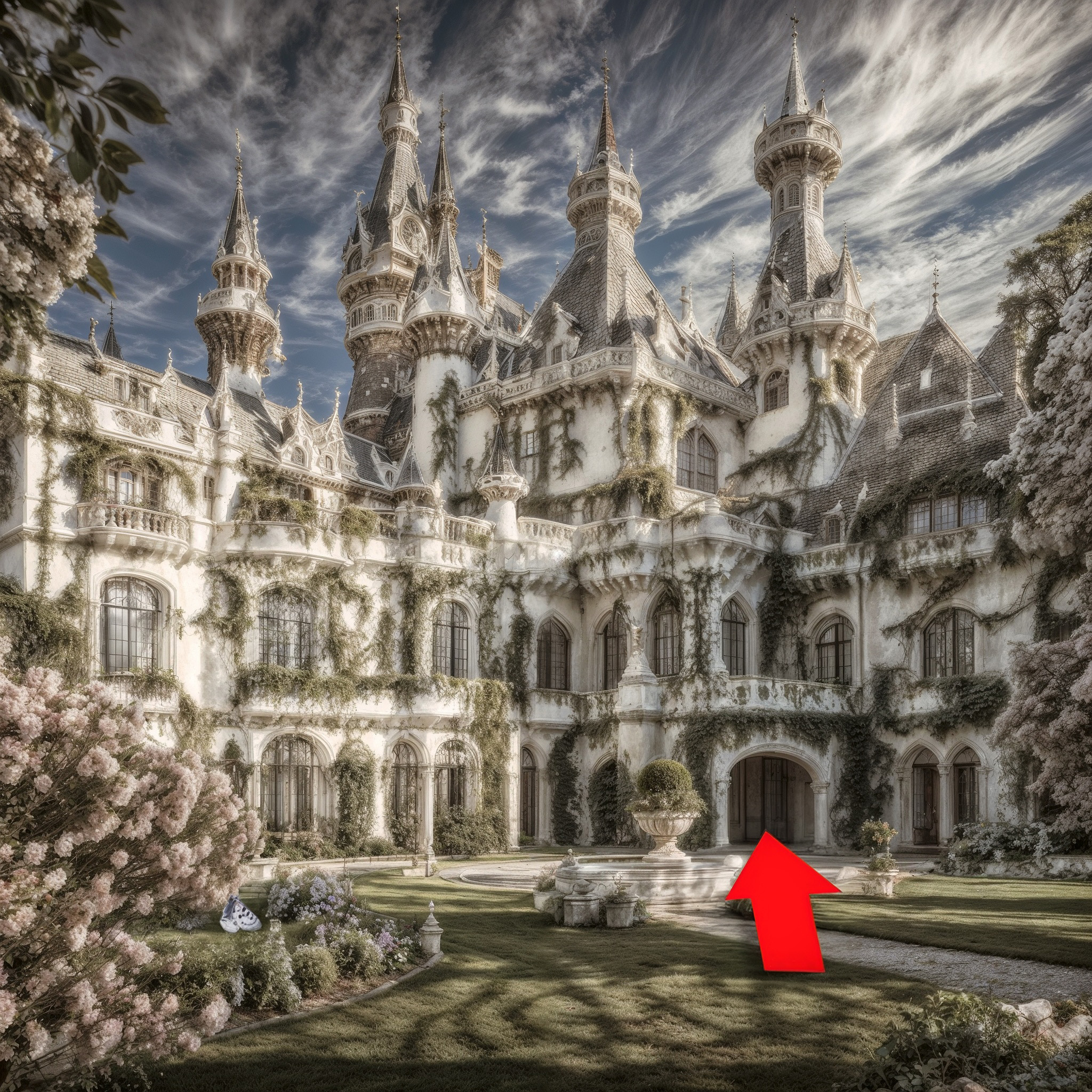
I enter the corridor leading to my memory palace. Of course, this long hallway doesn’t actually exist—not even on blueprints—any more than the palace itself, whose sprawling rooms are accessed through the colorful doors of the entrance corridor. It is a pure invention, a figment of my imagination. I traverse it in my mind repeatedly to give my feeble memory a boost. Whenever I want to remember something new, I either tuck it away in the appropriate room or simply add on another cabinet.
In the palace, I know every detail: the rooms, wall niches, windowsills, the half-height columns, tables, secretary desks, dressers, shelves, and printer’s trays—all the places where I mentally deposit things I want to remember. Or must.
The entrance corridor, however, is empty. It contains no niches or furniture—only the doors to the various wings of the palace. Behind the white one reside all the phone numbers I’m supposed to know by heart. (This is also where I would have stored the number Pi to any number of decimal places, had I the ambition to memorize it.) Then come doors in every color of the rainbow, beginning with infrared and ending with ultraviolet. From scientific discoveries, formulas, and jargon to biological facts, technical terms, and the life dates of famous researchers, all the way to the great milestones of human history—you can find just about everything here that ever seemed worth remembering to me. Whether it’s the names of the primordial continents (and the potential ones of our future, like Pangaea Ultima and Amasia), the 398 expletives from Joyce’s Finnegans Wake, or the 28 possible features of a leaf (from hastate to seven-pinnate).
At the very back, there is a black door. It leads to the basement of my palace. There, I store… but perhaps I should keep that to myself. In any case, this corridor—the one with the many colorful doors through which I enter the wings of the palace—inspired me to write a few short texts. I regularly deposit their content, their order, and their connections to each other and to other works of literature behind the orange door. Just as I am doing now with this very piece: traveling to deposit it in a special spot within my personal cabinet of curiosities, never to be forgotten again.
I enter the corridor. It’s a strange feeling to come back here after all these years. At first glance, everything looks just as it did then: the white vaulted ceiling, the simple stone pillars stretching at regular intervals into the distance, the smooth, cool marble floor beneath my bare feet—and the guardhouse standing right at the entrance. The troll opens the small, oval wooden door in the window to speak to me.
“Who are you, and what is your business here?” He sounds stern, but then, he has to be. He’s the controller here. I’d completely forgotten that he appears to me as a troll. I didn’t invent him. At least not consciously.
“It’s me, the Boss. I just wanted to see that everything is in order here.”
The troll looks at me, knitting his brow. “Do you have an appointment? Have you filled out the forms? Do you have an ID or a recommendation? Because you can’t just come in here like…”
“Whoa, whoa—slow down,” I interrupt him. “I don’t need any of that. I’m the Chief here. And I’d like to have a word with my Controller.”
“That’s me,” says the troll in his guardhouse, without a trace of humor.
“What’s your task?” I ask him. He explains it to me. Like everyone else here in the first part of the corridor, the troll has a fairly limited horizon. So, it’s no surprise when he tells me that his job is to keep everything under control, day and night, because otherwise things would immediately go off the rails. Control is everything, and without him, total chaos would break out. “I’m just trying to do my job as well as I can,” he says.
“You’re doing a fantastic job,” I say, and I mean it. In fact, my inner controller has saved me from a lot of trouble, and he’s visibly pleased by the praise.
Then I ask him if he’ll let me talk to the others further down the corridor without him interfering. There’s a brief discussion, but eventually, he agrees to take a short break. I give him a grateful nod and pass the guardhouse, heading deeper into the corridor.
Beyond the arches lining the sides of the corridor, various rooms open up. They are inhabited by other members of my inner ensemble—one-dimensional characters much like those found in myths, fairy tales, and pop culture. Types like the Minotaur, Chewbacca, the circus clown (“Ta-da! Magic!”), Gollum (“We wants it, we needs it. Must have the precious!”), or Scrat, the saber-toothed squirrel—characters who, in their simple-mindedness, sometimes move us deeply.
I hear a sob.
It’s a small, gloomy room with a worn-out bed. In one corner of the room, a pathetic little heap is huddled. “Who are you?” I ask, though I already know. It is Despair. A sob is her only answer. “What is your task?” I inquire. She turns to me and begins recounting her experiences in a halting voice: she sets out full of hope, only to be driven to despair by circumstances and other people. This has been going on her whole life. And since apparently no one else is willing to feel and confront this despair, she takes on the task herself—she explains, big tears welling in her eyes.
I thank her for her selfless dedication and stifle a cynical “Good job!”—instead, I suggest to the little, teary-eyed girl that she should team up with the Methodologist. He lives a bit further down the corridor. I can still hear his words ringing in my ears from our last encounter: “Formulate a goal, define the steps, work through them methodically!” The two of them could make a great team.
My next visit takes me to the study of the “Questologist,” as I’ve dubbed him: a young man with three-day stubble, a hat, and a coiled whip on his belt. He has maps spread across the entire room, with open books scattered among them. “What is your job?” I ask the Inner Seeker. Of course, he only knows one thing: searching! He is constantly on a quest—for love, for the answer, for happiness, salvation, perfection, the path, meaning, significance, enlightenment… “What about finding?” I ask with a smirk. But in truth, the Seeker is solely fixated on the search itself. If he ever manages to land a hit, he immediately sets his sights on the next goal, the next landmark on the horizon.
I tip my hat to him as well, because his insatiable yearning is very valuable to me—though he’s already too deep in his maps and treasures to even notice.
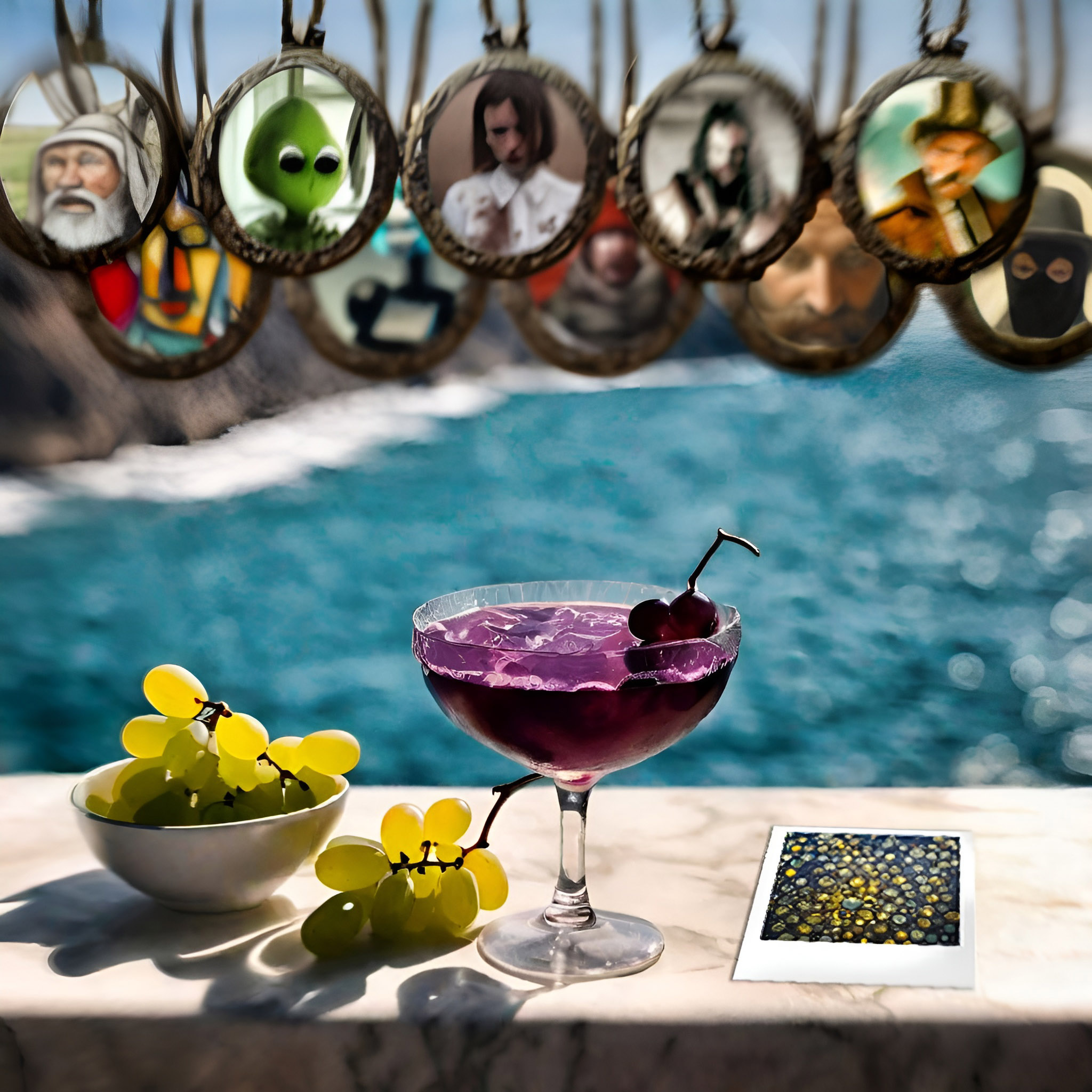
I was actually planning to visit the Daydreamer next, but as I continue walking, I notice a room that seems completely unfamiliar. It’s luxuriously furnished and opens onto a terrace overlooking the sea. In a deck chair, I spot a somewhat paunchy, hairy man in swim trunks. Next to him, within arm’s reach: a cocktail and a bowl of grapes.
“Delicious!” he exclaims. “Wonderful!”
“Who are you?” I ask, taken aback. He belongs to me?
“Mmmh, you’ve got to try these! They taste absolutely heavenly!”
He nudges the grapes toward me. I’m usually wary of people who end every sentence with an exclamation point. But I decide to try one anyway. They taste… not bad.
Aaaahh, the sun on my belly—could there be anything better? And this panorama! The breeze isn’t too shabby, either! That hint of salt in the air!”
“What is your task?” I ask. “Enjoooying!” he answers, drawing out the syllable with pure relish. “Living life to the fullest! Delighting in everything beautiful, delicious, and blissful! Speaking of which…” he says, turning his equally hairy back to me, “could you maybe give me a quick scratch between the shoulder blades?”
I hesitate for a second, but then I do him the favor.
“A little lower, yesss! Oh, that’s the spot, ooohh, just right, wonderful!”
Even the smallest things can be deeply pleasurable, I think, and I thank the Enjoyer for the inspiration.
I step back into the corridor. It’s time to proceed to the next section. Toward the end, it becomes brighter: the floor, the walls, the pillars, the ceiling—it all seems to radiate light from within. Here, I encounter further facets, but these are transpersonal: they are the parts of the soul that transcend our limited human perspective, anchored in Great Being itself.
Finally, I call out into the bright, gentle glow in front of me, “I would like to speak with the ‘Division-Exceeding Unifying Sense.‘”
“Yes?” responds a voice that is neither male nor female, neither old nor young. My gaze, heart, and mind expand. It’s as if I am floating in the void between galaxies, becoming cosmic space itself. It’s as if I were a silent flame in the innermost heart of all things—a power whose curiosity and love create the world and its beings, granting creation and all creatures the freedom to unfold in any direction they choose, to have every experience they seek, and even, if they wish, the freedom to forget who they truly are. It feels like the memory of the Source of all existence. “What is on your heart?” the voice asks gently.
A long conversation follows. On one hand, it’s a bit staggering to view one’s own small life from a cosmic perspective; on the other, it puts every problem, worry, and fear into perspective. And it feels simply wonderful to bathe in all-encompassing compassion.
One last step remains: to take all aspects of myself—including the transpersonal—out of the corridor, to leave it behind as the meditation ends, and to step into life not necessarily as a better person, but perhaps more at peace with myself… and thoroughly “soulful.”
I enter the corridor every night before falling asleep. It’s become second nature to click off the bedside light, settle in, close my eyes, and try to reach the corridor that bridges the two worlds. Yet, as always, the images in my mind remain faint; it feels more as if I am laboriously constructing the corridor than simply entering it.
When my twin brother died, it was as if someone had cut out half my heart. In an instant, the world lost its vibrancy, and a milky veil settled over everything.
But then, almost a year later, one night in a dream, I was suddenly surrounded by colors I couldn’t name—colors that shouldn’t even exist. Amidst this shimmering, fluorescent splendor, he suddenly stood before me. He looked different, older, and he no longer wanted to be called Dignus, but Korian. In the dream, I knew nothing of the suicide, but I felt my brother had something vital to tell me, something concerning him, me, and this corridor between worlds where our encounter took place.
Waking up was terrible. I was still buoyed by the closeness of him, and I knew immediately how profoundly significant my dream experience had been. But simultaneously, a bitter, angry despair crawled up within me because, despite all my efforts, I could no longer remember what Dignus—what Korian—had said to me. There were only the colors, those insane, impossible colors. The content of his words, even the world-corridor itself: they had lost their contours and dissolved like a footprint in the desert sands. I doggedly racked my brain, and of course, I fervently hoped the dream would repeat itself—in vain. The door had swung shut again. Nevertheless, I made it a habit to review the few memories I had left while falling asleep. Perhaps the door to this corridor, the door to Korian, would open for me once more!
The dream never returned—not in the nearly thirty years that followed. Oh, I did begin to dream of corridors; corridors of every kind, shape, and texture—but not the corridor. And not of my twin brother.
Eventually, I began to write down the fragments of my memories from those failed, tangled dream-corridors that blocked my way to the real one—hoping to rid myself of them. I used the postcards for this: the large bundle of old postcards from all over the world that Dignus had once bought at a flea market and given to me. There were 398 of them, as it turned out, and I was supposed to read one each day for a year, imagining he was sending them from his secret travels. That had seemed too crazy to me then; I only started reading them once he had actually departed on his journey.
When I decided to write down those false dreams of misleading corridors to finally be rid of them, I did it on those cards—between the lines, around the exotic stamps and postmarks, on every free inch. And then, sometimes, I turn them over to look at a yellowed photo, and it feels as if those are the very colors in which that forgotten corridor between worlds once glowed.