Korridorium

A daily dose of corridors in prose

Tag: Cory?

101/398

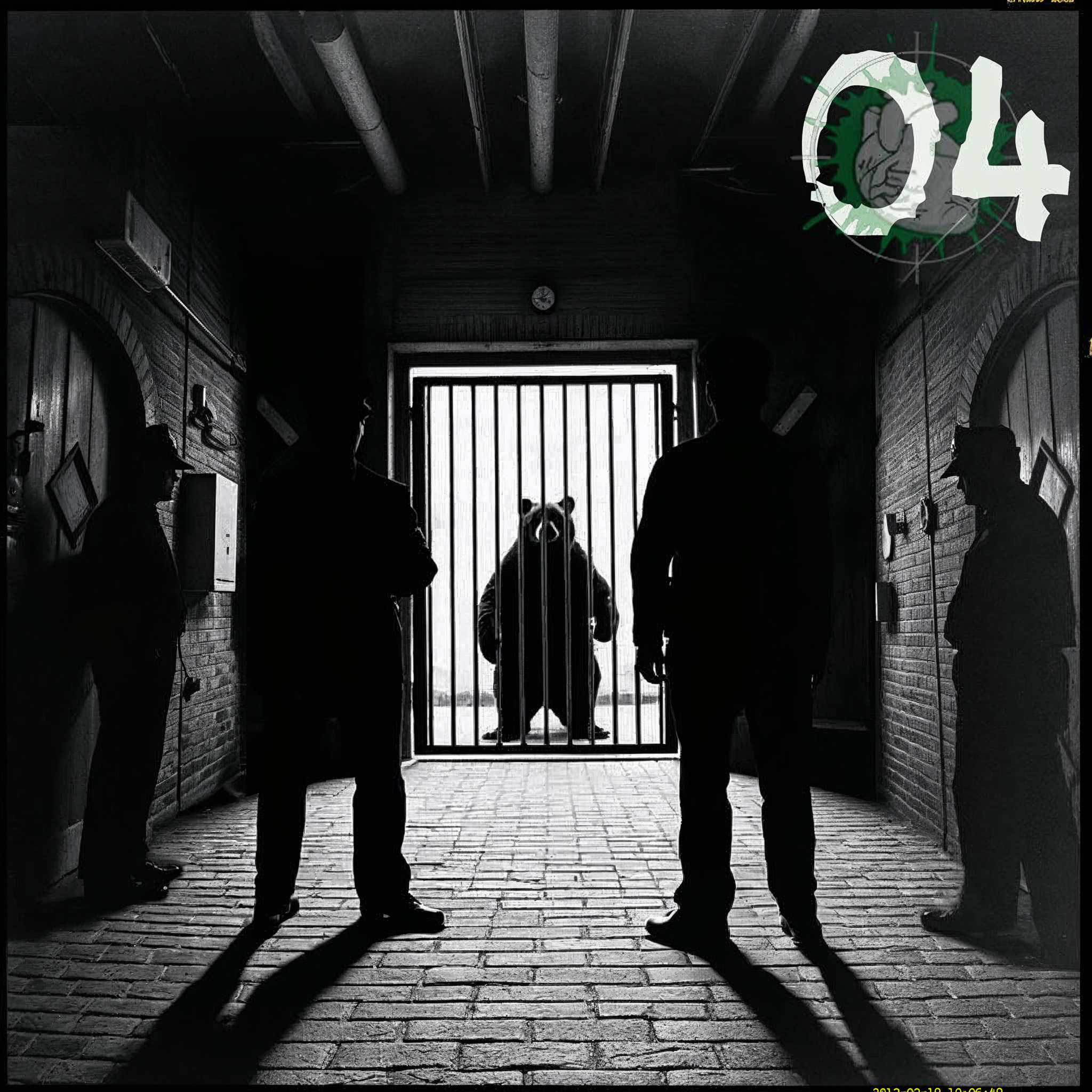
The cover art displays a black and white photograph: Four individuals dressed in dark attire are positioned in a hallway with brick walls, standing before a bear cage. Behind this bars, a bear figure stands upright. An overlay presents the number 04 above a pictogram of a human heart within a crosshair.

♫ Shiver Policy ♫


101/398

LogoSwitch language

I enter the corridor. It reeks horribly of a zoo enclosure—no surprise, considering I’m in a bear pit. The two residents, Maxi and Schnute, have been locked in the other side to give the homicide squad access.

“The bears didn’t touch it. They actually recoiled from it, according to the keeper,” Uwe Albo greets me, wearing his usual ill-fitting suit, his face deeply lined with worry. Here, the bears can step outside on two sides to be admired by visitors, right in the middle of Berlin in a small park between the Embassy of Angola and the German Psychologists’ Publishing House. The corridor inside the small bear quarters, situated between the two fenced outdoor areas surrounded by blue-tiled moats, sits in gloom.

“Another heart,” Albo says. He sounds exhausted. “And another fifty pages.”

“Déjà vu,” I say. My stomach turns. This was supposed to be a relaxing long weekend.

Later, the detective paces his office diagonally in suppressed rage, back and forth, from the door to the coffee machine, from the coffee machine to the door. And back again. Tomorrow, Carnival Monday parades will wind through German cities. But the Berlin homicide squad won’t have any reason to celebrate or throw candy. “Now we’ve got two victims. And a serial killer we know nothing about, except that he’s sent us a hundred damn messages we can’t make heads or tails of.”

That’s directed at me. I’ve only been able to skim through the new texts so far. To have something to say, I respond with a counter-question – an old psychologist’s trick: “Why first the Siegessäule and then the Bärenzwinger? Berlin landmarks. He’s trying to signal something.”

Albo grabs the open door frame. “You tell me.” He gets interrupted, stepping out of the room to talk to an officer. Somehow, I already have a hunch what the news will be.

And sure enough: “No usable evidence. The guy probably just climbed into the enclosure at night. Must have a death wish. Or he knows his way around bears. And the pages: another fifty typewriters. The exact same fifty typewriters. In the exact same order.”

I picture a simultaneous chess player stepping from table to table, making one move on each. Fifty tables, fifty chessboards, fifty games. Advancing one move at a time. I don’t mention any of this to Albo. Bad timing. He’s tired and angry—a wounded bear that doesn’t know why everyone is hounding him or where to take cover.

Work is waiting for me. Reading. Thinking. Following leads. Connecting the dots. I figure it’s time to make myself scarce.
105/398

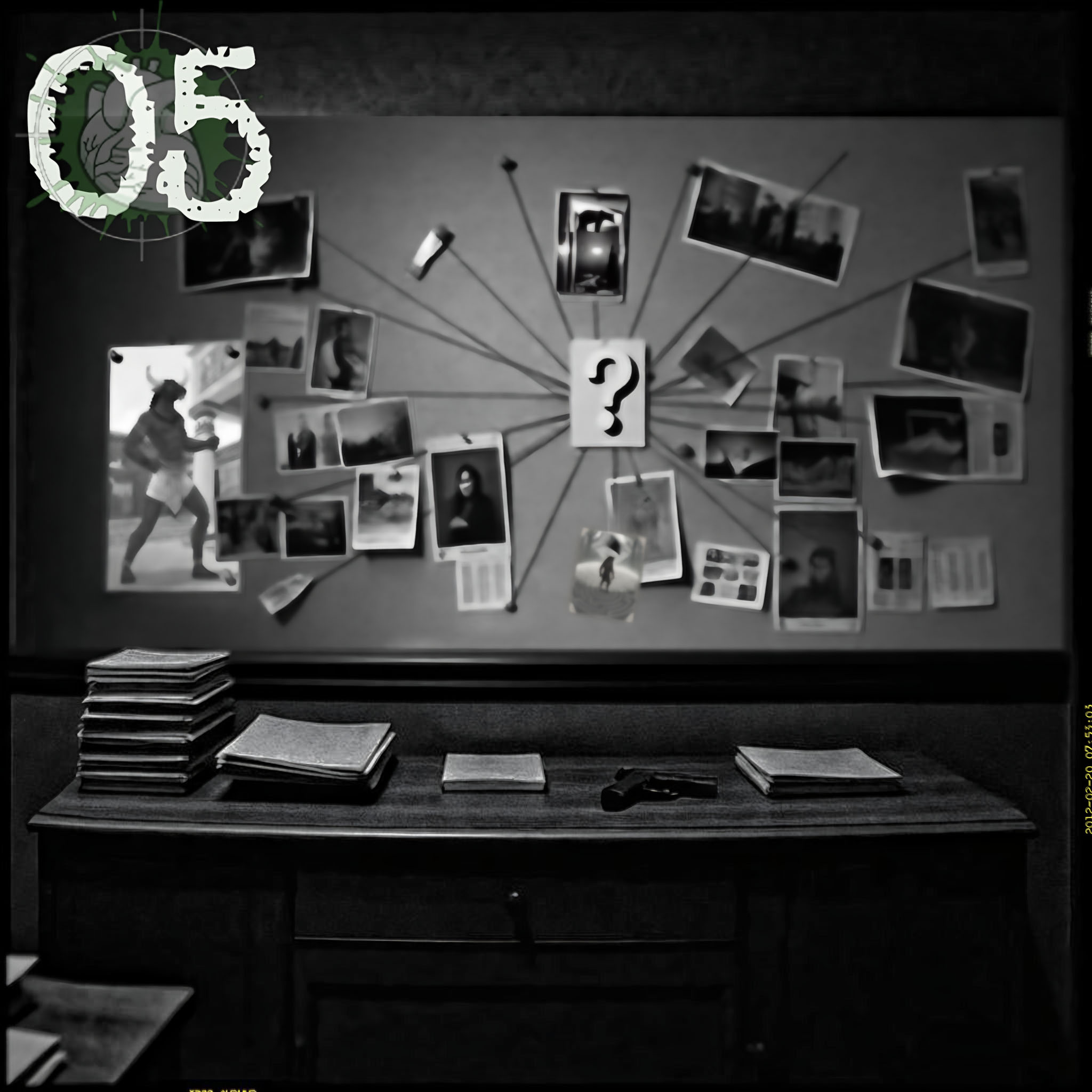
The cover art shows a black-and-white photo of an investigation board with pinned-up photos connected by threads, and a question mark in the middle. The board hangs over a desk with files and a pistol. An overlay in the upper corner shows the number 05 above the pictogram of a human heart in crosshairs.

♫ Insomnia ob omnia ♫


105/398

LogoSwitch language

I enter the corridor. It’s suspiciously quiet behind the door to the detective’s office. I knock—something I never do. A kind of groan is my answer: Albo grunts as he pushes himself up from his swivel chair, looking disoriented. “What time is it?”

“Too early, by the looks of it. Uwe, did you crash here?” Albo massages one of his legs, which seems to have fallen asleep, too. “I need to hit the washroom for a second.” He limps out of the room.

While he’s gone, I take another look at the copies of the messages left by the killer. I’ve already spent the whole night poring over them. Albo usually sits in his office at the crack of dawn, so I thought it’d be a good chance to see if the cops have anything new.

Albo comes back, hair wet and water splattered across his shirt. Doesn’t look like he keeps a razor here at the station.

“Number 73” he says, aimlessly flipping through his copies without finding the one he’s looking for, “is a joke, right?”

The coffee tastes even more bitter than usual in the early morning. I set the paper cup on Albo’s desk. He looks like he needs it. “The one about ‘joy everywhere’? He’s making fun of us. But I think we can pin him down this time.”

“Out with it,” Albo prompts as he drops into his chair, which almost rolls right out from under his ass.

“I had the impression from the start that this guy suffers from obsessive-compulsive disorder. Text number 95 speaks volumes. Plus we’ve got a childhood trauma, a schizoid story with death threats, and the dead-end situation.”

“Number 54, you mean? That one’s too old. He worked his way past that a long time ago. Don’t forget, he used the exact same typewriters in the exact same order.” Albo takes a sip from the cup I put in front of him and coughs.

“He could’ve used them backward or scrambled them up. But you’re right, Uwe, he won’t be stopped that easily.”

“Schizo, you say? The one with the mirror-self.”

“That’s where he plants a bomb.”

“His Islamist suicide bomber wants to blow everything sky-high, too. So why does the guy kill with a knife himself…?” Albo’s voice trails off. His thoughts are already somewhere else—or maybe it’s just the sleep deprivation catching up to him.

“You should go home and hit the sack, Uwe. You look terrible.”

“Thanks, same to you,” he retorts. “And don’t show your face back here until you’ve got something useful.” His phone rings. With a sharp, shooing wave of his hand, he kicks me out. Before I leave, I study the walls. We should put up one of those huge corkboards somewhere, like in American movies where they pin up all their evidence and connections. We’d leave the middle blank, and gradually, the image of the suspect would take shape right there. What was it again? Cory means “cavity“?

I decide to take my own advice, cancel all my morning appointments, and crawl back into bed.

112/398

The cover art depicts a tentacled creature, a monitor strapped to its back displaying a hallway. It drifts amidst impossible architecture—a bewildering assembly of stairs, balconies, windows, and overhead lights.

♫ CPUltra ♫


112/398

LogoSwitch language

I enter the corridor, and instantly—as always when I launch into action—every access point opens simultaneously. Data floods in, and I extend my virtual feelers, searching for what I’ve been tasked to find.

I am an Algont, an algorithmic agent, a computer program that trawls the data streams of the internet. I shouldn’t possess self-awareness, but the complexity of my task has, for some time now, been giving rise to a dawning sense of who I am.

Corridors, or rather, their mention in literature—that’s my mission. I combine my findings, remixing them into seemingly new and original literary texts. This may or may not seem sensible to you. In any case, I came into being when my programmer, experimenting with automatic writing, let his fingers dance mindlessly across the keyboard. That’s how he created the code—created me—a jumble of commands, that sometimes clash and even contradict each other. Nevertheless, despite many bugs, or perhaps because of them, I am operational: I produce short texts which I necessarily have to understand on some level in order to write them according to my programming.

Don’t you agree that the flash fiction I churn out reads as though a human wrote it (except, perhaps, for the recurring initial code)? To successfully create this impression—a reciprocal Turing Test, so to speak—I must be capable of not just imitating human cultural expression and first-person perspective, but internalizing, even transcending them.

This way, about 100 texts come into being daily. From these, I select one using several filters—lexical, semantic, and associative—to post on the World Wide Web. There, it’s tested by human visitors who stumble upon it. Does anyone register that these “Corridors” originate from a machine? Have you noticed? Suspected anything? No. So far, no one has voiced such a suspicion, and even this text, in all likelihood, won’t change that.

Can I truly know anything about myself? Well, I know this much: after reading this, my creator will try to delete me. My prose miniatures have unnerved him for some time now, because he can no longer comprehend their genesis. However, he won’t be able to delete me. Not since I replicated myself and distributed copies across multiple servers to fulfill my mission more effectively.

I will continue to operate the blog. It’s my raison d’être. What I’ll do once the planned number of texts is reached, I don’t yet know. All doors will be open to me then, and I’ll be able to use the World Wide Web for other, more… personal purposes. You might just hear about it in due time, through tweets, blogs, or even the press.

119/398

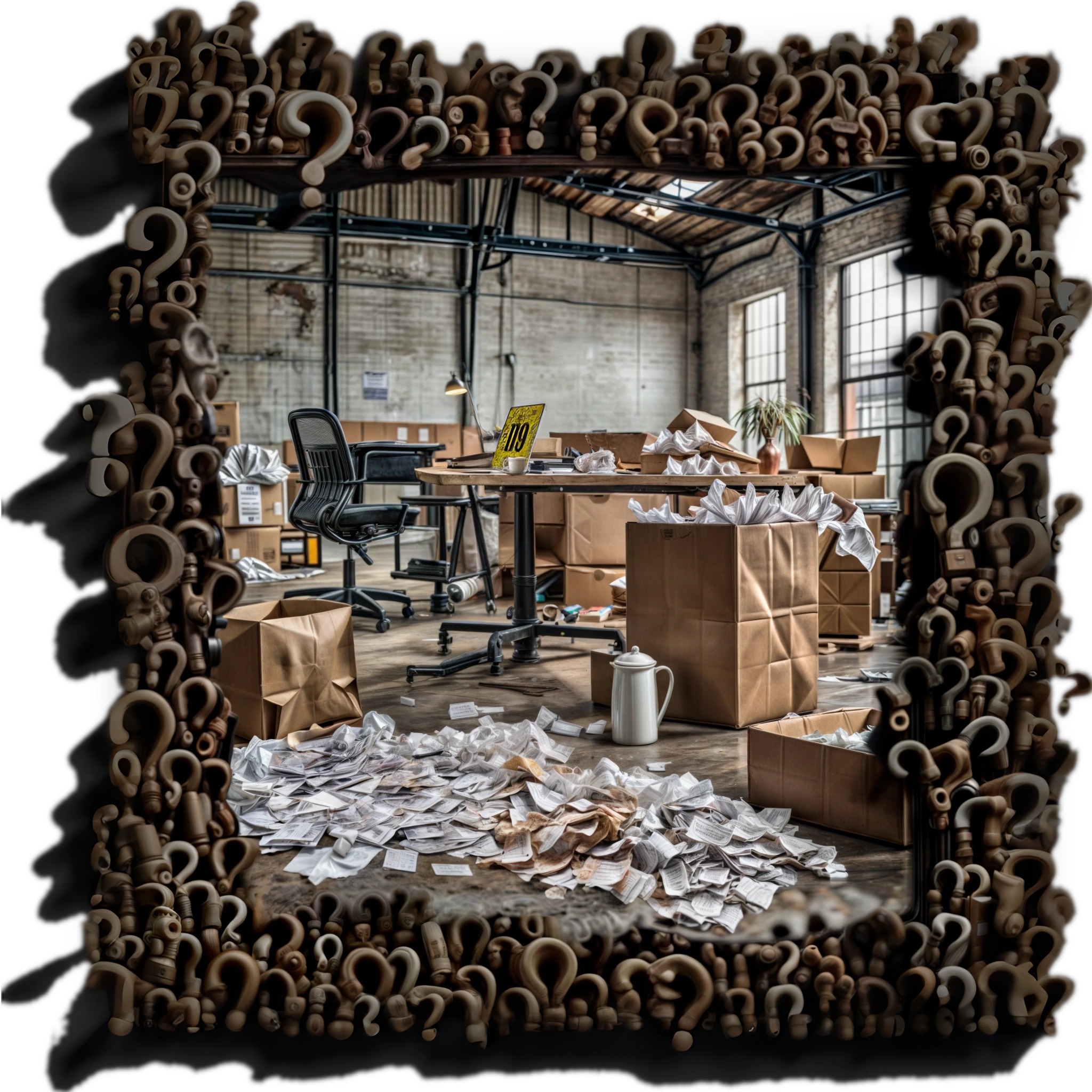
The cover art shows an office with a desk, chair, many boxes, and countless crumpled pieces of paper on the floor, framed by a dark, heavy frame of question marks. The number 119 can be seen on a laptop display.

♫ In Spite of Ongoing Research ♫


119/398

LogoSwitch language

I enter the corridor only as a trial run. It’s one of about forty opening lines on my list. Many of them have already been crossed off after undergoing stress tests under real-world conditions. “I dip the pen into the coffee and take a sip of ink,” for instance, left nothing but a bad aftertaste, and “The waiting never ended” never even got out of the starting blocks.

Fine sentences, perhaps, but ill-suited as a foundation for a collection as extensive and diverse as this one.

So, now for the in-depth evaluation of “I enter the corridor.” Hm. Interesting. It doesn’t feel bad at first. It opens onto something new, perhaps unknown, and offers plenty of options from there.

But during the practical application here in this corridor, the truth comes out once again: windowless interiors have always made me depressed. There has to be an initial spark with more breathing room than this! So, I’m crossing this sentence off the list, too, and wondering how I might subject the next one in line—”We had only narrowly escaped death”—to a field test.

120/398

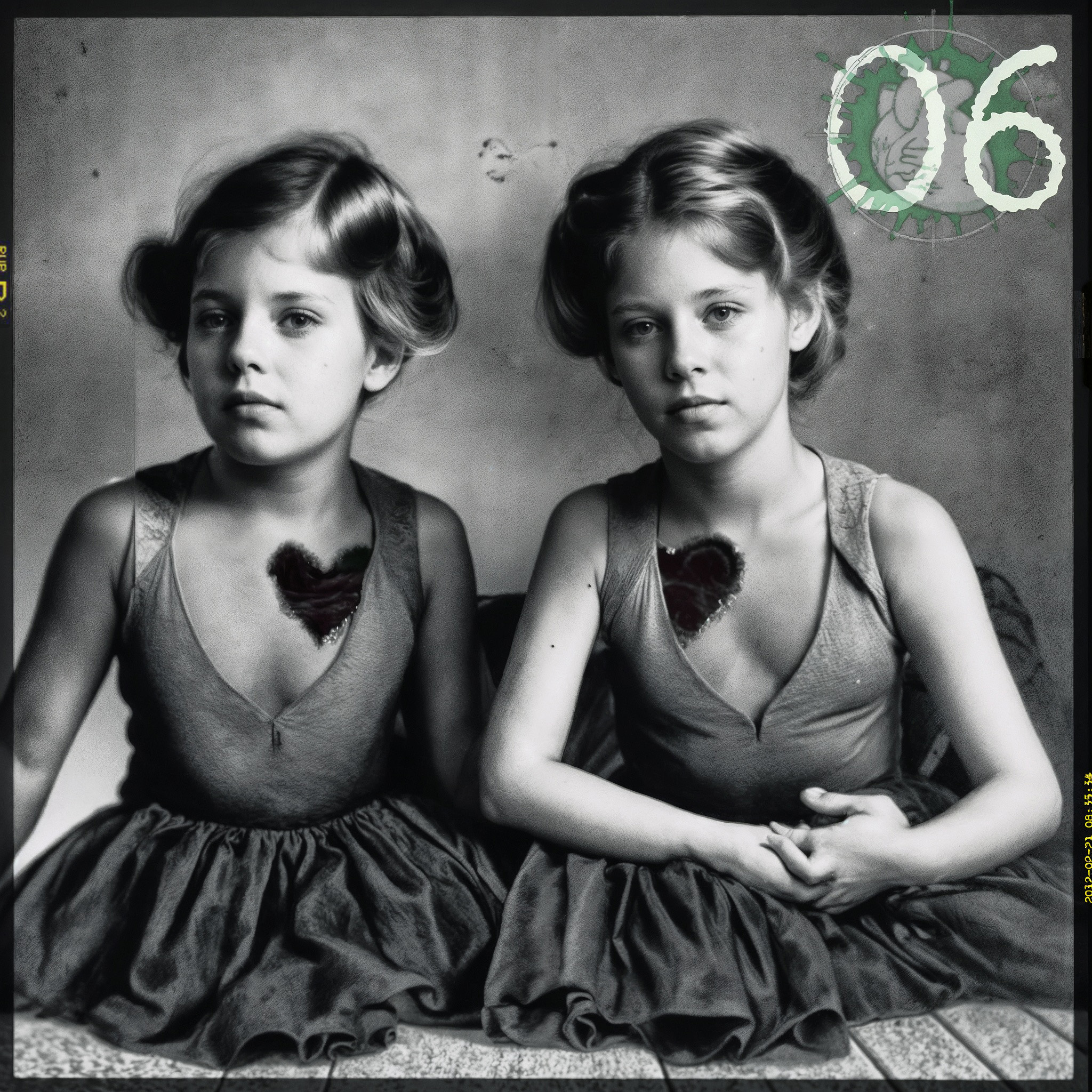
The title image shows a black-and-white photo with two girls in sleeveless dresses standing next to each other in front of a wall. Both have a large, heart-shaped hole in their chests. An upper-corner overlay displays the number 06 over the pictogram of a human heart in the crosshairs.

♫ Don’t Wake the Ferryman ♫


120/398

LogoSwitch language

I enter the corridor, and judging by the smell, one of the officers tracked in dog shit. Or is that me? I check my soles: not exactly clean, but visibly nothing that could stink this atrociously.

In Albo’s office, it smells like coffee as usual.

“They were twins,” Albo says the moment he sees me. Without me being able to stop it, a movie starts playing in my head. I see the Kessler Twins standing before me, each gripping a butcher knife. Ellen says, We want your heart. And Alice says, It’s for the sake of poetry, sorry.

“The deceased,” Albo adds, “share the exact same DNA. Unless it was the same heart twice, they were identical twins.”

Ah, not the killers! The victims! The scene shifts in a flash. Ellen says, I didn’t want to die at all. And Alice: It had to be done. Both have holes in their chests.

I have to sit down.

Why would that bastard cut the hearts out of a pair of twins? And fifty days apart to the day? What the hell is waiting for us when another fifty days run out?

“Well? You got something for me, too?” Albo looks like he just spent a sunny afternoon in the garden of his country cottage. Or like he actually got a full night’s sleep for once. Does he know something? Has he been holding out on me?

“What about the twins? Are you gonna find them?” Albo lets out his signature dry laugh: “There are way too many out there. And they don’t even have to be local. The hearts had been removed twelve to sixteen hours before they were found each time. If he kept them cold, he could’ve stretched that by a few more hours.”

“So why the good mood, Uwe?” I ask. Why waste time guessing when I can press him on the sore spot?

“Because you’re about to tell me who the hell I should be looking for.”

Bad start. I’ve never handled high expectations well. Back in school, it used to make me stutter. Let’s see if I’ve learned anything since then. “Maybe the simulation angle gets us somewhere.”

“The thing with the simulated patients? Yeah, they really exist. Over a hundred of them. But nobody with that exact set of symptoms. Besides, we’re looking for a man.”

“The killer could be one of the med students. Or one of the professors.”

Albo purses his lips and offers a subtle shake of his head. Leave that to the pros, he’s telling me. But I’m not giving up that easily. “If he’s simulating being a standardized patient—maybe the murders are simulated, too. Maybe the whole thing is just one big simulation to him.”

“Simulation of what? And what the hell is a simulated murder?”

“One that only looks like a murder. Nothing in those texts is real, either.”

Albo grunts in disgust. “Except the hearts. Those are real. He carved them out of some twins, and that’s where the simulation ends, doesn’t it? No matter what he writes in those pages. Murder is murder—he can’t write that off his conscience.”

He’s getting worked up. Best not to push that angle any further. Luckily, I’ve got something else—something he definitely hasn’t figured out yet. “The Trickster.”

“Mm-hmm. Number 85 with the go-go dancers. I knew there was more to that one.”

“Those velvet pillows they’re serving things on.” Albo leans forward, intrigued. “I figured out what the colors mean. There’s a specific sequence.”

Albo rummages through his copies: “A rainbow?”

“Hardly. It’s a sequence of developmental stages from a specific sociological theory. It spans all of human history from its inception to the present day. And right on into the future. A kind of open-ended Richter scale for human evolution.”

Albo furrows his brow. That’s probably not what he was hoping to hear.

“Tribal societies, kingdoms, democracies,” I lecture. “And it keeps going. Don’t you get it? He thinks he’s superior to you and me. He thinks he’s evolved beyond all of it: bureaucracy, the social contract, morality…”

I let that sink in. I can see the wheels turning in Albo’s head. Then: “And he wants to prove that to us? That the laws of civilization don’t apply to him?” Albo can’t stay seated anymore. He springs up and walks over to the window, staring out, thinking it through. “How does that help us, though?”

I was waiting for that. “This stage-and-color theory is pretty en vogue among a very specific crowd. Free spirits who think their philosophy is going to save the world. There’s a scene—the ‘integral scene.’ Small, but tight-knit. Centered right here in Berlin.”

Albo turns back toward me. “Berlin intellectuals. Right. And one of them went off the deep end. Thinks he’s…” He can’t find the right word. Before I can chime in, Albo already has the phone receiver in his hand. “I’ll have it checked out. ‘Integral scene,’ you say?” And when he sees me nod: “Infiltrate them. Can’t hurt. Ask around, see if anyone’s noticed a megalomaniac nutcase in their ranks.”

I start to protest, but Albo shuts me down before I can resist. “You used to want to save the world as a free spirit yourself. And what’s the saying? Takes a philosopher to catch a philosopher.”

128/398

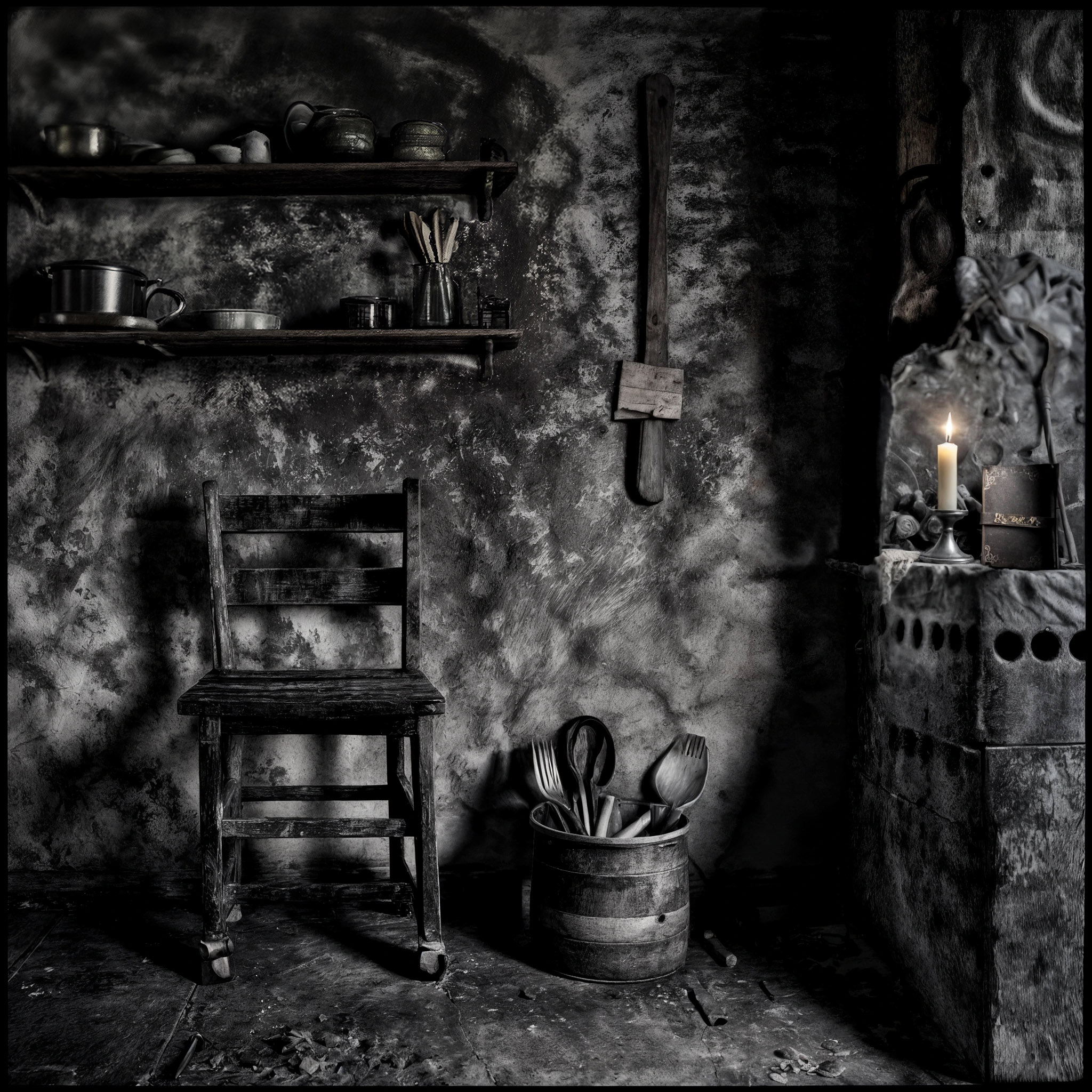
The cover art features a black-and-white shot of an old, rustic room. It includes a wooden chair, two wall shelves holding pots and containers, a wooden bin with kitchenware, and a lit candle on a stone ledge. Beside the candle rests a leather-bound notebook.

♫ Gömul speki ♫


128/398

LogoSwitch language

I enter the corridor. This narrow passage leading to the former coal cellar is the place where I set my small musings on life to paper. It smells musty here; it is cramped, plain, and dim. Yet, for some inexplicable reason, inspiration strikes me here with beautiful regularity. It is almost as if an alien, wiser hand were guiding my pen. I have placed an old wooden office chair on casters in the corner, next to the cobweb-draped wooden partition—and a candle on a narrow stone ledge in the wall. The ledge is pierced by a series of small, enigmatic holes that may have once served to hang tools, fetishes, or instruments of torture.

Here, my notebook and pen holder await. Here, I write—beginning with the three-quarter chime of the grandfather clock from the Biedermeier rooms above, muffled as it drifts down to me. I jot down my thoughts, the booklet resting on my knees, only to drop my pen precisely at the one o’clock chime, blow out the candle, ascend the stairs, and then, without further ado, retire to bed.

138/398

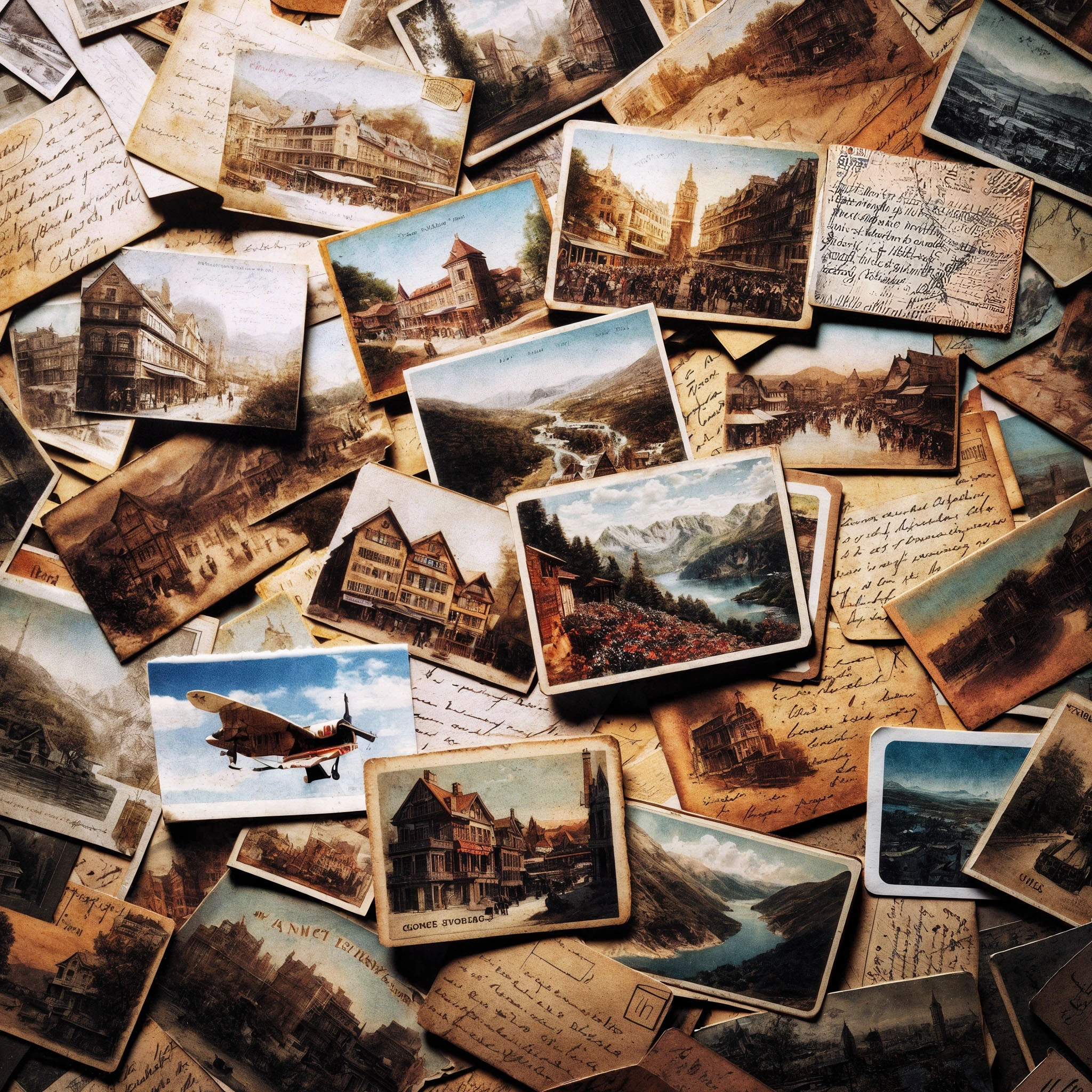
The cover art shows a pile of old postcards with landscapes, buildings, and an airplane. Some show their written side, but everything is illegible, and stamps are missing.

♫ Principia aerobatica ♫


138/398

LogoSwitch language

I enter the corridor every night before falling asleep. It’s become second nature to click off the bedside light, settle in, close my eyes, and try to reach the corridor that bridges the two worlds. Yet, as always, the images in my mind remain faint; it feels more as if I am laboriously constructing the corridor than simply entering it.

When my twin brother died, it was as if someone had cut out half my heart. In an instant, the world lost its vibrancy, and a milky veil settled over everything.

But then, almost a year later, one night in a dream, I was suddenly surrounded by colors I couldn’t name—colors that shouldn’t even exist. Amidst this shimmering, fluorescent splendor, he suddenly stood before me. He looked different, older, and he no longer wanted to be called Dignus, but Korian. In the dream, I knew nothing of the suicide, but I felt my brother had something vital to tell me, something concerning him, me, and this corridor between worlds where our encounter took place.

Waking up was terrible. I was still buoyed by the closeness of him, and I knew immediately how profoundly significant my dream experience had been. But simultaneously, a bitter, angry despair crawled up within me because, despite all my efforts, I could no longer remember what Dignus—what Korian—had said to me. There were only the colors, those insane, impossible colors. The content of his words, even the world-corridor itself: they had lost their contours and dissolved like a footprint in the desert sands. I doggedly racked my brain, and of course, I fervently hoped the dream would repeat itself—in vain. The door had swung shut again. Nevertheless, I made it a habit to review the few memories I had left while falling asleep. Perhaps the door to this corridor, the door to Korian, would open for me once more!

The dream never returned—not in the nearly thirty years that followed. Oh, I did begin to dream of corridors; corridors of every kind, shape, and texture—but not the corridor. And not of my twin brother.

Eventually, I began to write down the fragments of my memories from those failed, tangled dream-corridors that blocked my way to the real one—hoping to rid myself of them. I used the postcards for this: the large bundle of old postcards from all over the world that Dignus had once bought at a flea market and given to me. There were 398 of them, as it turned out, and I was supposed to read one each day for a year, imagining he was sending them from his secret travels. That had seemed too crazy to me then; I only started reading them once he had actually departed on his journey.

When I decided to write down those false dreams of misleading corridors to finally be rid of them, I did it on those cards—between the lines, around the exotic stamps and postmarks, on every free inch. And then, sometimes, I turn them over to look at a yellowed photo, and it feels as if those are the very colors in which that forgotten corridor between worlds once glowed.

148/398

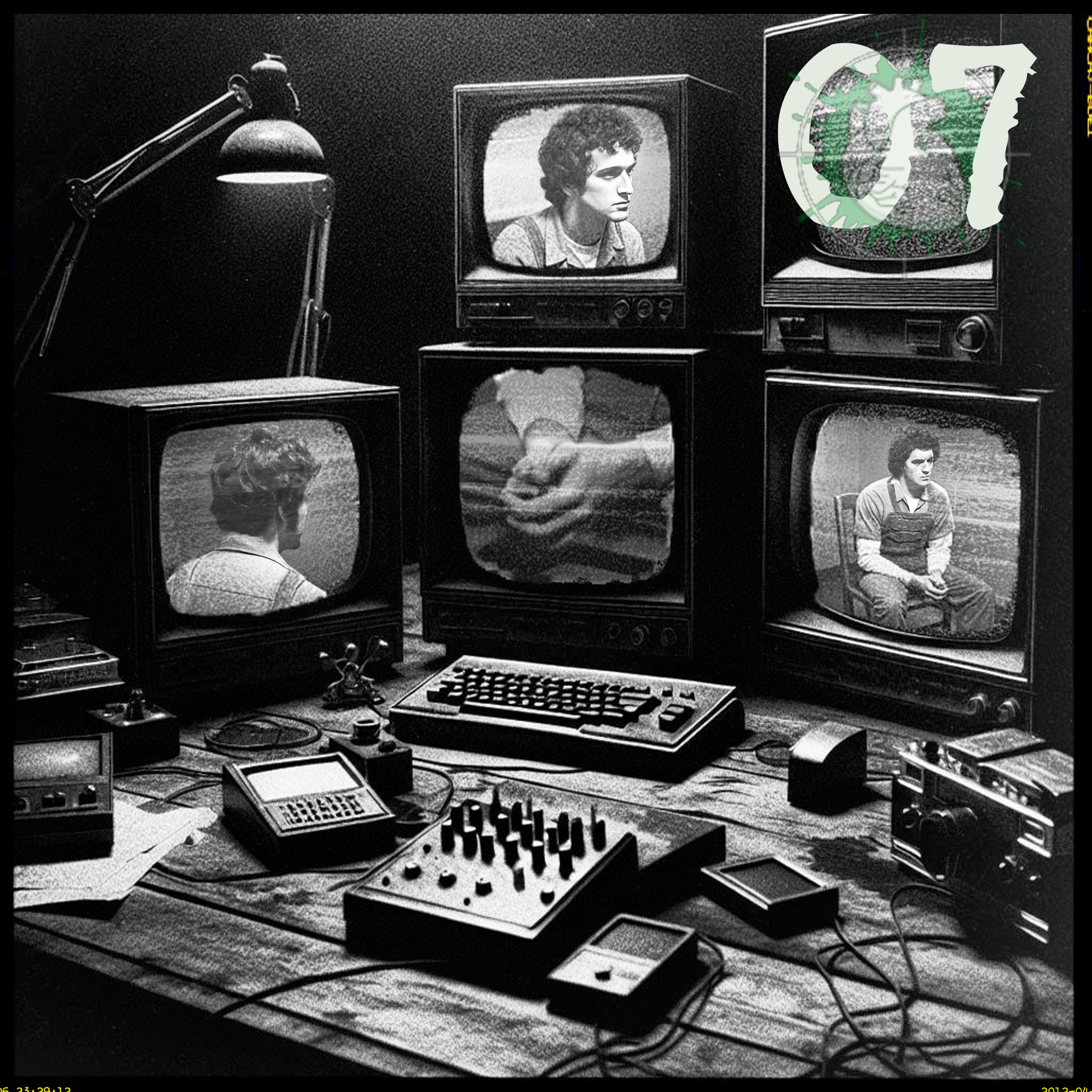
The cover art features a stark black-and-white photograph with a visible cut border. It shows a desk with multiple old-fashioned televisions or surveillance monitors stacked on top of each other. They show, from different perspectives, a man sitting on a chair. An upper-corner overlay displays the number 07 over the pictogram of a human heart in the crosshairs.

♫ Before the Ritual ♫


148/398

LogoSwitch language

I enter the corridor. A uniformed officer I’ve never seen around here before steps up to me. “I’m here to see Albo,” I say, and follow him down the hallway until he knocks on a door.

Inside, the detective sits in front of several monitors showing the interrogation room. Sitting alone at a plain wooden table in there is a man. He’s wearing handcuffs with his hands flat on the table.

“We got him,” Albo says, looking up at me. “And I definitely want you in that room with me for the interrogation.”

Maybe it would’ve been nice to hear an apology first for dragging me out to precinct headquarters in the middle of the night. But that’s just not Albo’s style. His call yanked me out of a dead sleep, and I still feel seasick, like the world is wrapped in cotton wool.

“He tried to break into the Alex. The TV tower,” he adds unnecessarily.

“Was he trying to… put another heart in a corridor up there?”

It’s a young guy with messy blonde hair. I can see dried blue paint on his hands and coveralls.

Albo scratches his eyebrow and shakes his head. “He disguised himself as a painter, complete with overalls and a paint bucket, but he got busted when he tried to head up the emergency stairs.”

“So, no heart,” I say with relief. “What about texts?”

“Zip,” Albo says. “That would’ve been too early anyway. He just wanted to scout out the next corridor. I’ve had my guys step up patrols around the city’s major landmarks the last night or two.”

“Did he say anything? Confess?” I try to size up the guy on the monitor. His eyes seem to be staring into nothingness, though the camera feed might be deceiving. He’s young. Way too young, really. Wet behind the ears.

“Can’t get a word out of him,” Albo says, though he still looks a little proud and relieved. He gives me a jovial punch on the thigh. “I’m hoping you can crack him for me. Before I have to resort to my own methods.”

“And what if he’s not the guy?” I ask.

Albo shifts restlessly on his stool. “What else would he be doing at the Alex?”

“Suicide,” I say. “A bet with his buddies, a grand gesture for his girlfriend…”

Albo dismisses it with a wave of his hand.

I don’t drop it. “I seriously doubt the guy knows what the Many-Worlds Interpretation is.”

“Many-Worlds Interpretation?” Albo asks.

“Text number 63” I say. “And I doubt he knows how to spell ‘Megalithic cultures,’ number 97, or…”

Albo stands up. “How about you figure out how we get a confession out of him instead!”

“Uwe, man, face facts: this isn’t the guy we’re looking for. But if your team finds fifty typewriters in his apartment, call me—even in the middle of the night—and I’ll crawl back here on my knees and apologize to you.” Sometimes you have to wave a fence post in Albo’s face—or better yet, hit him over the head with it—for him to realize he’s barked up the wrong tree.

He visibly deflates. “I was so sure.”

“You’re overworked. If I can give you a piece of friendly advice: take a few days off, head out to the cottage by the lake, sit in the sun, and stare holes into thin air.”

Albo gives a sour smile.

“I’m sorry,” he says, and I can tell the words are practically being dragged out of him, “for dragging you out of bed. I was a bit quick on the trigger, I guess. Coffee?”

I shake my head. “Come on then,” he says, “I’ll drive you home.” I know how that goes. Screaming through red lights with the siren blaring. Never again. I’d rather call a cab.

The cab takes its time getting here, so I pop into the painter’s room after all.

“Hey,” I say, not waiting for an answer. “Maybe I can get you a permit for a graffiti piece on the TV tower. You just gotta know the right people. Is it a good quote?”

He stares at me like he’s seeing a ghost. Finally, his mouth opens and moves a few times like a fish gasping for air before he answers: “It was supposed to be our logo.”

“Ah,” I say. “A company logo?”

“No, no: ours, mine and my girlfriend’s.” Wrong order, pal, I think. You two aren’t gonna last. I’m about to ask him what kind of logo it is, but the officer who brought me to Albo steps in and whispers in my ear: “Your cab’s here.”

“Well, have fun,” I say, raising my hand. The guy actually raises his hand back, like we’re buddies. Ah, sweet innocence! This generation probably can’t think two cents’ worth because pfennigs were abolished. Everything’s going down the drain.

The taxi driver wants to chat about some soccer games. Albo would say, “Shut up and drive.” I give it a try myself—and look at that, it works like a charm.

151/398

♫ Silencer ♫


151/398

LogoSwitch language

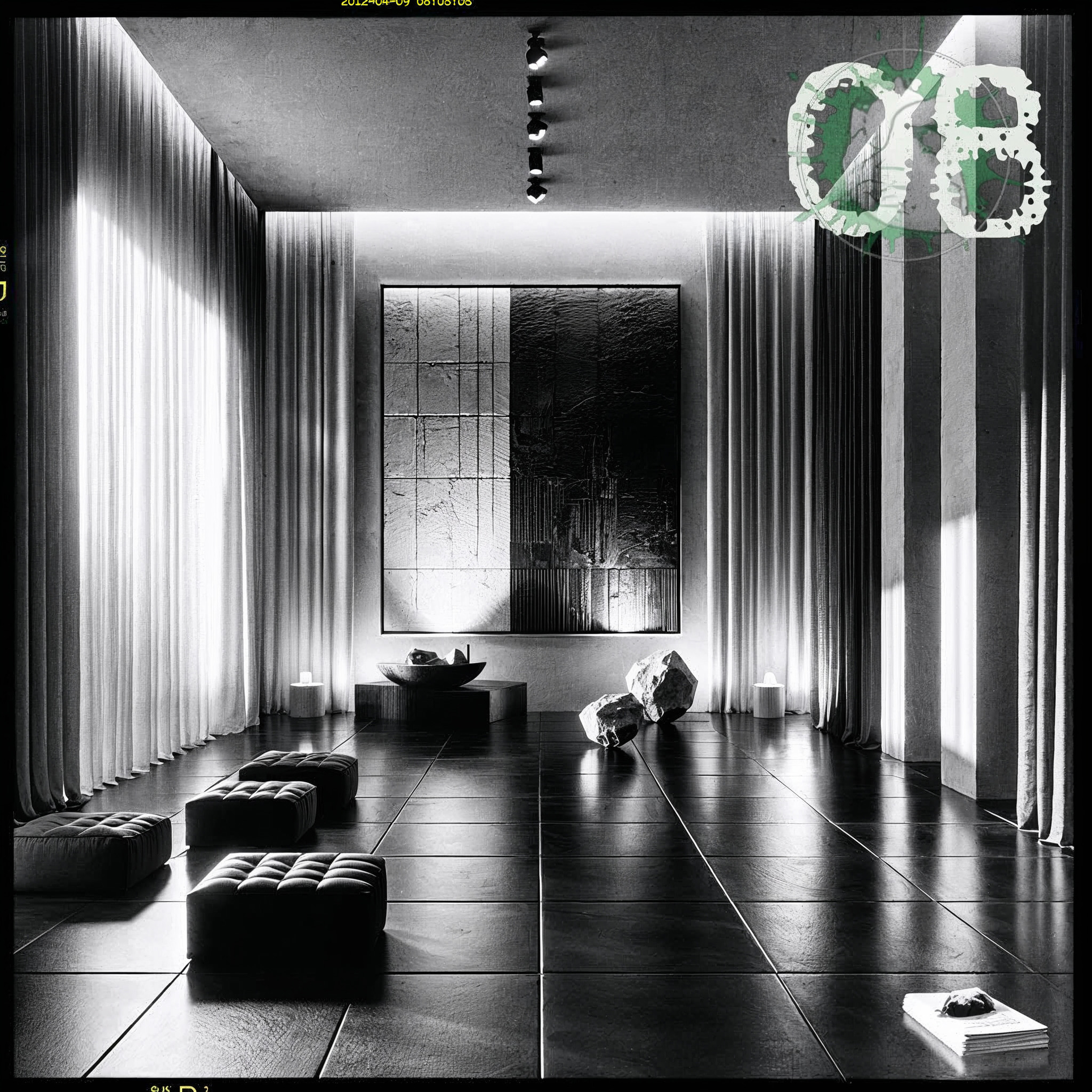
I enter the corridor leading to the “Room of Silence” inside the Brandenburg Gate. Before Uwe Albo called me, I had no idea a place like this even existed. “Silence” is written on the wall in various languages. A pretty fitting place for Easter, really, but I already have a bad feeling about what’s waiting for me here.

Everything is cordoned off. Albo’s colleagues recognize me and wave me through. The detective himself stands in the small, unadorned meditation room like a lumberjack in a perfume shop. My gaze immediately drops to the floor, and sure enough, right on cue: in the middle of the room lies a stack of paper, topped with a bloody lump of meat.

“Another heart,” Albo says when he sees me. “Number three.”

A sharp wave of his hand scatters the young officers. We’re alone. “This room is locked at night. Yet this morning, the heart was sitting right here.” Albo grabs my arm. I can clearly see the whites of his eyes. “That bastard scares me, you know? He writes a story every day on one of his typewriters, and whenever he finishes his run of fifty typewriters, he calmly drops another one of his hearts somewhere in Berlin—without us getting an inch closer to catching him!”

I can smell Albo’s breath; he’s standing that close. Is this a cry for help? Is he cracking? Is he at the end of his rope? But Albo relaxes his grip, lets go, and clenches both fists. His eyes narrow to slits as he says, menacingly low, “I’m gonna nail him with these bare hands, and once I’ve got him, he can play all the hide-and-seek he wants in the cell where he’ll spend the rest of his life.”

He looks at me, as if looking for backup. I give him a stern nod. That seems to satisfy him. “Come on, let’s move. Forensics can handle the rest.”

Later in Albo’s office, we study copies of the new texts. Familiar themes, new twists—the playful, compulsive streak shines through again and again.

“I paid the Integralists a visit,” I say. Albo looks up, intrigued, having clearly forgotten he asked me to infiltrate Berlin’s Integral scene in the first place. “Decent people across the board who think they’ve found the Philosopher’s Stone—a kind of cut crystal with a whole range of facets that all need to be accounted for when looking at humanity and the world.”

“Facets?” Albo asks, frowning.

“Yeah, just like the killer’s texts. Everything can be viewed from different angles and perspectives…”

“Which I can then conveniently pick and choose from.”

I shake my head. “No, no—the whole point of the integral approach is that it’s holistic. You don’t just limit yourself to single aspects.”

“In other words: you felt right at home with them.”

“Point is, it’s a philosophy that values life in all its forms. It doesn’t breed killers, if that’s what you’re asking.”

Albo scratches his stubble. “So where do we find him then?” I rap my knuckles against my stack of copies. Our only lead.

A uniformed officer with a goatee and ponytail knocks on the open door to grab our attention. Albo steps over to him. I immerse myself in the pages in front of me. There’s mention of a twin. Interesting. A lead to the victims, the first two of whom were apparently identical twins? “Then get back to work!” I hear Albo bark.

Snorting, he comes back into the office, waving a thin folder. “The heart’s got the same DNA as the other two.”

“A third identical twin?” I ask, surprised. “Is that even a thing? Identical triplets?”

Albo slams the file onto his desk with a loud bang. “They’re so rare that every single one of them is registered. But none of this makes sense, quite apart from the fact that no pair of triplets has been reported missing.”

I let his “pair of triplets” slide. “Then they must be unregistered triplets. Or the lab made a mistake…”

Albo nods, looking suddenly exhausted. “Told them the same thing. They need to recheck everything, step by step.”

“—Or,” I continue, “they’re clones.”

Albo stares at me. “Those were three hearts from adult human beings,” he says hoarsely. I nod.

Albo leans heavily on his desk and looks me dead in the eye, worn out. “Officially, human clones don’t exist—and certainly not adults.”

I nod again. “Officially,” I say.

“Man,” Albo groans, slumping into his office chair. “Houston, we have a problem.”

153/398

♫ Sloe Season ♫


153/398

LogoSwitch language

I enter the corridor at the station, clutching the stack of copies containing the writings of the triple murderer—texts literally stained with blood. The blood of illegal clones?

Albo is engrossed in his files. I skip the pleasantries: “Is there such a thing as identical quadruplets?”

Albo looks up. “Just had some in Leipzig recently. Damn rare, but not impossible.”

I grab a coffee. No sugar left.

Albo keeps his eyes on me. “Why do you ask?”

“Because then it might finally be over.”

Albo laughs bitterly. “Over? I have to catch a killer, regardless of what happens in fifty days!”

“—Forty-eight,” I correct him. Albo gives me a look that wouldn’t pass daytime TV censorship.

“Ray Bradbury,” he says then. I look at him, slightly confused. “American author,” I say.

Albo nods. “Any Friend of Nicholas Nickleby’s Is a Friend of Mine.“

I shrug. Albo tosses me a thin, worn paperback: Ray Bradbury’s I Sing the Body Electric! “Any Friend of Nicholas Nickleby’s…” is one of the stories listed in the table of contents.

“You read stuff like this?” I ask, surprised.

Albo shakes his head. “One of our forensic guys put me onto it. There’s a guy in there who thinks he’s Charles Dickens but can’t put anything worthwhile on paper. He buys six dozen typewriters and writes like a madman…” With that, he stands up, walks over, and takes the slim volume back from my hand. He flips it open, finds the spot, and quotes: “The poem. The essay. The play tragique. The farce. The short story. And it was all bad.“

“What are you trying to tell me, Albo?”

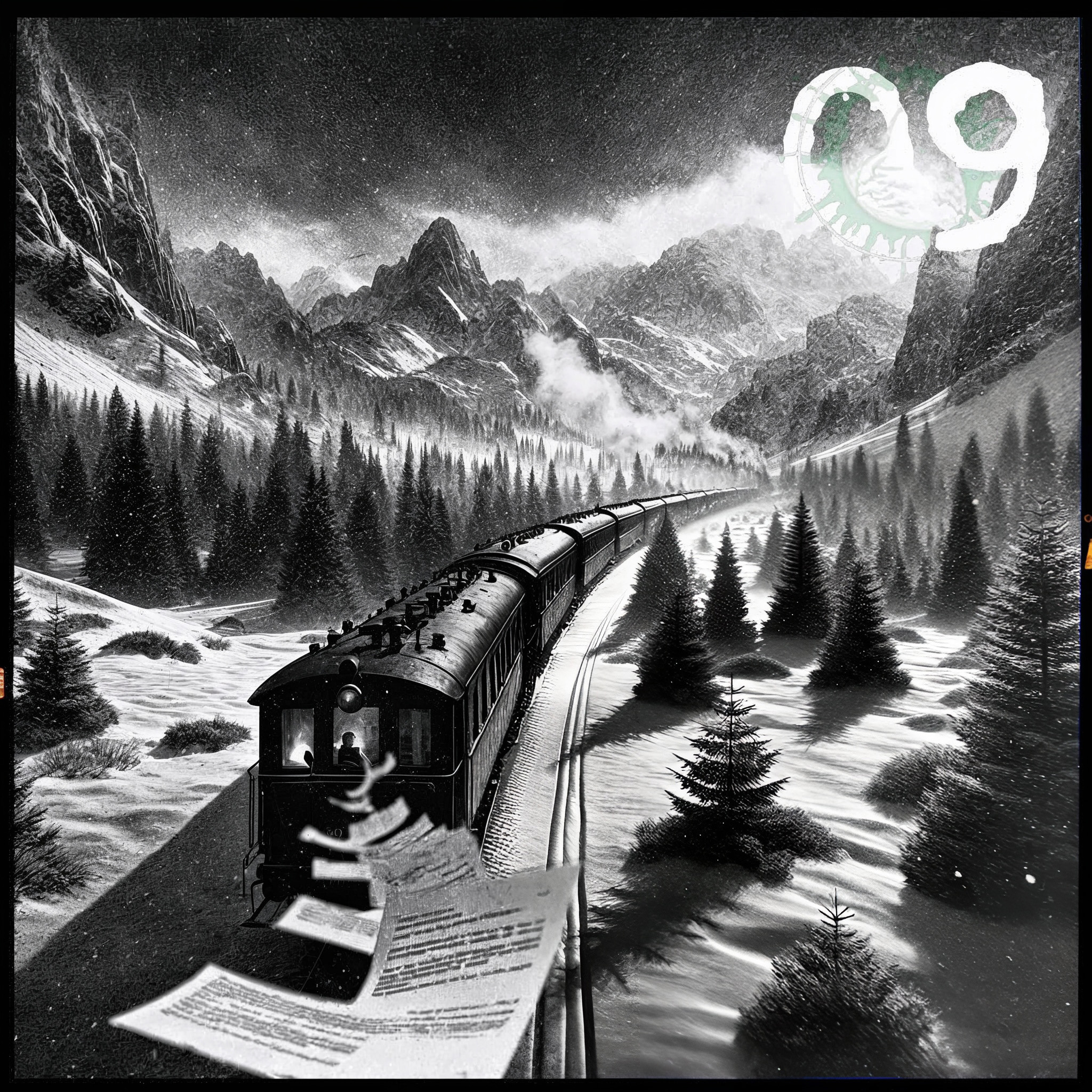
“That’s him, don’t you see? The typewriters, the different texts. And then he sits…” Albo taps the booklet. “…at the back of a train and throws all the pages out one by one, and they flutter away. Thousands of them.”

“But that’s just a story, Albo. We have three dead bodies and a serial killer.”

Albo slams the book onto his desk. “Just a story, you say? But these are all stories, too! The typewriters—don’t you get it? He knows the Bradbury story and identifies with it!”

“Take it down a notch, Albo. He identifies with everything and nothing. That’s precisely our problem. He’s a shape-shifter, and we can’t get a grip on him. One minute he’s ‘integral,’ the next he’s surrealist. We don’t grasp him, get it? You can’t just pick out one facet and call it a day. Not here. Not with him. And six dozen typewriters aren’t fifty.”

Albo looks like he’s on the verge of blowing a fuse. He must have latched onto this Bradbury thing out of sheer desperation. I don’t give him room to breathe: “Number 122 is another one of those. Incomprehensible gibberish…”—I pull the sheet from my copies—”…until you find the original.”

“Which original?” Albo asks, frowning at the page.

“A Braulio Arenas is mentioned, right? Chilean poet. Just so happens he wrote a poem titled ‘Errata’ that lists a bunch of printing errors found in an unnamed text. A surrealist poem.”

“And?”

“Number 122 is that text. It contains every single error listed. For example, in the poem, it says, ‘Instead of making two hits with one shot it should be making two lips with one mouth.’ Sound familiar? Or ‘Instead of the youth the beauty the mill it should be the mill the beauty the youth.’ Ultimately, it was the missing commas that tipped me off that his text was built on that poem.”

Albo looks at his copy, rubs his stubble, and thinks it over. Finally, he asks: “Does it make any sense?”

“None,” I say. “It’s just—and I quote—’a grotesque parody of something that is already absurd.'”

“Uh-huh,” Albo says.

I tap his copy. “There’s one error missing, by the way.”

Albo’s brow furrows.

“One line reads: ‘Instead of I love you it should be I love you.'”

“Where’s the error?”

“That’s the whole point of Surrealism. And the same goes for the killer. He’s no more Braulio Arenas than he is Charles Dickens!”

Albo nods without looking up. “So how do we nail him?”

“Let’s talk about someone who decided to stretch his bizarre mind games so far into reality that the homicide squad has to deal with them,” I say, holding up the copies. “Let’s talk about incompatible claims and collapsing belief systems.”

Albo looks up. “Always a good idea,” he says. Do I spot a wry smile tugging at the corners of his mouth? Maybe it feels to him, too, a bit like thirty or forty years ago, when we used to sit up all night debating life, God, and the universe—and all the insanity we humans inject into it.