Korridorium

A daily dose of corridors in prose

Tag: Cory?

7/398

The title image shows a bedroom with a large bed on a platform, surrounded by various singing bowls and a gong stand, to which an orange hose leads. A digital button displays a mechanical lotus flower.

♫ Druckluft-Meditation (Uraniborg-Mix) ♫


7/398

LogoSwitch language

I enter the corridor—if you can even call it that, since I’m actually just on Skype. It’s my conversation partner who, balancing his laptop on one hand, enters the corridor to take me into the studio. It’s called “Uraniborg,” and I’m supposed to call him Tycho. It’s a good fit; the so-called “Sky Fortress” was once the research station of the Danish astronomer Tycho Brahe.

This Tycho, however, is a musician, and that’s exactly what I’m after: music for my texts. Even though I can’t see him right now because the webcam is giving me shaky images of the hallway, I repeat what I’d already told him in my email into my headset mic, just to be safe: “I can’t pay you anything for it, though.”

“You already mentioned that,” he says, opening a soundproofed door. I had expected walls of synthesizers and a mountain of instruments. But the large, bright room with panoramic windows overlooking the garden doesn’t contain much more than a keyboard and a lounger surrounded by singing bowls of various sizes. The keyboard apparently slides out from under the desk, which has a piano stool in front of it. Judging by the many cables on the table, I assume a computer gets plugged in there—likely the one Tycho is using to carry me around right now.

“Welcome to Uraniborg,” Tycho says. He sets the laptop down on the table, his face obscuring the arrangement of singing bowls.

“What’s that lounger behind you? Is it for a sound massage?” I ask curiously.

“Oh, that,” he says. “We’re currently experimenting with soundscapes controlled by the skin resistance of whoever lies on it. It’s powered by compressed air.” Sure enough, behind him, among the singing bowls, I spot a strange mechanism with hoses and chrome-plated pistons.

“Want to give it a go? Let’s see what kind of skin resistance the computer has…” The image tilts. Tycho sets his laptop on the lounger. Through the built-in webcam, I now have a view of some of the singing bowls. The pneumatic percussion begins to hiss and thump, the mallets start moving, and soon I’m enveloped by hypnotic, celestial sounds.

“Before I drift away completely…” I shout into my headset. The image tilts again, and Tycho—having switched off the machinery—sets me back on the table. He puts on a headset of his own. The singing bowls behind him ring out for a long time.

“How did you find me?” he asks. “Were you at one of my sleep concerts?”

I shake my head. “Not yet. I heard a few of your tracks online and thought…” Well, what was I thinking?

“You want to publish a series of texts and you’d like a little soundtrack for each one. Did I get that right?”

“Exactly,” I say.

I’d already shared a bit about myself in the email: that I work in the building office of a small town in eastern Germany. I don’t have much to do there, but I want to look busy because my desk is right by the hallway to the restrooms and my colleagues can see me clearly through the glass door. I told him I’ve started typing up little “architectural” sketches on my computer, inspired by the applications on my desk and the inspections and site visits I sometimes get to attend.

And that I need music for the publication. A lot of music. Something unusual. Music that creates images in the mind.

“The Labyrinth of the Minotaur,” he says thoughtfully.

“Yes. I sent you a few Minotaur fragments because that was a theme at your sleep concerts and it comes up in the music. It connects us, in a way. I want to start on November 11th.”

“So soon?” My heart sinks when he says that. I’m way behind in my search for music. But having little soundtracks for the stories is my dream, and I don’t want to give up on it that easily.

“What is a young woman like you doing working as a clerk at a building office?” he asks.

“I studied History and Oriental Studies in Leipzig, but I couldn’t find work as a historian. So… anyway, my colleagues can’t know anything about my literary ambitions.”

Tycho gives a mischievous little smile. “I won’t tell a soul. How many blog posts do you have ready?”

“I have the first batch, and I always want to be at least three or four ahead. As for the music, I’d give you totally free rein. It’s going to be almost… uh, four hundred blog posts in total.”

He doesn’t flinch at the number. Good sign.

“I know,” I continue hurriedly, “that it’s a massive ask, but…”

Tycho interrupts me. “No problem. We have tons of material in the archive, all unpublished. Some of it is pretty weird, though.”

“That’s perfect,” I say.

Tycho grins at my enthusiasm. “We’re talking drones, soundscapes, compositional sketches, studio sessions, field recordings, psychoactive sound experiments…”

“Well, that all sounds great! As for the length, I thought the music should last roughly as long as it takes to read the text aloud—so, anywhere from seven seconds to seven minutes.”

“Okay. Send me a text, and twenty-four hours later, you’ll have a soundtrack for it. If you don’t like a piece, you’ll get a different one.”

Wow. I can’t believe my luck. My blog is getting a soundtrack! But…

“But what,” I ask worriedly, “if you don’t like my texts?”

Tycho keeps a straight face. “Won’t happen. I’m not going to read them. I’ll just check to see how long they are.” He shows no emotion—except for a little glint in his eyes that tells me he isn’t being entirely serious.

And that’s how I ended up with a unique little soundtrack for each of my literary architectural sketches.

30/398

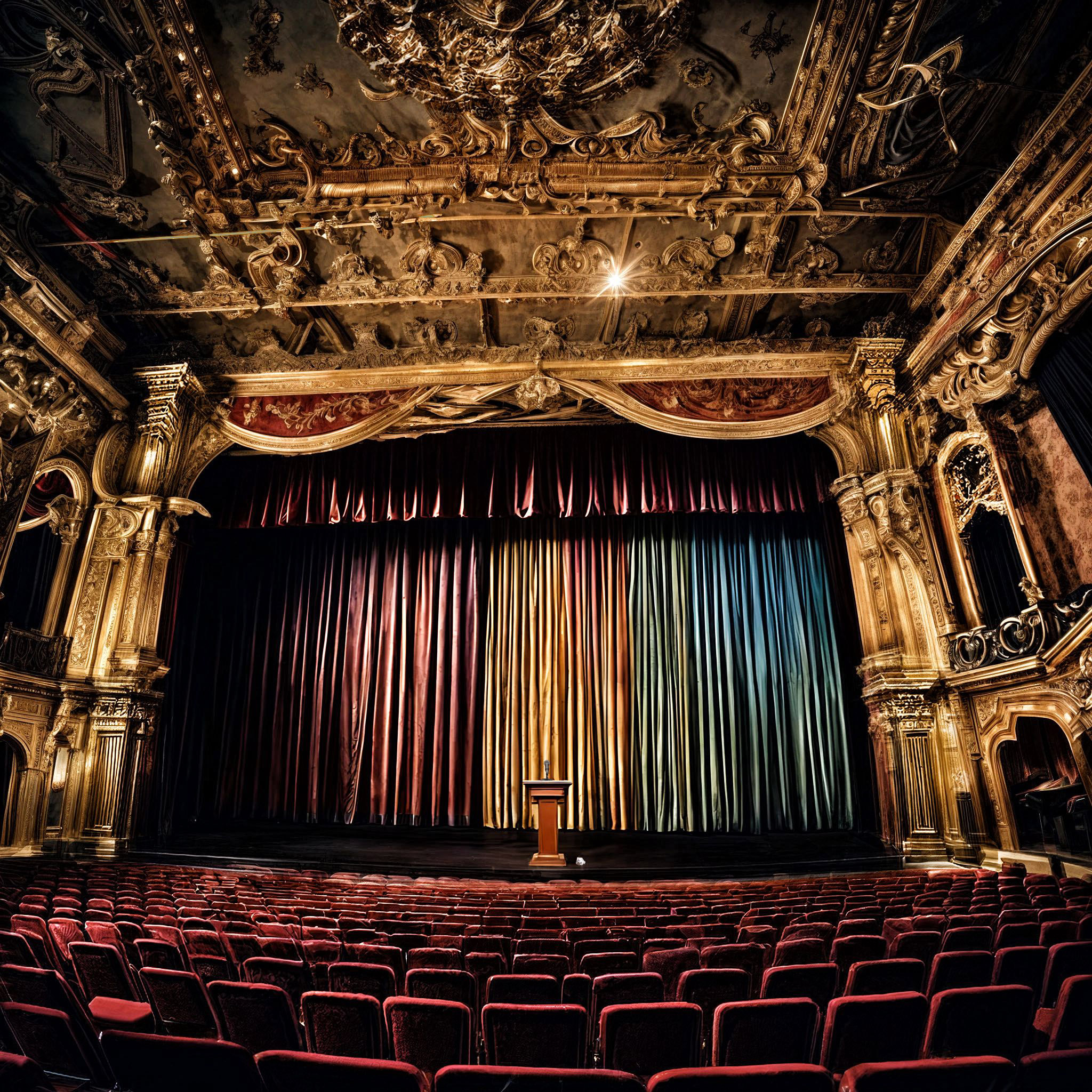
The cover art presents a grand theater stage, complete with a closed, vibrant curtain and a lectern positioned before it. Ornate golden stucco work and rows of crimson seats in the audience area frame the scene. A crumpled piece of paper rests beside the lectern.

♫ This Sudden Hallelujah Feeling ♫


30/398

LogoSwitch language

Ich betrete den Korridor. Einen Moment lang bin ich hier allein. Gleich wird mein Name fallen, und ich soll raus auf die Bühne treten. In dem Leih-Frack ist mir unwohl. Mit der Fliege am Revers fühle ich mich wie zum Karneval verkleidet. Ich schwitze in dem ungewohnten Aufzug, und als ich mir über die Stirn wische, sind da auch schon die ersten Schweißperlen. Oh Mann! An meinen Magen darf ich gar nicht denken. In was für eine Situation habe ich mich da nur gebracht?

Dabei – führe ich mir vor Augen – habe ich doch jetzt endlich die Chance, viele Menschen zu erreichen. Aber was soll meine Botschaft sein? Wie kann ich etwas bewirken, nicht nur in der Presse und der Blogosphäre, sondern ganz handfest in der Welt?

Meine schweißfeuchten Finger umklammern den Zettel in der Fracktasche mit den Notizen für meine Dankesrede. Dies ist die eine von zwei Versionen, die offizielle, die ich mit den Veranstaltern absprechen musste. Die andere, inoffizielle, geheime, existiert nur in meinem Kopf: eine Kampfansage ans Establishment, ein flammender Aufruf gegen die allgegenwärtige Profitgier und die gedanken- und gnadenlose Plünderung unserer Ressourcen – der literarischen und mythologischen, die unseren Kindern eine leere und lebensfeindliche Welt aus lauter Worthülsen hinterlassen wird.

Vom Saal her dringt gedämpft Applaus zu mir. Gleich ist es soweit. Ich zerknülle den Zettel in meiner Fracktasche und innerlich den mit den Notizen für meine Revolutionsrede. Ich werde da rausgehen, den Korridor verlassen und die Bühne betreten, um dann einfach das zu sagen, was mir einfällt – indem ich mit dem Satz anfange, den vermutlich alle von mir erwarten, ob sie’s wissen oder nicht, und dann improvisiere, wie ich es immer tue, immer schon getan habe.

40/398

The cover art depicts an antique, open book resting on a wooden table. Behind it, a circular room's wall is lined with towering shelves, packed to capacity with venerable tomes. The book itself mirrors this scene, presenting an illustration of a book-laden chamber, yet minus any single volume left ajar.

♫ Malträtarium ♫


40/398

LogoSwitch language

I enter the corridor. Its walls are composed almost entirely of book spines. (Not like Matej Krén’s installations or Ishwori Sapkota’s bookstore in Kathmandu, where books are seamlessly stacked horizontally, sometimes even mirrored to create endless, walkable tunnels, but densely packed vertically.) Tilting my head, I study the titles in bewilderment. Someone seems to have made a self-referential joke here.

Back to back, there are, among others,

  • • Im Korridor der Sterne by Alexander Kaiser,
  • • Le deuxieme couloir by Georges Barguet,
  • Corridor of Storms by William Sarabande,
  • The Corridors of Time by Poul Anderson next to
  • Corridors of Time: 1,700,000,000 Years of Earth at Grand Canyon with an introduction by Carl Sagan,
  • Harlan Ellison’s Dream Corridor Volume 2 (where is volume one?),
  • Korridor der Blicke by Camill Leberer,
  • Corridors of Light by Eleanor G. Brown, Ph. D.,
  • Petits bruits de couloir by Philippe Guillard,
  • Il decimo corridoio by Marco Meini,
  • L’ultima stanza in fondo al corridoio by Alessandra Brisotto,
  • Corridor de Vie by Camille Sabatier,
  • Corridors of the Mind by Caroline Lupfer Kurtz,
  • The Locked Corridor by Marilyn Ross,
  • The Corridors of Fear by Clarissa Ross,
  • Der lange Korridor – ein Arztroman by Catherine Cookson,
  • The Silver Corridor by Harlan Ellison (here perhaps? No!),
  • The Golden Corridor by Jody and Ric Hornor,
  • The Smoky Corridor: A Haunted Mystery by Chris Grabenstein,
  • La mistica nel corridoio by Luis Casasús Latorre,
  • the comic Sunset Corridor by Régis Franc,
  • Der dunkle Korridor – klassische Erzählungen aus Russland by Hanjo Kesting,
  • Yao ye hui lang by Julian Lee,
  • Night Corridor by Joan Hall Hovey,
  • Corridors by Candlelight: A Family Album with Words by Anna Clyde Plunkett,
  • The Black Corridor by Michael Moorcock,
  • Flucht aus dem Grauen Korridor by Clark Darlton,
  • Les couloirs de l’espoir by Corinne Vomscheid,
  • The Corridor of Mullah-Kajar and Other Stories by J. M. DeMatteis and Roy Thomas,
  • Tumithak of the Corridors by Charles R. Tanner,
  • Il corridoio del flaminio by Aldo Toffoli,
  • Le corridor des invendus by Bernard A. Chevalier,
  • Corridor of Whispers by Edwina Noone,
  • Dans les couloirs du labyrinthe by Emmanuel Matateyou,
  • Echoes Down the Corridor by Arthur Miller,
  • L’Enfant dans le corridor by Yves Thibault,
  • L’homme assis dans le couloir by Marguerite Duras,
  • The Ladies of the Corridor by Dorothy Parker,
  • Série X numéro 122: Dans le couloir de l’amour by Tracy O’Toole,
  • La fille au bout du couloir by Jacqueline Remy,
  • Ma princesse disparait dans le couloir by Brigitte Smadja,
  • Mon père s’est perdu au fond du couloir by Philippe Garnier and
  • La vérité est au bout du couloir by Sam Richez,

in between are the scripts for

  • Korridoren by Bengt Bratt, Bengt Forslund and Jan Halldoff,
  • White Corridors based on a novel by Helen Ashton,
  • Corridor of Mirrors after a novel by Christopher Massie,
  • Les couloirs du temps: Les visiteurs 2 by Christian Clavier and Jean-Marie Poiré,
  • Whispering Corridors by In Jung-ok and Park Ki-hyung, as well as
  • Shock Corridor by Samuel Fuller

plus a videocassette with the handwritten label

  • En el corredor de la muerte,

then more books:

  • Corridor Ecology: The Science and Practice of Linking Landscapes for Biodiversity Conservation by Jodi Hilty et. al.,
  • Corridor naar de Rijn by Hen Bollen,
  • Ostpreussen und der Polnische Korridor by Wilhelm Deuticke,
  • Club és folyosó: Politikai ötletek és rajzok by Kálmán Mikszáth,
  • The Persian Corridor and Aid to Russia by T. H. Vail Motter,
  • Le couloir de Dantzig by Général Gomer Castaing,
  • Der Gansu-Korridor: Barbarenland diesseits und jenseits der Großen Chinesischen Mauer by Sabira Stahlberg,
  • L’île au bout du corridor by Marie-Antoinette Liaudet,
  • Camera e stanze – Il corridoio racconta by Lucio Tisi,
  • Kubismus im Korridor by Susanne Friedli et. al.,
  • a photography collection Corridors of the World – Places of Arrival and Departure,
  • Au-delà du couloir by Marion Brodeau,

even a volume titled

  • Analysen der Verkehrswege zwischen dem alten und neuen Bundesgebiet dargestellt am Korridor Rhein-Main und Thüringen-Sachsen,
  • from Die Spannenden Geschichten Nr. 71, Deutsche Panzer durchbrechen den Korridor,
  • Le corridor des Panzers (Vol. 1 et 2),
  • Korytarz śmierci by Perry Moore,
  • Through the Corridor by Daniel Pearson,
  • Running Through Corridors: Rob and Toby’s Marathon Watch of Doctor Who by Robert Shearman and Toby Hadoke,
  • Im Korridor geht der Mond by Elisabeth Alexander,
  • “Cunning passages, contrived corridors”: Unexpected Essays in the History of Lexicography by Michael Adams,
  • Voci dal corridoio dell’anima by Trotti Nardo,
  • Le couloir de la pieuvre by Olivier Descosse,
  • Meine Freunde ziehen mit einer fahrbaren Plastikmaus über den Korridor by Thomas Böhme,
  • God in the Corridors of Power by Michael Ryan and Les Switzer,
  • Messages de vie du couloir de la mort by Roger W. McGowen,
  • Memorias del corredor de la muerte by Joaquín José Martínez,
  • Chimerical Corridors by S. Vasuki,
  • El entrenamiento del corredor de orientación by the Spanish Ministerio de Educación,
  • Portals and Corridors: A Visionary Guide to Hyperspace Travel with a foreword by Terence McKenna,
  • Corridor of Uncertainty by Paul Hill,
  • Paranormal n12: Le couloir sans fin by Engle, and finally
  • 100+ Stairs and Corridors from the 100+ Tips, Ideas series by Fernando de Haro and Omar Fuentes.

I shouldn’t have curiously pulled that last one off the shelf; it unexpectedly gives way, collapses, and buries me beneath it.

After I’ve finally extricated myself from all these corridors, I decide (since I’m already here) to arrange the fallen books alphabetically by author. (Maybe, while I’m at it, I could transcribe some passages and publish them online—perhaps as a daily blog?)

41/398

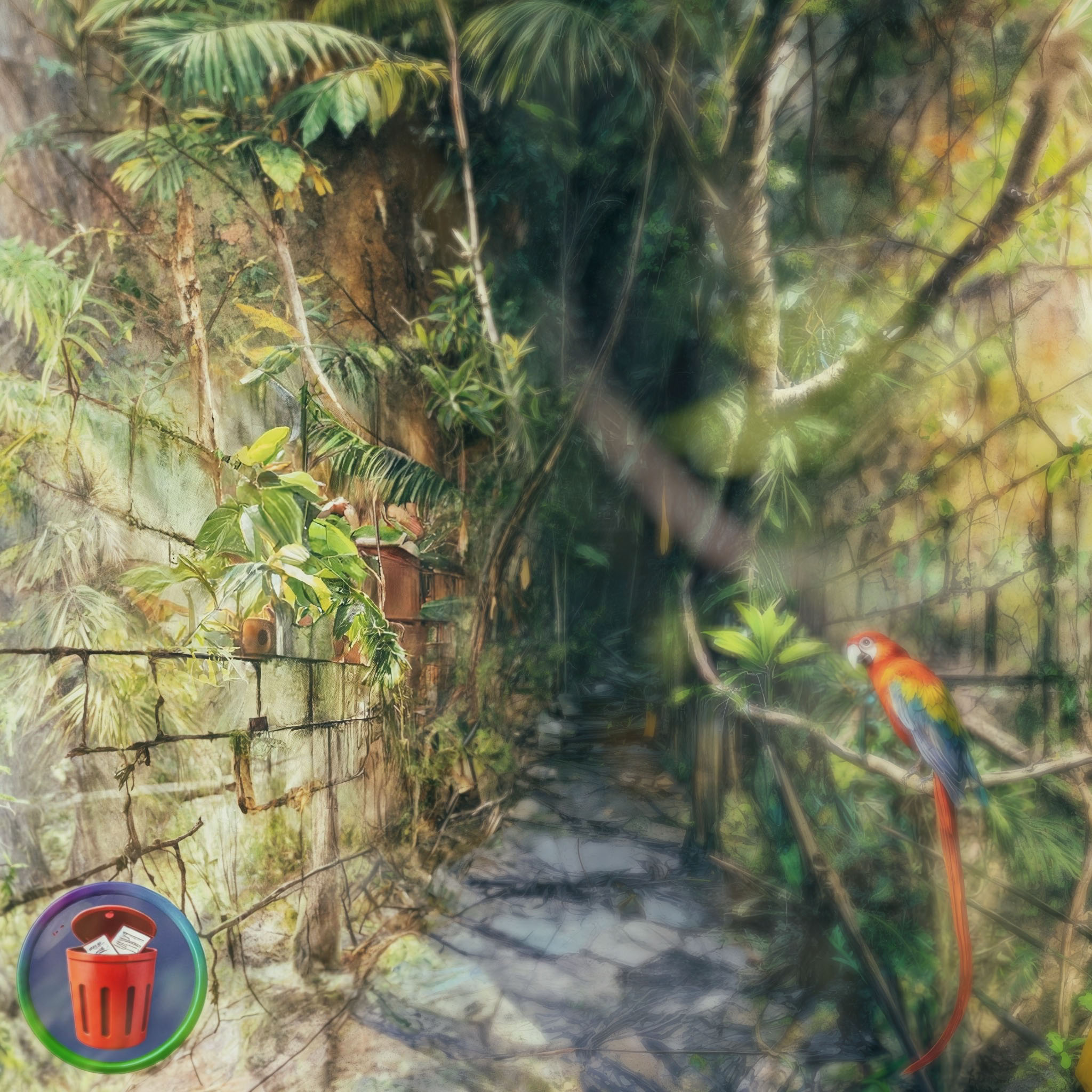
Das Titelbild zeigt einen verwunschenen, von Pflanzen überwucherten Pfad zwischen alten Steinmauern mit einem bunten Papagei auf einem Ast rechts. Ein digitaler Button links unten zeigt einen Papierkorb.

♫ On a Secret Trail ♫


41/398

LogoSwitch language

I enter the corridor leading to one of the temples in the Pirámide del Adivino in Uxmal. The Maya were great builders, but ultimately, their success led to their downfall: despite sophisticated irrigation systems, several years of drought brought their rapidly growing population to its knees. They left behind magnificent structures and a complex calendar that—as some believe—predicts the end of our world for December 21, 2012.

Typically, I experience panic attacks in narrow corridors and passageways; however, since I set foot on the Yucatán Peninsula, strange, long-forgotten memories have come flooding back to me. The ruins appear as though I knew them in their original state—these interiors do not cause me any discomfort; on the contrary, they draw me in as if by magic.

Have I lost my troublesome claustrophobia, which I’ve been trying to combat through a kind of self-treatment with a blog? No, a remnant of panic remains. But there’s a noticeable improvement, and my efforts to conquer my fears seem to be bearing fruit. I’ll give myself exactly one more year! Then, I decide spontaneously right here in the temple corridor of Uxmal, the world will end—at least the world of my little therapy blog, which I will ruthlessly delete on that exact day. It will be a sign that I can now take on corridors in naturam—the physical ones made of stone, metal, wood, and glass. While an entire universe of real corridors awaits me, a world of imagined corridors will be consigned to destruction in a single stroke. As if the Maya had foreseen it…

49/398

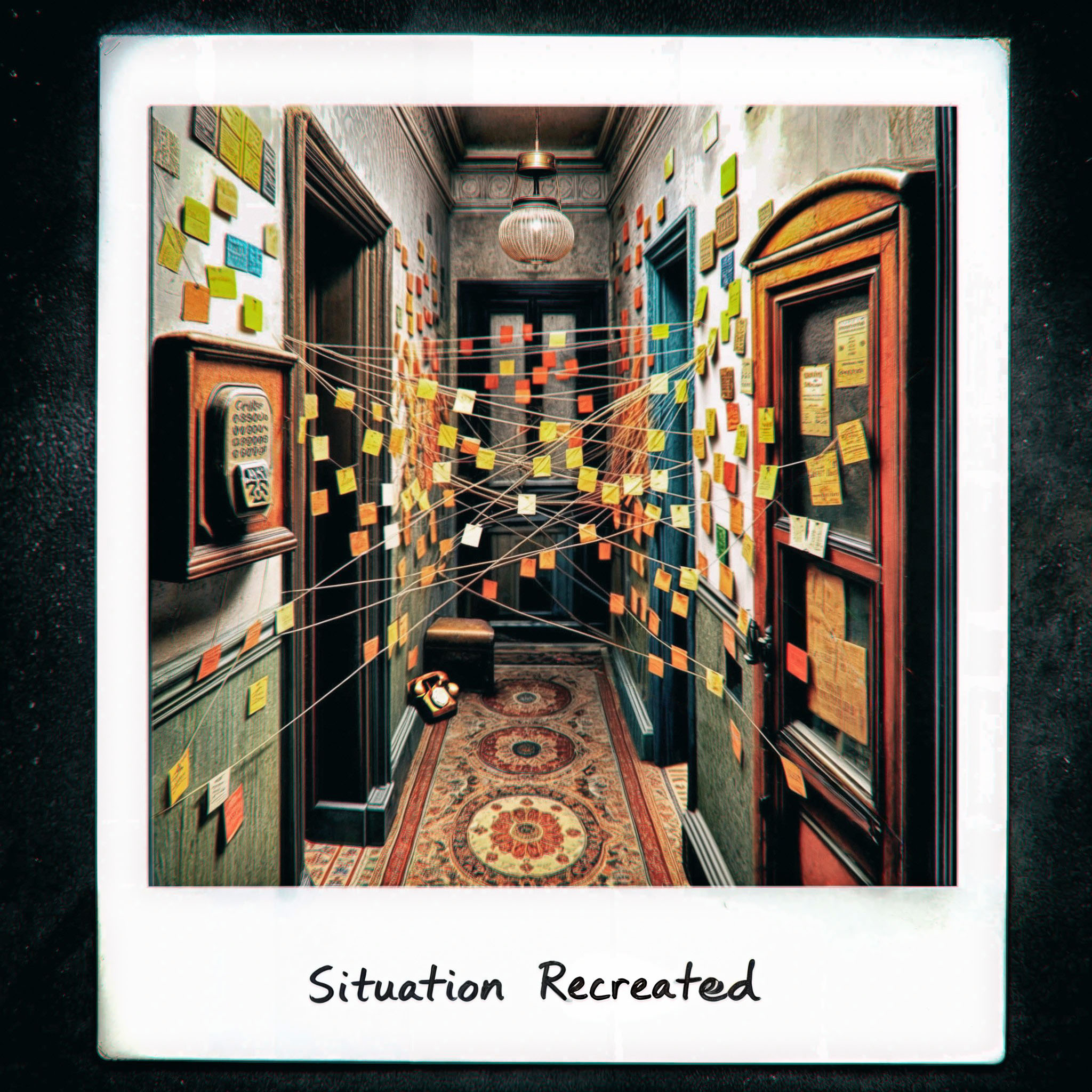
The cover art is a Polaroid showing a hallway with many colored sticky notes on the walls and threads stretched between the notes. The hallway is carpeted; an old rotary dial telephone stands on the floor. The Polaroid bears the caption: "Situation Recreated."

♫ Clone Chamber ♫


49/398

LogoSwitch language

I enter the corridor, and instantly, my annoyance over the supposedly extra pizza—which the customers simply handed back without even leaving a tip—is forgotten. After the hassle with that client in a Berlin rear building, my gaze falls on a doorbell nameplate two floors down on the landing. It reads: “Cory d’Or.”

Could this be the anonymous author of the obscure blog Korridorium that my wife raves about? On impulse, I ring the bell. A buzzer sounds. The door opens into a long hallway, typical of many Berlin pre-war apartments. “Don’t touch anything!” a commanding voice orders from one of the adjoining rooms, without the speaker showing himself.

The pizza box almost falls out of my hand. I stare in disbelief at thousands of hand-written index cards pinned to the walls, ceiling, and some scattered on the floor. Many are connected by colored strings, making it almost impossible to navigate the hallway without disturbing the delicate network. It resembles a rainbow-colored art installation. Fascinated, I try to read some of the index cards, but then the voice sounds again: “Place the books on the entrance cabinet. Your payment is there.”

I nearly drop the pizza box. I stare, speechless, at thousands of handwritten index cards pinned to the walls and ceiling, some even spread across the floor. Colored strings stretch from one to another, making it nearly impossible to navigate the hall—at least not without snapping the delicate web. It looks like a rainbow-colored art installation. Fascinated, I try to read a few of the cards, but then the voice rings out again: “Place the books on the hallway console. Your money is there.”

Cory must be mistaking me for someone he’s expecting. Hallway console? I spot a wooden casing on the wall with several glass-covered displays—evidently an old call system for servants. There is money lying on it. A lot of money. I can’t resist the temptation; I pocket it. Hastily, I set the extra pizza on the ledge, retreat, panic, leave the door standing open, rush down the stairs, and scramble onto my scooter…

Am I brain-dead? What was I thinking?!

Of course, I never dared to go back. The money is long gone, and to this day, I’ve never had the courage to tell a soul about that encounter. I suppose it’s no excuse that I—with a doctorate in astrophysics and another in moral philosophy—am struggling to support my small family as a pizza delivery guy.

(via email)

50/398

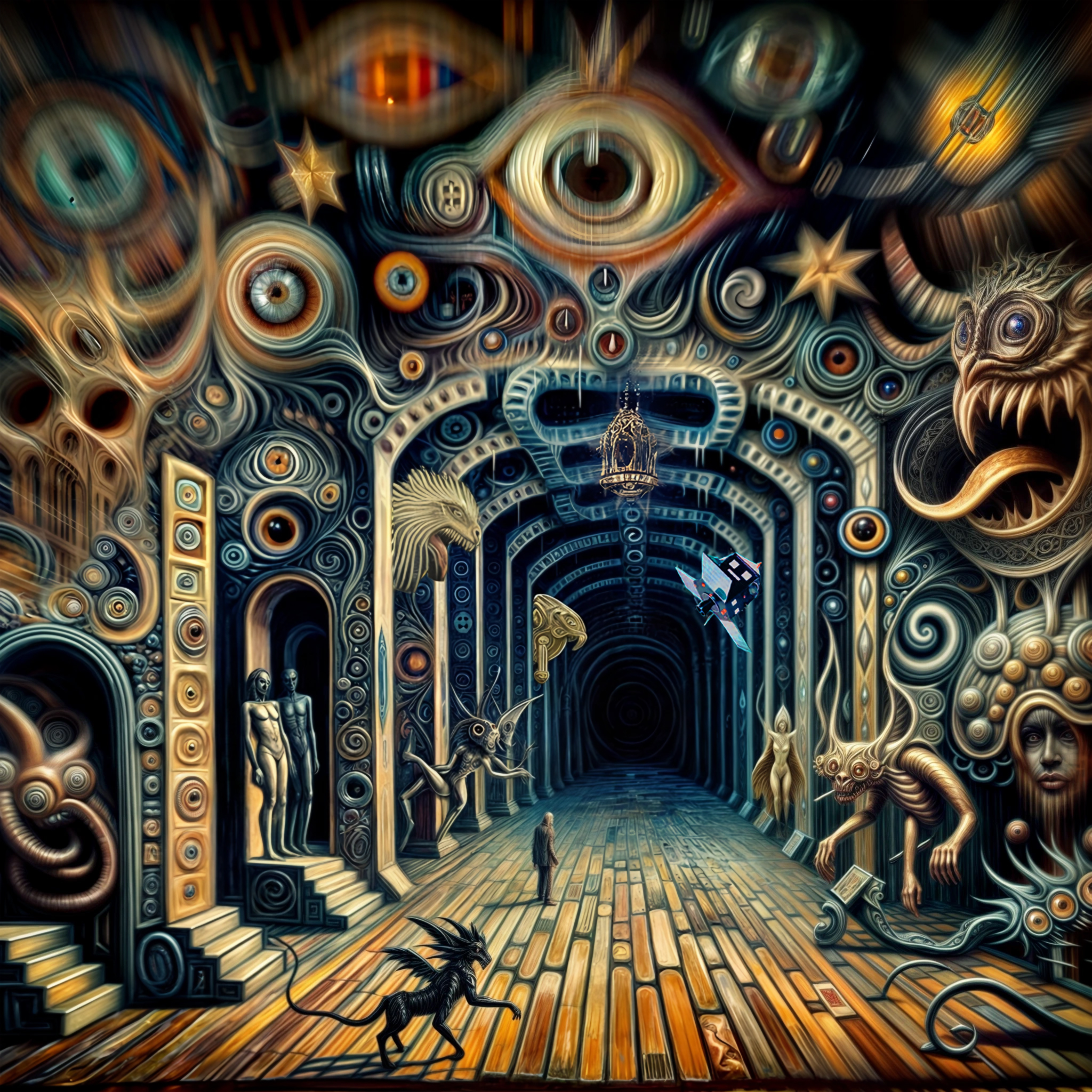
The cover art depicts a surreal, detailed representation of a long corridor lined with eyes and stars, with bizarre creatures and figures on a wooden plank floor. A satellite floats in the background.

♫ nThe Hipparcos Orbit (Astronomers’ Nightmare Mix)nnn ♫


50/398

LogoSwitch language

I enter the corridor, shuddering and full of dark foreboding. Countless corridors from thousands of nightmares once again culminate in the ultimate terror for me. Soon, when the night is at its darkest and quietest, I will wake up screaming and drenched in sweat, and my cat will once again bolt from the bed, meowing. I will lie awake until morning, and then, like every Friday, I will recount to my therapist the hair-raising horrors that—in gloomy, ghostly corridors—lay in wait for me throughout the seven nights of the Christmas holidays.

She will probably advise me again to continue writing little stories about them to free myself from these nightmares. She doesn’t share my concern that these tales might be the very thing triggering the nighttime horrors in the first place.

51/398

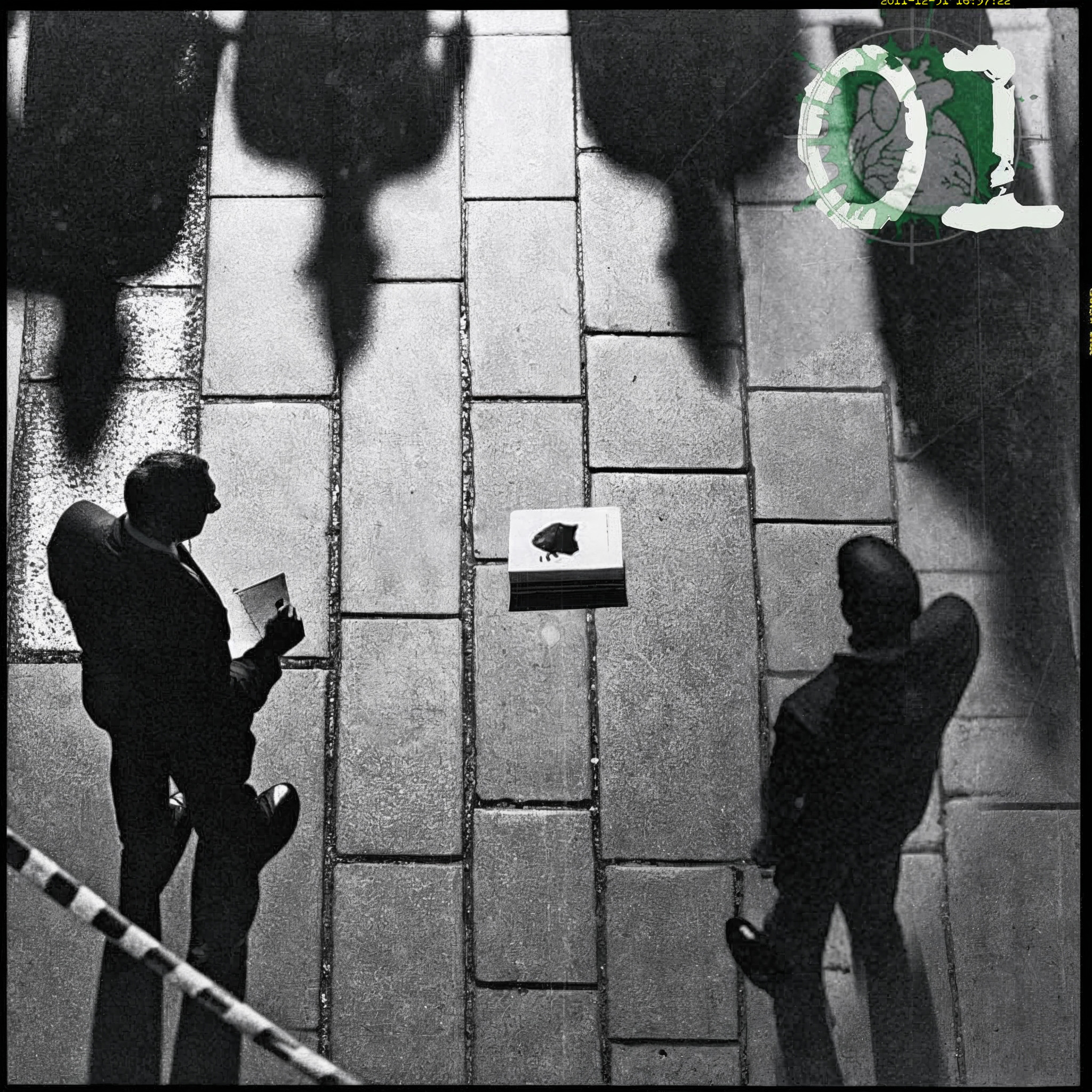
The cover art features a stark black-and-white photograph with a visible cut border. Viewed from above. It shows two men from above, behind a barrier tape on a paved floor with a stack of paper in the center and long shadows falling into the image. An overlay displays the number 01 over the pictogram of a human heart in the crosshairs.

♫ Thundersnow ♫


51/398

LogoSwitch language

I enter the corridor. I’ve never wound up inside the Victory Column before. Probably just a tourist thing anyway. There are none here this time because the homicide squad has cordoned off the whole place. Uwe Albo walks up to me. “I’ve never seen anything like this in my life. Truly nasty. I’m gonna nail that bastard myself, if…” He loses his train of thought. Looks rattled. I help him along: “The guy? Or the woman?” Albo blinks, but quickly realizes I couldn’t possibly know more than he does yet. “No woman would do something like this.” He steps aside for me. The photographer is busy working. His flash illuminates a stack of loose pages topped with a bloody lump of meat. A fresh heart, it seems—most likely human, or Albo and the homicide squad wouldn’t have shown up, and he wouldn’t have called me in so fast. Well, what a great way to end the year. I look around the corridor, but I can’t spot anything psychologically noteworthy.

Later in his office, after waiting for what felt like twenty paper cups of bitter coffee, Detective Albo hands me the pages. The blood has left dark red stains on them. I’m pretty glad the crime lab sealed every single sheet in a plastic sleeve.

“There are fifty of them,” Albo says. He looks especially tired today, as if the dark bags under his eyes have absorbed even more of the world’s suffering. “Numbered sequentially.” He drops into his swivel chair. “That’s all we’ve got. Suspect DNA, fingerprints, footprints: zilch.” I flip through the pages. Typewritten. Short texts. Stories. No confession letter, by the looks of it. No love letters, either. “The heart?” I ask.

Albo reaches for his phone as if it just vibrated. But he must have been mistaken; he slips it away with a barely noticeable shake of his head. “The heart, yeah. The victim is male, judging by the blood. No sign of the rest of him.”

I stand up and wave the stack of pages: “I’ll take a closer look at these at home.” Albo stares at me like I’ve just opened my jacket to show him a suicide belt. “You can’t take those! Have you lost your mind? That’s crucial evidence.” I take three steps to the copier and lift the lid. The document feeder won’t do me any good here with the plastic around the pages. Albo looks like he wants to protest. A green glow sweeps beneath the glass. Can a copier light destroy forensic evidence? Albo seems to decide that’s pretty unlikely. He slumps back into his chair. He must have known right away that we’re dealing with a sick mind. Otherwise, I wouldn’t be here.

I place the second sheet on the glass. On the first page I set aside, there’s a lot of dried blood that left ugly black continents on the copy, like inkblots in a Rorschach test. The stains pool around the text numbered 1 on the page. It’s just a single sentence. It reads: “I enter the corridor …“

55/398

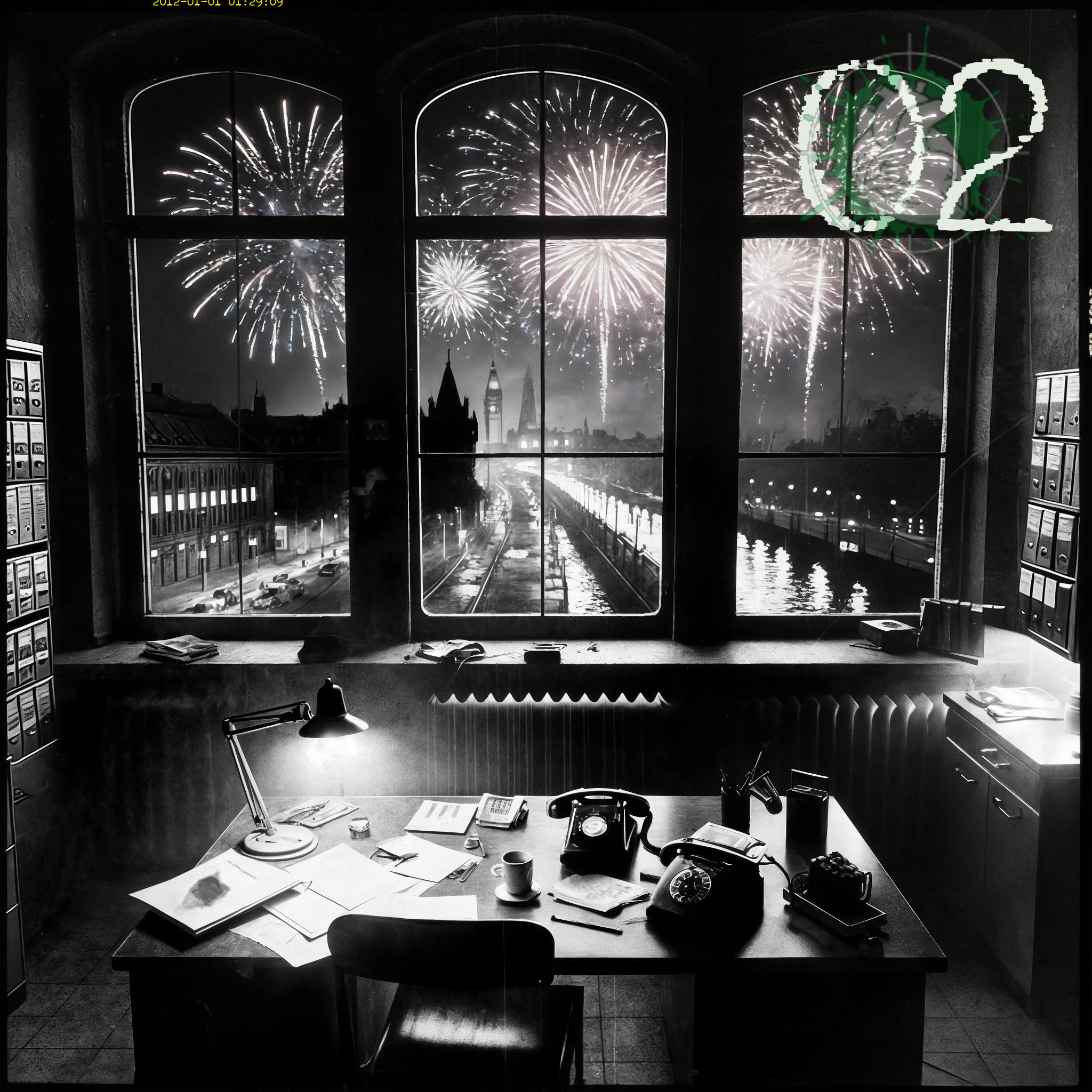
The cover art features a stark black-and-white photograph with a visible cut border. It shows a view from an office with a desk, phones, and papers onto a city with fireworks over a river at night.

♫ Under the Throne ♫


55/398

LogoSwitch language

I enter the corridor. The neon tube flickers. Albo’s office door is slightly ajar. “Come in,” he calls, “Happy New Year!” He sits partially bathed in the pool of light from his desk lamp. The rest of the room remains in darkness. Outside, a few belated fireworks go off. It’s long past midnight.

“Happy New Year!” I reply, although the gruesome discovery from earlier today hasn’t exactly put me in a festive mood.

“So?” he asks. I know what he wants from me. Albo needs to catch a killer, and I’m supposed to help him do it. I head for the coffee machine first. Its red power light guides my way. A bad habit, but definitely better than immediately reaching for the hard liquor.

It seems Albo is ringing in the New Year with coffee, too. I notice he’s made copies of the fifty pages as well. He’s probably read them as many times as I have over the past few hours. They would’ve made decent New Year’s reading if a human heart hadn’t been sitting on top of them.

Albo’s head stays in the shadows. Maybe that’s for the best. I sit down across from him. “All typed. On a typewriter, I mean. And different typewriters, judging by the font.”

“Fifty different typewriters. I already had it checked out. There’s an eBay account, SpellingErrors68, that bought fifty old typewriters a few months ago and then deactivated the account. We reached out to eBay and the sellers—nothing useful so far, at least not what we could dig up on a holiday. Looks like he covered his tracks thoroughly.”

“SpellingError?”

“Yeah, there are tons of accounts with names like that. Why?”

“Because he doesn’t make any.”

“If you think that’s a contradiction, it’s just one of many, isn’t it?” Albo places his palm flat on the copies with spread fingers, as if laying a curse on them. “Sometimes a man, sometimes a woman, sometimes old, sometimes young, playing dumb one minute, playing smart the next…”

“Who says the killer wrote them?”

Albo pulls his hand back. “The opening. Always the same. A corridor. Remember where we found the cut-out heart? In a corridor.”

“Hardly proof,” I say. “And besides, who says it was written by a single person? Could be multiple people.”

Albo leans forward, dipping his stubbly chin into the pool of light. “Come on, man,” he says, “I need results, clues, leads, something!”

I crumple the empty paper cup and toss it toward where the trash can usually sits in daylight.

Albo gestures with his hands. “Is it a madman? An unrecognized artist? A literature teacher? Someone whose texts were stolen, seeking bloody revenge? Believing it will get him on the front page of the local tabloids? You’re the profiler, so tell me.”

“If it’s an author, and if he’s a male author – which I think is both likely – then he’s someone who likes to juggle with possibilities. And who apparently likes to play hide-and-seek.”

“What does that mean?” Albo rumbles, as he did in his prime. “That he wants us to chase him? That this guy sees murder as a game?”

I purse my lips and shake my head. Albo probably can’t see me any better than I can see him. But I need it for myself. Making clear statements here means venturing far out onto thin ice. “A game, yes. Or a kind of puzzle course through corridors. There’s mention of around four hundred texts in total: if we’re unlucky, it will continue.”

“We’ll prevent that. That’s why I need some clues!”

“What do you want to hear? That he’s educated, probably has a degree, is well-versed in the new German spelling, has a broad range of interests, including fairy tales, myth, history and science fiction possesses a dry sense of humor, seems to consider himself a poet or ‘short prose writer,’ gravitates toward word play and existential tirades, and has an obsession with corridors? That he’s forty-three years old?”

“Forty-three? Does he write that?”

“Just a hunch, because of ‘SpellingErrors68’—he might’ve used his birth year. A lot of people do.”

Albo leans forward again, this time to make sure I see him smile. “Well, that’s something. We’re narrowing it down. What about the woman he writes about at the start?”

“Could be a tragic love story. She turns up later as an anagram—I just hope the ‘chosen one‹’ hasn’t been missing her heart since yesterday.”

Albo grunts. “The victim was male.”

“Right, yeah. Maybe text number 50 gives us a lead.”

Albo rummages through the copies until he finds the right one: “The therapist?”

“Yup. That could be something: trauma, nightmares, therapy. And the bloody heart could be a manifesto. Or a cry for help.”

“So I should have all the female trauma therapists in Berlin checked to see if they’ve got someone with a corridor obsession on their couch…”

“I’d actually check the male therapists instead. Everything in these texts is twisted.”

Albo holds out one of the copies. “Who’s R. L. St.?”

I stand up and walk over to the window. Rain is falling, making the streetlights outside the station look even gloomier than usual. At least from here I can spot two shimmering reflections in the dark hole where Albo’s head must be. “Robert Louis Stevenson. Wrote Jekyll and Hyde, inspired by hallucinated little men.”

“Jekyll and Hyde. Great, this oughta be fun,” he grunts.

“I need more time, Uwe,” I say. Albo mutters something I take as grudging agreement. I leave him alone. The new year is a few hours old now, and as I step out into the night, the rain stops, as if someone had suddenly placed a hand over the city.

68/398

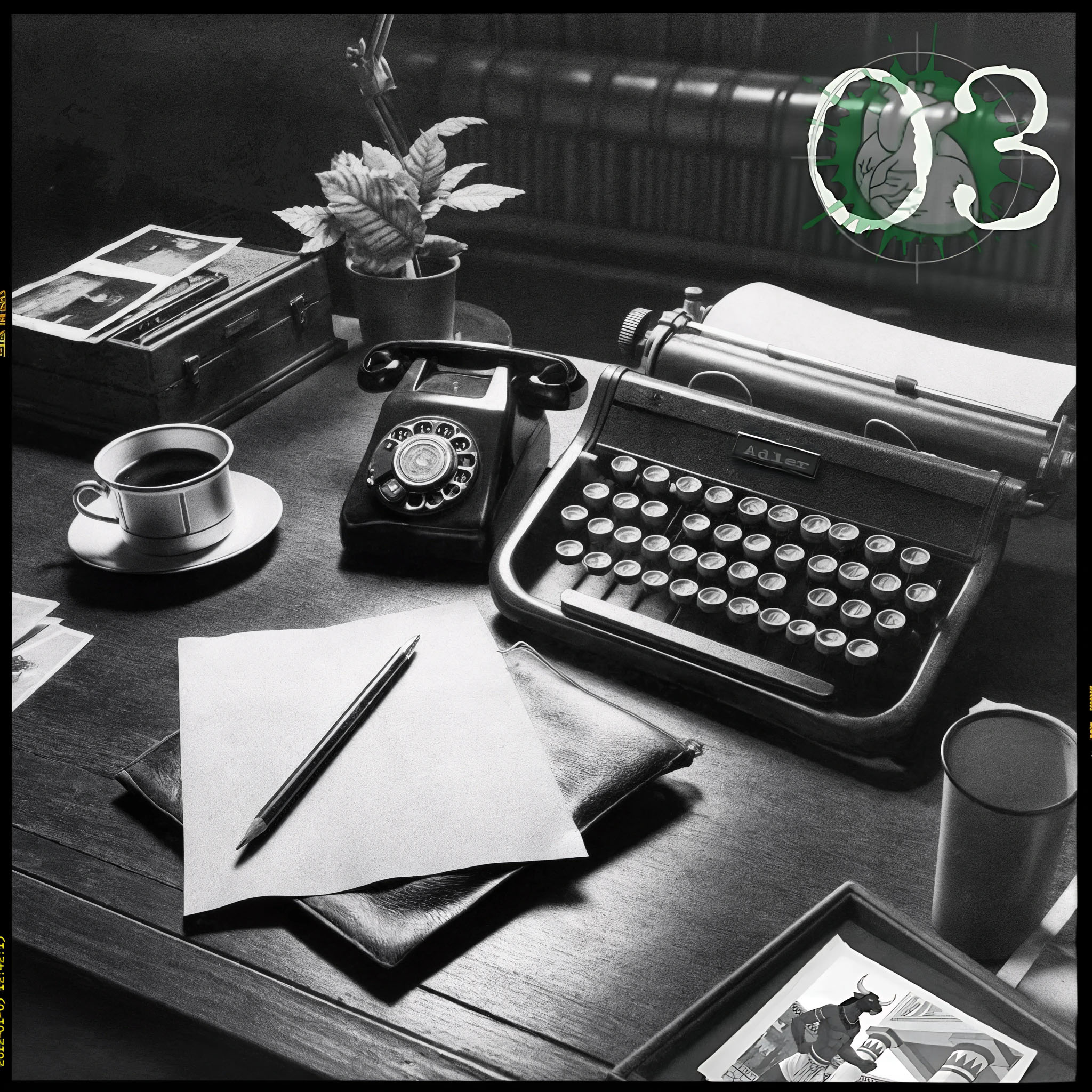
The cover art shows a black-and-white photograph of a desk with an Adler brand typewriter, an old rotary dial telephone, a cup of coffee, a small potted plant, a pen on paper, and a framed picture showing a human-like figure with a bull's head.

♫ Wimmelbild ♫


68/398

LogoSwitch language

I enter the corridor at the police station. Even from here, I can hear Albo yelling. He seems to be in a foul mood. No surprise there. When he sees me, he shoos the rookies out of the office. Even pulls up a chair for me. Never does that, the detective.

“Find anything?” His voice is hoarse. He nods towards the copies with the bloodstain that fades down to document number 10. “The team here says he’s a cannibal and ate everything but the heart.”

I help myself to a coffee. “They must mean text number 15, the ‘man-eater.’ It’s a literary allusion to the Minotaur myth. Unlikely that he identifies with it that way.”

Albo sits on the desk and rubs his right thigh. “But there’s no body. And no missing person report that fits. He cut the heart out with a knife that, the experts say, ‘was neither particularly sharp nor particularly dull.’ Great! Got anything else for me?”

“It’s all pretty vague. Based on the texts, I’d guess he’s single, a loner, doesn’t like being around people.”

“The thing about Mount Olympus?”

“Yeah. But also the one about the hippies. And he’s got a grudge against government institutions and bureaucracy. Number 42, with the promised bloodbath…”

“Could just be he’s having trouble with his tax office. This is all garbage, man. I’ll spell it out for the dummies: What am I supposed to be searching for? And don’t tell me some young female clerk at the building department named Cory d’Or!”

“That’s just one of many false leads, sure. Although…”

Albo shifts to get comfortable and knocks a pencil sharpener off the desk. He groans as he bends down. “Although what?”

“There’s a decent chance his real name actually is Cory. It’s a man’s name, too.”

Albo reaches out with extended fingertips, but the sharpener just slides further under the desk.

“Text number 8, with cavity, horn, and boiling basin, and so on,” I add.

“Yeah?” He gives up, drops back into his swivel chair, and looks at me expectantly.

“All possible etymological origins of the name ‘Cory.’ And unless he happens to be a linguist—which I can’t entirely rule out—only someone with that name would know that.”

Albo rubs his stubble. “I’ll have it checked out. A thin lead and a slim chance, but I’ll check it. Can’t be that many Corys in Berlin and the surrounding area.”

“And one more thing, Uwe.” Albo drops his hand. “I’ve been thinking we should publish some of the texts. With a note making it clear we’re looking for the author.”

“And you don’t think that might be exactly what he wants?”

I expected that question. “Yeah, could be. But we’ll only publish excerpts, and we’ll slip in a few typos. Enough to make him see red. What do you think? Maybe someone recognizes the texts. Or the style, or an allusion.”

“That’s all you’ve got? What if he feels provoked? I don’t want to find a liver somewhere tomorrow, or a lung, excised with a knife that’s not too dull and not too sharp.”

I point to the copies. “I’ve squeezed them dry. The whole thing is a shell game designed to lead us by the nose. I can’t just point a finger at someone and say, ‘That’s him, he wrote them, you’ll find fifty typewriters in his garage and the bloody knife in his kitchen cabinet.'”

Albo sways his head back and forth. We’ve known each other for so many years—every now and then he’d consult me, his old psychologist friend, on tricky murder cases. But despite the useful insights I could offer from time to time, he should know I can’t work miracles. He lowers his voice, leaving no doubt that what comes next is important. “I want a written profile, as precise as possible, clear? One that says he isn’t a cannibal, but an intellectual who enjoys cruel games. Who might be named Cory, which gave him a trauma that turned into an obsession with corridors. Got it?!”

“That’s pretty much all I have, though.”

“Write it down. I need it for admin. If you happen to think of anything useful while doing it, let me know. And as for publishing the stuff—I’ll think about it.”

71/398

Das Titelbild zeigt eine junge Frau mit Kopftuch in einem eleganten Café. Sie macht lächelnd ein Selfie mit einer Person, deren Gesicht geblurrt ist, an einem Tisch mit Kaffeetasse und einem Stapel Papier.

♫ Corrispondenza ♫


71/398

LogoSwitch language

“‘I enter the corridor’—why this sentence? What makes it so special?” I was sitting across from Cory d’Or in a Viennese coffeehouse. The reply to my email inquiry had arrived promptly, and to my surprise, I didn’t have to travel to Berlin or another German city for the interview; I could conduct it right around the corner at my favorite café. The second surprise: Cory is a young woman. Of course, Cory d’Or isn’t her real name. She won’t reveal her true one. In contrast to her eloquent short prose, which sometimes calls to mind Fantastic Realism, Cory expresses herself laboriously, constantly correcting herself and getting tangled in contradictions. And yet, I’d come up with some really lovely questions: “What do you want to achieve with this blog? Is there a specific intention behind it, or is it just a game with words, connotations, topoi?” She wrings her hands, runs her fingers through her hair, searches for the right words. I keep asking, tentatively: “Where do all these ideas come from? Are there real-life models for the characters that keep reappearing?” Cory nods, starts to speak, shakes her head, bites her lip. Before she can give me a single usable answer, she cuts the interview short and instead—accompanied by animated gestures—reads me passages from the typescript of her new novel, which she has given the working title No Corridor on Earth.