122/398
♫ The Brazen Branches of Remembrance ♫
122/398

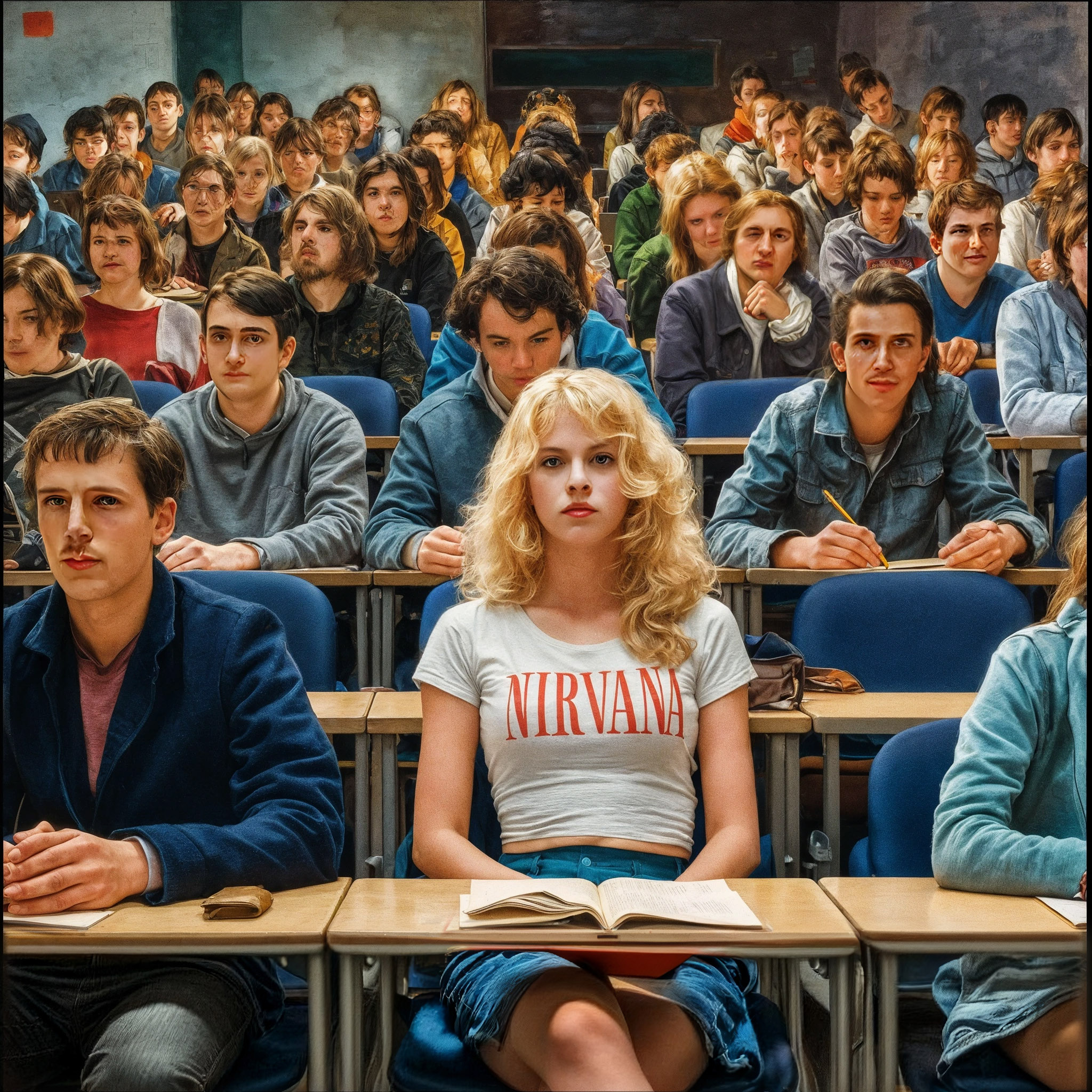
I enter the corridor, and, yes, I will also take the next step and enter the lecture hall. But, folks, do not be too quick to rejoice. Even though I stand here today—breaking the long, long silence to a certain extent unexpectedly—rest assured that surrealism is not my subject, nor is this about love or death. David Gascoyne once wrote—if memory serves me right—“The full breasts,” well, not exactly, it reads just “The breasts of eternity await my tender hands.” But eternity won’t be my subject either, just as the youth the beauty the mill or the secret word won’t be.
Yes, the gazettes write it again and again and hardly leave me any room to doubt: that I was once called “the tiger”. “Ocean of silence” I would have liked almost better—my attacks were explosions, but inconsequential as they were meant to remain unique. At least, love is also not my theme, and there’s a good reason for that.
I believe I should regret my decision to speak to you, for it seems to me the attempt alone is destined to fail. I won’t deny that the lunar caustic likely corrodes as its name suggests, but it doesn’t heal.
I often have to think of Gascoyne’s phrase, “the breasts of eternity”, a fleshy image, but perhaps misguided. He seeks to make two hits with one shot, but by my own reckoning, he doesn’t account for the fact that the essence of duration ultimately ends in silent reverence. The voluptuous blonde up there with “Nirvana” on her T‑shirt might grasp it if you will, but for those who’ve written “1984” on the board—insofar as I am aware—they might as well have scribbled “Kilroy was here” or just his long nose. As I recall, with some reservation, for memories are treacherous, which in turn distracts from the fact that the idea we make of the present is also as deceptive as a fairy tale we tell ourselves … But I digress.
Didn’t I firmly resolve not to err? Now it seems this lecture is turning into a sort of confession. But except for monologues delivered by villains at the end of crime stories, to explain what they did and why, such a confession is undoubtedly not just superfluous but thoroughly agonizing. I want to say—but what do I want to say, not just prattle on but, one might say, call down, conjure up, what is my theme? That such a theme can only be a fragment, and as they say, no fragment of reality does it justice?
Don’t worry, I won’t speak much longer; speaking tires me, and seeing some of you taking notes depresses me. So many mistakes are made, and multiplying them in this way seems to me—why shouldn’t I admit it?—like an unintentional grotesque parody of something that is absurd in itself. Or, as I’d like to call it, it’s a second-order absurdity.
Can the night, if I’m not mistaken about the times, give the day’s agenda a wipe? I remember now. The bold interjection—wasn’t it Braulio Arenas, whom I just saw somewhere in the fourth row?—leads down a wrong path. “The Farewell,” it should be called! That’s the theme, that’s the inducement, that, if there’s any moral approximation, is the crux.
It’s been twenty-four years. I recollect. It comes back to me: the attempt back then to start all over again. “I enter the corridor to visit the ladies of the past,” I wrote. You may find it surreal or hermetic or simply misguided, but at that moment, it appeared to be a truly life-defining step, and I put three dots after it. As I’m told, everything left unsaid stimulates the human mind to vividly imagine the omission, and let it not be thought that this doesn’t apply to the one responsible for the omission. Perhaps for this reason, three dots seemed insufficient to me, and I added more of them almost frenetically, at increasingly greater intervals. When I reached eighteen dots at the end of the page, it became clear, as one might easily imagine, not only the futility of all this but also that I would never speak again, let alone proclaim anything from the pulpit.
I had, to use this admittedly old and, grant this to me, beloved metaphor, crossed the mirror. And that’s the mirror, which I, forgive me, would hold up to all of you if I were capable. I had completed the crossing of the mirror, leaving all themes and dramas, all futile words and incantations behind me. And now, to be honest and straightforward, I looked calmly at what lay—tangible but literally defying any description—before me.
And so, I fell silent, in an instant, unawares, had become, to call a child by its name, speechless. I fell silent, as I will do now—after these useless and (despite all the, pardon the coarse expression, drudgery on my part) probably more than erroneous and incomprehensible explanations — for good and forever.
(Restrained applause, occasional bravos)
Lunar caustic: 
David Gascoyne:
Braulio Arenas (engl.):
Goethe’s list of idioms to avoid (German):