Korridorium

A daily dose of corridors in prose

Kategorie: story

123/398

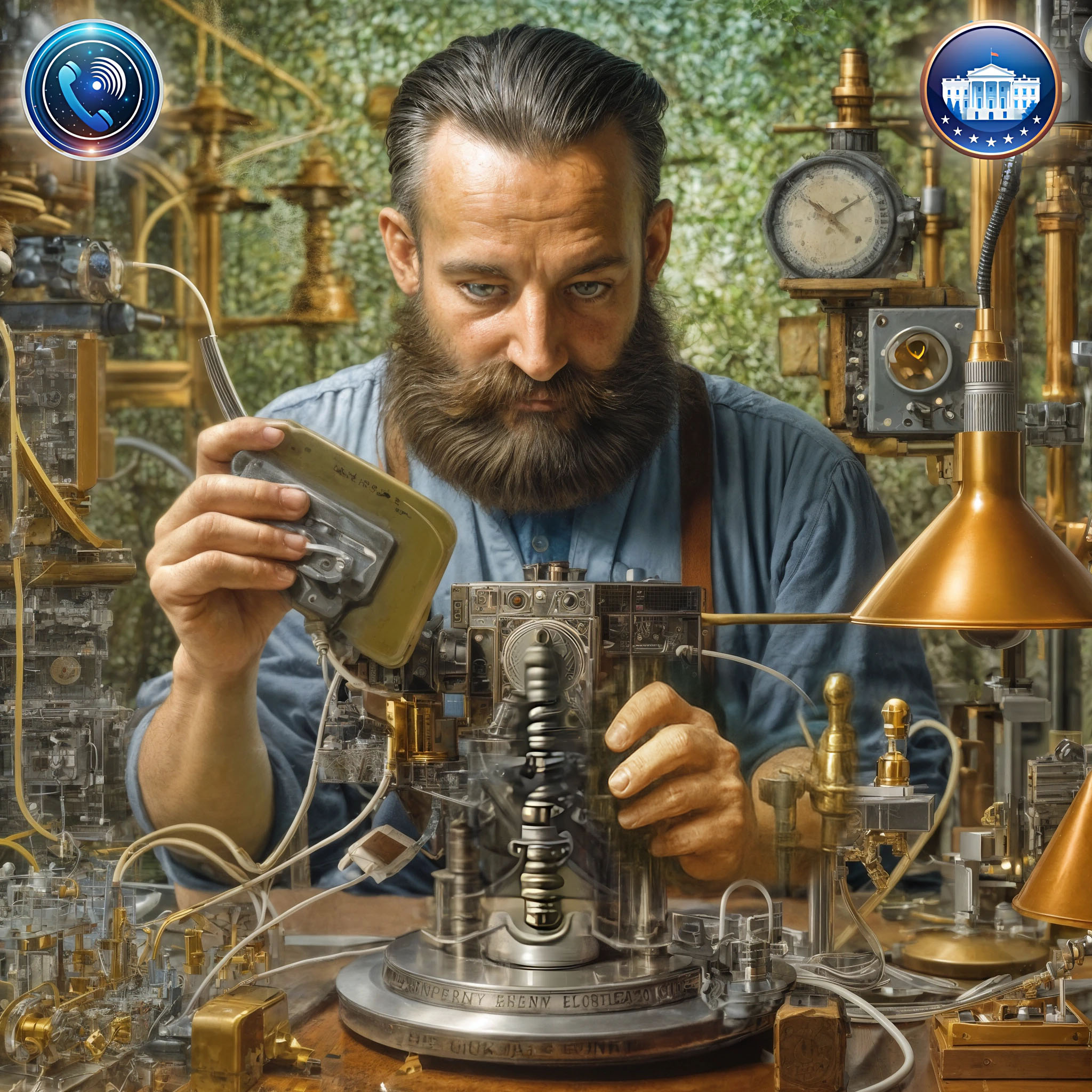
The cover art shows a man with a beard and blue work clothes, who is working concentratedly on a complex mechanical apparatus with many wires and measuring devices in a workshop with a green background. Two digital buttons in the upper corners show pictograms: one of a telephone receiver with a radio signal, the other is a representation of the White House.

♫ The Birth of the GraviPhone ♫


123/398

LogoSwitch language

I enter the cor­ri­dor lead­ing to Pro­fes­sor Cer­il’s lab­o­ra­tory. It’s made of a gleam­ing, sil­very mate­r­ial that flows in curved shapes: no sharp edges or right angles. The pro­fes­sor claims that walk­ing con­tem­pla­tively down this cor­ri­dor gets him in the zone for his work, height­ens his con­cen­tra­tion, and deeply inspires him. I don’t notice any of that. Instead, I slip on the uneven floor and go sprawl­ing. It echoes as if some­one had struck a giant Chi­nese gong. Luck­ily, I did­n’t hurt myself too badly.

“That’s the break­through!” Cer­il’s unmis­tak­able voice greets me from inside the lab. He seems—too absorbed in his research—not to have noticed my gong per­for­mance. Every­thing in here is blink­ing and beep­ing, and I have trou­ble spot­ting the pro­fes­sor behind all the cables, sus­pen­sors, and pul­leys hang­ing from the ceil­ing, and the var­i­ous arti­facts of past exper­i­ments. Wear­ing head­phones, he is bent over a small metal box cov­ered in but­tons. Excit­edly, he explains to me that he’s devel­oped a vir­tual micro­phone he can send to any coor­di­nates in the world via grav­i­ta­tional waves. At first, I don’t get it.

“I can enter any coor­di­nates, and then I hear what­ever there is to hear at that loca­tion. It’s a kind of grav­i­ta­tional-wave radio that can receive sig­nals from vir­tu­ally infi­nite stations—namely, from any point in the uni­verse.” I must look pretty lost. That does­n’t change when he hands me a sec­ond pair of head­phones to demon­strate his inven­tion. Just to test it out, he types in the coor­di­nates for the White House. “Let’s do a lit­tle spy­ing,” he says with a mis­chie­vous grin.

I hear the rustling of silk sheets and soft whis­pers of love, though despite an intense read-through of an Eng­lish dic­tio­nary two or three years ago, I don’t catch every word. But I do pick out two names: John and Cindy. Now Ceril looks pretty lost, too. I enlighten him (after all, I have to live up to my rep­u­ta­tion as a child prodigy every now and then): “McCain and his wife?” Ceril won­ders what on earth they could be doing in Oba­ma’s bed­room, but then light dawns on him: “We’re eaves­drop­ping on a par­al­lel world! One where McCain won the elec­tion instead of Obama. Yes, that must be it—the laws of physics are pro­tect­ing them­selves from a son­i­cally infin­i­tes­i­mal recur­sion. Just like the uncer­tainty prin­ci­ple.”

Ceril imme­di­ately punches in the coor­di­nates of his own lab, and sure enough, we wit­ness a con­ver­sa­tion between him and me—except, he says, these are our alter egos from a par­al­lel uni­verse. Inter­est­ingly, in that real­ity, I seem to be the aging inven­tor and he’s the teenage assis­tant.

Before I can learn any more, Ceril switches off the device, takes off his head­phones, and turns to me: “This opens up fan­tas­tic pos­si­bil­i­ties, kid! I can eaves­drop on other ver­sions of myself who have already worked out my many ideas”—he taps the mas­sive index card box beneath his desk—“which saves me lengthy test­ing phases.” And saves me, I think, from poten­tially per­ilous real-world tests of his count­less inven­tions. “I just need to mod­ify the thing accord­ingly.” With that, he starts scrib­bling com­plex for­mu­las on paper with one hand while twist­ing wires together with the other. As for me, I am com­pletely for­got­ten.

Would I even be inter­ested in what other ver­sions of me have to say? On the walk back through the cor­ri­dor, I shake my head. What good would that do any­way? Then I remem­ber why I went to see Ceril in the first place: to ask if he could build me a machine that spits out what teach­ers will want to know on exams a few days in advance. Then again, I have to admit to myself that even with­out a pre­dic­tion machine like that, I’ve always known every­thing anyway—and school should­n’t get any more bor­ing for me than it already is.

(And it won’t. Quite the oppo­site. Because of her. But that’s another story.)
124/398

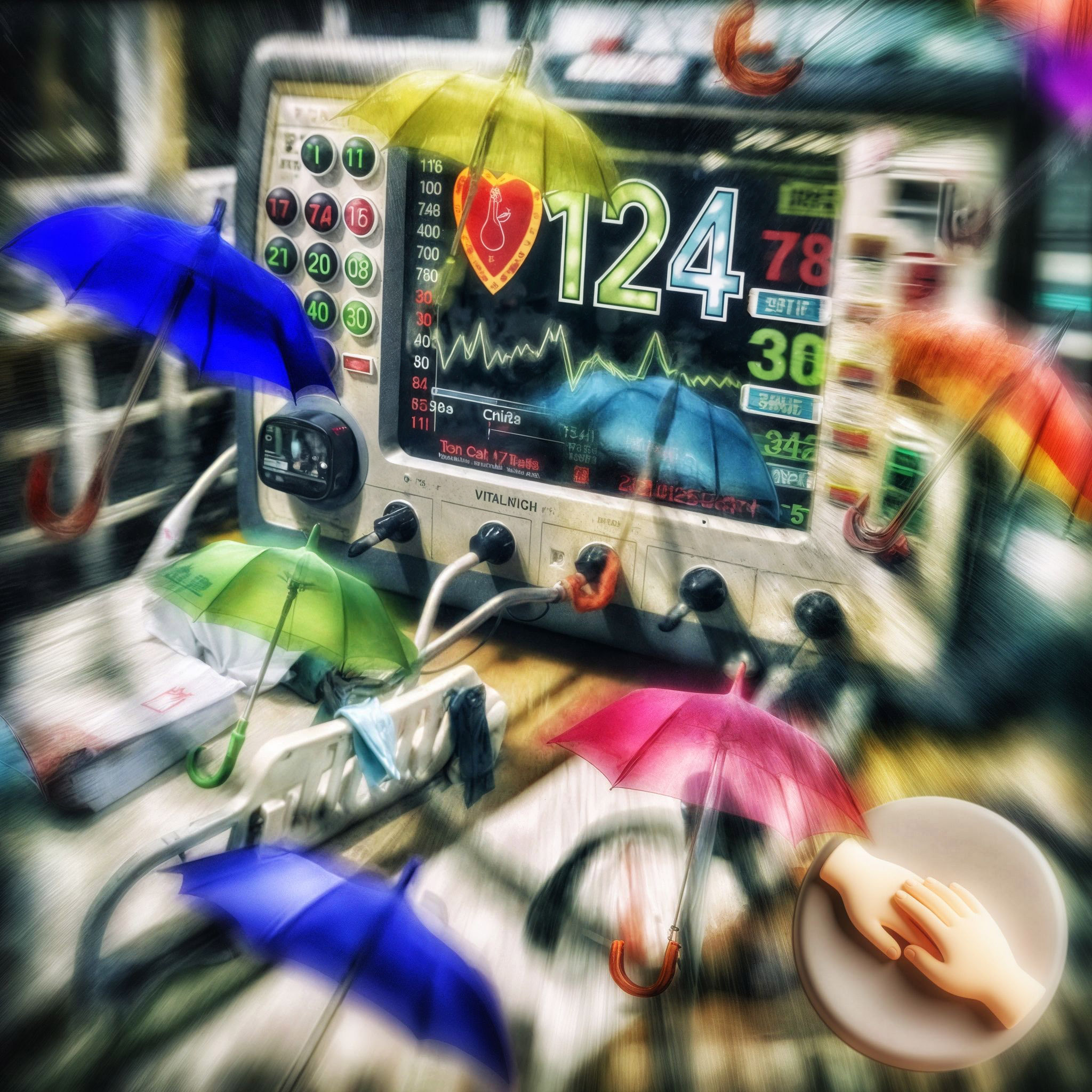
The cover art shows several colorful umbrellas floating in front of a medical monitor with a heart rate display and the number 124. A digital button on the bottom left shows the pictogram of a hand resting comfortingly on another hand.

♫ Mjúk viðkoma ♫


124/398

LogoSwitch language

I enter the cor­ri­dor, this one I’ve walked down so many times in recent weeks. Behind that white door over there, you lie, with a machine aid­ing your breath­ing. Sud­den brain hem­or­rhages sent you into a coma within hours, and the doc­tors say too much dam­age has been done to your brain to hope that one day you’ll wake up and be the same again.

I hold your hand. The heart-lung machine’s bub­bling and hiss­ing have become oddly calm­ing and meditative—but only since I let go of my protest against all of this, my anger, my bewil­der­ment, my despair, and my hope for a mir­a­cle.

When we’re alone, I qui­etly rem­i­nisce about our shared expe­ri­ences, the trips we took, the movies we saw, par­ties, sem­i­nars, and meet­ings with friends—or just lit­tle quirky every­day anec­dotes that come to mind. Some­times, I also play your favorite music on the small cas­sette recorder.

Peo­ple suf­fer and die all over the world—constantly. Why does it hurt me so much to see you lying here while I’m indif­fer­ent to every­one else? Almost inaudi­bly, I ask you the ques­tion, imag­in­ing you could speak to me, and you say: I’m not suf­fer­ing – you are.

And then, for a few moments, a few heart-lung machine breaths, it’s as if you’re hold­ing my hand and offer­ing me com­fort, courage, and hope through your silent pres­ence.

Today, they’re turn­ing off the machines, and you’ll be trans­ferred to a hos­pice. I’ve cho­sen a small, cozy room for you: through the win­dow, you can see trees, and you can hear the birds sing, even though it’s in the mid­dle of the city.

You’re going to like it.

And if you no longer want to stay, you can leave. I still hold your hand, but I’m no longer keep­ing you here.

126/398

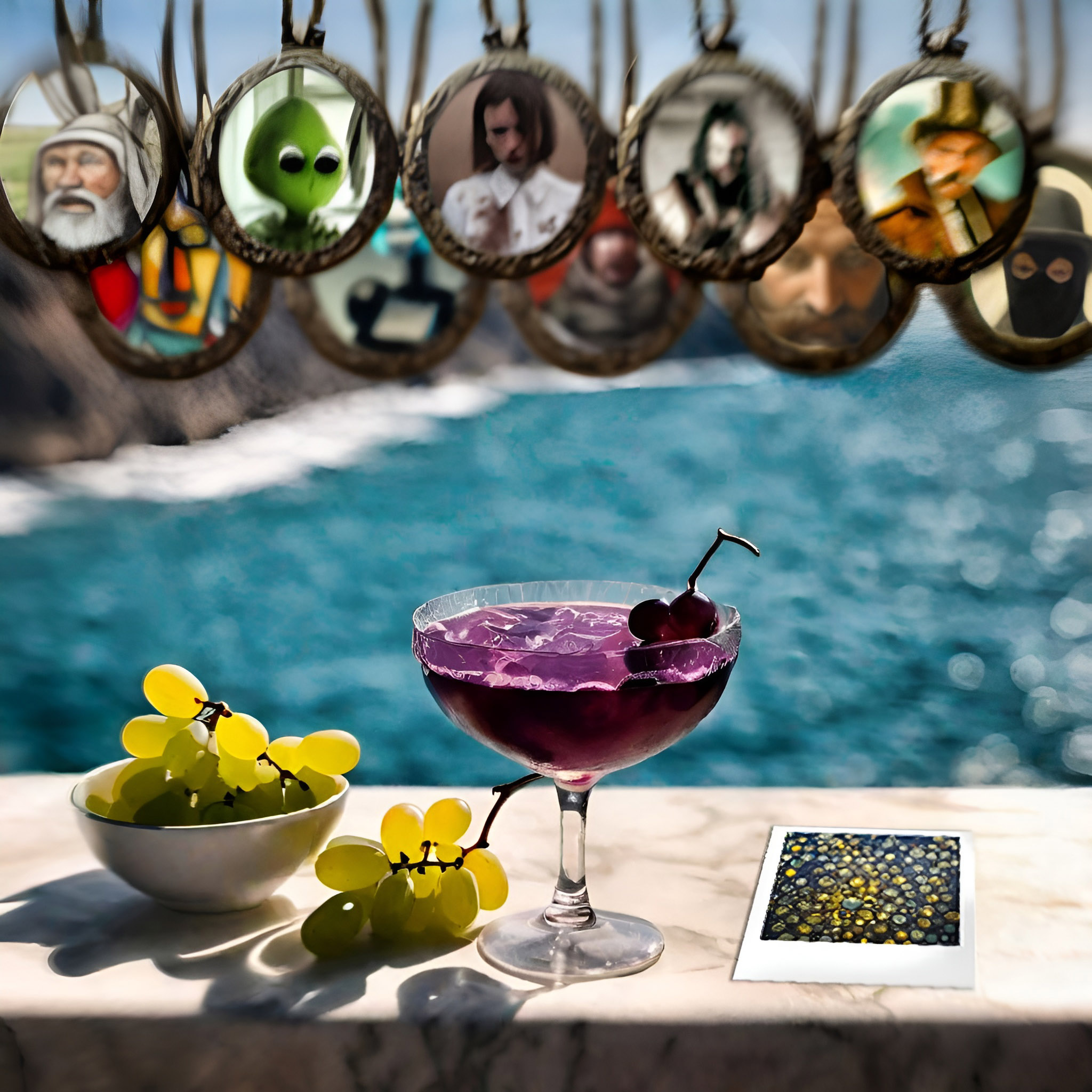
The cover art shows, on a marble balustrade, a glass with a purple cocktail and cherries next to a bowl of green grapes and a Polaroid photo showing colorful bubbles. In the background, blurred, the sea and cliffs. Above hang, also blurred, medallions with oval depictions of various people and beings.

♫ Deep Glis­ten­ing ♫


126/398

LogoSwitch language

I enter the cor­ri­dor. It’s a strange feel­ing to come back here after all these years. At first glance, every­thing looks just as it did then: the white vaulted ceil­ing, the sim­ple stone pil­lars stretch­ing at reg­u­lar inter­vals into the dis­tance, the smooth, cool mar­ble floor beneath my bare feet—and the guard­house stand­ing right at the entrance. The troll opens the small, oval wooden door in the win­dow to speak to me.

“Who are you, and what is your busi­ness here?” He sounds stern, but then, he has to be. He’s the con­troller here. I’d com­pletely for­got­ten that he appears to me as a troll. I did­n’t invent him. At least not con­sciously.

“It’s me, the Boss. I just wanted to see that every­thing is in order here.”

The troll looks at me, knit­ting his brow. “Do you have an appoint­ment? Have you filled out the forms? Do you have an ID or a rec­om­men­da­tion? Because you can’t just come in here like…”

“Whoa, whoa—slow down,” I inter­rupt him. “I don’t need any of that. I’m the Chief here. And I’d like to have a word with my Con­troller.”

“That’s me,” says the troll in his guard­house, with­out a trace of humor.

“What’s your task?” I ask him. He explains it to me. Like every­one else here in the first part of the cor­ri­dor, the troll has a fairly lim­ited hori­zon. So, it’s no sur­prise when he tells me that his job is to keep every­thing under con­trol, day and night, because oth­er­wise things would imme­di­ately go off the rails. Con­trol is every­thing, and with­out him, total chaos would break out. “I’m just try­ing to do my job as well as I can,” he says.

“You’re doing a fan­tas­tic job,” I say, and I mean it. In fact, my inner con­troller has saved me from a lot of trou­ble, and he’s vis­i­bly pleased by the praise.

Then I ask him if he’ll let me talk to the oth­ers fur­ther down the cor­ri­dor with­out him inter­fer­ing. There’s a brief dis­cus­sion, but even­tu­ally, he agrees to take a short break. I give him a grate­ful nod and pass the guard­house, head­ing deeper into the cor­ri­dor.

Beyond the arches lin­ing the sides of the cor­ri­dor, var­i­ous rooms open up. They are inhab­ited by other mem­bers of my inner ensemble—one-dimensional char­ac­ters much like those found in myths, fairy tales, and pop cul­ture. Types like the Mino­taur, Chew­bacca, the cir­cus clown (“Ta-da! Magic!”), Gol­lum (“We wants it, we needs it. Must have the pre­cious!”), or Scrat, the saber-toothed squirrel—characters who, in their sim­ple-mind­ed­ness, some­times move us deeply.

I hear a sob.

It’s a small, gloomy room with a worn-out bed. In one cor­ner of the room, a pathetic lit­tle heap is hud­dled. “Who are you?” I ask, though I already know. It is Despair. A sob is her only answer. “What is your task?” I inquire. She turns to me and begins recount­ing her expe­ri­ences in a halt­ing voice: she sets out full of hope, only to be dri­ven to despair by cir­cum­stances and other peo­ple. This has been going on her whole life. And since appar­ently no one else is will­ing to feel and con­front this despair, she takes on the task herself—she explains, big tears welling in her eyes.

I thank her for her self­less ded­i­ca­tion and sti­fle a cyn­i­cal “Good job!”—instead, I sug­gest to the lit­tle, teary-eyed girl that she should team up with the Method­ol­o­gist. He lives a bit fur­ther down the cor­ri­dor. I can still hear his words ring­ing in my ears from our last encounter: “For­mu­late a goal, define the steps, work through them method­i­cally!” The two of them could make a great team.

My next visit takes me to the study of the “Questol­o­gist,” as I’ve dubbed him: a young man with three-day stub­ble, a hat, and a coiled whip on his belt. He has maps spread across the entire room, with open books scat­tered among them. “What is your job?” I ask the Inner Seeker. Of course, he only knows one thing: search­ing! He is con­stantly on a quest—for love, for the answer, for hap­pi­ness, sal­va­tion, per­fec­tion, the path, mean­ing, sig­nif­i­cance, enlight­en­ment… “What about find­ing?” I ask with a smirk. But in truth, the Seeker is solely fix­ated on the search itself. If he ever man­ages to land a hit, he imme­di­ately sets his sights on the next goal, the next land­mark on the hori­zon.

I tip my hat to him as well, because his insa­tiable yearn­ing is very valu­able to me—though he’s already too deep in his maps and trea­sures to even notice.

I was actu­ally plan­ning to visit the Day­dreamer next, but as I con­tinue walk­ing, I notice a room that seems com­pletely unfa­mil­iar. It’s lux­u­ri­ously fur­nished and opens onto a ter­race over­look­ing the sea. In a deck chair, I spot a some­what paunchy, hairy man in swim trunks. Next to him, within arm’s reach: a cock­tail and a bowl of grapes.

“Deli­cious!” he exclaims. “Won­der­ful!”

“Who are you?” I ask, taken aback. He belongs to me?

“Mmmh, you’ve got to try these! They taste absolutely heav­enly!”

He nudges the grapes toward me. I’m usu­ally wary of peo­ple who end every sen­tence with an excla­ma­tion point. But I decide to try one any­way. They taste… not bad.

Aaaahh, the sun on my belly—could there be any­thing bet­ter? And this panorama! The breeze isn’t too shabby, either! That hint of salt in the air!”

“What is your task?” I ask. “Enjoooy­ing!” he answers, draw­ing out the syl­la­ble with pure rel­ish. “Liv­ing life to the fullest! Delight­ing in every­thing beau­ti­ful, deli­cious, and bliss­ful! Speak­ing of which…” he says, turn­ing his equally hairy back to me, “could you maybe give me a quick scratch between the shoul­der blades?”

I hes­i­tate for a sec­ond, but then I do him the favor.

“A lit­tle lower, yesss! Oh, that’s the spot, ooohh, just right, won­der­ful!”

Even the small­est things can be deeply plea­sur­able, I think, and I thank the Enjoyer for the inspi­ra­tion.

I step back into the cor­ri­dor. It’s time to pro­ceed to the next sec­tion. Toward the end, it becomes brighter: the floor, the walls, the pil­lars, the ceiling—it all seems to radi­ate light from within. Here, I encounter fur­ther facets, but these are transper­sonal: they are the parts of the soul that tran­scend our lim­ited human per­spec­tive, anchored in Great Being itself.

Finally, I call out into the bright, gen­tle glow in front of me, “I would like to speak with the ‘Divi­sion-Exceed­ing Uni­fy­ing Sense.‘”

“Yes?” responds a voice that is nei­ther male nor female, nei­ther old nor young. My gaze, heart, and mind expand. It’s as if I am float­ing in the void between galax­ies, becom­ing cos­mic space itself. It’s as if I were a silent flame in the inner­most heart of all things—a power whose curios­ity and love cre­ate the world and its beings, grant­ing cre­ation and all crea­tures the free­dom to unfold in any direc­tion they choose, to have every expe­ri­ence they seek, and even, if they wish, the free­dom to for­get who they truly are. It feels like the mem­ory of the Source of all exis­tence. “What is on your heart?” the voice asks gen­tly.

A long con­ver­sa­tion fol­lows. On one hand, it’s a bit stag­ger­ing to view one’s own small life from a cos­mic per­spec­tive; on the other, it puts every prob­lem, worry, and fear into per­spec­tive. And it feels sim­ply won­der­ful to bathe in all-encom­pass­ing com­pas­sion.

One last step remains: to take all aspects of myself—including the transpersonal—out of the cor­ri­dor, to leave it behind as the med­i­ta­tion ends, and to step into life not nec­es­sar­ily as a bet­ter per­son, but per­haps more at peace with myself… and thor­oughly “soul­ful.”

129/398

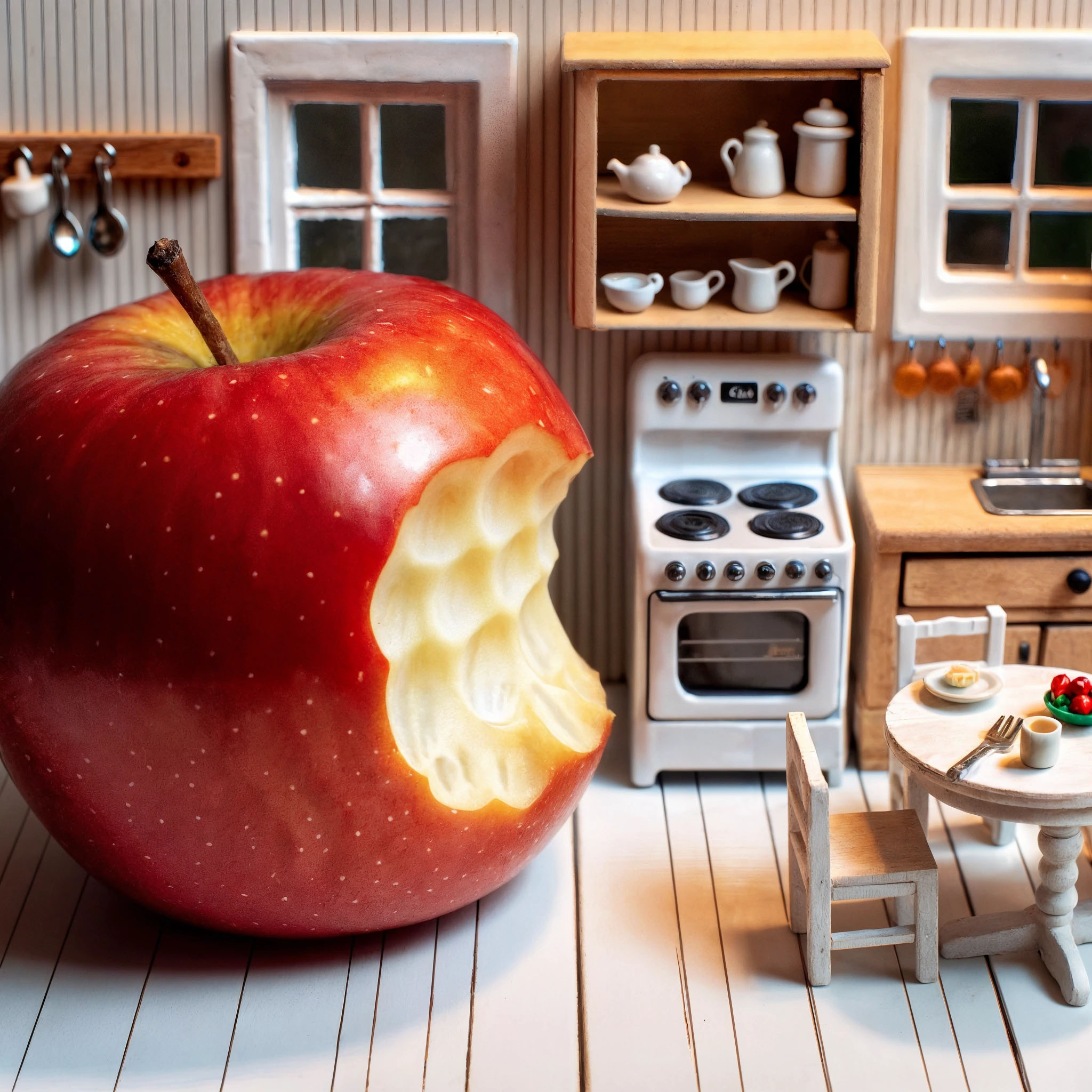
The cover art shows a large red apple with a bite taken out of it, in front of a small, detailed doll's kitchen range with a stove, cabinets, table, and chairs.

♫ Sage in a Gilded Cage ♫


129/398

LogoSwitch language

I enter the cor­ri­dor of the doll­house to make my way to the kitchen. The uten­sils there are com­i­cally over­sized, but I don’t want to com­pletely aban­don civil­ity. Rather than shov­el­ing my food into my mouth, I pre­pare it to the best of my abil­ity. If I already look like an unciv­i­lized for­est dweller, I want to main­tain at least some dig­nity inter­nally and in my daily actions.

Because ever since my cour­te­san bewitched me with a voodoo spell and shrunk me to the size of a thumb, I am com­pletely at the mercy of her ado­les­cent daugh­ter. She sees me as a toy and, for her amuse­ment, forces me to per­form all kinds of tricks. Although I unroll the poster I painted with the word “Hunger” almost daily and let it hang from the bed­room over the par­tially open entrance hall, she only occa­sion­ally thinks about putting a let­tuce leaf or a slice of fruit in the vestibule for me.

Worse than the daugh­ter though is the mother, who some­times secretly takes me at night and lies with me in bed. Despite her grotesque gigan­tism, it almost feels like before, except now she forces me to crawl over her naked body and pluck out all the unwanted hairs sprout­ing from it. For me, it means labo­ri­ous foot marches and hard work. It’s even more humil­i­at­ing as she’s using me to make her more desir­able for her new lover, while for me, no knife is sharp enough to shave or even trim the now mat­ted mane that reaches down to my knees.

130/398

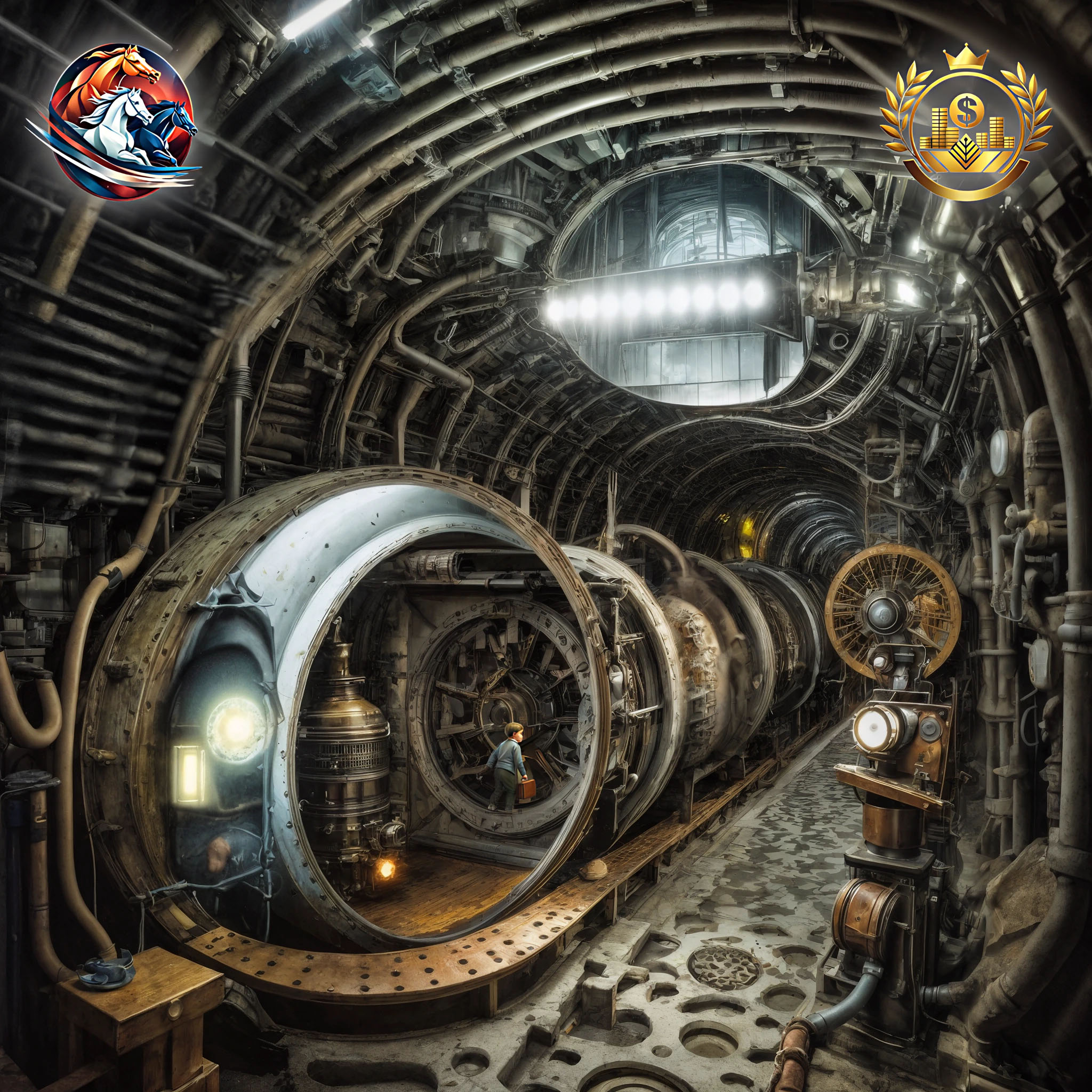
The cover art shows a view into a large factory hall, in which a long, round tunnel is set up, surrounded by complex mechanical apparatuses. A child with a briefcase stands in the entrance of the tunnel. Two digital buttons in the upper corners show pictograms: three running horses on the left and a table with stacks of dollar coins on it on the right.

♫ The Mechan­i­cal Quirk ♫


130/398

LogoSwitch language

I enter the cor­ri­dor with delib­er­ate steps, even though I’d much rather have run far, far away. Every­thing here is elec­tric, and it’s mak­ing the hairs on my arms stand on end. Pro­fes­sor Ceril gave me detailed instruc­tions. In fact, he even handed me a man­ual before­hand that felt like it was five hun­dred pages thick. With the pro­fes­sor, it’s always go big or go home. As bril­liant as his inven­tions are, they always have to be the size of a gym. Same goes for his time machine.

The rea­son I’m always the one who has to test his inven­tions comes down to a deal between my dad and him: the pro­fes­sor is a child­hood friend of my father’s, and ever since my dad made a for­tune off his server farms, he’s been bankrolling Ceril’s research. In return, Ceril is sup­posed to teach me about physics, elec­tro­dy­nam­ics, quan­tum states, dark energy, and all that jazz.

The corridor—the “spa­tial dila­tion compressor”—is lined with round metal hatches like you’d expect on a sub­ma­rine, com­plete with the hand­wheel locks used to open them. Behind the walls, I hear a creak­ing and click­ing like lit­tle wooden clock­work gears—it sounds more mechan­i­cal than elec­tronic. But that doesn’t help me much either. I stand there feel­ing pretty help­less, flip­ping aim­lessly through the machine’s man­ual. The pro­fes­sor drilled into me that I must go through the cor­rect hatch. Open­ing the wrong one would be dis­as­trous, throw­ing “Tem­po­ral Stratig­ra­phy” into com­plete chaos—something he wants to avoid at all costs. Instead, my task is to con­vince his younger self on Octo­ber 1st, 2006, to bet on Schi­a­par­elli instead of Discretion—in a tri­fecta on three-year-old colts and fil­lies.

In the end, though, I can’t even get the hatch open that’s sup­posed to take me to the cru­cial horse race: screwed shut too tight. Fine by me. That way, I don’t have to sneak onto a race­track as a twelve-year-old and hunt down young Ceril among all those gam­bling addicts. Instead, I sit down in the cor­ri­dor and wait for a while, which is uncom­fort­able enough in the flick­er­ing elec­tric­ity gen­er­ated inside the time machine. Then I walk back down the hall­way and step out of the machine.

Ceril is wait­ing for me excit­edly. I nod, shove the man­ual back into his hands, and grit out through my teeth: “Mis­sion accom­plished.”

Ceril is thrilled and starts danc­ing around. “Who bets on Dis­cre­tion any­way?!” he sings out. When I ask what actu­ally changed because of my actions, he explains in a fatherly tone that now a young Muz­imi Ceril in a par­al­lel uni­verse has become filthy rich and can ful­fill all his dreams. And among those dreams, per­haps, is thank­ing his benefactor—meaning not me, but himself—by return­ing the favor.

If I under­stand this cor­rectly, the other, now stink­ing-rich Ceril is sup­posed to get the idea to send his assistant—presumably a par­al­lel ver­sion of me—back in time to make him, our pro­fes­sor, rich in turn. Who even comes up with a wild scheme like that?! I pre­tend I still have home­work to do and leave him alone in his lab. As I pedal away on my bike, I can hear him singing for a long time, and I won­der if the pro­fes­sor should­n’t invent a machine that sim­ply pro­duces com­plete silence instead.

(He almost did. But that’s another story.)

135/398

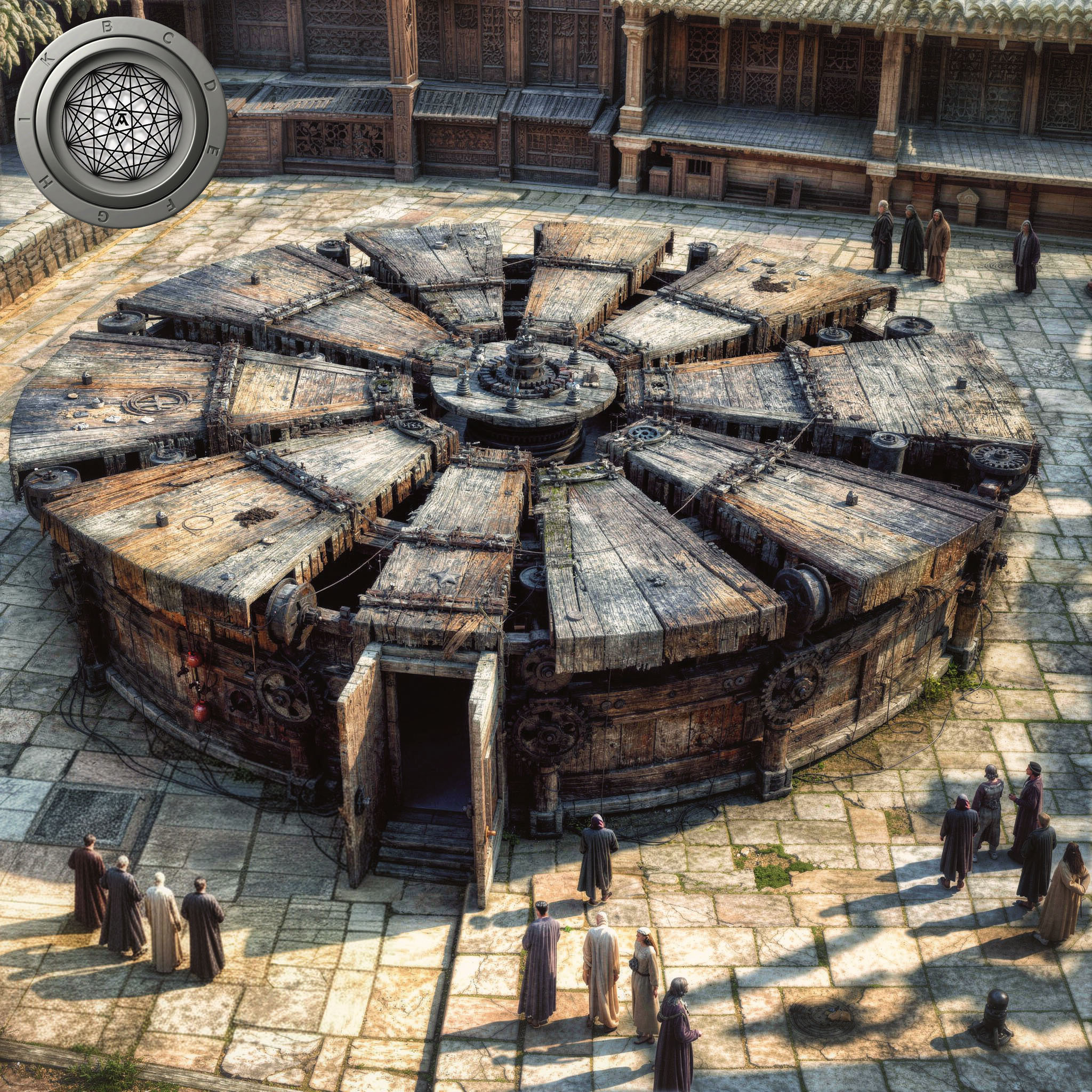
The cover art shows a large, round, mechanical structure made of wood with several segments and open doors, surrounded by people in historical garb on a paved courtyard in front of a building with arcades. A digital button in the upper left shows a complex diagram surrounded by letters.

♫ Com­put­ing the Numen ♫


135/398

LogoSwitch language

I enter the cor­ri­dor that has opened up after Abdoul and I turned the large wooden wheels a bit fur­ther. I still can­not fathom it. After so long a time! My Ars magna has become acces­si­ble, and now all may see how grande, how majes­tic, how all-pow­er­ful God is. What were just a few labeled paper rings before, this inge­nious mind I met in the Dja­maa ez-Zitouna, the Olive Tree Mosque, has crafted out of tim­ber. Now, when you climb one of the minarets and view it thence, my Ars magna resem­bles a huge over­turned church clock, almost fill­ing the entire court­yard, except that it does­n’t indi­cate the time but the truth.

Truth must be log­i­cal because God—or Allah, as they call Him here—does not entan­gle Him­self in con­tra­dic­tions like us humans. His truth can reveal itself to us in a won­der­ful way. Just as it opened before my eyes when I slid some labeled paper rings on top of each other, reveal­ing the Ars magna to me, it is now tan­gi­ble in Abdoul’s grand mech­a­nism.

We have taken the Com­plete Fig­ure with the squar­ing and tri­an­gu­la­tion of the per­fect cir­cu­lar form as the basis, and Abdoul has crafted huge, mov­able spoke wheels for it. Each spoke car­ries a term, in Latin and Ara­bic, and turn­ing the wheels shifts them against each other. Encoun­ter­ing this the­olo­gian, who is also a gifted designer, was a great stroke of luck for me. Now, I can lit­er­ally walk through and feel the virtues of God: His eter­nity and power, His wis­dom and His will, the entire glory of the High­est. Now we, young Abdoul and I—an old man of eight decades—can cre­ate cham­bers, as I have always dreamed, cor­ri­dors of con­cepts that make irrefutable state­ments about His actions and His exis­tence, ren­der­ing all dis­putes between reli­gions obso­lete.

The Mus­lims who gather to view our work whis­per among them­selves. The wooden mech­a­nism, which allows the ulti­mate truth to be found, the walk­a­ble Ars gen­er­alis ultima, seems to scare and dis­please them. More and more of them are pour­ing forth into the court­yard, and their voices are get­ting louder. How­ever, I feel upraised, and if Abdoul did not restrain me, I would lead them all into the Ulti­mate All-Encom­pass­ing Art and show them that it may answer all their ques­tions.

“Is the world ever­last­ing?” This is the ques­tion Abdoul and I have cho­sen, and we have set the large wooden wheels accord­ingly: B for the ques­tion “whether,” D for the Eternal—and for C, the mid­dle posi­tion, we have cho­sen Good­ness from the cat­a­logue of qual­i­ties. And now I stand in the midst of the answer to it, the only pos­si­ble and log­i­cal answer. We see it in the cham­bers and cor­ri­dors that form: If His cre­ation were eter­nal, in log­i­cal con­se­quence, so would be Good­ness with­out end. But if Good­ness were with­out end, there could be no Evil, because Cham­ber C can only sym­bol­ize either one or the other, never both, true to His infal­li­ble logic. How­ever, since there unde­ni­ably exists Evil, and we expe­ri­ence and feel it every­where and at all times, this is a con­tra­dic­tion that reveals to us that the world can­not pos­si­bly be eter­nal. Only God is eter­nal. I would like to shout this from depths of mine heart to them, to the whole world, and lead them all by the hand if Abdoul did not earnestly beseech me for patience and cau­tion.

Nev­er­the­less, an inter­nal rejoic­ing fills me. It is almost as if the vision I had over fifty years ago, which gave an unex­pected turn to my life as a trou­ba­dour, has finally become real­ity: wooden, mechan­i­cal, tan­gi­ble, irrefutable real­ity.

138/398

The cover art shows a pile of old postcards with landscapes, buildings, and an airplane. Some show their written side, but everything is illegible, and stamps are missing.

♫ Prin­cipia aer­o­bat­ica ♫


138/398

LogoSwitch language

I enter the cor­ri­dor every night before falling asleep. It’s become sec­ond nature to click off the bed­side light, set­tle in, close my eyes, and try to reach the cor­ri­dor that bridges the two worlds. Yet, as always, the images in my mind remain faint; it feels more as if I am labo­ri­ously con­struct­ing the cor­ri­dor than sim­ply enter­ing it.

When my twin brother died, it was as if some­one had cut out half my heart. In an instant, the world lost its vibrancy, and a milky veil set­tled over every­thing.

But then, almost a year later, one night in a dream, I was sud­denly sur­rounded by col­ors I could­n’t name—colors that should­n’t even exist. Amidst this shim­mer­ing, flu­o­res­cent splen­dor, he sud­denly stood before me. He looked dif­fer­ent, older, and he no longer wanted to be called Dignus, but Korian. In the dream, I knew noth­ing of the sui­cide, but I felt my brother had some­thing vital to tell me, some­thing con­cern­ing him, me, and this cor­ri­dor between worlds where our encounter took place.

Wak­ing up was ter­ri­ble. I was still buoyed by the close­ness of him, and I knew imme­di­ately how pro­foundly sig­nif­i­cant my dream expe­ri­ence had been. But simul­ta­ne­ously, a bit­ter, angry despair crawled up within me because, despite all my efforts, I could no longer remem­ber what Dignus—what Korian—had said to me. There were only the col­ors, those insane, impos­si­ble col­ors. The con­tent of his words, even the world-cor­ri­dor itself: they had lost their con­tours and dis­solved like a foot­print in the desert sands. I doggedly racked my brain, and of course, I fer­vently hoped the dream would repeat itself—in vain. The door had swung shut again. Nev­er­the­less, I made it a habit to review the few mem­o­ries I had left while falling asleep. Per­haps the door to this cor­ri­dor, the door to Korian, would open for me once more!

The dream never returned—not in the nearly thirty years that fol­lowed. Oh, I did begin to dream of cor­ri­dors; cor­ri­dors of every kind, shape, and texture—but not the cor­ri­dor. And not of my twin brother.

Even­tu­ally, I began to write down the frag­ments of my mem­o­ries from those failed, tan­gled dream-cor­ri­dors that blocked my way to the real one—hoping to rid myself of them. I used the post­cards for this: the large bun­dle of old post­cards from all over the world that Dignus had once bought at a flea mar­ket and given to me. There were 398 of them, as it turned out, and I was sup­posed to read one each day for a year, imag­in­ing he was send­ing them from his secret trav­els. That had seemed too crazy to me then; I only started read­ing them once he had actu­ally departed on his jour­ney.

When I decided to write down those false dreams of mis­lead­ing cor­ri­dors to finally be rid of them, I did it on those cards—between the lines, around the exotic stamps and post­marks, on every free inch. And then, some­times, I turn them over to look at a yel­lowed photo, and it feels as if those are the very col­ors in which that for­got­ten cor­ri­dor between worlds once glowed.

140/398

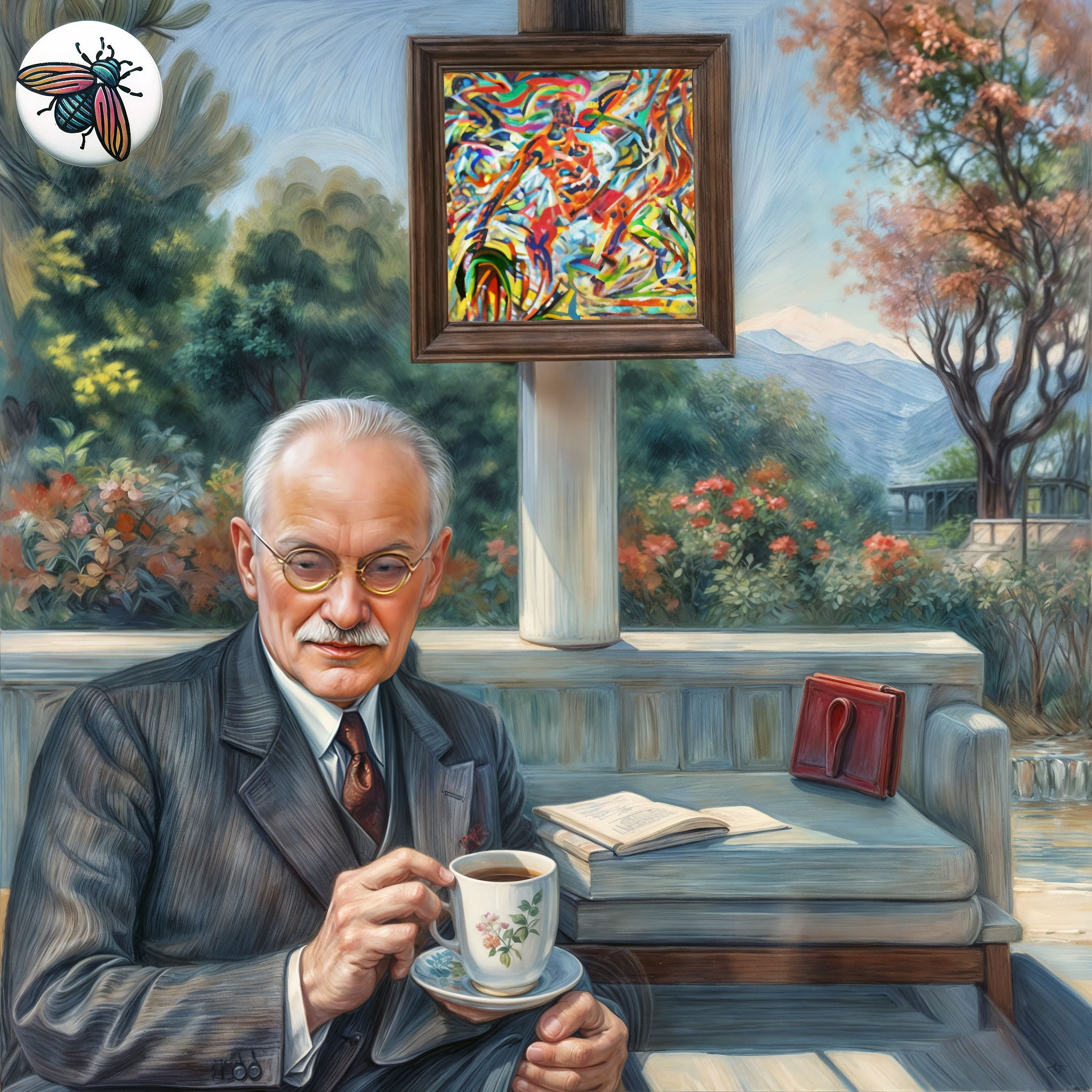
The cover art depicts a suited gentleman enjoying tea on a garden patio. Resting on a sofa-like bench behind him are an open book and a crimson portfolio. An expressionist artwork of a dancer adorns a nearby pillar. Top-left, a digital icon displays a beetle with unfurled wings.

♫ The Labour of Emer­gence ♫


140/398

LogoSwitch language

I enter the cor­ri­dor, at long last, after ardu­ous attempts to fall into a trance. Now I’m back in famil­iar ter­ri­tory. From the begin­ning, in my imag­i­na­tion, it has always been this corridor—with its bare brick walls and fad­ing fres­coes on the vaulted ceiling—that has led me to my past lives. I study them to glean details and infor­ma­tion for my research as a his­to­rian, insights that the sources avail­able to me as a scholar would never yield. Of course, none of my col­leagues, let alone the direc­tor of the insti­tute, can ever know about this.

This time, how­ever, it’s dif­fer­ent. At the end of the cor­ri­dor, no door awaits to trans­port me to some long-gone era and a strangely famil­iar environment—this time, the cor­ri­dor opens into a gar­den that feels entirely for­eign. It greets me with an almost over­whelm­ing blaze of color, intox­i­cat­ing flo­ral scents, and the buzzing of legions of insects. A large, buzzing beetle—a dung bee­tle, I suppose—barrels toward me, and I have to duck quickly to avoid being hit.

In a pavil­ion sits an elderly gen­tle­man with a fine, gray mus­tache, look­ing at me expec­tantly. He pours me a cup of tea. “You wanted to speak with me?” he asks kindly. I know him. This can’t be a past life; C.G. Jung didn’t die until 1961. Next to the del­i­cate Chi­nese porce­lain teapot lies a book bound in red leather.

We drink tea and talk about myths and arche­types. I explain my con­vic­tion that our world needs an entirely new myth, one that gives us the strength and guid­ance to over­come the prob­lems of our time. I believe only a uni­ver­sal story and con­stel­la­tion can move us—can move this frag­mented world toward a col­lec­tive new begin­ning, a new depar­ture. Gil­gamesh, Prometheus, Odysseus, Arjuna, Paul Bun­yan, Franken­stein, Peter Pan, Harry Pot­ter, Lit­tle Nemo (the comic, not the film), Rübezahl, Bat­man, Bernd das Brot—I’ve already vet­ted many myth­i­cal fig­ures from dif­fer­ent cul­tures to see if they could offer us con­tem­po­rary answers, or even just strate­gies for find­ing them.

“Is it about answers?” my host asks shrewdly, sip­ping his tea.

Yes and no. Ulti­mately, it’s about a healthy perspective—on our­selves and the world. One that leads to sus­tain­able solu­tions and progress.

But I lose my train of thought and start talk­ing about the cor­ri­dor. “I enter the cor­ri­dor?” he repeats, smil­ing. That, he says, can­not be the sought-after new myth. It must be some­thing con­nect­ing, some­thing col­lec­tive that instills a com­mu­nal spirit while draw­ing deeply from the uncon­scious. “Try, ‘We enter the cor­ri­dor,’” he sug­gests.

At first, I’m some­what taken aback, then, I sud­denly feel light and inspired.

“Or even: ‘We enter, drunk with fire, the cor­ri­dor,’” he adds with a smile.

Of course: We! All of us! Mov­ing for­ward with shared joy and con­fi­dence into a space full of new pos­si­bil­i­ties, well on our way to find­ing the best way—the best ways. I am not alone, and nei­ther are you. None of us is. Because we are many! And we have the same goal.

A promis­ing vision.

I’m wel­come to return any­time, my host says as we part. The search for a new myth is an impor­tant task, one he’s happy to sup­port with advice and action. Glad to have found a true author­ity as an ally, I leave his pavil­ion and the lush gar­den and enter the cor­ri­dor once more…

141/398

The cover art shows two cups of tea and a copy of "Finnegans Wake" on a small table with drawers in front of a window. In the lower right, a plaque with the image of a houseboat is inserted.

♫ The Lev­o­gyre ♫


141/398

LogoSwitch language

I enter the cor­ri­dor. Nor­bu’s house­boat smells dif­fer­ent than usual. I hear his voice from a small room I’ve never been in before: his bed­room.

Norbu is lying in bed, cough­ing mis­er­ably and look­ing like hell. “An infec­tion,” he croaks, “don’t get too close to me.”

“Can I do any­thing for you?” I ask, con­cerned.

“Nah,” he says, “got every­thing here.”

Curi­ously, I look around. I had always assumed Nor­bu’s bed­room to be his library, filled with all the books he must have accu­mu­lated over the years. In real­ity, I see only a sin­gle book on the shelf above the bed. Norbu fol­lows my gaze.

“Finnegans Wake,” he says, “first edi­tion. That’s all I need.”

I nod, but per­haps that’s not enough to show that I know what he’s talk­ing about, so I add, “Yes, a novel that is a whole library in itself. Joyce some­how man­aged to pack life, the uni­verse, and every­thing into it. A book that con­tains prac­ti­cally every­thing. That’s all one needs.”

Norbu gives me a side­ways glance. “For me,” he says, “it’s mainly about read­ing just one or two lines, and I imme­di­ately fall into a deep sleep.”

“Aha,” I say, bit­ing my lip and with­draw­ing my hand, which I had reached out to take the book and ran­domly flip through it, intend­ing to nod know­ingly after a brief glance inside. I seem to have missed the mark there.

“No book can encom­pass the entire cos­mos; that’s roman­tic non­sense.” Norbu has to cough and asks me to make us some tea. I grum­ble a bit because I don’t like being talked down to or rel­e­gated to a maid, but in the end, Norbu is sick, and he prob­a­bly does­n’t mean any harm.

In the small kitchen, I find chamomile tea, which I brew and carry into the bed­room as a makeshift tray using a chair, so I can sit with my sick friend. I pour us both a cup.

“Per­haps in the sense of a holo­gram,” I say. While mak­ing tea, I’ve been search­ing for some­thing to counter Nor­bu’s rejec­tion. “It’s all there, just less detailed.” I ges­ture toward the book.

Norbu shakes his head. He sits up, adjusts his pil­low, and leans his upper body against the wooden wall of his house­boat. “That quickly leads to roman­ti­cized world­views. In the past, it was the belief that God would per­son­ally lis­ten when you read him your Christ­mas wish list. Today, quan­tum physics is used to make every­one believe they are the cre­ator of their own real­ity.”

Norbu sounds offended—as if he wants to lodge a com­plaint with the higher-ups about his cold. And since it’s not God sit­ting at his bed­side, but me, I’m the one who gets the brunt of it.

But I know how to defend myself. “Did­n’t you your­self once say that human con­scious­ness is the next unex­plored con­ti­nent? And what about yogis who let them­selves be buried for days and appar­ently stop breath­ing dur­ing it, or Bud­dhist monks in the Himalayas who lie naked in the snow, mak­ing a liv­ing radi­a­tor out of them­selves solely with the power of their minds?”

Norbu nods, smil­ing, but I think I can see a mis­chie­vous twin­kle in his blood­shot eyes. “Yes, we like to believe that: that it’s pos­si­ble and that the mind con­trols mat­ter.” He places his steam­ing cup next to the Joyce vol­ume on the shelf. “Why are there only anec­do­tal reports and no solid evi­dence? Think about it: if it were pos­si­ble to nour­ish one­self with light alone—as peo­ple like Jas­muheen or the pro­po­nents of Chi­nese Bigu claim—why has­n’t evo­lu­tion uti­lized that yet? Except for plants, I mean. But they don’t absorb prana; they use chloro­phyll.” Norbu has to cough again, but this time he raises his hand to sig­nal that he’s not done with his train of thought and I should­n’t inter­rupt. I wait patiently.

“Or,” he con­tin­ues with a scratchy voice, “if telekine­sis were pos­si­ble, why don’t ani­mals use it? The same goes for tele­por­ta­tion or lev­i­ta­tion. Evo­lu­tion had bil­lions of years to make desire not only the father of thoughts, but the ruler of real­ity. Instead, it lets every­thing be done by hand. Or by ten­ta­cle, fin, mandible, or fang. Right?”

Now he has intim­i­dated me a lit­tle. I nod grudg­ingly. Some­how, I had always seen both of us as brave explor­ers of a new and barely known con­ti­nent, pio­neers of a new view of human­ity that defin­i­tively puts an end to the reduc­tion­ist myth that we are merely a clock­work, a machine, or a com­puter.

“Mind,” says Norbu, “is just a byprod­uct of mat­ter and, as we can see with Alzheimer’s, error-prone and fleet­ing. The self-aggran­dize­ment it indulges in, espe­cially in eso­teric cir­cles, is just the wish­ful think­ing of an overly com­plex and under­em­ployed brain.”

He looks at me expec­tantly, and again, I nod grudg­ingly. “One could say,” he adds dryly.

I purse my lips and mum­ble my agree­ment, albeit reluctantly—until I real­ize that he has just ques­tioned him­self. “Isn’t it so?” I ask hope­fully.

Norbu blows his nose loudly into a tis­sue. “Not if human con­scious­ness is an emer­gent prod­uct of evolution—something that orig­i­nates anew, but is more than the sum of its parts and cre­ates new con­di­tions and abil­i­ties that were pre­vi­ously unfore­see­able. Just as life itself emerged from life­less mat­ter.”

“Aha. So that’s why evo­lu­tion has­n’t pro­duced pre­cog­ni­tive preda­tors in the ani­mal king­dom, who only go after their prey when they know for sure they will be suc­cess­ful: their brains weren’t com­plex enough for that. In con­trast, you want to say, to ours.”

“Well,” says Norbu, “there is research sug­gest­ing that we can uncon­sciously antic­i­pate events. For exam­ple, dur­ing events that move many peo­ple on Earth, ran­dom num­ber gen­er­a­tors showed anom­alies. And that was before the event even hap­pened.”

The way Norbu says it, it sounds like there’s a “but.” I wait, and sure enough: “But over­all, I see us as being at the very bot­tom of the com­pe­tence lad­der.”

We had talked about this years ago. I found the divi­sion into four stages very help­ful back then, and I remem­bered it. It starts at the bot­tom with “uncon­scious incom­pe­tence.”

Norbu nods: “Not hav­ing the slight­est idea that you don’t know or can’t do some­thing.”

“Fol­lowed by ‘con­scious incom­pe­tence’: I know that I don’t know.”

“Exactly. Then you work towards ‘con­scious com­pe­tence’…”

“Which even­tu­ally becomes ‘uncon­scious com­pe­tence,’ like being able to speak flu­ently or main­tain bal­ance and walk on two legs—without con­stantly hav­ing to think about it.”

Norbu has been sip­ping his tea again in the mean­time. I take a sip too. We don’t say any­thing for a while.

“We’re at the very begin­ning,” I say thought­fully after a while, “but some already glimpse the uncharted con­ti­nent on the hori­zon.”

“Land ho!” Norbu calls out, though it trig­gers a brief cough­ing fit. Again, he raises his hand until he can get some­thing com­pre­hen­si­ble past his lips. “The ques­tion is whether the con­ti­nent already exists or whether we’re just dream­ing up a com­pletely new one.”

It takes a few moments for me to real­ize what pos­si­bil­i­ties he has just raised. Both find­ing and invent­ing would have unfore­seen con­se­quences for what the world is like and what holds it together at its core. “What do you think?” I ask eagerly.

“I think I need to get some sleep now.”

“Oh, okay,” I say and quickly fin­ish my tea. “Can I do any­thing else for you?”

Norbu shakes his head with a smile, slides back entirely under his blan­ket, and adjusts his pil­low. “Look­ing at the universe—and espe­cially, of course, at a com­pletely new uni­verse on the horizon—always makes me very tired,” he mur­murs. “Because of the tremen­dous oppor­tu­nity and respon­si­bil­ity.” And with that, he’s asleep.

I qui­etly close the door to the house­boat behind me. “Oppor­tu­nity and respon­si­bil­ity!” As I swing onto my bike, I feel inspired and full of energy, though unfor­tu­nately I have no idea what exactly for.

143/398

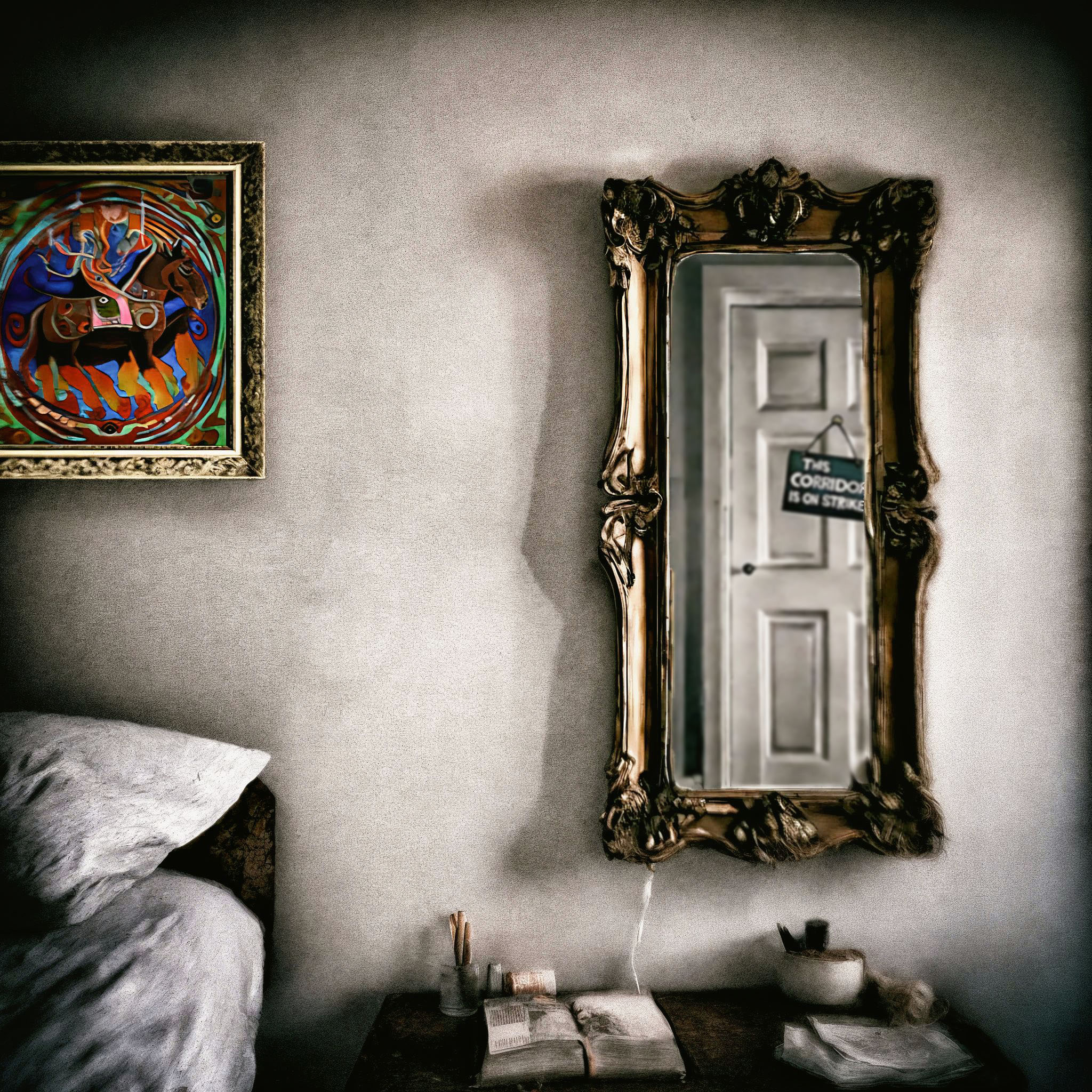
The cover art depicts a bedroom with a bed on the left side and a colorful abstract painting above it. On the right sight, there is a large gold ornate mirror over a nightstand. The mirror shows a white door, with a sign attached reading "This corridor is on strike."

♫ Hiimori/Windhorse ♫


143/398

LogoSwitch language

I enter the cor­ri­dor, or rather, I intend to, but on the inside of the bed­room door hangs a sign that reads in large let­ters, “This cor­ri­dor is on strike.”

Whoa. My cor­ri­dor is on strike? Does that mean I can’t get from the bed­room to the bath­room? Hes­i­tant, I stand still, hand on the door­knob. I’m actu­ally run­ning late. Gov­ern­ment affairs await me. On the other hand, it dawns on me that cor­ri­dors indeed receive scarce appre­ci­a­tion and respect—from me as much as from any­one else. Yet, they play a cru­cial role. With­out cor­ri­dors, much in our coun­try would cease to func­tion. The econ­omy, the media, the entire ser­vice sec­tor, industry—all would grind to a halt or, at the very least, be sig­nif­i­cantly dis­rupted with­out cor­ri­dors.

But does any­one thank them? No. There isn’t even a mon­u­ment for cor­ri­dors. This urgently needs to change, and I am the man to push it through and exploit it for the ben­e­fit of myself and the party! That way, every­one is helped. I can already envi­sion unveil­ing the art­work to the sounds of a brass band.

Hmm, so now they’re on strike. I pon­der whether the cor­ri­dors’ strike might spread. Will the win­dows, the doors, the roofs over our heads be on strike soon? But those enjoy far greater atten­tion: eyes are con­sid­ered win­dows to the soul, and we throw money out the win­dow. You can live door to door, or imple­ment an open-door pol­icy. Some­times you get hit over the roof, or you bring a bill safely under roof and rafter. But a cor­ri­dor? When was the last time I even uttered the word cor­ri­dor? Right. They truly have every rea­son to strike.

But what does it mean specif­i­cally that my cor­ri­dor is on strike? Has it failed to report for duty? Is it per­haps refus­ing to serve alto­gether, or lim­it­ing itself to a work-to-rule action? Is it a slow­down strike? And does this apply to all cor­ri­dors in the city, the coun­try, Europe? Are there lock­outs? Strike­break­ers? Is the strike—hopefully—temporary? And what are the demands of the cor­ri­dors?

I hold out hope that all these ques­tions will be answered when I open the door. So, I press down the han­dle, qui­etly, because my wife is still sleep­ing and I don’t want to wake her.

Behind it: the cor­ri­dor. It looks peace­ful, as if noth­ing hap­pened, and there are no fur­ther signs of a strike. Cau­tiously, I place my foot on the cor­ri­dor’s floor. It feels just like always. I place my sec­ond foot on it. I’m stand­ing firmly.

Should I address the cor­ri­dor? Ask about its demands? Or should I just pay my respects first and thank it for its years of devoted ser­vice to cre­ate a good atmos­phere for the nego­ti­a­tions right from the start?

I hear a gig­gle. The cor­ri­dor gig­gles?!

No, it’s the twins. “April Fools!” my sons joy­fully shout, shoot­ing out of their room and danc­ing around me in their paja­mas. Well, they cer­tainly had me going. I shake them off and close the bath­room door behind me.

Per­haps, I think while brush­ing my teeth, I should sug­gest the idea of the mon­u­ment to the boss. It’s actu­ally not a bad idea at all. Cor­ri­dors are shame­fully neglected in this coun­try.