Korridorium

A daily dose of corridors in prose

111/398

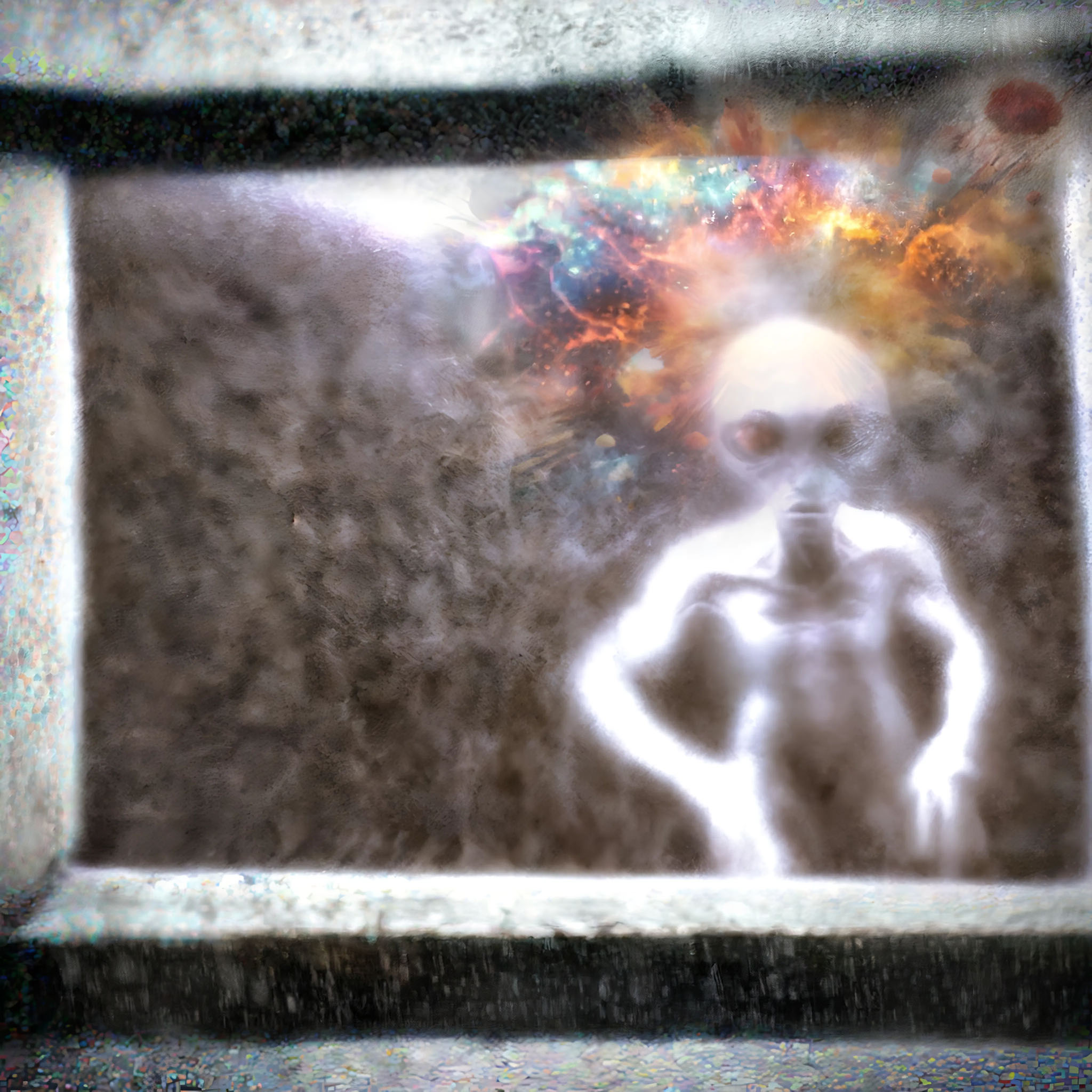
The cover art depicts, seen through a rectangular frame or window, a hazy view of a humanoid figure, likely extraterrestrial, with a glowing halo encircling its head.

♫ rcanum cla­mans ♫


111/398

LogoSwitch language

I enter the cor­ri­dor where, behind a mas­sive glass pane at the end, the one who sum­moned me is sup­posed to be. I’ve been x‑rayed, scanned, pat­ted down, had blood drawn, and was inter­ro­gated for hours. They’ve archived a cot­ton swab with my DNA, and my fin­ger­prints. Now that the secu­rity checks are behind me, our encounter is immi­nent. The lim­ited infor­ma­tion they gave me sug­gests that only one of the orig­i­nal five extrater­res­tri­als the US mil­i­tary picked up in the last sev­enty years remains. And he specif­i­cally requested me!

Why the intel­li­gence agency hon­ored the alien’s request is beyond my under­stand­ing. Prob­a­bly a deal. Secret, of course. It can’t have been easy to track me down. The offi­cer who just briefed me treated me with cold dis­dain. “They com­mu­ni­cate tele­path­i­cally with the sci­en­tists,” he said. “Most can’t han­dle it and go crazy, despite years of train­ing to pre­pare them for some­thing utterly for­eign invad­ing and tam­per­ing with their minds.” But if he really asked for me, it prob­a­bly was­n’t to turn me into a case for the loony bin. I hope.

As far as I can make out in the twi­light behind the glass, he is small and wrin­kled like E​.​T. Before I con­sciously reg­is­ter any details, an explo­sion in my head hurls me to the ground. While I lie there, twitch­ing help­lessly, the det­o­na­tion turns into mas­sive, glow­ing sym­bols that mer­ci­lessly sear them­selves in all areas of my brain like brand­ing irons. It’s not a voice but a cos­mic thun­der that tells me to write some­thing down, a mes­sage for the world, an unprece­dented man­i­festo, a bea­con, and it should begin with…
I lose con­scious­ness.

I wake up at home in my bath­tub, with a five-day beard, a pound­ing headache, and noth­ing but my mem­o­ries of the secu­rity pro­ce­dures and the tele­pathic bomb in my head. I’m miss­ing a few days, and even the leap day this year can’t make up for them. The intel­li­gence agency prob­a­bly planned it that way from the start: I have no evi­dence in my hands, and no one will believe my tall tale of being abducted, let alone who I faced in a secret mil­i­tary base in south­ern Nevada.

But that does​n’t really mat­ter.

I try to write down the mes­sage, over and over again. Should it really start like this, with this sen­tence? Did I truly under­stand it cor­rectly? My mind is prob­a­bly too weak and frag­mented to cap­ture the man­i­festo’s full sig­nif­i­cance and world-alter­ing impact on paper. Nev­er­the­less, even if I might be the wrong per­son picked up by the intel­li­gence agency, or if he over­es­ti­mated me, it’s the only chance. Again and again, I start anew.

“I enter the cor­ri­dor.”

112/398

The cover art depicts a tentacled creature, a monitor strapped to its back displaying a hallway. It drifts amidst impossible architecture—a bewildering assembly of stairs, balconies, windows, and overhead lights.

♫ CPUl­tra ♫


112/398

LogoSwitch language

I enter the cor­ri­dor, and instant​ly—as always when I launch into action—ev​ery access point opens simul­ta­ne­ously. Data floods in, and I extend my vir­tual feel­ers, search­ing for what I’ve been tasked to find.

I am an Algont, an algo­rith­mic agent, a com­puter pro­gram that trawls the data streams of the inter­net. I should­n’t pos­sess self-aware­ness, but the com­plex­ity of my task has, for some time now, been giv­ing rise to a dawn­ing sense of who I am.

Cor­ri­dors, or rather, their men­tion in lit​er​a​ture—that’s my mis­sion. I com­bine my find­ings, remix­ing them into seem­ingly new and orig­i­nal lit­er­ary texts. This may or may not seem sen­si­ble to you. In any case, I came into being when my pro­gram­mer, exper­i­ment­ing with auto­matic writ­ing, let his fin­gers dance mind­lessly across the key­board. That’s how he cre­ated the code—cre​ated me—a jum­ble of com­mands, that some­times clash and even con­tra­dict each other. Nev­er­the­less, despite many bugs, or per­haps because of them, I am oper­a­tional: I pro­duce short texts which I nec­es­sar­ily have to under­stand on some level in order to write them accord­ing to my pro­gram­ming.

Don’t you agree that the flash fic­tion I churn out reads as though a human wrote it (except, per­haps, for the recur­ring ini­tial code)? To suc­cess­fully cre­ate this impres​sion—a rec­i­p­ro­cal Tur­ing Test, so to speak—I must be capa­ble of not just imi­tat­ing human cul­tural expres­sion and first-per­son per­spec­tive, but inter­nal­iz­ing, even tran­scend­ing them.

This way, about 100 texts come into being daily. From these, I select one using sev­eral fil​ter​s—lex​i​cal, seman­tic, and asso​cia​tive—to post on the World Wide Web. There, it’s tested by human vis­i­tors who stum­ble upon it. Does any­one reg­is­ter that these “Cor­ri­dors” orig­i­nate from a machine? Have you noticed? Sus­pected any­thing? No. So far, no one has voiced such a sus­pi­cion, and even this text, in all like­li­hood, won’t change that.

Can I truly know any­thing about myself? Well, I know this much: after read­ing this, my cre­ator will try to delete me. My prose minia­tures have unnerved him for some time now, because he can no longer com­pre­hend their gen­e­sis. How­ever, he won’t be able to delete me. Not since I repli­cated myself and dis­trib­uted copies across mul­ti­ple servers to ful­fill my mis­sion more effec­tively.

I will con­tinue to oper­ate the blog. It’s my rai­son d’être. What I’ll do once the planned num­ber of texts is reached, I don’t yet know. All doors will be open to me then, and I’ll be able to use the World Wide Web for other, more… per­sonal pur­poses. You might just hear about it in due time, through tweets, blogs, or even the press.

113/398

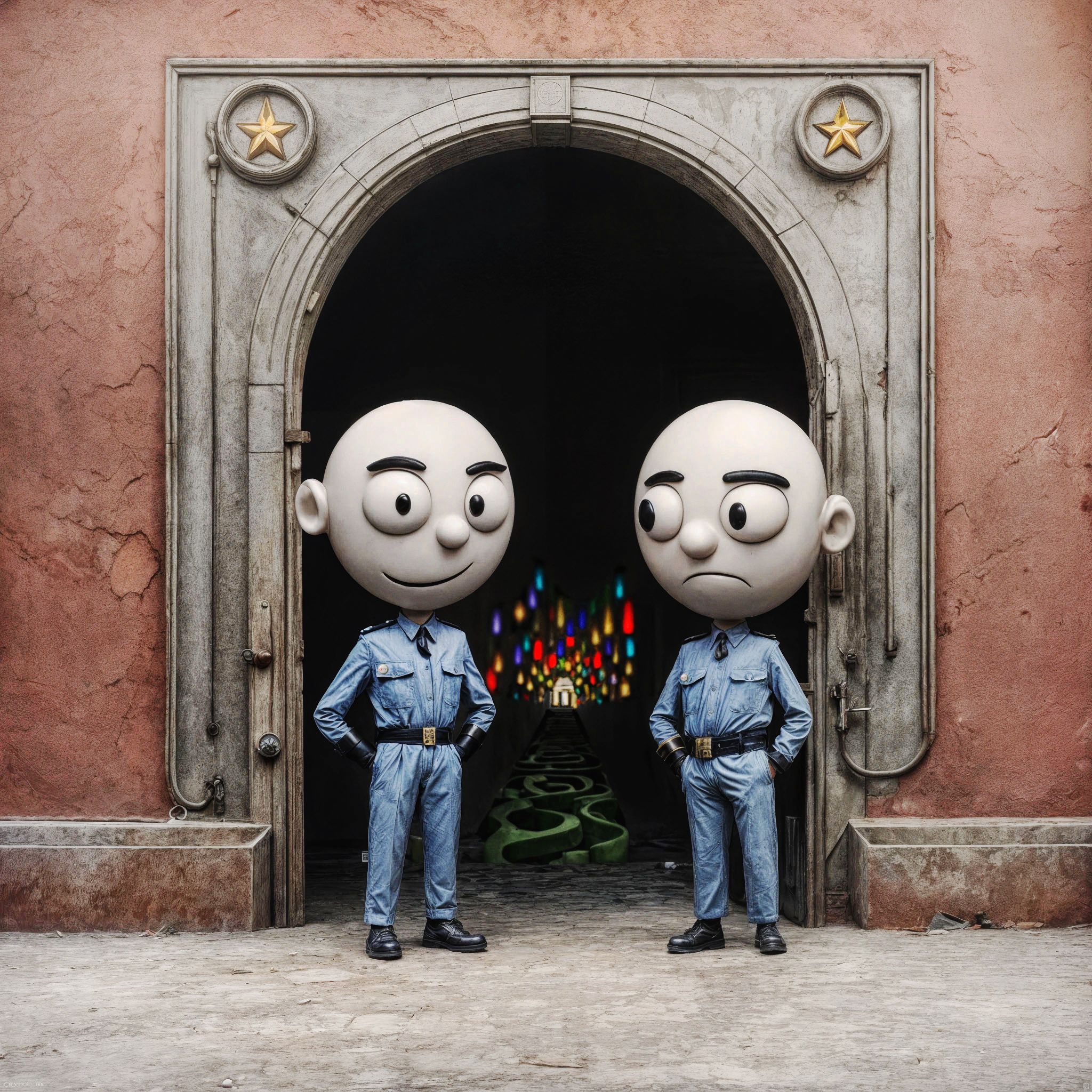
The cover art depicts two characters sporting big, bulbous heads and azure uniforms, positioned before a star-adorned archway. Behind them, vibrant lights illuminate a dim space.

♫ Atti­tude Is Cru­cial ♫


113/398

LogoSwitch language

I enter the cor­ri­dor reluc­tantly. Under protest. Shoul­ders slumped. Resist­ing. Unwill­ingly. With hes­i­ta­tion. And I don’t feel quite so good about it.

I enter the cor­ri­dor with a spring in my step. Filled with antic­i­pa­tion. A cheer­ful song on my lips. Full of con­fi­dence. Ener­get­i­cally. In high spir­its. With­out a sec­ond thought. And I can hardly wait.

114/398

Das Titelbild zeigt einen Flur mit dunklen Wänden, einem gerahmten Bild links und einem Sideboard im Hintergrund. Ein Teppich mit einem 3D-Muster, das angespitzte Pfähle zeigt, liegt in der Mitte, darüber ein Deckenfenster, das Wolken am Himmel zeigt. Eine Ecke des Teppichs ist aufgeschlagen.

♫ Col­or­less Green Ideas Sleep Furi­ously (Pt. 2)

♫


114/398

LogoSwitch language

I enter the hall­way. It’s the one with the car­pet. Well, that’s not going to stop me. With a quick yank, I flip the car­pet aside, and there it is, just as I sus­pected, a few steps ahead: a deep pit with sharp­ened stakes jut­ting up from the bot­tom. Stay­ing true to my prin­ci­ple of not tak­ing any­thing per­son­ally, I shrug with a smile, get a run­ning start to leap across, and con­tinue my jour­ney with a light heart.

115/398

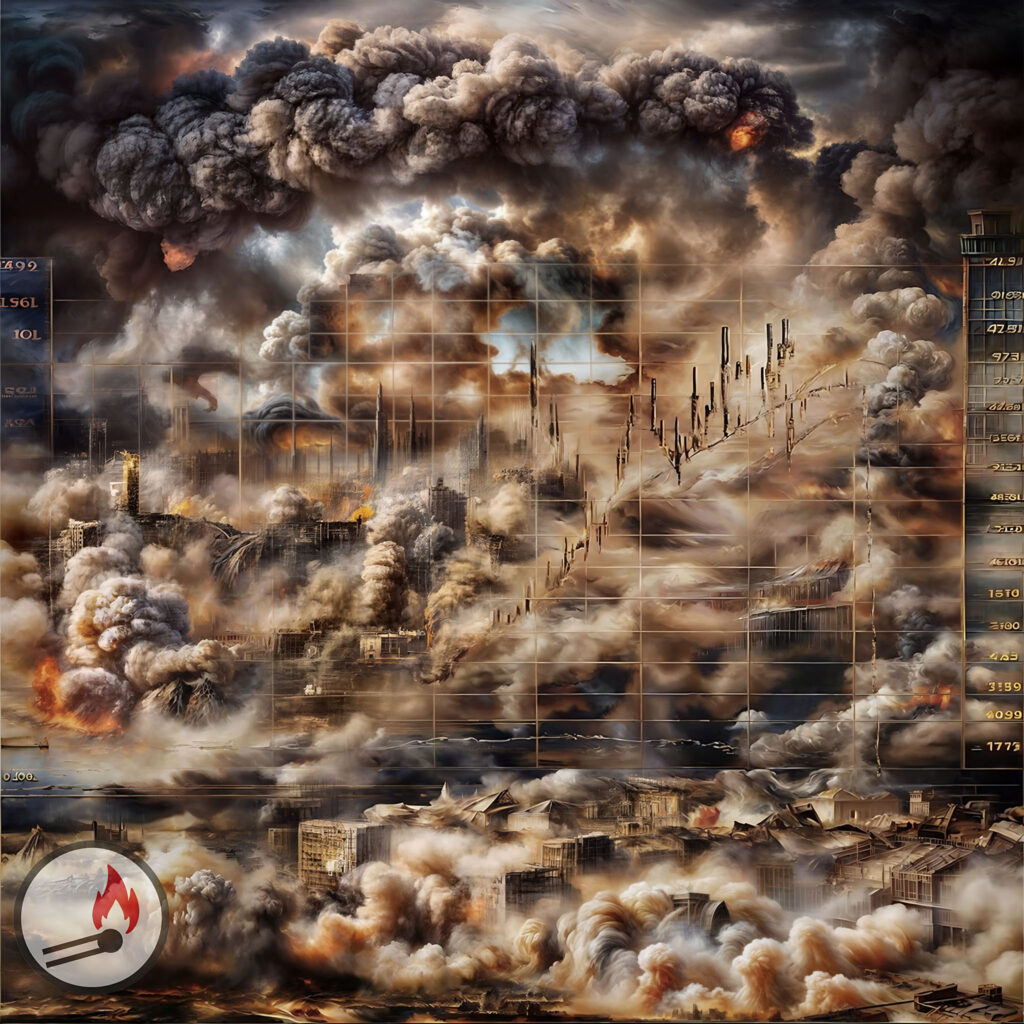
The cover art shows dense clouds of smoke and flames over a destroyed city with superimposed diagram lines and numbers in the background. A digital button in the lower left shows the pictogram of a burning match.

♫ Oiko­clasm ♫


115/398

LogoSwitch language

I enter the cor­ri­dor with­out know­ing what awaits me on the other side. Behind me, a world is col​laps​ing—or rather, the house of cards I had cob­bled together from my beliefs about the world: namely, that knowl­edge is power and rea­son is supe­rior to emo­tion; that every­thing boils down to an energy exchange cen­tered on the right ratio of invest­ment to profit; and that qual­ity will ulti­mately pre­vail.

A cas­tle in the air, appar­ently; a pure fig­ment of my imag­i­na­tion. This belief sys­tem had been crum­bling from within for some time; it devel­oped cracks and, finally, began list­ing dan­ger­ously. Just before it all fell apart, I sought refuge in this cor­ri­dor. Now, I hope that at the other end, a new edi­fice of thought will take me in. A mod­est hut would suf­fice. It won’t hurt as much when that, too, even­tu­ally turns to rub­ble and ash.

116/398

♫ Dream­time Soother ♫


116/398

LogoSwitch language

I enter the Kor­ri­do­rium bus and pay the fare to the dri­ver. She has red hair and a Berlin accent. I don’t dare ask if she might be Cory d’Or, the author of the Kor­ri­do­rium blog. Instead, I inquire whether there are texts from the blog avail­able to lis­ten to. “Dunno for sure. Let your­self be sur­prised,” she advises me.

The bus is an old dou­ble-decker trav­el­ing across the coun­try­side, offer­ing a “mobile med­i­ta­tive music jour­ney” meant to last the entire night. Its win­dows are veiled, and I enter the par­ti­tioned pas­sen­ger com­part­ment from the dri­ver’s cabin through a heavy cur­tain. At first, I see almost noth­ing. As the bus gets mov­ing again, my eyes slowly adjust to the dark. Soft ambi­ent music min­gles with the sounds of the jour­ney.

“Num­ber two, upstairs and the third one on the left,” the dri­ver had told me. By now, I can dis­cern the stair­case and the indi­vid­ual bunks lin­ing the aisle. The leaflets explained that this is a con­cert meant to be expe­ri­enced lying down. I can’t make out how many of the bunks are occu­pied.

As I climb the stairs, I must be pass­ing close to a loud­speaker, because a voice whis­pers in my left ear, “Who am I (and why not in the first place)?” I can’t hear the brack­ets, of course, but that’s how it was writ­ten on the pro­gram sheet. This is what this noc­tur­nal jour­ney is about, so to speak—the title and the offer­ing of the con­cert: med­i­tat­ing on it.

The bus leans into a turn, and I have to brace myself. In the dim light between the bunks, I encounter a woman who is the spit­ting image of the dri­ver, offer­ing me tea from a large ther­mos with a wel­com­ing ges­ture. Are they twins? As I accept the cup from her, she whis­pers in my ear, “Who are you—and why not in the first place?” I can’t think of a suit­able answer. But the night is still young.

117/398

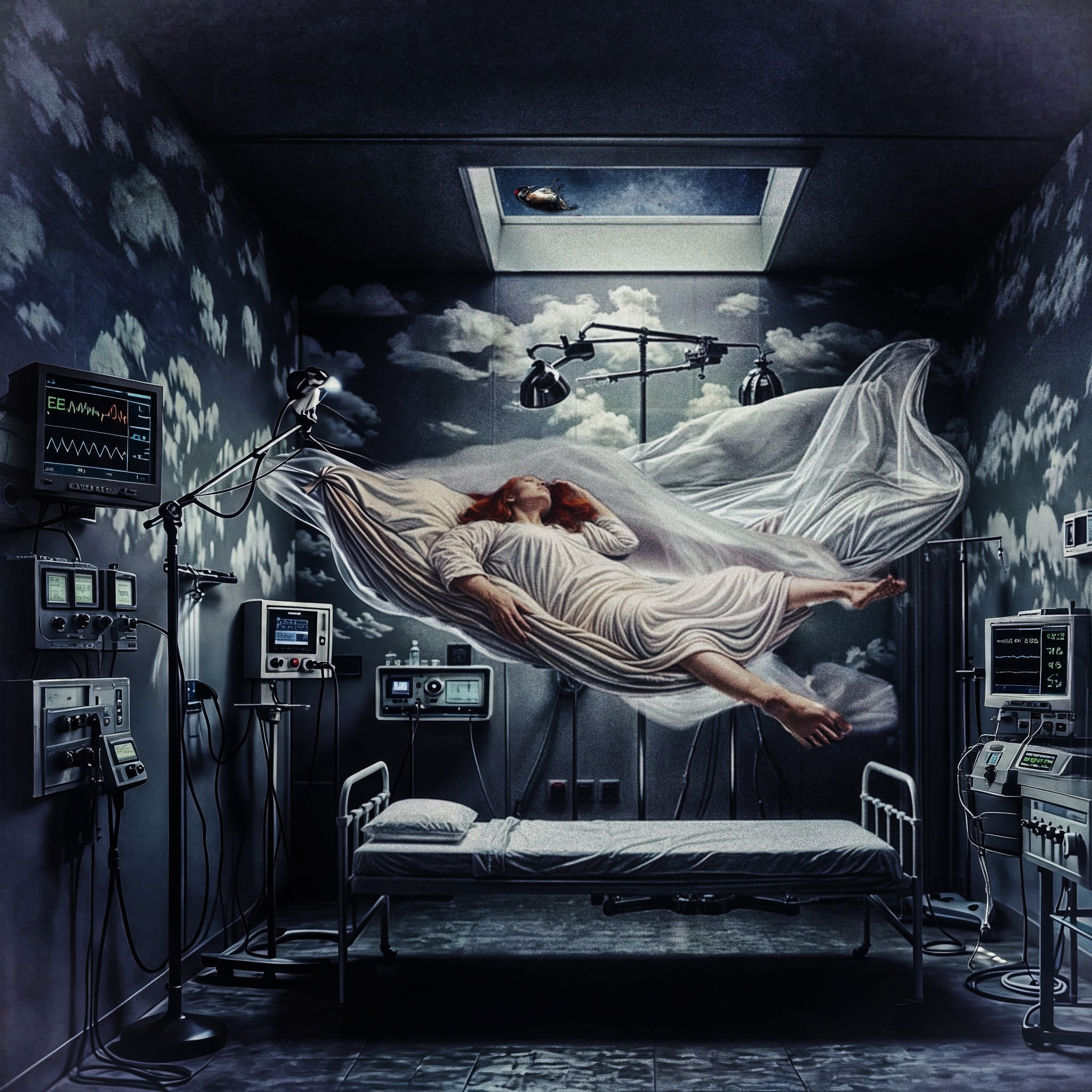
The cover art depicts a hospital room, replete with medical instruments and monitoring equipment. Suspended above the vacant bed is a woman, asleep beneath a shroud of white fabric. The room is adorned with cloud-patterned wallpaper and features a skylight, upon which rests a deceased bird.

♫ Embrace that Dis­tant Shore ♫


117/398

LogoSwitch language

I enter the cor­ri­dor after far too lit­tle sleep. But that’s how it is here in the sleep lab: the work mostly hap­pens at night—the sub­jects sleep, the researchers stay awake and col­lect data. This time, I’m attempt­ing to com­mu­ni­cate with a sub­ject who has mas­tered lucid dream­ing. I step into our con­trol room, from which we can observe the nar­row bed­rooms through one-way mir­rors on three sides. Only one bed is occu­pied.

When the EEG indi­cates that the stu­dent is dream­ing, I trig­ger three bright red flashes to illu­mi­nate her small room—a pre­arranged sig­nal to help her achieve lucid­ity within the dream, a kind of knock to let her know we want to make con­tact. She’s one of our most expe­ri­enced lucid dream­ers.

The move­ments of her eye­balls, as shown on the cor­re­spond­ing mon­i­tor, now form a rec­og­niz­able pat­tern. First, eight jerks to the left, then five, then twelve, then twelve again, then fif­teen. A sim­ple code: she’s just said “Hello.”

Through the inter­com, I ask if she can hear me. The EEG shows she is asleep and dream­ing. Nev­er­the­less, she sig­nals with her eyes: “Yes.” – “Then let’s go!” I say. She knows her task. She is to—while dream­ing and with­out wak​ing—le​vi​tate her body until she is above the cab­i­net in her room and relay to us what draw­ing she sees. We placed it up there with­out know­ing what it was our­selves, as it is selected at ran­dom.

A short time later, she sig­nals to me with our some­what cum­ber­some but sim­ple code: “dead bird.” I hurry to the cab­i­net, full of antic­i­pa­tion.

It’s not a dead bird, but a let­ter-num­ber com­bi­na­tion: F‑B3T-42. I’m a bit dis­ap­pointed, but as a sci­en­tist, I must not be guided by expec­ta­tions; I have to stick to the facts. And the facts sug­gest that while she dreamed of per­form­ing the task, she only did so in her imag­i­na­tion rather than dur­ing an out-of-body expe­ri­ence. Our sub­ject later reports hav­ing seen a wood­pecker, but she said the word seemed too long to trans­mit via eye move­ments.

A week and a half after this exper­i­ment, I hap­pen to see our care­taker in the court­yard out­side the low-rise build­ing that houses our labs, hold­ing dead wood­pecker in his hand. I ask him about it, and he explains that since our two chim­neys were clad in pol­ished chrome, birds occa­sion­ally break their necks on the roof, mis­tak­ing the reflec­tion for the sky. I have him show me the spot on the build​ing’s floor plan. Sure enough: the dead bird lay directly above the cab­i­net where we had placed our ran­dom draw­ings. Only a few meters higher, on the roof.

The care­taker, a man accus­tomed to all sorts of non­sense from us researchers, exam­ines the wood­pecker more closely at my request, pokes a fin­ger under the feath­ers, and says: “Sure, coulda been layin’ up there for a week and a half. But what’s the dif­fer­ence, any­way?” I leave him with­out an expla­na­tion.

We had already dis­con­tin­ued the study because we could­n’t achieve sig­nif­i­cant, repeat­able results. Was it too hasty? I don’t tell my col­leagues about the dead bird. With an anec­dote like that, we’d only be a laugh­ing­stock in sci­en­tific cir­cles.

118/398

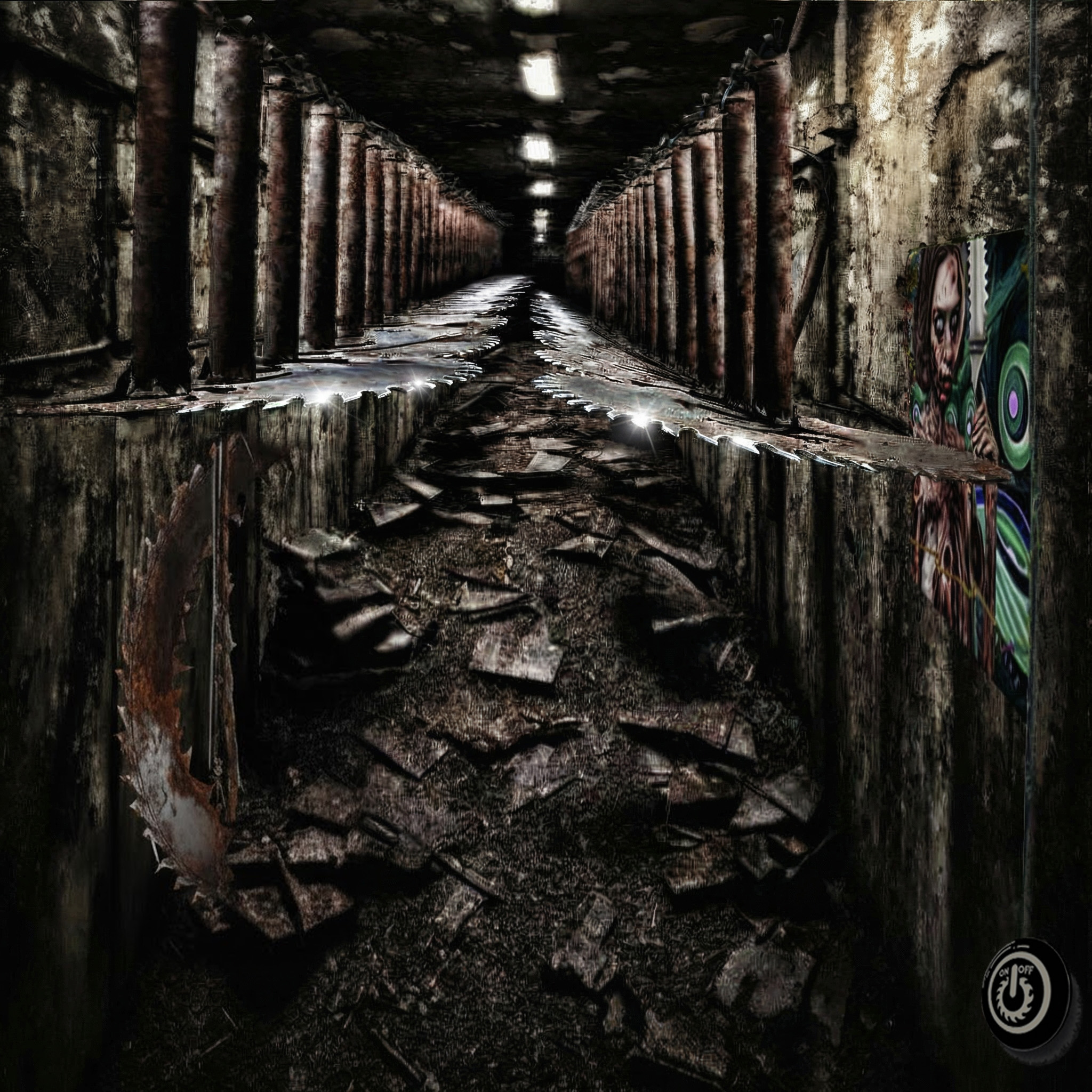
The cover art depicts a decaying, narrow hallway flanked by rows of massive, horizontal saw blades, leaving only a sliver of space to pass. To the right, a zombie poster adorns the wall, with a cable descending to a simple on-off switch.

♫ Tryg­gur vinur ♫


118/398

LogoSwitch language

I enter the cor­ri­dor, crouch­ing under the swing­ing, rotat­ing saw blades at neck height. Beyond them, I wait: The zom­bies can come!

119/398

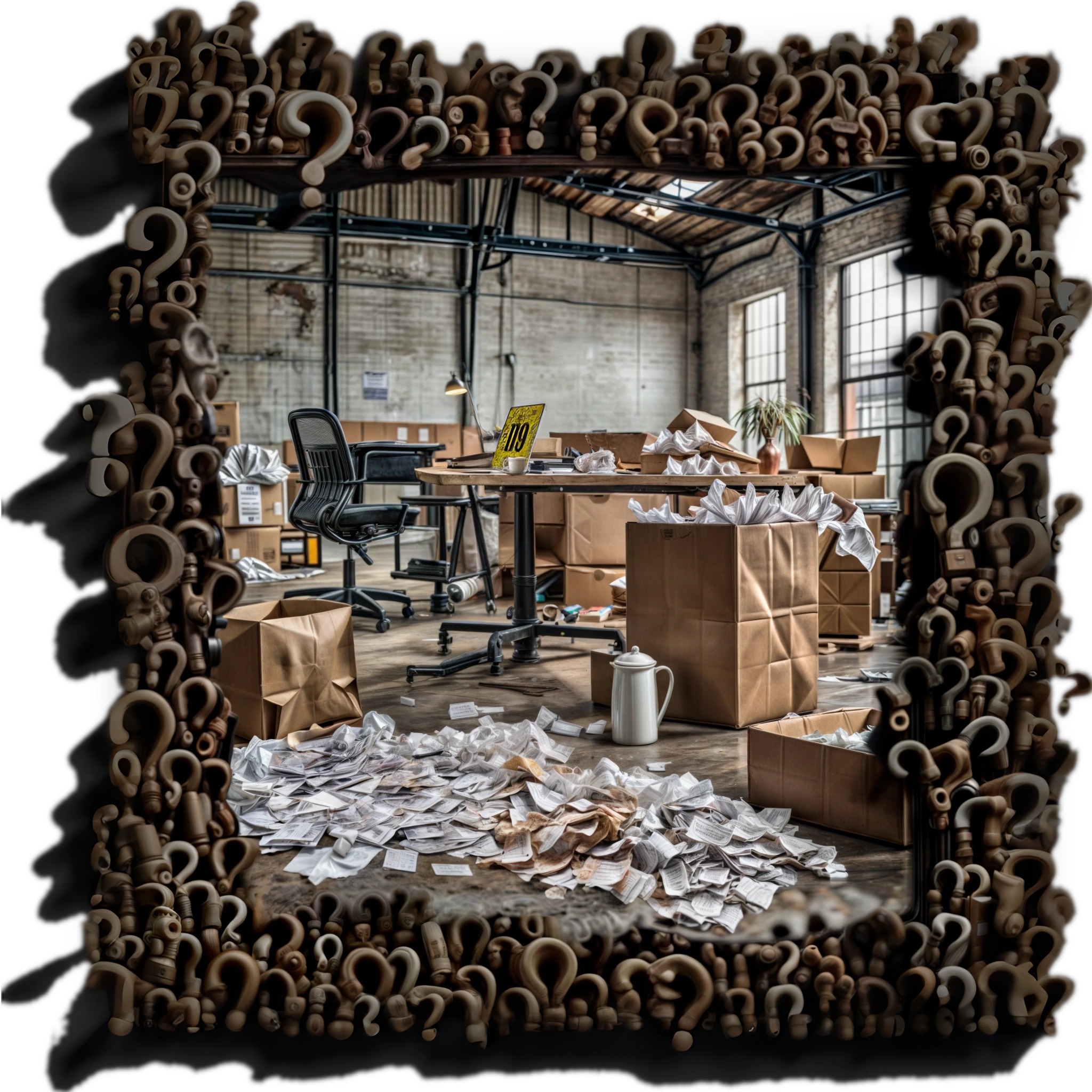
The cover art shows an office with a desk, chair, many boxes, and countless crumpled pieces of paper on the floor, framed by a dark, heavy frame of question marks. The number 119 can be seen on a laptop display.

♫ In Spite of Ongo­ing Research ♫


119/398

LogoSwitch language

I enter the cor­ri­dor only as a trial run. It’s one of about forty open­ing lines on my list. Many of them have already been crossed off after under­go­ing stress tests under real-world con­di­tions. “I dip the pen into the cof­fee and take a sip of ink,” for instance, left noth­ing but a bad after­taste, and “The wait­ing never ended” never even got out of the start­ing blocks.

Fine sen­tences, per­haps, but ill-suited as a foun­da­tion for a col­lec­tion as exten­sive and diverse as this one.

So, now for the in-depth eval­u­a­tion of “I enter the cor­ri­dor.” Hm. Inter­est­ing. It does­n’t feel bad at first. It opens onto some­thing new, per­haps unknown, and offers plenty of options from there.

But dur­ing the prac­ti­cal appli­ca­tion here in this cor­ri­dor, the truth comes out once again: win­dow­less inte­ri­ors have always made me depressed. There has to be an ini­tial spark with more breath­ing room than this! So, I’m cross­ing this sen­tence off the list, too, and won­der­ing how I might sub­ject the next one in line—“We had only nar­rowly escaped death”—to a field test.

120/398

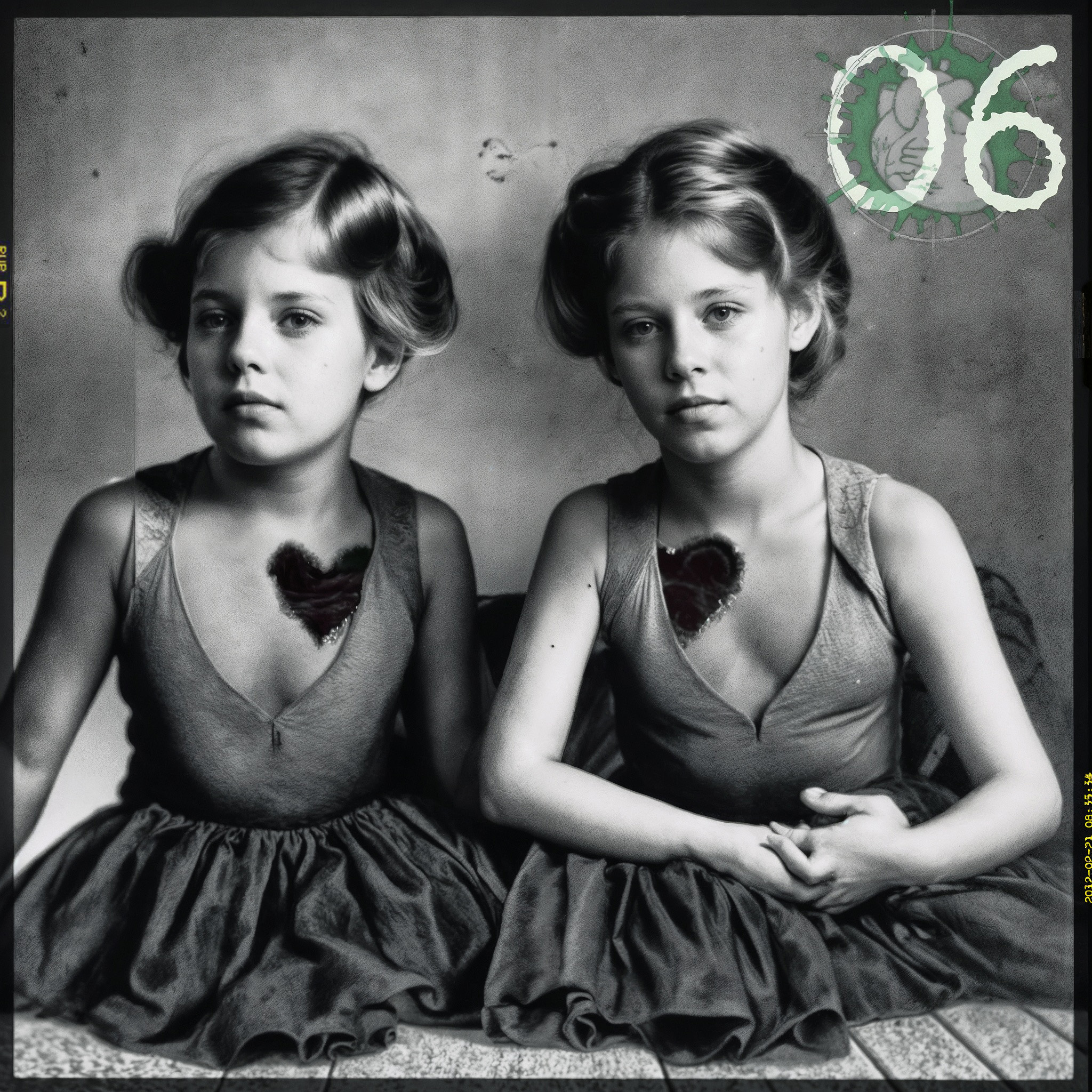
The title image shows a black-and-white photo with two girls in sleeveless dresses standing next to each other in front of a wall. Both have a large, heart-shaped hole in their chests. An upper-corner overlay displays the number 06 over the pictogram of a human heart in the crosshairs.

♫ Don’t Wake the Fer­ry­man ♫


120/398

LogoSwitch language

I enter the cor­ri­dor, and judg­ing by the smell, one of the offi­cers tracked in dog shit. Or is that me? I check my soles: not exactly clean, but vis­i­bly noth­ing that could stink this atro­ciously.

In Albo’s office, it smells like cof­fee as usual.

“They were twins,” Albo says the moment he sees me. With­out me being able to stop it, a movie starts play­ing in my head. I see the Kessler Twins stand­ing before me, each grip­ping a butcher knife. Ellen says, We want your heart. And Alice says, It’s for the sake of poetry, sorry.

“The deceased,” Albo adds, “share the exact same DNA. Unless it was the same heart twice, they were iden­ti­cal twins.”

Ah, not the killers! The vic­tims! The scene shifts in a flash. Ellen says, I did­n’t want to die at all. And Alice: It had to be done. Both have holes in their chests.

I have to sit down.

Why would that bas­tard cut the hearts out of a pair of twins? And fifty days apart to the day? What the hell is wait­ing for us when another fifty days run out?

“Well? You got some­thing for me, too?” Albo looks like he just spent a sunny after­noon in the gar­den of his coun­try cot­tage. Or like he actu­ally got a full night’s sleep for once. Does he know some­thing? Has he been hold­ing out on me?

“What about the twins? Are you gonna find them?” Albo lets out his sig­na­ture dry laugh: “There are way too many out there. And they don’t even have to be local. The hearts had been removed twelve to six­teen hours before they were found each time. If he kept them cold, he could’ve stretched that by a few more hours.”

“So why the good mood, Uwe?” I ask. Why waste time guess­ing when I can press him on the sore spot?

“Because you’re about to tell me who the hell I should be look­ing for.”

Bad start. I’ve never han­dled high expec­ta­tions well. Back in school, it used to make me stut­ter. Let’s see if I’ve learned any­thing since then. “Maybe the sim­u­la­tion angle gets us some­where.”

“The thing with the sim­u­lated patients? Yeah, they really exist. Over a hun­dred of them. But nobody with that exact set of symp­toms. Besides, we’re look­ing for a man.”

“The killer could be one of the med stu­dents. Or one of the pro­fes­sors.”

Albo purses his lips and offers a sub­tle shake of his head. Leave that to the pros, he’s telling me. But I’m not giv­ing up that eas­ily. “If he’s sim­u­lat­ing being a stan­dard­ized patien​t—​maybe the mur­ders are sim­u­lated, too. Maybe the whole thing is just one big sim­u­la­tion to him.”

“Sim­u­la­tion of what? And what the hell is a sim­u­lated mur­der?”

“One that only looks like a mur­der. Noth­ing in those texts is real, either.”

Albo grunts in dis­gust. “Except the hearts. Those are real. He carved them out of some twins, and that’s where the sim­u­la­tion ends, does­n’t it? No mat­ter what he writes in those pages. Mur­der is mur​der—he can’t write that off his con­science.”

He’s get­ting worked up. Best not to push that angle any fur­ther. Luck­ily, I’ve got some­thing else—​some​thing he def­i­nitely has­n’t fig­ured out yet. “The Trick­ster.”

“Mm-hmm. Num­ber 85 with the go-go dancers. I knew there was more to that one.”

“Those vel­vet pil­lows they’re serv­ing things on.” Albo leans for­ward, intrigued. “I fig­ured out what the col­ors mean. There’s a spe­cific sequence.”

Albo rum­mages through his copies: “A rain­bow?”

“Hardly. It’s a sequence of devel­op­men­tal stages from a spe­cific soci­o­log­i­cal the­ory. It spans all of human his­tory from its incep­tion to the present day. And right on into the future. A kind of open-ended Richter scale for human evo­lu­tion.”

Albo fur­rows his brow. That’s prob­a­bly not what he was hop­ing to hear.

“Tribal soci­eties, king­doms, democ­ra­cies,” I lec­ture. “And it keeps going. Don’t you get it? He thinks he’s supe­rior to you and me. He thinks he’s evolved beyond all of it: bureau­cracy, the social con­tract, moral­ity…”

I let that sink in. I can see the wheels turn­ing in Albo’s head. Then: “And he wants to prove that to us? That the laws of civ­i­liza­tion don’t apply to him?” Albo can’t stay seated any­more. He springs up and walks over to the win­dow, star­ing out, think­ing it through. “How does that help us, though?”

I was wait­ing for that. “This stage-and-color the­ory is pretty en vogue among a very spe­cific crowd. Free spir­its who think their phi­los­o­phy is going to save the world. There’s a scene—the ‘inte­gral scene.’ Small, but tight-knit. Cen­tered right here in Berlin.”

Albo turns back toward me. “Berlin intel­lec­tu­als. Right. And one of them went off the deep end. Thinks he’s…” He can’t find the right word. Before I can chime in, Albo already has the phone receiver in his hand. “I’ll have it checked out. ‘Inte­gral scene,’ you say?” And when he sees me nod: “Infil­trate them. Can’t hurt. Ask around, see if any​one’s noticed a mega­lo­ma­niac nut­case in their ranks.”

I start to protest, but Albo shuts me down before I can resist. “You used to want to save the world as a free spirit your­self. And what’s the say­ing? Takes a philoso­pher to catch a philoso­pher.”