Korridorium

A daily dose of corridors in prose

Kategorie: story

68/398

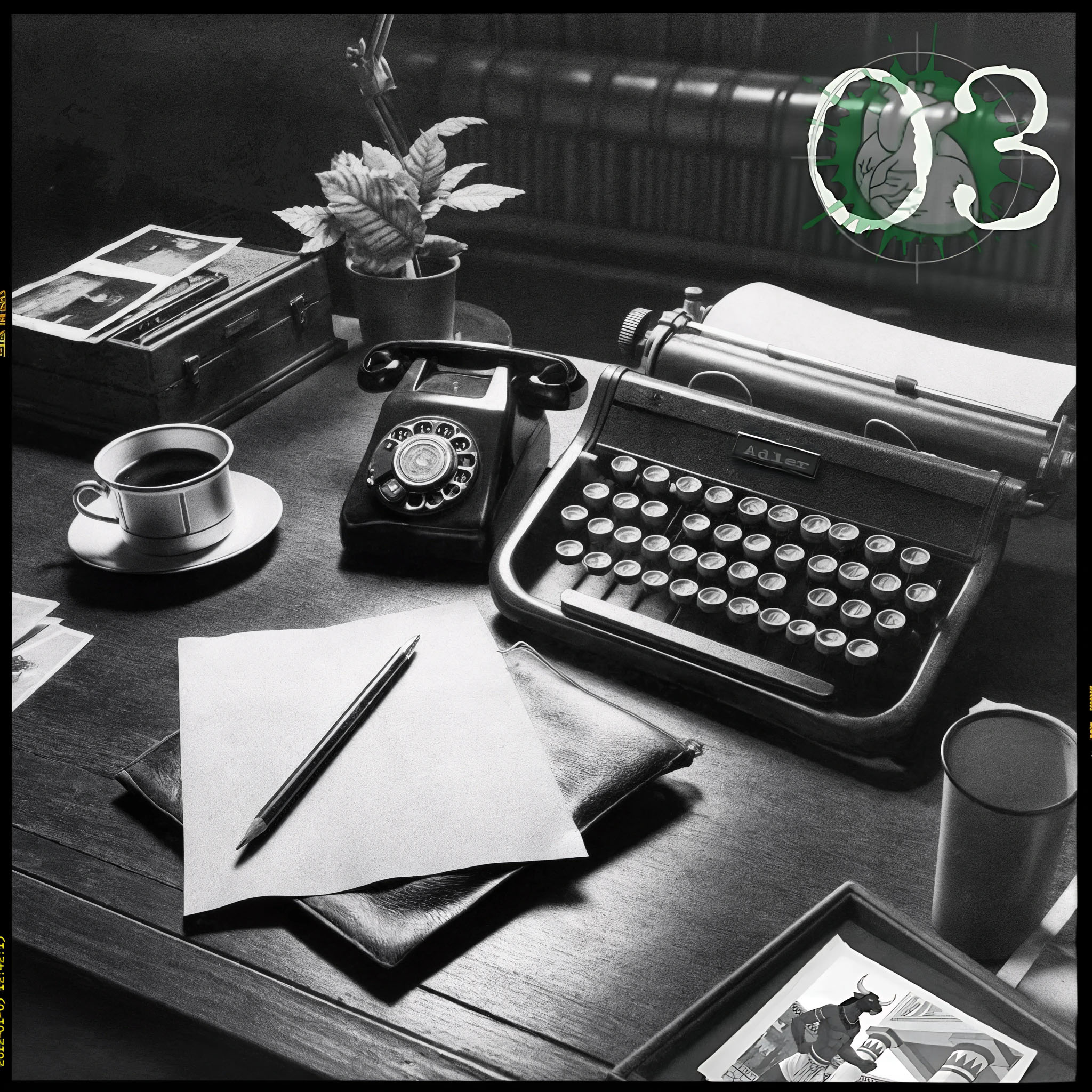
The cover art shows a black-and-white photograph of a desk with an Adler brand typewriter, an old rotary dial telephone, a cup of coffee, a small potted plant, a pen on paper, and a framed picture showing a human-like figure with a bull's head.

♫ Wim­mel­bild ♫


68/398

LogoSwitch language

I enter the cor­ri­dor at the police sta­tion. Even from here, I can hear Albo yelling. He seems to be in a foul mood. No sur­prise there. When he sees me, he shoos the rook­ies out of the office. Even pulls up a chair for me. Never does that, the detec­tive.

“Find any­thing?” His voice is hoarse. He nods towards the copies with the blood­stain that fades down to doc­u­ment num­ber 10. “The team here says he’s a can­ni­bal and ate every­thing but the heart.”

I help myself to a cof­fee. “They must mean text num­ber 15, the ‘man-eater.’ It’s a lit­er­ary allu­sion to the Mino­taur myth. Unlikely that he iden­ti­fies with it that way.”

Albo sits on the desk and rubs his right thigh. “But there’s no body. And no miss­ing per­son report that fits. He cut the heart out with a knife that, the experts say, ‘was nei­ther par­tic­u­larly sharp nor par­tic­u­larly dull.’ Great! Got any­thing else for me?”

“It’s all pretty vague. Based on the texts, I’d guess he’s sin­gle, a loner, does­n’t like being around peo­ple.”

“The thing about Mount Olym­pus?”

“Yeah. But also the one about the hip­pies. And he’s got a grudge against gov­ern­ment insti­tu­tions and bureau­cracy. Num­ber 42, with the promised blood­bath…”

“Could just be he’s hav­ing trou­ble with his tax office. This is all garbage, man. I’ll spell it out for the dum­mies: What am I sup­posed to be search­ing for? And don’t tell me some young female clerk at the build­ing depart­ment named Cory d’Or!”

“That’s just one of many false leads, sure. Although…”

Albo shifts to get com­fort­able and knocks a pen­cil sharp­ener off the desk. He groans as he bends down. “Although what?”

“There’s a decent chance his real name actu­ally is Cory. It’s a man’s name, too.”

Albo reaches out with extended fin­ger­tips, but the sharp­ener just slides fur­ther under the desk.

“Text num­ber 8, with cav­ity, horn, and boil­ing basin, and so on,” I add.

“Yeah?” He gives up, drops back into his swivel chair, and looks at me expec­tantly.

“All pos­si­ble ety­mo­log­i­cal ori­gins of the name ‘Cory.’ And unless he hap­pens to be a linguist—which I can’t entirely rule out—only some­one with that name would know that.”

Albo rubs his stub­ble. “I’ll have it checked out. A thin lead and a slim chance, but I’ll check it. Can’t be that many Corys in Berlin and the sur­round­ing area.”

“And one more thing, Uwe.” Albo drops his hand. “I’ve been think­ing we should pub­lish some of the texts. With a note mak­ing it clear we’re look­ing for the author.”

“And you don’t think that might be exactly what he wants?”

I expected that ques­tion. “Yeah, could be. But we’ll only pub­lish excerpts, and we’ll slip in a few typos. Enough to make him see red. What do you think? Maybe some­one rec­og­nizes the texts. Or the style, or an allu­sion.”

“That’s all you’ve got? What if he feels pro­voked? I don’t want to find a liver some­where tomor­row, or a lung, excised with a knife that’s not too dull and not too sharp.”

I point to the copies. “I’ve squeezed them dry. The whole thing is a shell game designed to lead us by the nose. I can’t just point a fin­ger at some­one and say, ‘That’s him, he wrote them, you’ll find fifty type­writ­ers in his garage and the bloody knife in his kitchen cab­i­net.’ ”

Albo sways his head back and forth. We’ve known each other for so many years—every now and then he’d con­sult me, his old psy­chol­o­gist friend, on tricky mur­der cases. But despite the use­ful insights I could offer from time to time, he should know I can’t work mir­a­cles. He low­ers his voice, leav­ing no doubt that what comes next is impor­tant. “I want a writ­ten pro­file, as pre­cise as pos­si­ble, clear? One that says he isn’t a can­ni­bal, but an intel­lec­tual who enjoys cruel games. Who might be named Cory, which gave him a trauma that turned into an obses­sion with cor­ri­dors. Got it?!”

“That’s pretty much all I have, though.”

“Write it down. I need it for admin. If you hap­pen to think of any­thing use­ful while doing it, let me know. And as for pub­lish­ing the stuff—I’ll think about it.”
74/398

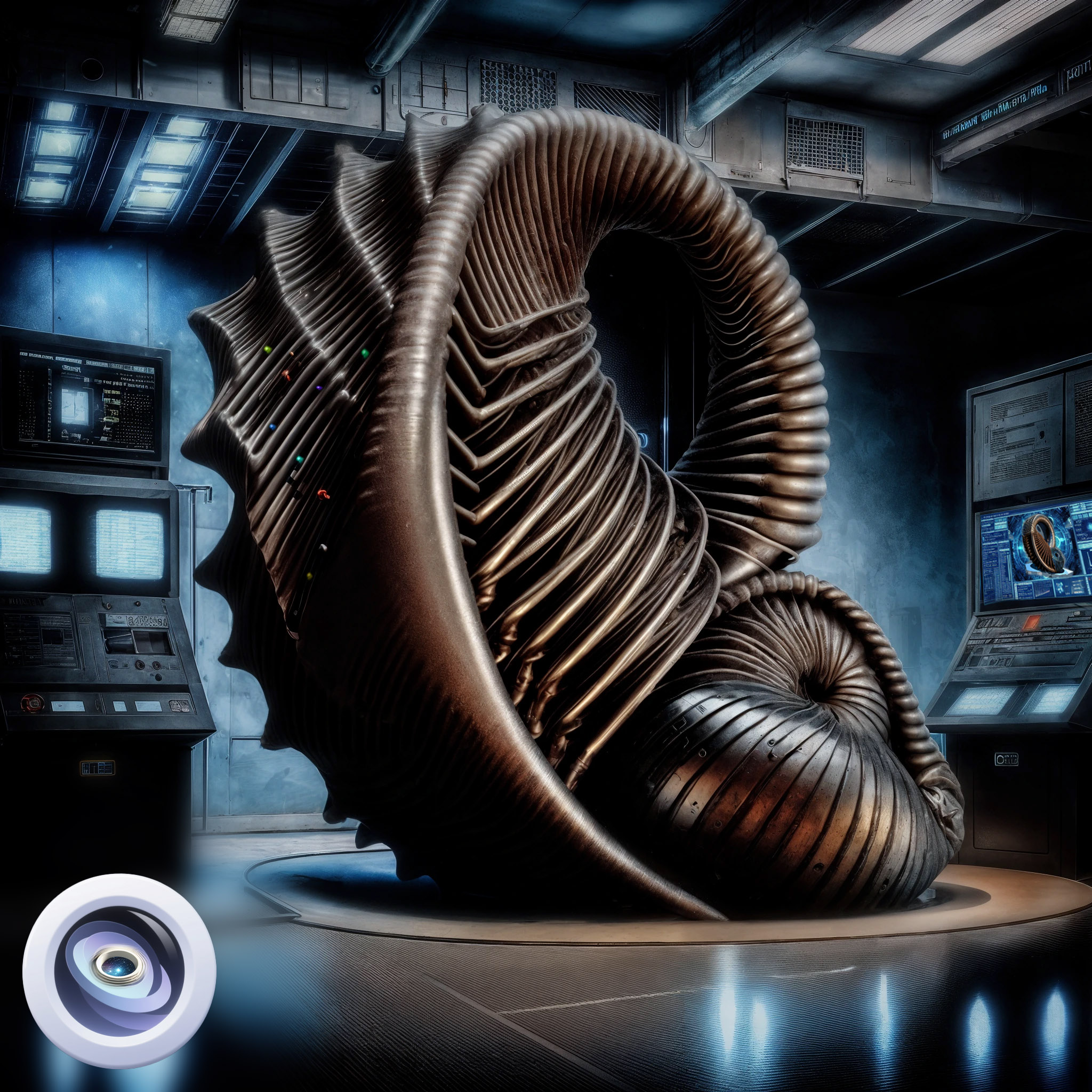
The cover art shows a massive, coiled metallic form within a shadowy high-tech chamber, complete with banks of monitors and control stations. In the lower left, a digital button presents a circular aperture, offering a descent into the star-strewn heavens.

♫ A Mod­icum of Sense ♫


74/398

LogoSwitch language

I enter the cor­ri­dor to find the right door: the door that will take me back to the “Snail Shell.” That’s what we called the con­vo­luted mag­netic cham­ber, which our super­com­puter had cal­cu­lated for us. After two years of con­struc­tion along­side my stu­dents, the cham­ber was nearly com­plete: a strangely twisted and self-folded struc­ture of gleam­ing metal adorned with hun­dreds of mag­nets, designed to pre­vent any mat­ter gen­er­ated in the vac­uum cham­ber from com­ing into con­tact with any­thing. As the mag­netic cham­ber hung in the spa­cious lab­o­ra­tory, it resem­bled a work of art from another world. Almost ethe­re­ally beau­ti­ful, yet also unset­tlingly alien, as if this form should not exist.

I can­not ade­quately describe it. The Snail Shell held an ever-increas­ing fas­ci­na­tion for me. Even­tu­ally, I con­vinced myself that I absolutely had to inspect the welds before seal­ing the cham­ber, and one night, I secretly crawled inside.

But not back out.

Instead, I find myself in the Tri­este. As a child, this world record had left an indeli­ble impres­sion on me. I instantly rec­og­nize the sub­mersible; the descrip­tions from my child­hood must have etched them­selves deep into my mem­ory back then. I also rec­og­nize Pic­card, and in doing so, I know whose head I’m stuck in and through whose eyes I see it all: those of his fel­low trav­eler, Don Walsh—I am accom­pa­ny­ing Jacques Pic­card on a jour­ney to one of the deep­est points in the world’s oceans, the Mar­i­ana Trench.

It is cramped and stuffy; the metal hull groans heav­ily under the immense exter­nal pres­sure. The water, into which spot­lights shine, looks cloudy. A uni­verse of impen­e­tra­ble black­ness sur­rounds us.

I am a ghost, squat­ting inside Wal­sh’s head. Walsh seems obliv­i­ous to my pres­ence. I keep drift­ing away, as if I were a for­eign object that does­n’t belong here—which, in a way, is true. The expe­ri­ence reaches me like a radio sig­nal clouded by heavy sta­tic. And then, recur­ring headaches wash over me, which is strange because I no longer have a head of my own. Walsh appears to notice noth­ing of the ghost or the pain inside his head.

In bro­ken Eng­lish, Pic­card explains that we could die down here if we set­tle onto a wreck, get entan­gled, and can­not resur­face. How­ever, we land gen­tly. A flat­fish in front of our tiny win­dow feels dis­turbed, stirs from the mud, and swims away. There is life down here. In eter­nal dark­ness, with the weight of almost eleven kilo­me­ters of water above! Pic­card writes in his log­book. Then we release our bal­last and begin to ascend.

I don’t under­stand any of this. How did I get here? How can I sud­denly end up in a dif­fer­ent time, in the head of a stranger?

Is it a dream, or am I per­haps actu­ally dead, suf­fo­cated in the Snail Shell? But do you expe­ri­ence headaches and black­outs when you’re dead? Clear think­ing is a chal­lenge right now, but I believe this is all hap­pen­ing solely within my con­scious­ness. I’m not a time trav­eler, but a ghost trav­eler. And some­how, I must find a way back to the Snail Shell, the mag­netic cham­ber whose con­vo­luted form—crafted only by math­e­mat­ics and a pow­er­ful computer—has sent me into the Tri­este. I must return!

We resur­face. Cham­pagne is poured to cel­e­brate the record jour­ney. Walsh urgently needs to use the head. He apol­o­gizes, enters a cor­ri­dor in the mothership—and sud­denly, I spin away from him, adrift, upside down, shat­tered into count­less frag­ments. How­ever, like mag­netic par­ti­cles, these pieces reassem­ble. Not in the Snail Shell, but in another time, in the mind of another per­son, another child­hood fas­ci­na­tion…

80/398

The cover art depicts a circle of orchestra musicians, clad in black, seemingly suspended above a chasm filled with vibrant, organically formed structures.

♫ Sonochronic Con­tra­dic­tions ♫


80/398

LogoSwitch language

I enter the corridor—the orches­tra has already begun—and has­ten into the hall. To reach my seat, I must squeeze through the oth­er­wise fully occu­pied sec­ond row. As I do, the music crashes against me like a jun­gle of inco­her­ent tones, fol­low­ing no recog­nis­able form. Must I really endure this? “Avant-garde”—that sub­ti­tle on the pro­gramme should have made me sus­pi­cious. I truly wish to leave, yet I am as if paral­ysed, steadily los­ing the sen­sa­tion of my own body as the music expands. It begins to flow between the inter­vals of the accus­tomed semitones—not merely into quar­ter-tones, but “cen­ti­tones” and “mil­li­tones.” To the untrained ear, it is tor­ture; but for me, within me, some­thing has shifted. I now per­ceive with mount­ing inter­est the var­i­ous musi­cal forms bustling within the sound.

It is aston­ish­ing: these sound-fig­ures live and move freely through the world of tones, drift­ing apart and draw­ing near to one another. I realise with amaze­ment that the two dimen­sions of this world are, on one hand, pitch, and on the other, the tim­bres aris­ing from har­monic over­tones. Every liv­ing crea­ture in this sound uni­verse pos­sesses its own coloura­tion, even if some are adept at cam­ou­flag­ing them­selves.

One of these sound-crea­tures seems very close to me, and sud­denly the real­iza­tion hits: That’s me! In this world of vibra­tions and fre­quen­cies, I pos­sess my own body; I am part of this acoustic habi­tat! When one of the sound-beings nudges me and I feel a sharp pain, I learn that I can change my musi­cal form and move through this jun­gle of tones, through the dense musi­cal veg­e­ta­tion. I can even absorb small sound-fig­ures into my own form—as if I were strolling through a gar­den, snack­ing on tasty-look­ing apples or rasp­ber­ries.

A deep growl makes my heart skip a beat: a hunter is prowl­ing the jun­gle, search­ing for prey with its whirring sound-ten­ta­cles. I flee, but the hun­gry crea­ture has already spot­ted me. I hide my sound-body in the musi­cal veg­e­ta­tion of our habi­tat, but my cam­ou­flage is use­less. I nar­rowly escape a search­ing ten­ta­cle by climb­ing higher. I am lim­ited, how­ever; I man­age to rise a few octaves, but then the sounds begin to thin out in the high reg­is­ters. The preda­tor rum­bles rest­lessly back and forth directly beneath me in the low reg­is­ters, until a tiny melodic frag­ment falls from the veg­e­ta­tion I’m cling­ing to and betrays me. With a pierc­ing arpeg­gio, one of its ten­ta­cles reaches me and digs deep into the sound-pat­tern of my flesh. The greedy growl pulls me down toward it, octave by octave…

I let out a death cry.

The music dies away. A few vio­lins play on, but the con­duc­tor has turned towards me, and the entire audi­ence is star­ing. “I am sorry,” I mum­ble, stand­ing up and push­ing through the row to flee the hall.

I can still hear the con­duc­tor call­ing out a bar num­ber to his orches­tra to resume the piece. The music rises once more. But I run on, fur­ther and fur­ther, with­out col­lect­ing my coat from the cloakroom—simply away from here, into the open air.

There is no music here. The street noises are refresh­ing, wash­ing over my ears like a wel­come down­pour. Every­thing is a rush of cars and roar­ing motor­cy­cles; in the dis­tance, I hear a siren, and above me, an aero­plane. I come to a halt in the midst of this won­der­ful clam­our. A roar draws closer—the deep growl of a pow­er­ful engine. A bus thun­ders at great speed along the street, bear­ing down on the spot where I stand. I face it, arms flung wide to the sky, thank­ing the heav­ens for my res­cue…

83/398

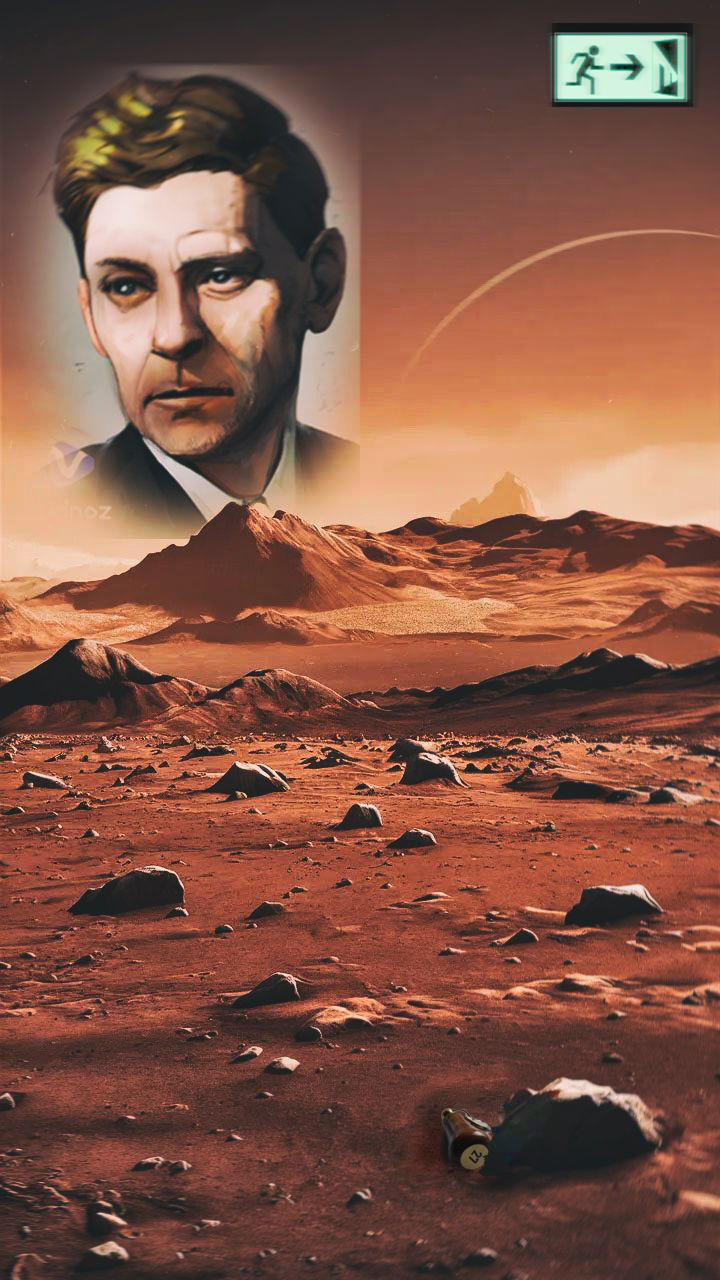
The cover art shows the portrait of a man above a barren, rocky Mars landscape with a green emergency exit sign in the upper right corner. A key with the number 27 lies in the Mars sand.

♫ Mare Chronium—Drifting ♫


83/398

LogoSwitch language

I enter the cor­ri­dor, rush­ing to reach Room No. 27 in time. Our guest, Mr. Korian­der, insists that his meal—again it is Coq au vin, a spe­cialty of our house—be served promptly at five min­utes past mid­night. Today, Pas­cal, the chef, has been a bit slow, and I have to bear the brunt of it. But Mr. Korian­der, the one who opens the door for me, does­n’t seem upset that I’m run­ning slightly late. Again, he is not alone. There’s an older gen­tle­man sit­ting there, with a dis­tin­guished face and dense black hair, who appears some­what reserved and uncer­tain.

I serve their meals and pour each of them a glass of still water, as Mr. Korian­der prefers. “Please, stay,” he offers, and I posi­tion myself beside the bed in the small guest room, ready to refill their glasses at any time.

Mr. Korian­der’s guest eyes the chicken on his plate a bit crit­i­cally. “Man is no more than a lit­tle fleck of foam…” Mr. Korian­der begins, and as his guest con­tin­ues, “…on the tor­rent of exis­tence,” reveal­ing that he’s British. He smiles. The ice seems to be bro­ken.

The Eng­lish­man starts eat­ing, and Mr. Korian­der bom­bards him with ques­tions, eagerly jot­ting down notes in his note­book. They seem to have for­got­ten about me, or maybe they think I don’t speak Eng­lish. How­ever, I under­stand enough to catch that their con­ver­sa­tion briefly touches on Mars and its inhab­i­tants before mov­ing on to Venus, a planet inhab­ited by humans, which leaves me quite per­plexed. Mr. Korian­der appears to be con­sis­tently inter­ested in mat­ters related to intel­li­gence and con­scious­ness, as he fre­quently inquires about them and has his guest explain his views on these top­ics.

Sud­denly, the Eng­lish­man turns to me. He has a keen gaze, and I feel myself blush­ing a bit. With­out tak­ing his deep-set eyes off me, he asks Mr. Korian­der if the hotel might have a swim­ming pool. Mr. Korian­der replies in the neg­a­tive. I also shake my head. The Eng­lish­man low­ers his gaze again and mut­ters some­thing like “too bad.”

The intense con­ver­sa­tion between the two con­tin­ues, and their jour­ney into a dis­tant future unfolds. They don’t just talk about one, but “our” human­ity, touch­ing upon a suc­ces­sion of human civ­i­liza­tions, even one in which the indi­vid­ual humans tele­path­i­cally join together to form a kind of super­in­tel­li­gence, if I’ve under­stood cor­rectly. In two bil­lion years—can it truly be that they’re dis­cussing such an unimag­in­able span of time while our world is sup­posed to end in this very year?

The Eng­lish­man even­tu­ally fin­ishes his meal but declines when Mr. Corian­der offers him his por­tion, which he has not touched. “You can clear the table,” Mr. Korian­der instructs me. As I leave the room with the tray, he men­tions to his guest that he would have liked to dis­cuss the intel­li­gence and con­scious­ness of stars and galax­ies, and I feel a bit bewil­dered. Often I gaze in won­der at the star-stud­ded night sky, but the idea that the thou­sands of shim­mer­ing points above me could pos­sess their own con­scious­ness or intel­li­gence has never crossed my mind!

Pas­cal is still around and is pes­ter­ing me with ques­tions as I put the tray in the kitchen. I should prob­a­bly explain to him that there were two madmen—one of whom mys­te­ri­ously appeared because I haven’t left the recep­tion all evening, except once when I had to use the restroom. But I can still see their two faces and the seri­ous­ness with which they dis­cussed their eccen­tric top­ics. So, I sim­ply tell Pas­cal that there were two writ­ers who met here in Room 27 of our hotel.

“Writ­ers, hm-hm,” Pas­cal responds with a know­ing grin, “and only still water, you say?” He wants to open a bot­tle of wine with me, but I send him home.

A short while later, Mr. Korian­der stands at the recep­tion with his hat and coat, plac­ing the room key and a tip on the counter. I nearly ask him who the man with the intense eyes was, but I believe Mr. Korian­der chose our small coun­try hotel because of our dis­cre­tion, so I decide to keep my mouth shut.

The room is empty, the bed untouched. How the Eng­lish­man man­aged to leave the hotel unno­ticed remains a mys­tery to me. But per­haps that’s pre­cisely what makes good room ser­vice: not to be sur­prised by any­thing.

87/398

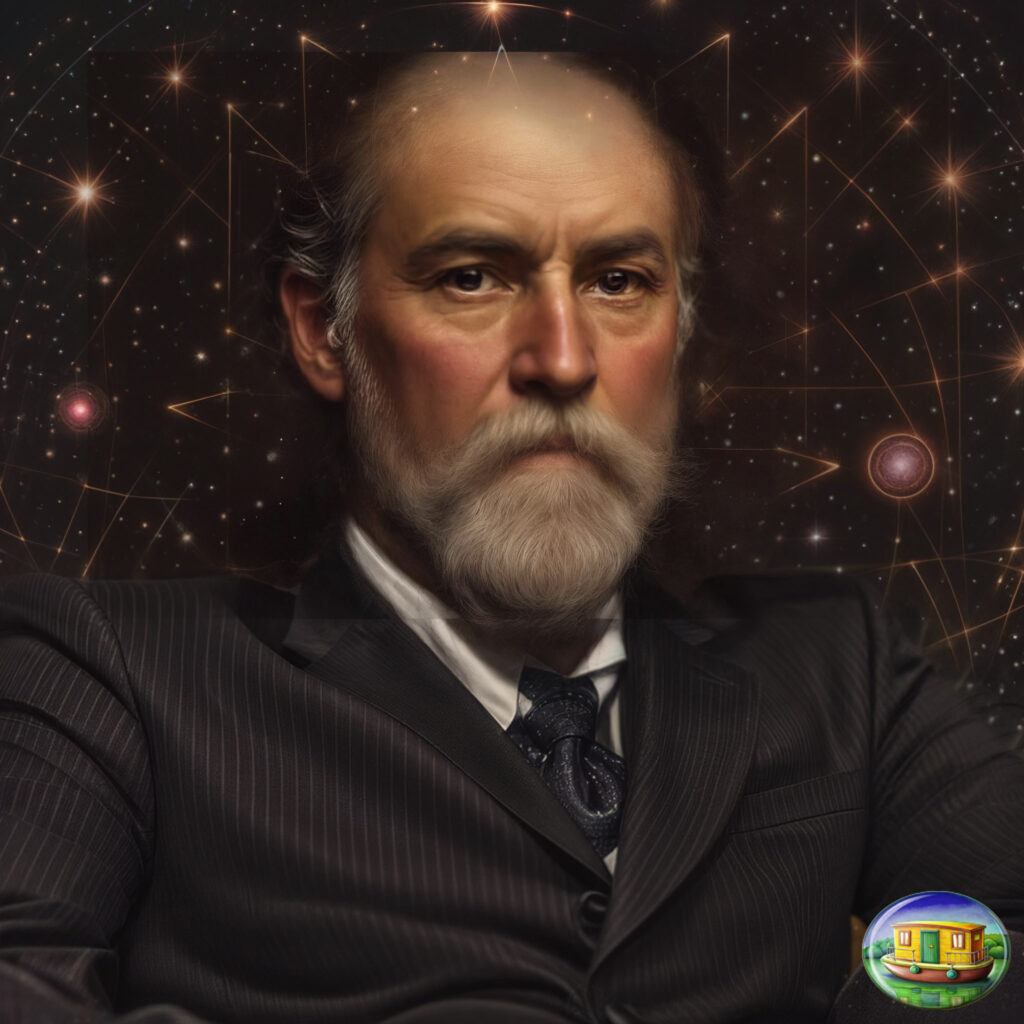
The cover art shows the portrait of an older man with a gray beard and receding hair, wearing a dark suit with a tie, against a background of shining stars and geometric lines. Tucked in the bottom right is a small plaque, depicting a houseboat.

♫ Astral Short Cuts ♫


87/398

LogoSwitch language

I enter the cor­ri­dor of his house­boat and find my friend Norbu on the small ter­race as expected, hunched over the lap­top on his lap.

“Wikipedia!” he groans, and it sounds like a sup­pressed curse. I open the wine I brought along. I already know where to find the glasses.

“When you hit the outer lim­its, they’re all ter­ri­ble ide­o­logues.”

“What lim­its?” I ask.

“Well, the lim­its of sci­ence. Here, for exam­ple, the entry on Fred­eric Myers.” He points to the text on his dis­play, but with­out my glasses, I can only make out a blurry logo and a photo. “Myers was one of the founders and later pres­i­dent of the Soci­ety for Psy­chi­cal Research, which dealt with spir­i­tu­al­ist top­ics. He coined the term ‘telepa­thy.’”

“Does­n’t ring a bell,” I say, then quickly add, “The man, I mean.”

“But the Wikipedia edi­tors,” he con­tin­ues, unfazed, “leave out his most impor­tant con­tri­bu­tion.”

“Well,” I ven­ture, “spir­i­tu­al­ism and telepa­thy aren’t exactly stan­dard Wikipedia top­ics.”

Norbu looks at me, shak­ing his head. “But they have to be. An ency­clo­pe­dia can’t just erase a part of real­ity sim­ply because the edi­tors and authors don’t like it.”

I clink my glass against his to buy a lit­tle time. “Aren’t they all com­pletely dif­fer­ent authors? I mean, after all, you’re a con­trib­u­tor too.”

Norbu gives a pained laugh. “Sure. But there are the deci­sion-mak­ers, a kind of priestly caste, and it’s mostly the ide­o­logues who’ve made it to the top. They cut out what­ever doesn’t fit their agenda, using flimsy excuses and prac­ti­cally war­like tac­tics.”

I nod to show under­stand­ing. “Like telepa­thy.”

“And every­thing that evades the sci­en­tis­tic creed.”

Sci­en­tific creed? I let Norbu get away with the con­tra­dic­tion and point a fin­ger to remind him of the old bearded man on his dis­play, star­ing out at me from the deep dark­ness.

“After his death,” my friend Norbu explains, “medi­ums all over the world received strange trans­mis­sions through auto­matic writ­ing, many signed ‘Myers.’”

“You mean he was reach­ing out from the, uh, realm of the dead?”

Norbu nods zeal­ously. “And not just that. The texts made no sense.”

“Aha,” I say with sat­is­fac­tion, “then it doesn’t need to be on Wikipedia.”

That earns me a glare from Norbu.

I take another sip of the red wine. Pretty dry. But that’s how Norbu likes it.

“Only inde­pen­dent observers were able to piece together the transmissions—like I said, tran­scripts from var­i­ous medi­ums across the globe—and sud­denly a pat­tern emerged. They all ref­er­enced each other.”

“Wow,” slips out of my mouth, “telepa­thy!”

Norbu shakes his head testily. “No, exactly not. Who­ever sent these mes­sages intended to rule out the pos­si­bil­ity that the medi­ums were com­mu­ni­cat­ing with each other tele­path­i­cally.”

“So no telepa­thy,” I say, frown­ing. What then?

“Let’s apply Occam’s razor and go with the sim­plest expla­na­tion: After his death, Myers came up with a way to prove the sur­vival of the human psyche—through these scat­tered trans­mis­sions to dif­fer­ent medi­ums that only make sense when taken together. They con­tained infor­ma­tion very few liv­ing peo­ple had access to. And over roughly thirty years, that added up to more than three thou­sand texts. It’s just that none of it appears on Wikipedia—neither the Ger­man nor the Eng­lish ver­sion. Just like there’s noth­ing about spir­i­tu­al­ism in the arti­cle on ‘Auto­matic Writ­ing,’ and so on and so forth.”

Norbu looks at me expec­tantly. But I can’t really bring myself to agree.

“Maybe that’s for the best. What you’re telling me sounds pretty, uh, unset­tling. The part about the 3,000 trans­mis­sions.” I take a big gulp of wine and pour myself a refill. The longer I think about it, the more uncom­fort­able I feel under Myers’s gaze from his Wikipedia page.

“You’re just like them,” Norbu says, shut­ting his lap­top in dis­ap­point­ment. “What­ever doesn’t fit into your neat lit­tle world­view gets kicked out.”

“Speak­ing of which,” I say, “up for a game?”

The dis­trac­tion tac­tic is a resound­ing suc­cess: A short while later, we’re stand­ing at Norbu’s foos­ball table, replay­ing the lat­est Cham­pi­ons League matches.

It’s only on the walk home—a bit unsteady, but in good spirits—that I remem­ber this Myers fel­low again. Strange guy. 3,000 non­sen­si­cal texts? Sounds like some­thing from the inter­net age. With a blog from the after­life, he prob­a­bly would’ve achieved a lot more—and maybe even made it onto Wikipedia…

92/398

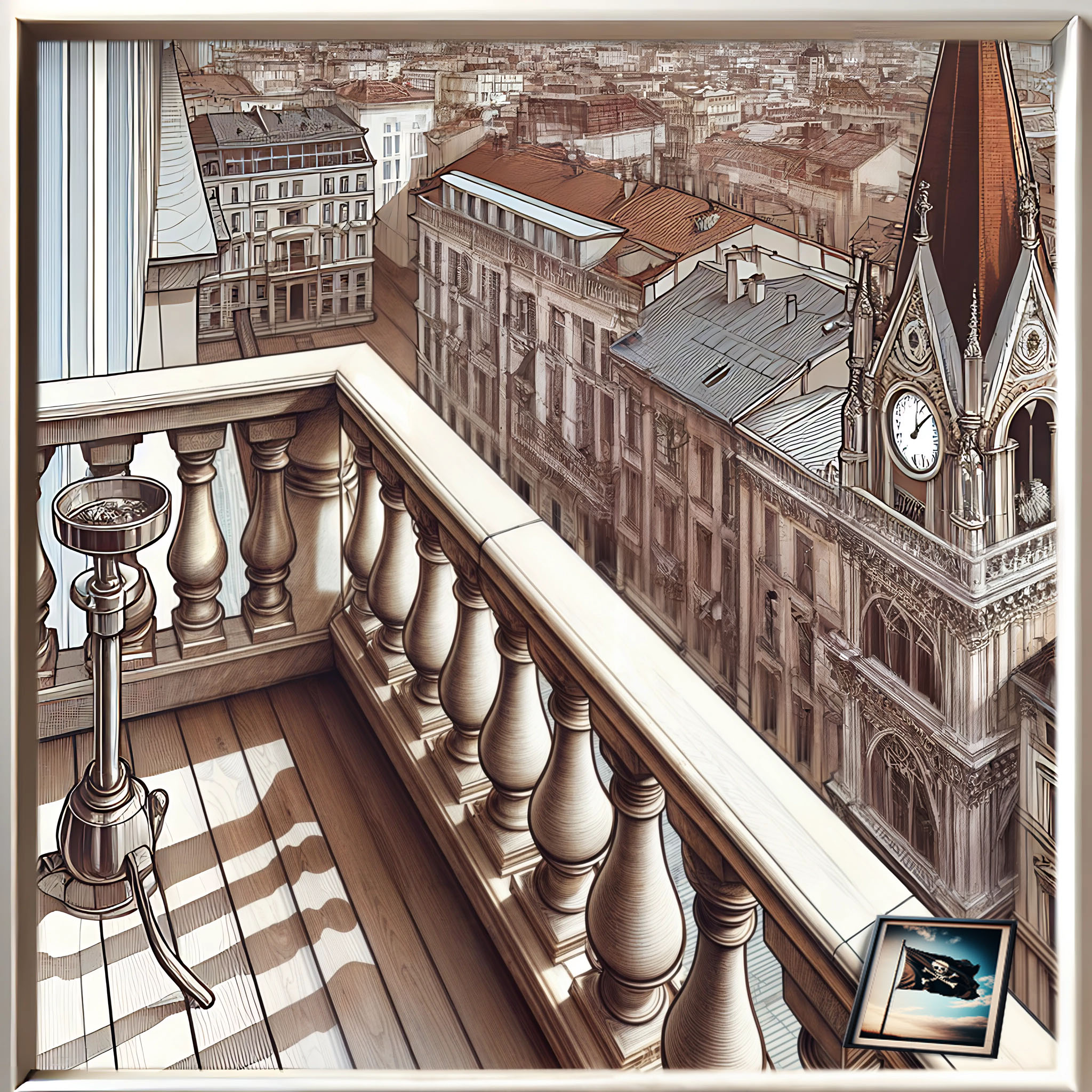
The cover art shows the view from a balcony with a balustrade onto a city with historical buildings and a tower with a clock. An ashtray stands on the floor, and a framed picture with a pirate flag lies on the railing.

♫ Kor­saren­stück ♫


92/398

LogoSwitch language

I enter the cor­ri­dor at pre­cisely eleven. Nicole is com­ing down the hall­way. It’s our rit­ual: at eleven, we head to the smok­ing bal­cony, just the two of us, for a smoke and world-alter­ing con­ver­sa­tions for the dura­tion of a cig­a­rette, before retreat­ing to our respec­tive offices.

“How’s it going?” I ask as I reach for a pack of cig­a­rettes. She smokes roll-ups.

“If only it were the week­end already,” she sighs.

“You’ve been say­ing that since Mon­day. But you’re right, of course. Got plans? A date?” I ask, teas­ing.

The small smok­ing bal­cony is occu­pied. Out­ra­geous! Every­one in the office knows it belongs to us at eleven. The guy promptly clears out. It’s the tech­ni­cian respon­si­ble for the copiers.

“Nice butt,” I say with a melt­ing look as he dis­ap­pears around the cor­ner.

“Way too young and inex­pe­ri­enced.”

“Maybe for you. You’re twenty years older than me.”

Nicole groans. “Don’t remind me. You still have all the typ—uh, doors open. For me, the ship has sailed. All the good men are taken.”

“Oh, come on, the right one will come along.”

“My moth­er’s been say­ing that for what feels like half a cen­tury.”

We laugh and take a drag from our cig­a­rettes. Men. Our favorite topic num­ber one.

“Have you actu­ally booked yet?” I ask her. Vaca­tion. Our favorite topic num­ber two.

“Two weeks on the Appalachian Trail. Hik­ing away the frus­tra­tion and a few pounds.”

“That does­n’t exactly sound like a four-star hotel…”

Nicole grins. “More like zero stars. It’s like with snails. You carry your home on your back.”

“Home on your back?” I must look a lit­tle con­fused, because Nicole laughs. “Well, the tent, of course.”

“And you want to meet an Amer­i­can mil­lion­aire out there?”

“Why a mil­lion­aire? I’m not after money. That phase is over. I’m look­ing for an adven­turer, a pirate, or some­thing.”

I roll my eyes. “Some rum-lov­ing sleaze­ball from the Caribbean?”

Nicole laughs again. It’s too sweet when she gig­gles and shakes all over. “No,” she says, once she’s caught her breath, “some­one who’s actu­ally dar­ing.”

“Uh-huh,” I say with­out much con­vic­tion.

“Like, make a move on me, for exam­ple.” It takes me a moment to catch on, and then we both cackle. “Do you actu­ally believe,” she asks me next, “in love at first sight?”

“Sure,” I say, “I’ve expe­ri­enced it. More than once.”

“What?” Nicole seems sur­prised.

“Kel­lan Lutz,” I say. Nicole fur­rows her brow and shakes her head: never heard of him. “Twi­light,” I add, and then again “The movie.” Nicole’s eyes widen in hor­ror. Before she can say any­thing, I drop “Jörn Schlön­voigt” on her. Once again, she looks sur­prised. “Aha. Have you been hid­ing some­thing from me? That sounds more like a guy in your league…”

I wrin­kle my nose briefly to let her know she can skip the league talk—feeling quite capa­ble of han­dling Kel­lan Lutz myself—and explain: “GZSZ, my favorite soap.” Nicole’s face falls com­pletely. That alone made it worth it. We laugh.

“I’m not talk­ing about actors, Lisa,” she puts on record, “and not about star­ing at a screen or gaz­ing into the idiot box…”

“He sings, too,” I inter­rupt.

Nicole groans. Even worse! “I’m talk­ing about run­ning into a total stranger some­where, for just a sin­gle moment, and there’s a spark. And it’s so pow­er­ful that all your fuses blow—and his, too!”

“Sup­posed to hap­pen, yeah,” I say as Nicole looks at me expec­tantly. “Why do you ask? Has that ever hap­pened to you?”

Nicole nods. “It was in the the­ater lobby. I was drunk, to put it mildly—pretty plas­tered,” she says, grin­ning. We extin­guish our cig­a­rettes in uni­son. Part of the rit­ual.

“Drunk? And him?” I ask.

“He was a life-size card­board cutout of Bruce Willis.”

Again, it takes me a sec­ond to process. As we part ways in front of my office to head back to work, we are still howl­ing with laugh­ter.

93/398

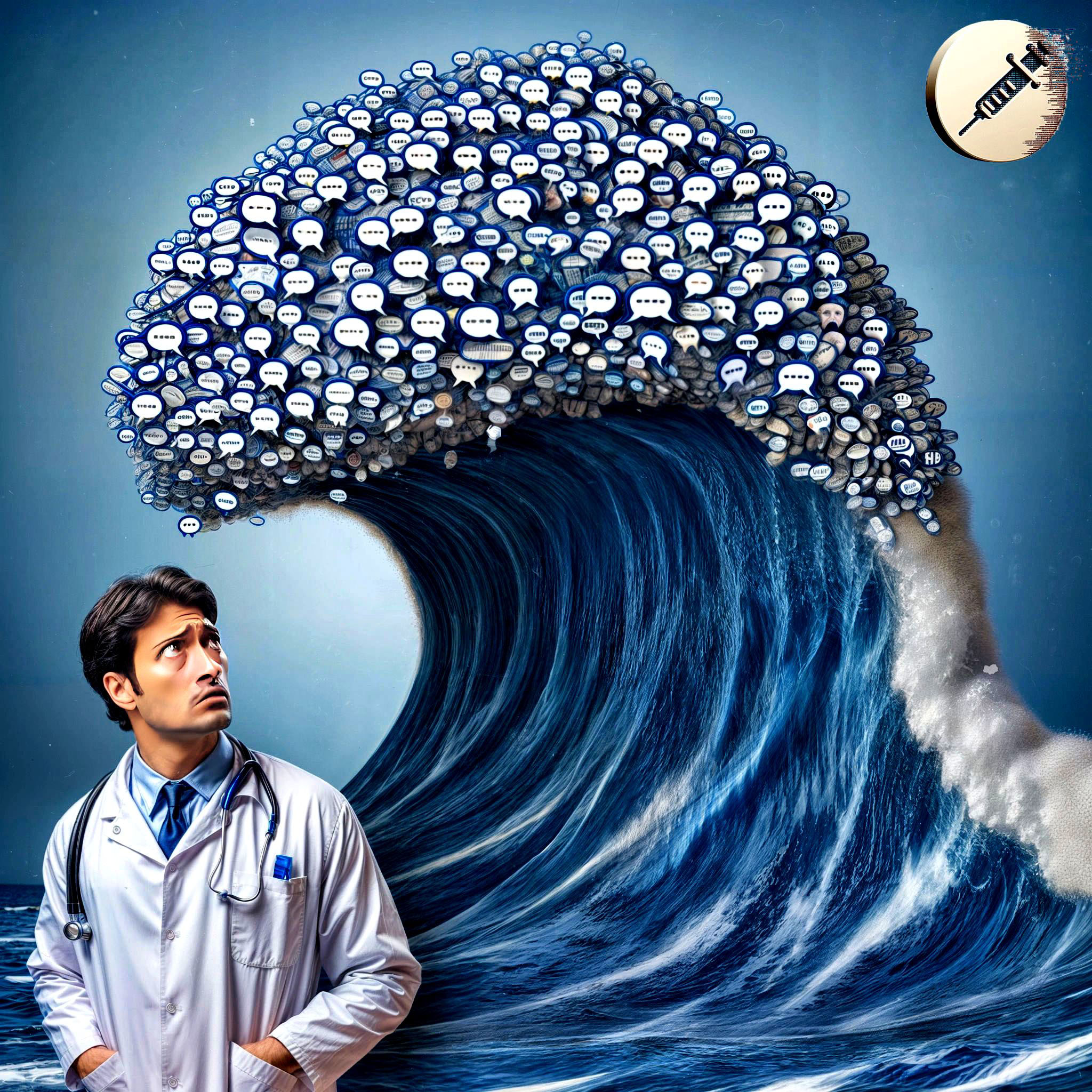
The cover art shows a doctor with a stethoscope, looking concerned at a giant wave of speech bubbles rolling towards him. A digital button in the upper right corner displays the pictogram of a syringe.

♫ Cuore non duole ♫


93/398

LogoSwitch language

I enter the cor­ri­dor and hurry along to the sem­i­nar room. Three other SPs are already sit­ting in front of the door. I’m run­ning late. John P. is among them, grin­ning at me. “You’re up first. The pro­fes­sor’s already back in.” As always, I enjoy his cute British accent. “Thought I’d have to do the ‘covert depres­sion’ for you!” He briefly ges­tures to the door to the sem­i­nar room, behind which, as usual, there are about twenty stu­dents wait­ing for us.

I nod briefly to my fel­low sim­u­lated patients and join them.

To expose the psy­cho­so­mat­ics in their eighth semes­ter real-life sce­nar­ios they will encounter after their train­ing, their pro­fes­sors arrange encoun­ters with “sim­u­la­tion patients” at the begin­ning of each year. That’s us, the SPs. With care­fully crafted and metic­u­lously rehearsed roles, we engage with the aspir­ing doc­tors, and since they have never dealt with real patients before, few of them are up to the task. For most, we rep­re­sent a hum­bling yet for­ma­tive expe­ri­ence.

I por­tray var­i­ous roles for those spe­cial­iz­ing in somatic med­i­cine, includ­ing hys­terec­tomy, sal­mo­nella, a fam­ily mem­ber of an Alzheimer’s patient, and a can­cer-stricken, unwit­tingly doomed mother of mul­ti­ple chil­dren. But I par­tic­u­larly enjoy the roles involv­ing psy­cho­so­mat­ics, such as mania and depres­sion, such as today’s “covert” case or the one with “somato­form pain dis­or­der.” They pose a greater act­ing chal­lenge.

“Also an actress and unem­ployed?” the blonde with frayed hair next to me asks. She extends her hand. “I’m Lara, hello. Uh, ‘Frau Edna Gierke,’ of course.” Ah, so the three of them are play­ing the fam­ily with the teenager who has stopped tak­ing his insulin injec­tions: the father unem­ployed, the mother a meter maid. I’ve had that plea­sure before. Today, a pim­ply twenty-year-old with glasses who sweats and ner­vously fid­gets in his chair plays the teenager.

“Frau Karsten,” I intro­duce myself to them with my char­ac­ter’s name. Around forty, slightly over­weight, for­merly employed at Deutsche Telekom before her pri­mary diag­no­sis, she deals very ratio­nally with her ill­ness, etc.

The door to the sem­i­nar room opens. A med­ical stu­dent in a white coat steps into the cor­ri­dor. “Frau Karsten?” he asks briskly, as if this were his wait­ing room. In real­ity, he is incred­i­bly ner­vous: this is his first patient inter­ac­tion. He won’t for­get it any­time soon!

I jump up and pull out an enve­lope. “Doc­tor, it’s good that you’re see­ing me right away, look, Doc­tor, just look, here!” I let him peek inside the enve­lope. As expected, the stu­dent reacts in bewil­der­ment. There’s a clump of hair inside, which I’ve been col­lect­ing for weeks in the drain of my shower for this pur­pose. “I just showed it to Herr and Frau Gierke,” I unabashedly fib, “I’m los­ing my hair!” My three col­leagues nod, but I don’t pay much atten­tion to them. My voice becomes shrill, and I clutch my doc­tor’s arm. “This must be a bad sign, right? Doc­tor? What do you think? You’re the expert. I don’t want to go bald!” The stu­dent is ini­tially at a loss for words, then stam­mers, “Please, uh, come in, Frau uh, Karsten.”

I fol­low him obe­di­ently but turn around one last time and wink at John P. We’re sea­soned pros in this busi­ness and imme­di­ately noticed that this white-coated new­bie is about to thor­oughly screw up the first patient inter­view of his career.

94/398

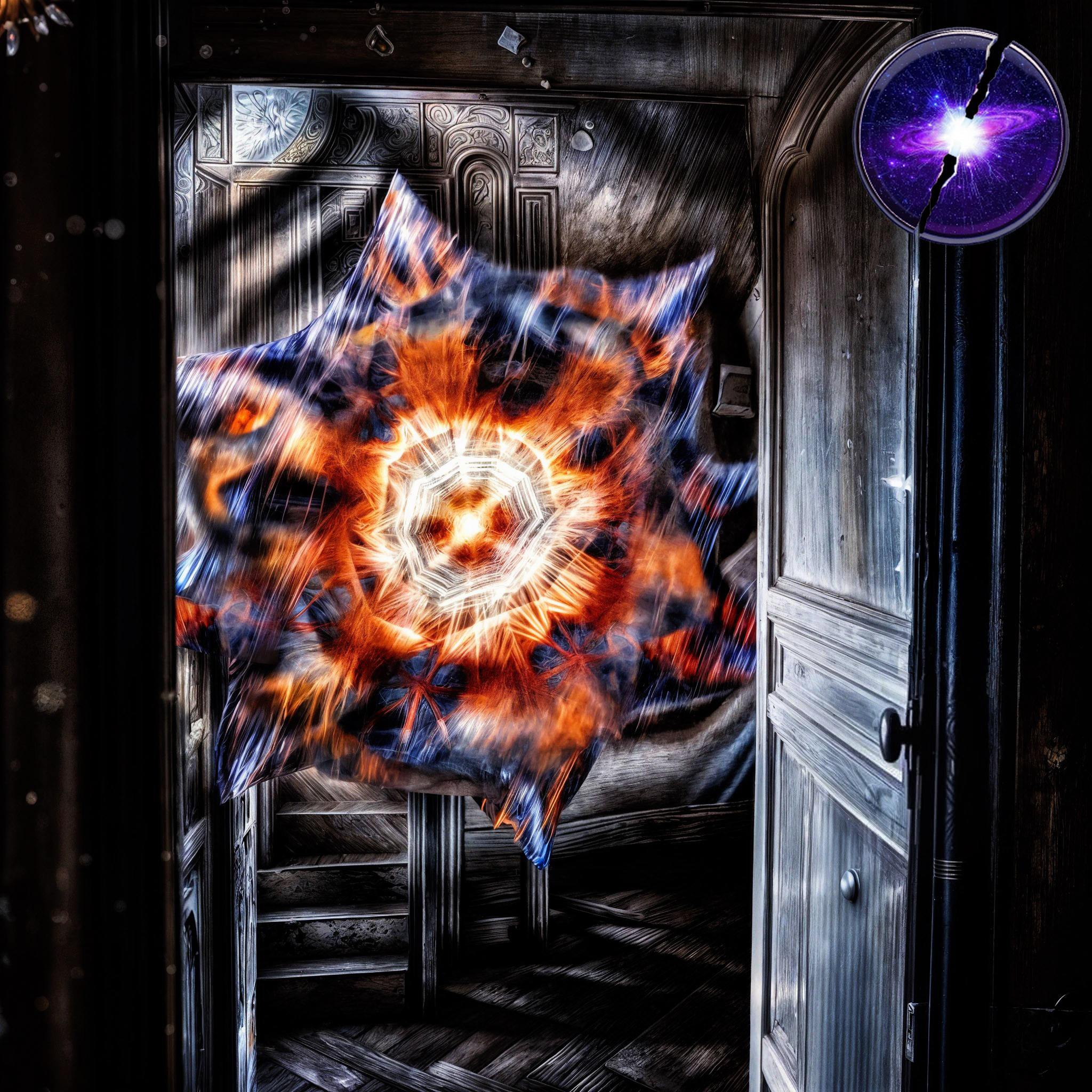
The cover art depicts an open wooden door within a shadowy interior, where a luminous, kaleidoscopic, starburst pattern hovers in the threshold. Top-right, a digital button features a galaxy icon, bisected by a fissure.

♫ Heim­sókn ♫


94/398

LogoSwitch language

I enter the cor­ri­dor because I heard a strange noise. At eye level, a blind­ing light flashes at the front door—two, three times. Is some­one weld­ing it from the out­side? It flashes glar­ingly again, three times, like a knock, but utterly silent. With­out a sec­ond thought, though I’m stand­ing there only in my paja­mas, I rip the door open.

In the shad­ows of the entry­way stands—some­thing. Or rather: it hov­ers. It looks like a three-dimen­sional kalei­do­scope whose lumi­nous shards con­stantly migrate inward, until they sud­denly shift direc­tion and flow out­ward from the cen­ter like molten iron.

The voice is very soft and gen­tle, and it feels like I’m hear­ing a famil­iar, beloved lul­laby. It says, “You caused a spi­ral arm of the galaxy to vapor­ize.”

I stare at the appari­tion. Words fail me. I want to run away, hide, or just faint. But it’s as though my thoughts no longer find res­o­nance within my body—no anchor to trig­ger a phys­i­cal act. I remain stone-still before this thing.

“You built a machine,” says the voice.

A machine? Yes, there was some­thing. But it was­n’t me. Just a dream. For weeks, I’ve been wak­ing up at the exact same time in the mid­dle of the night, at 2:22 a.m., and I always remem­ber a vivid dream in which I’m some sort of engi­neer, obses­sively build­ing an incred­i­bly com­plex machine—it fills nearly the entire ware­house I rented, using pow­er­ful Hadron lasers and a kind of minia­tur­ized fusion reac­tor to manip­u­late grav­ity and rup­ture the space-time con­tin­uum. Dream by dream, I com­pleted my work, even though I secretly knew the device could have uncon­trol­lable side effects. Until last night, when I finally acti­vated the fin­ished machine. I can’t say what it did because the moment it started run­ning and revved up, I woke up. That was yes­ter­day. It was 2:22 a.m.

Even now, in the mid­dle of the night, it could be 2:22 a.m. But this is not a dream.

“You built a machine,” the voice repeats, as I’m hyp­no­tized by the slow flow of liq­uid metal and a sense that the being with its gen­tle singsong is about to tell me some­thing ter­ri­ble.

“Your machine pierced the dimen­sions of the world, shat­tered your planet, and dragged many, many stars and plan­ets in the vicin­ity into destruc­tion.”

“But that’s non­sense! The Earth did­n’t per­ish just because I dreamt some­thing!”

The kalei­do­scope pat­tern changes, but I can’t say how. The voice now seems more stern. It says, “The world in your dream was real. As real as this one. We had hoped you would decide not to acti­vate the machine at the last moment, but to destroy it.”

“I had no idea what it would do!” Really? No, I did. In the dream, I knew very well the risk I was tak­ing. I just kept push­ing it away.

“Many civ­i­liza­tions had to die,” says the voice.

Because of me? Am I sup­posed to be guilty? “What about you?” I ask, “You’re alive, I assume.”

“A few, like me, were hurled through per­fo­rated dimen­sions into par­al­lel worlds.”

Par­al­lel worlds: In the dream, I repeat­edly sup­pressed the fear that my inge­niously devised machine—intended to tap into vac­uum fluc­tu­a­tions for unlim­ited free energy—might unravel the fab­ric of time and space. And now, an entity stands before me, thrown into my world through a dimen­sional rift—perhaps the last sur­vivor of an entire plan­e­tary civ­i­liza­tion that I have on my con­science. Slowly, the stag­ger­ing weight of what the entity is telling me begins to sink in.

“If you knew about it, why did­n’t you pre­vent it?” I ask in a hoarse voice.

“You have to do that your­self,” answers the liq­uid kalei­do­scope hov­er­ing before me in the entry­way.

“How?” I ask, bewil­dered.

The being slowly floats upwards and fades away. It has deliv­ered its mes­sage and now retraces its path—wherever the des­ti­na­tion may be. “How should I do it?” I call out.

The being van­ishes. I hear no more answers, but in my mind, a thought forms, say­ing, “Dream a new world into being.”

A pro­found despair seizes me. It was­n’t me! I scream inter­nally. It was that deluded engi­neer!

But the being is right: I was the man in the dreams, the one who decided to take the risk. I have the deaths of human­ity and a mul­ti­tude of other civ­i­liza­tions on my con­science; I have, with my obses­sion and greed for fame, led bil­lions of peo­ple to their deaths, and a sub­stan­tial chunk of our Milky Way along with them. I want to push it away, deny it, blame some­one else. But although they were just dreams, deep inside, I know that my vis­i­tor is cor­rect in his accu­sa­tion. I was that obsessed engi­neer who dis­re­garded all the omi­nous pre­mo­ni­tions and set the machine in motion.

As I close the front door, my hand trem­bles. I must pre­vent it! I think, and at the same time, I laugh bit­terly: How can I pre­vent some­thing that has already hap­pened?

But could­n’t a space-time fab­ric that includes par­al­lel worlds also include the pos­si­bil­ity of turn­ing back time? Did the kalei­do­scope being per­haps speak of this when it said, “You have to do it your­self”?

If it’s true—if it’s true that through my fault, human­ity and a hand­ful of other civ­i­liza­tions were destroyed—then I will thwart this dread­ful act at any cost! Num­bers, equa­tions, and cir­cuits race through my mind. The long nights as an engi­neer have paid off. Slowly, an image solid­i­fies in my mind: a device, a time-and-world machine with a sin­gle pur­pose, meant for one-time use. It will be a kind of ark. But I won’t fill it with ani­mals or peo­ple: It will trans­port me to a place and time that will allow me to pre­vent myself from punch­ing holes in the cos­mic fab­ric. I will undo it, thor­oughly and phys­i­cally! It must be pos­si­ble.

That night, I lay awake for a long time.

97/398

The cover art shows a wooden houseboat with a green door and various structures on the roof, in front of a wooded shore under a cloudy sky. A circular architectural structure can be discerned in the calm water. Tucked in the bottom right is a small plaque depicting a houseboat.

♫ House­boat Lounge ♫


97/398

LogoSwitch language

I enter the cor­ri­dor. My friend Norbu seems not to be on board, but as I stand some­what per­plexed in his liv­ing room, I sud­denly hear the sound of ham­mer­ing. Bur­glars? No, it dawns on me, prob­a­bly Norbu, who is seal­ing a leak and mak­ing sure that his house­boat does­n’t sink.

And there he comes, tool­box in hand, and we set­tle in with a glass of red wine. “I found ancient records of myself,” I tell him. As a teenager, I was fas­ci­nated by Atlantis and, like a lit­tle pri­vate scholar, combed the city library for archae­o­log­i­cal clues about the inhab­i­tants of this sunken con­ti­nent. I show Norbu cave draw­ings, metic­u­lously copied from var­i­ous books and adorned with schol­arly com­ments. They come from both the Old and the New World. “Atlantis lay in between,” I explain, “and that’s why there are such pecu­liar sim­i­lar­i­ties in sym­bols and depic­tions, long before Colum­bus came or the Vikings dis­cov­ered Amer­ica: sur­viv­ing Atlanteans who fled to the sur­round­ing con­ti­nents.” The the­sis still con­vinces me today.

My friend Norbu rubs his chin. “Has it never occurred to you that these sim­i­lar­i­ties may not have required any con­tacts by sea?”

“You mean it’s all just a coin­ci­dence?” Dis­ap­pointed, I take back my yel­lowed and slowly dis­in­te­grat­ing note­book.

“No, by no means. But haven’t you also delved into shaman­ism…”

Yes, right, there were shamans in almost all cul­tures world­wide, heal­ers in con­tact with the spirit world and ances­tors.

“And pos­si­bly,” my friend Norbu says, “in con­tact with each other.”

It takes a moment for the real­iza­tion to sink in. “You mean, across the oceans, from peo­ple to peo­ple? And that—telepathically?” Norbu points affir­ma­tively to my note­book. “Hm. Shamans of the Euro­pean mega­lithic cul­ture exchang­ing thoughts with those of the Proto-Amer­i­cans,” I imag­ine. And of course, that could also explain the sim­i­lar­ity of the pyra­mids or the fact that not only the Egyp­tians mum­mi­fied their dead but also some Native Amer­i­can tribes. Besides the under­world of the dead and the upper world with help­ful spir­its, the shamans also know the mid­dle world—the astral coun­ter­part to our every­day real­ity and its reflec­tion in the spir­i­tual world. On jour­neys to the mid­dle world, the shamans of ear­lier times, detached from space and time, could have vis­ited for­eign con­ti­nents and civilizations—and thus their respec­tive col­leagues.

“But maybe not,” Norbu inter­rupts my thoughts. “There are indi­ca­tions that even before the Vikings, there were con­tacts between Europe and both Amer­i­cas. The Chi­nese, Romans, Greeks, Egyp­tians, and Phoenicians—all are said to have been there and traded with the cul­tures there. Per­haps even the mega­lithic peo­ples. And all of this with­out the need for Atlantis as a bridge.”

I prob­a­bly look some­what dis­ap­pointed because Norbu adds con­sol­ingly, “But of course, your early research hon­ors you. Who knows, they might become impor­tant again and pro­vide new answers? Or raise new ques­tions?”

I know my friend Norbu isn’t entirely seri­ous, but I feel strangely affirmed nonethe­less. The young, curi­ous four­teen-year-old still within me is pleased to receive a late acknowl­edg­ment for con­duct­ing sig­nif­i­cant foun­da­tional research.

I clutch my note­book as I cycle away, decid­ing not to stash it back in a dusty drawer but to give it a place of honor on my shelf with the early works of great minds.

98/398

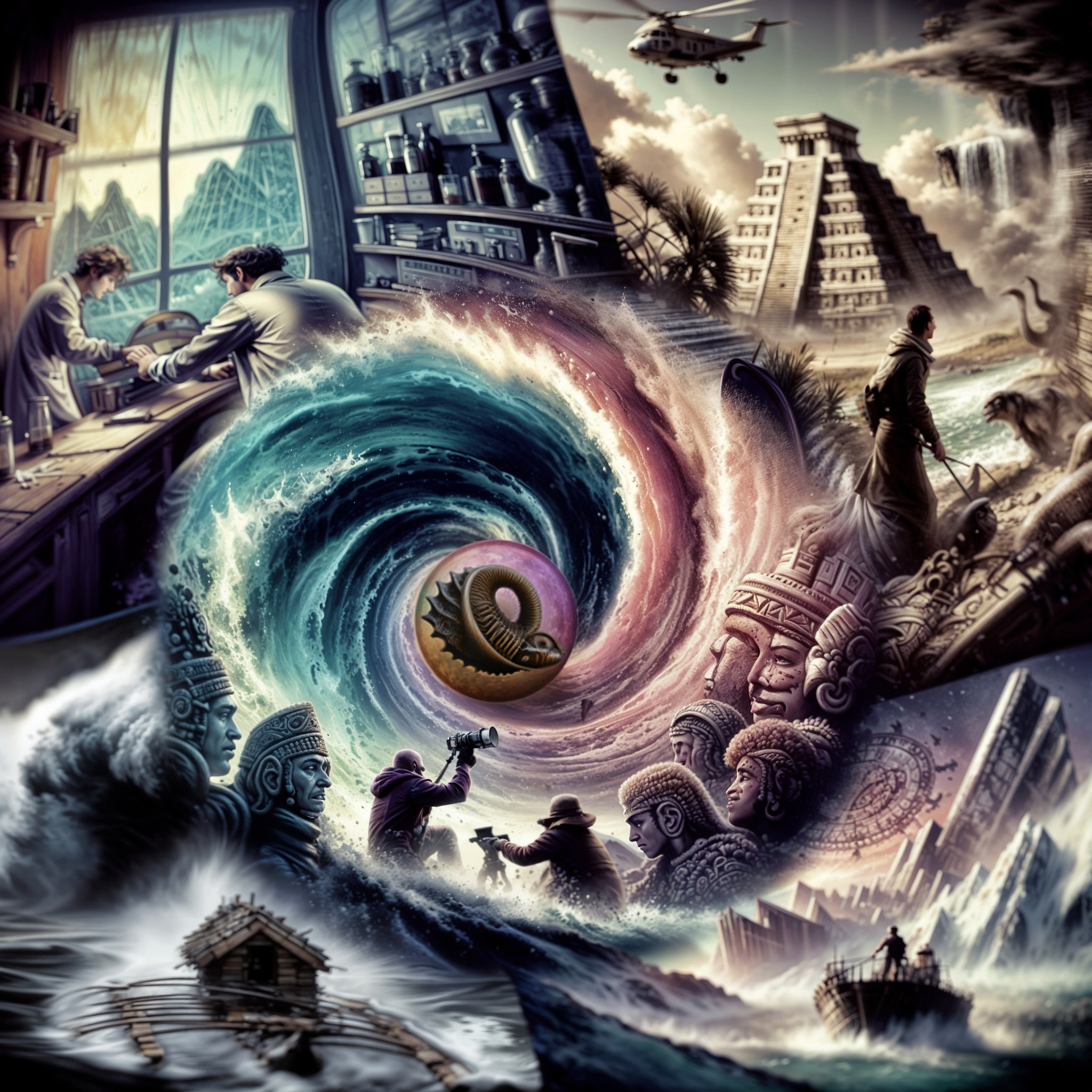
The cover art displays a surreal collage featuring researchers in a laboratory, a helicopter hovering above a Mayan pyramid, a modern boat, a Polynesian boat with a hut, and Mesoamerican statues – all swirling together around a snail-shaped structure at the center.

♫ Unearthed ♫


98/398

LogoSwitch language

I enter the corridor—although it’s not me whose body is step­ping into the hall­way, but a stranger in whose mind I sit undetected—relieved that the time has finally come to leave him behind. This time, it was Peter Auf­schnaiter who, after a dra­matic escape along­side Hein­rich Har­rer, reached the Tibetan cap­i­tal of Lhasa on Jan­u­ary 15, 1946, where he con­structed hydro­elec­tric power plants and sewage sys­tems over the fol­low­ing years.

It’s always a cor­ri­dor, a pas­sage­way, or a tun­nel that leads me out of one head and into another. Some­how, this form of men­tal travel must have some­thing to do with the “Snail Shell,” that intri­cate metal­lic struc­ture that devoured so much pro­cess­ing time on the uni­ver­si­ty’s super­com­put­ers—and even­tu­ally me. I should never have crawled inside.

Since then, I jour­ney through time with­out a phys­i­cal form. It’s like a dream that keeps fad­ing and blur­ring, and I’m con­stantly plagued by these headaches—a state of being not meant for humans. Some­thing unnat­ural has hap­pened to me. I’m trapped in for­eign bod­ies, for­eign times, for­eign places—except that I almost always instantly know where I am.

Whether I’m stand­ing in a lab­o­ra­tory with Marie Curie, doc­u­ment­ing the Mayan metrop­o­lis of Uxmal with Fred­er­ick Cather­wood, weath­er­ing a storm on the Kon-Tiki with Thor Hey­er­dahl, or reach­ing the South Pole with Amund­sen: it’s always the heroes of my child­hood and their defin­ing moments that dic­tate my mys­te­ri­ous itin­er­ary.

My mind always lingers in the head of one of my child­hood heroes’ companions—and some­times that means weeks or even months!—until they enter a pas­sage­way or some­thing sim­i­lar. A door­way is not enough. The cor­ri­dor must appar­ently have a cer­tain length. It’s then as if I lose my grip. I sway, spin, whirl, only to abruptly find myself in some­one else’s head.

I drift away repeat­edly, and even remem­ber­ing the past is dif­fi­cult for me: What other child­hood heroes were there? Dinosaurs! Like so many in their youth, I was fas­ci­nated by dinosaurs. Some­times I fear that my jour­ney could take me to that dis­tant past: What will hap­pen if I end up in a place, in a life where there are no cor­ri­dors, hall­ways, or tun­nels? Is my jour­ney over then? Am I finally truly dead when the one in whose head I’m squat­ting and through whose eyes I see dies? Or will I return to the “Snail Shell” and wake up there from uncon­trol­lable, twisted child­hood dreams?