123/398

♫ The Birth of the GraviPhone ♫
123/398


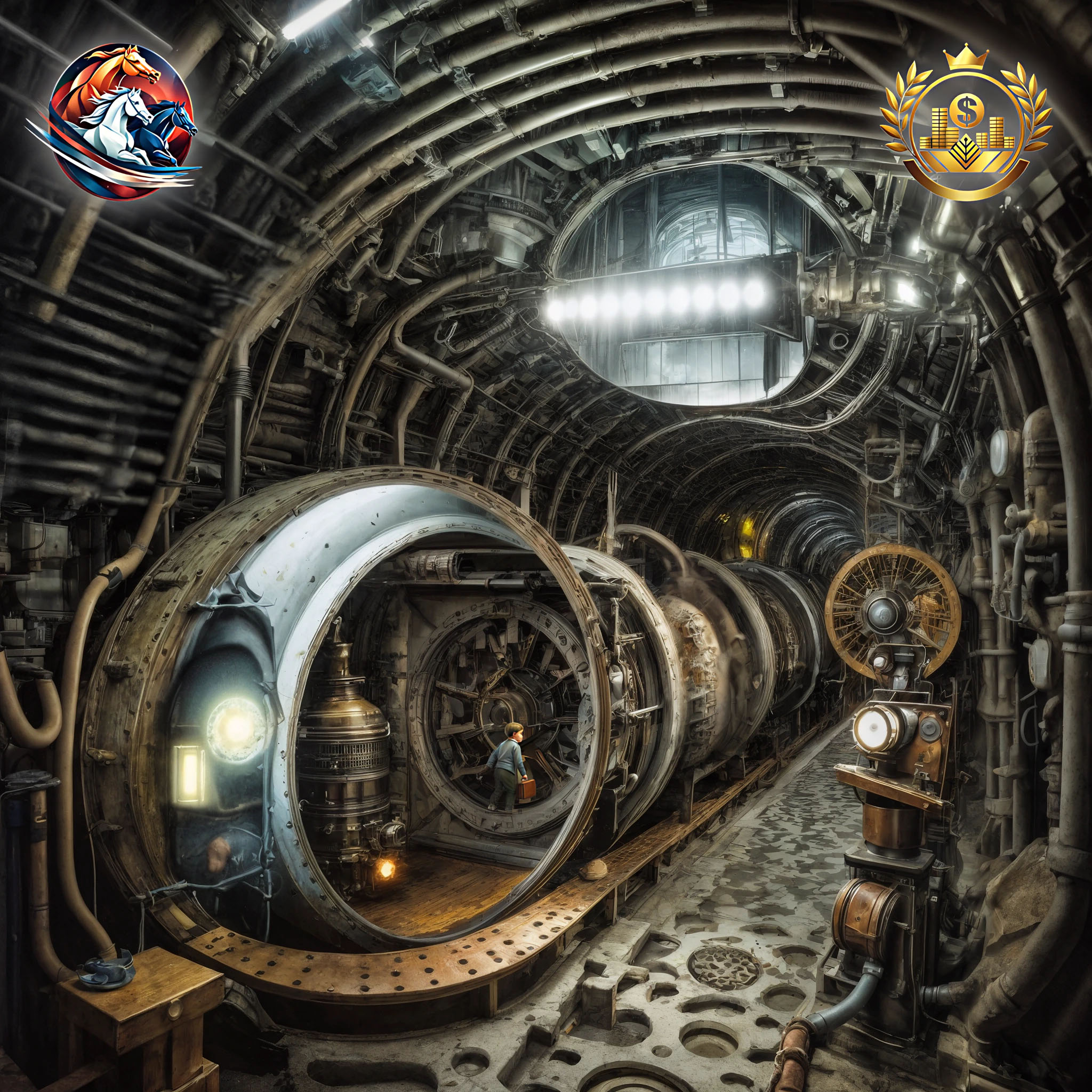
I enter the corridor leading to Professor Ceril’s laboratory. It’s made of a gleaming, silvery material that flows in curved shapes: no sharp edges or right angles. The professor claims that walking contemplatively down this corridor gets him in the zone for his work, heightens his concentration, and deeply inspires him. I don’t notice any of that. Instead, I slip on the uneven floor and go sprawling. It echoes as if someone had struck a giant Chinese gong. Luckily, I didn’t hurt myself too badly.
“That’s the breakthrough!” Ceril’s unmistakable voice greets me from inside the lab. He seems—too absorbed in his research—not to have noticed my gong performance. Everything in here is blinking and beeping, and I have trouble spotting the professor behind all the cables, suspensors, and pulleys hanging from the ceiling, and the various artifacts of past experiments. Wearing headphones, he is bent over a small metal box covered in buttons. Excitedly, he explains to me that he’s developed a virtual microphone he can send to any coordinates in the world via gravitational waves. At first, I don’t get it.
“I can enter any coordinates, and then I hear whatever there is to hear at that location. It’s a kind of gravitational-wave radio that can receive signals from virtually infinite stations—namely, from any point in the universe.” I must look pretty lost. That doesn’t change when he hands me a second pair of headphones to demonstrate his invention. Just to test it out, he types in the coordinates for the White House. “Let’s do a little spying,” he says with a mischievous grin.
I hear the rustling of silk sheets and soft whispers of love, though despite an intense read-through of an English dictionary two or three years ago, I don’t catch every word. But I do pick out two names: John and Cindy. Now Ceril looks pretty lost, too. I enlighten him (after all, I have to live up to my reputation as a child prodigy every now and then): “McCain and his wife?” Ceril wonders what on earth they could be doing in Obama’s bedroom, but then light dawns on him: “We’re eavesdropping on a parallel world! One where McCain won the election instead of Obama. Yes, that must be it—the laws of physics are protecting themselves from a sonically infinitesimal recursion. Just like the uncertainty principle.”
Ceril immediately punches in the coordinates of his own lab, and sure enough, we witness a conversation between him and me—except, he says, these are our alter egos from a parallel universe. Interestingly, in that reality, I seem to be the aging inventor and he‘s the teenage assistant.
Before I can learn any more, Ceril switches off the device, takes off his headphones, and turns to me: “This opens up fantastic possibilities, kid! I can eavesdrop on other versions of myself who have already worked out my many ideas”—he taps the massive index card box beneath his desk—”which saves me lengthy testing phases.” And saves me, I think, from potentially perilous real-world tests of his countless inventions. “I just need to modify the thing accordingly.” With that, he starts scribbling complex formulas on paper with one hand while twisting wires together with the other. As for me, I am completely forgotten.
Would I even be interested in what other versions of me have to say? On the walk back through the corridor, I shake my head. What good would that do anyway? Then I remember why I went to see Ceril in the first place: to ask if he could build me a machine that spits out what teachers will want to know on exams a few days in advance. Then again, I have to admit to myself that even without a prediction machine like that, I’ve always known everything anyway—and school shouldn’t get any more boring for me than it already is.
(And it won’t. Quite the opposite. Because of her. But that’s another story.)