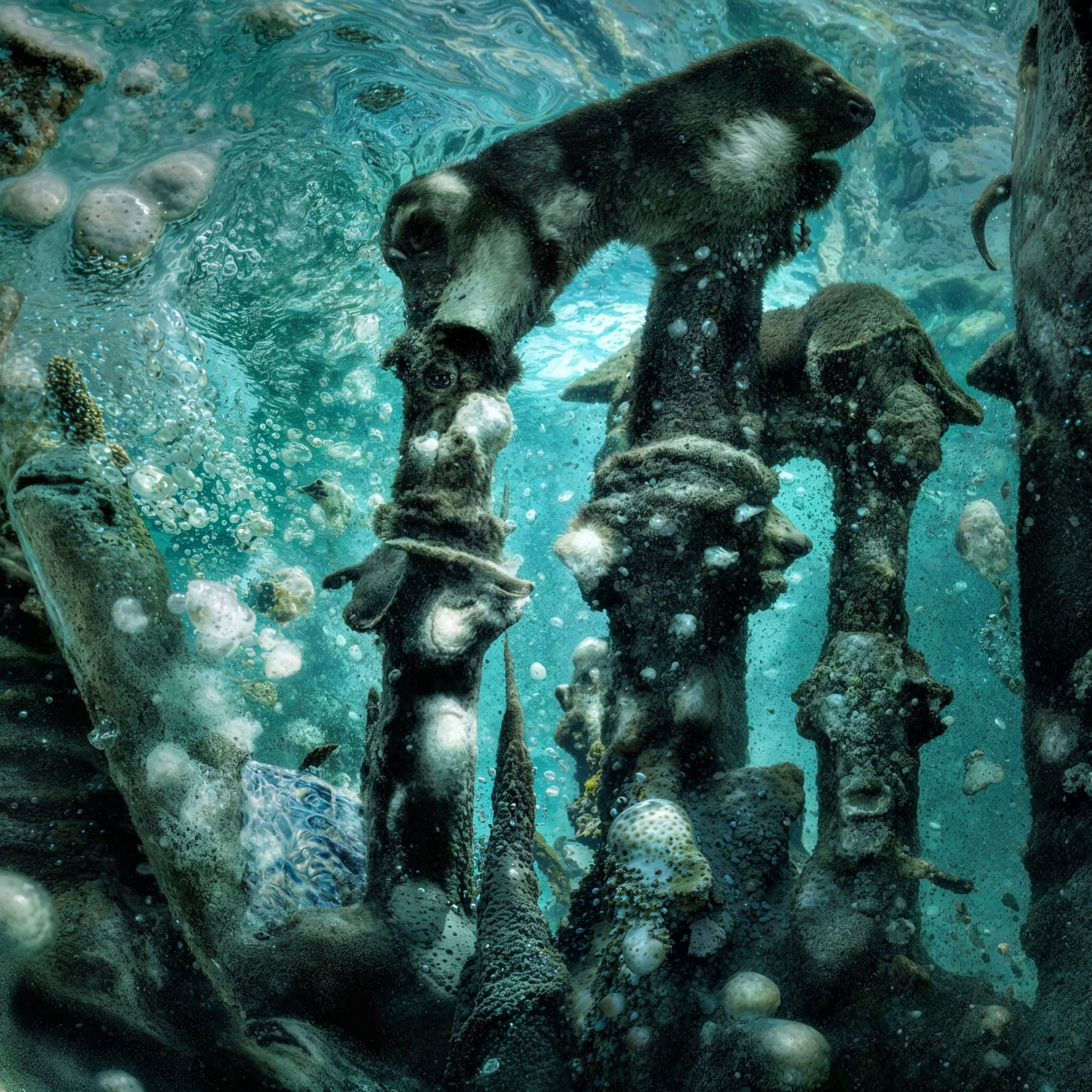
I enter the corridor that leads to the huge weather crystals. The earth trembles. People run about shouting in panic and mortal terror—I hear their screams echoing not just in my ears, but deep within my mind.
I am consumed by a single thought: I have to deactivate the large crystals! The Spirit Masters wanted to use them to influence the weather, but now they are out of control. A dark, terrible crash of thunder resounds, vibrating through my entire body. Knocked down as if by the fist of a god, I hit the ground. It was a ludicrous plan, trying to use the crystals to stop time! The entire land is sinking into the sea: the hall of crystals slowly tilts away to the side, and the corridor turns into a bottomless shaft. Its walls tower before me. I haul myself up the stone slabs, ducking away from falling debris. Water bursts in from all sides. Lightning streaks through the hall. The mighty crystals rise up against the deluge, their death throes making the sea boil.
The horrified screams of millions of dying people echo in my mind. My mother, my sister Nete—their presence flickers brightly in my consciousness one last time before fading away. The loss leaves everything inside me dull and numb.
More and more water rushes into the hall. The stone vault has already sunk deep into the sea, and the air bubble trapped inside is being swallowed up by the invading flood. Should I give up? No! Something unknown inside me grants me strength. I want to live, to climb higher, to escape the rushing water—but a collapsing pillar shatters my left leg. A piercing pain robs me of my breath. I am pinned down, and I am going to drown. Now, there is only one thing left for me…
…I enter the corridor, just as I learned to do from the Spirit Masters as a young child, and descend into my “temple of fleeting images.” At first I hesitate—for weren’t the Spirit Masters the very ones who descended too deep into their inner temples, and with their hubris conjured up the demise of us all? But the imminent drowning and the unbearable pain in my shattered leg drive me to this place where everything is still and motionless.
My “temple,” however, is—an island.
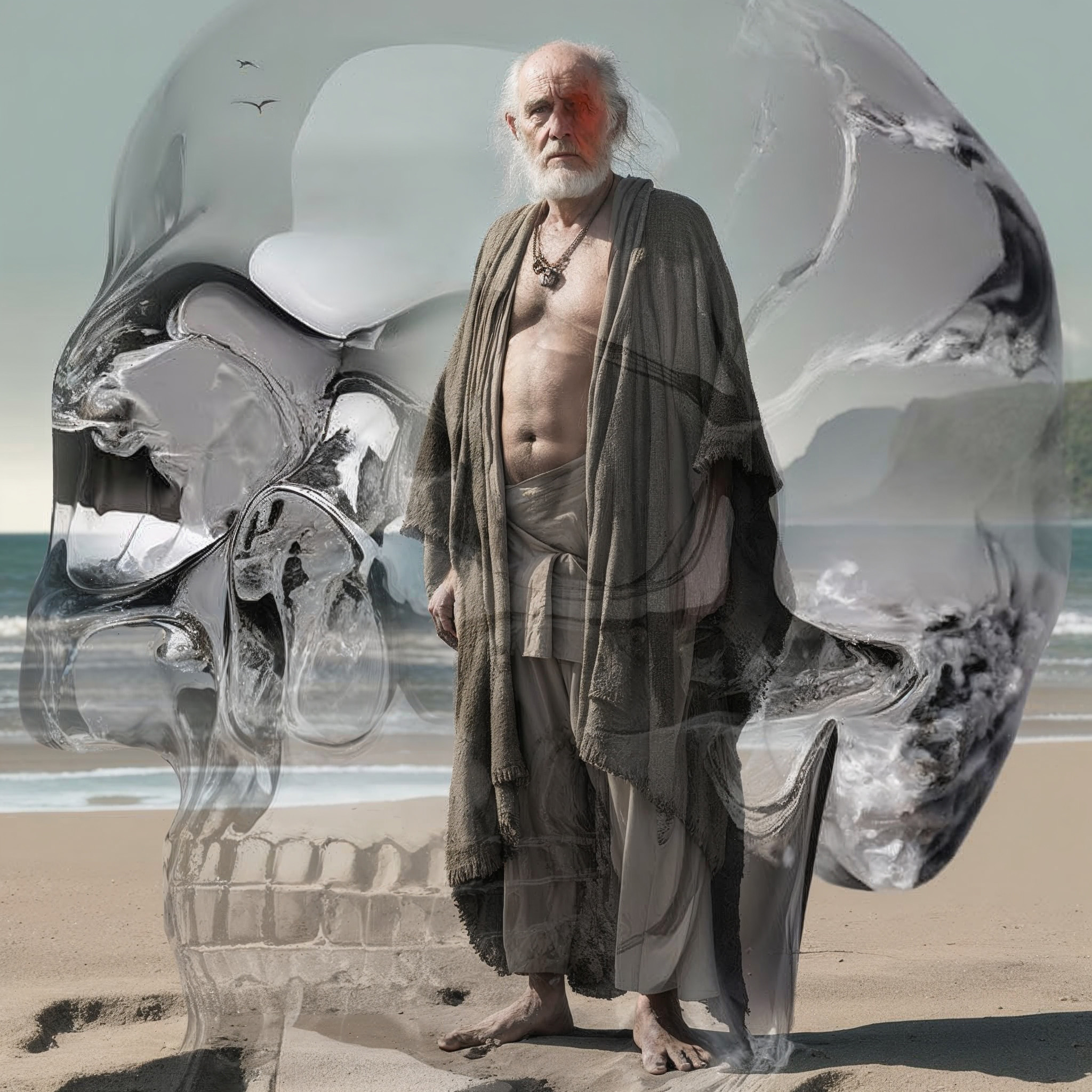
No one was allowed to know about it, since invoking the image of an island in the mind’s eye instead of a temple building contradicts the spiritual law as it is taught to us. Yet, as much as I tried to fight this island, it simply wouldn’t disappear. I didn’t even tell my closest friends about it, so I am profoundly shocked when I see a group of strangers standing there on my little island. An old man, the left side of his face completely scarred, approaches me. Behind him stand eleven men and women.
“I am Ktephaim,” the old man says. What are these people doing in my mind? Or have they come to collect me and lead me to the realm of the dead?
“We are… Wanderers. And we would like to offer you the chance to become one of us.” I want to know what all of this means first, but he motions for me to be silent. “You can save yourself.” With that, he hands me a polished crystal in the shape of a human skull.
I know what I have to do. The other eleven standing behind Ktephaim watch me silently. One of the women smiles encouragingly. I look into the eyes of the crystal skull.
“Concentrate,” the old man says. “You have practiced for this a long time. Now is the moment.”
All at once, I am back in my body. Icy cold water surges around me, and I feel a burning throb in my shattered leg. I take one last breath before the sea swallows me whole. And I concentrate.
My homeland sinks back into the magma. When the sun breaks through the black clouds for the first time again, nothing will be left of it. A new humanity will rise from the mud, a new historiography will unfold, new ancient wars will ignite, and old new inventions and experiences will stir the human soul.
But these are things I will only learn later. Because I survive. With a final breath, using the crystal skull and an unknown will to live within me, I transport myself to another place, another time.
A cushion of moss, massive roots, a clearing.
Slowly, I come to. Enra’daí, the woman from the group of Wanderers who had smiled at me, sits beside me, examining my leg. “Where am I?” I ask her, but Enra’daí corrects me: “Better ask when you are. You are one of us now.”
She explains to me that there are twelve of us, and that we possess the ability to jump to the flipside of time, wandering from there to wherever we are needed. Some of the Wanderers manage to do this five, six, or even ten times. Then the power runs dry. A new Wanderer must be found to fill the gap. “And you are probably the youngest there has ever been,” she adds.
Over the next few days, she heals my leg with herbal poultices and roasts her wild game for us over a fire. I don’t know what is happening to me. Her movements, her touch, her quiet voice: all of it intoxicates me, bringing joy to my innermost self, touching my heart, and awakening entirely unfamiliar feelings—feelings that promise sweetness and pain, which I shamefully hide from her. She nurses me lovingly, but clearly with the care of a mother for her son. How I long to prove to her that I am already a man. I could fell trees and build a hut for us, I would learn to hunt and slay wild beasts for her—but my leg does not yet allow for any of it; I must rest it.
Leaping to the flipside of time saved my life. I doubt our Spirit Masters knew of this ability. Enra’daí hesitates when I ask her what becomes of a Wanderer who loses the strength to jump. Her voice sounds fragile: “They remain where the new Wanderer was taken from.” I want to ask her if Ktephaim was transferred to the Hall of Crystals in my place, but Enra’daí grimaces painfully and turns her gaze away. That makes me falter, and I leave the question unasked.
“I must move on,” she says finally, looking a little sad. “We Wanderers are loners.”
I want to protest, begging her to stay, claiming my leg hurts again. But Enra’daí cannot be swayed. To say goodbye, she only touches my arm briefly and then quickly looks away. I want to call out after her that I love her, but she has already vanished between the massive trunks of the trees. Tears well up, and I begin to weep bitterly.
It is a goodbye…
All the dead—an entire people! My friends! My mother! My little sister! Not until dawn breaks do my tears dry up, and I fall into a restless sleep.
“I enter the corridor, which is said to be in a house—my house—located in a small town…”
“Grandpa,” one of the two interrupts—it must be Julietta, since she’s the one with the cowlick on the left side of her forehead—“why do you always start your stories with ‘I enter the hallway’ instead of ‘Once upon a time’?”
“Because the two of you are very special girls, and I tell you special stories that no one else tells—not other grandmas or grandpas, and certainly not the ladies at the preschool.”
“They aren’t ‘ladies,’ Grandpa. They’re our preschool teachers,” says the other one, Juniper.
“Storybook ladies, I mean. Anyway, my stories always begin in the hallway outside your bedroom. Because, unlike the other fairy tales you hear, mine are all true. Now, may I go on?” Both nod with wide eyes, looking as if they couldn’t hurt a fly. Well, we’ll see.
“So, I enter the hallway, which is said to be in a house—my house—located in a small town, in a region that belongs to a continent, which in turn drifts across the surface of a planet over geological timescales. Or so they say. But then I think of the garden of my childhood—the garden belonging to your great-grandparents, whom you never met.
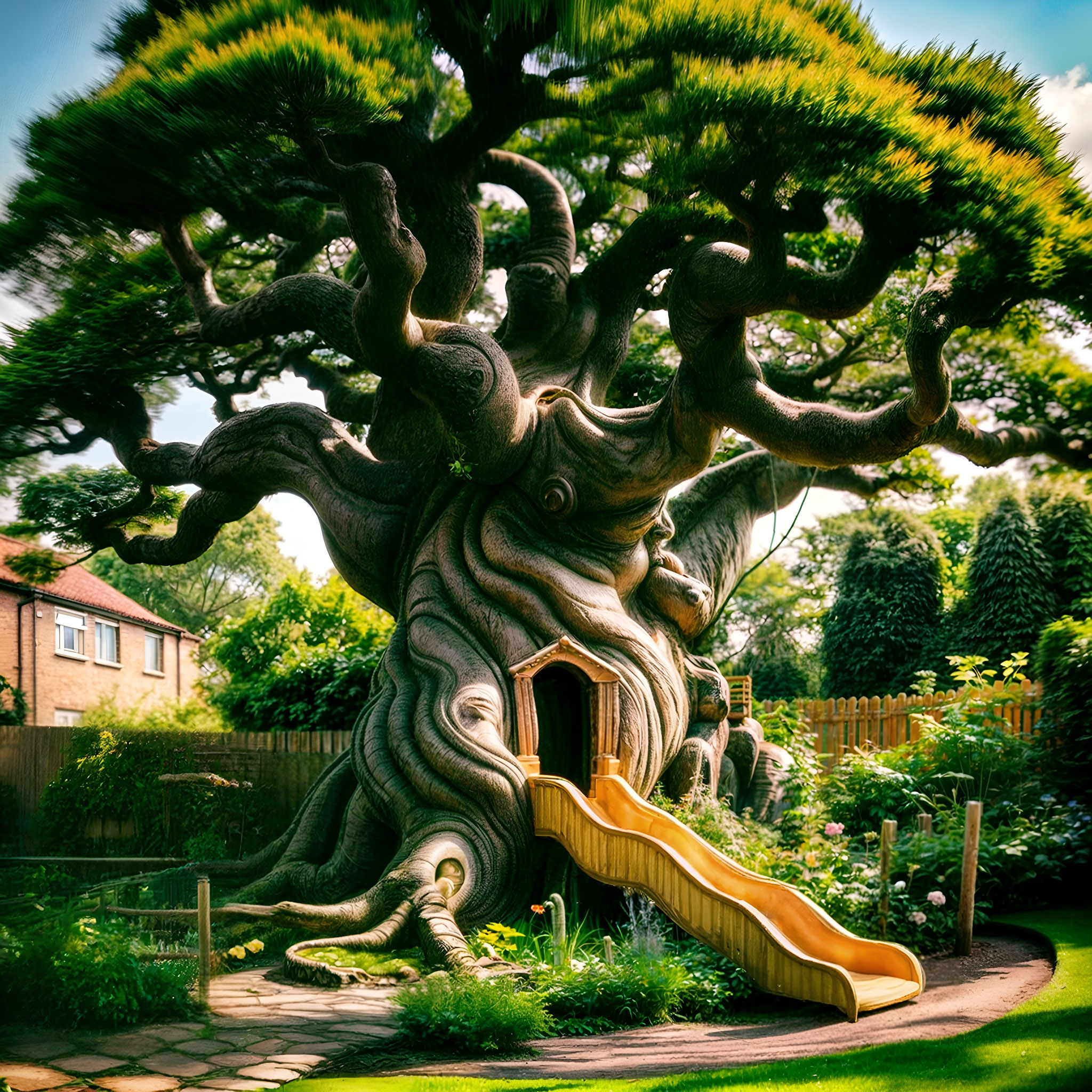
When I was little, there was a giant tree in our garden. It was so tremendously big that I thought entire countries existed up in its branches, and the people living there probably had no idea they were living in a tree.”
“There’s no such thing as a tree that big.”
“Oh, but there is. I should know. You see, one day I climbed it. And do you know what I found up there?”
“A bird’s nest?”
“No. A colossal, old, gnarled branch with meadows and forests, deserts, mountains, lakes, and entire seas. It took me many years to explore even a small part of those lands. Incidentally, that’s where I met your grandmother—God rest her soul.”
“Grandma?” Incredulous looks. “In the tree in your garden at home?”
I nod. “I built her a house in a village, in a country on that branch. This very house. The one where your mother was born.”
“But that’s silly, Grandpa. We don’t live on a tree!”
“Maybe we do. I should know. After all, I’m the one who climbed it.”
“But Grandpa, we live on a planet, not a branch. Just look at Google Earth. When you zoom all the way out, you see the Earth.”
“And who says that has to be true? In the Middle Ages, Google Earth would have shown the Earth as a disk—and if you weren’t careful, you’d fall right off the edge.”
“Grandpa!”
“But in reality, our countries and continents are nothing more than the bark of a colossal, old, gnarled tree. When the nights are very still, you can hear the wood creaking softly in the wind.”
“Oh, Grandpa, those are just stories.” — “And your stories aren’t even real fairy tales; otherwise there would be heroines and princes…” — “…and horses and squirrels and dwarves.” — “And no corridors.” – “Exactly. Definitely no corridors.”
“Not even the ones in a fairy-tale castle? Well, tell you what, you two heroines. I’m through with corridors anyway. First thing tomorrow morning, I’m setting off to climb back down.”
“Climb down?” Two pairs of wide, apprehensive eyes look at me.
“Yes. Back down from the tree that stands in the garden of my childhood. You see, my father had hung a swing from one of the lower branches, and if I remember correctly, that swing was the most beautiful place in the whole world to be.”
“You’re leaving?!”
“Well, we’ll talk more about it at breakfast—about whether you believe me about the tree, or if you’d rather trust Google Earth.”
“We believe you about the tree, Grandpa!” — “Google Earth is just trying to trick us!” — “You can easily use Photoshop to make a branch look like a planet.” — “Don’t go away, Grandpa!”
“No, my angels, don’t worry. I don’t even think the swing is still there. Now, close your eyes and let the wind that blows through the branches of the world night after night lull you to sleep.”
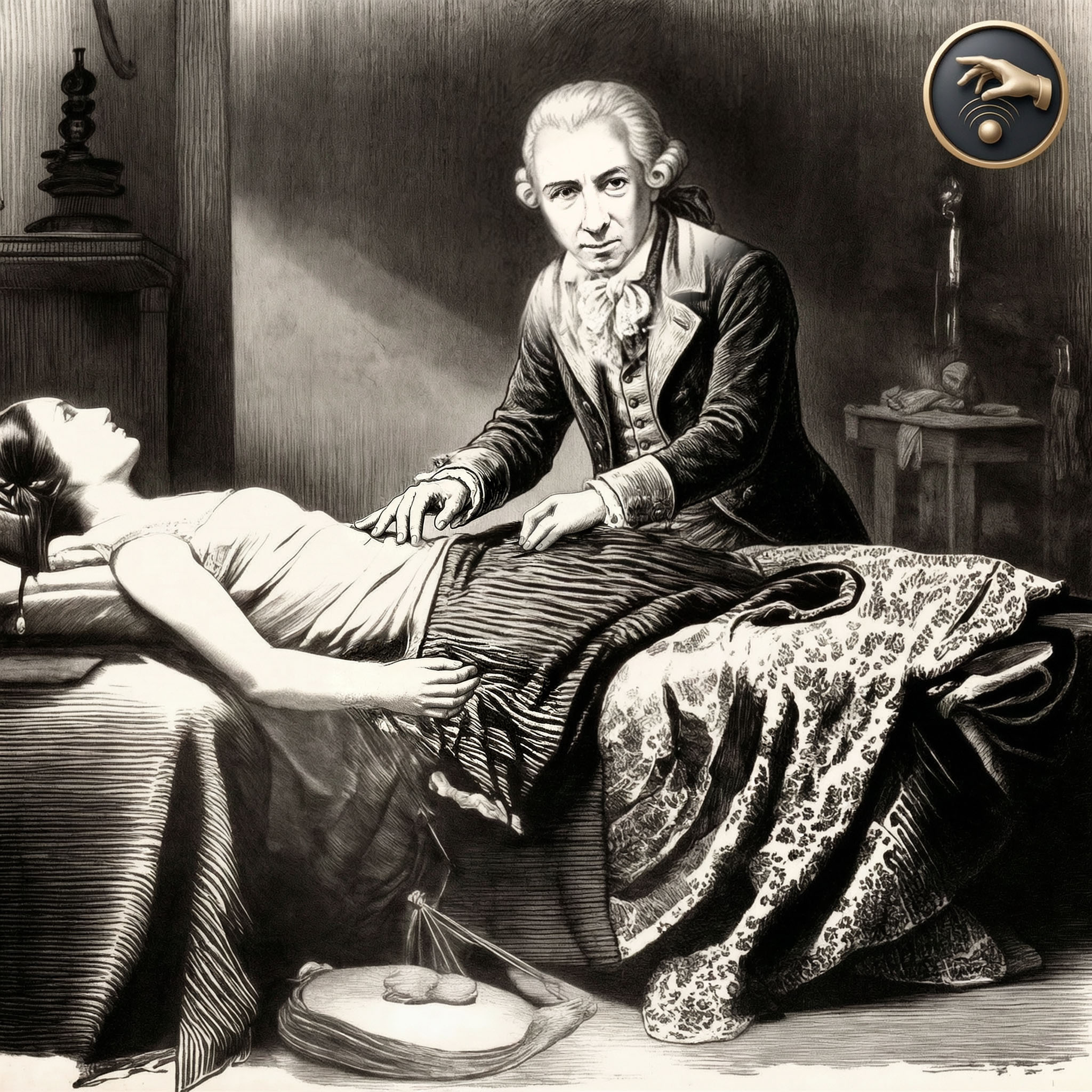
I enter the corridor. A woman’s moaning drifts from the treatment room. I knock and enter, placing the requested magnets on the table for the Maître. He holds his hands over his patient, pays no further attention to me, and mutters, “The fluid must flow; the invisible fire of life must spark the crisis to pave the way to healing.” Then he reaches for the magnets and passes them along the body of the woman, who is breathing heavily, her eyes rolling back.
I have also tried my hand as a magnetopath, covertly borrowing the Maître’s healing stones and waving them over the slowly swelling belly of my girlfriend, Eloise, the Maître’s maid. She, too, rolled her eyes, but likely because she found me and my muttered incantations quite ridiculous. In the end, she went to an angel-maker.
Perhaps it is not the magnets at all, but rather the Maître himself—his own gravitas animalis—that causes the reactions of his female patients and these miraculous healings? I still hope that he will take me on as a disciple and initiate me into his secrets. With an impatient wave of his hand, he dismisses me.
I step back into the corridor. For a long time, I listen at the door, hearing how, with the help of his magnets and incantations, he melts away the woman’s blockages bit by bit.
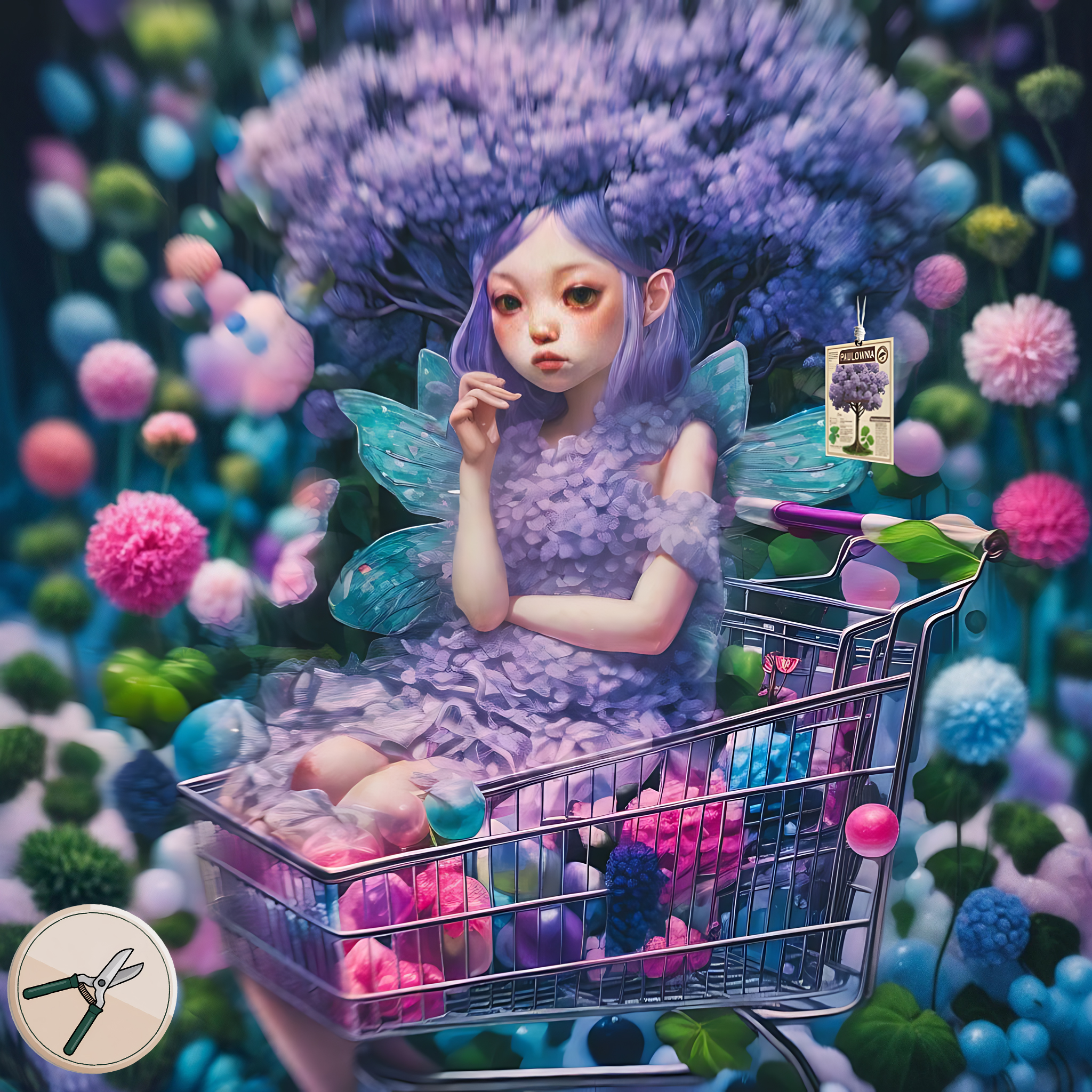
I enter the corridor between the herbaceous perennials and the ornamental trees. In our outdoor area, plant enthusiasts can fulfill almost any desire. From water lilies to border perennials, our range of products presents itself to them as vigorous, blooming, and brimming with sap and strength. Maintaining such an extensive inventory is quite a Herculean task for us garden center workers. Nevertheless, during my internship, I’ve often found time to observe, mesmerized, how the plants find their buyers.
The customers stroll around, inspecting our offerings, and then at some point, something clicks—a plant has found a new home and owner. Whether it’s something chemical, pheromones perhaps, or a form of magic, I haven’t been able to figure out yet. Home gardeners and weekend warriors may think they are the ones making the choice, but in truth, they have no control over their purchase; they are entirely under the spell of the flowers, perennials, and ornamental shrubs that impose themselves upon them. And these plants are quite choosy. Granted, there are also customers absolutely immune to the signals of botany, simply grabbing what’s on their shopping list. But they are rare.
A fat man, who has combed his remaining hair over his bald spot, pushes his cart through the pallets. His gaze wanders as he rolls leisurely past the princess tree. In his cart, he has a tabletop fountain with a dragon tree and a radiator plant. If I were a plant, I’d make myself small and inconspicuous and let him pass by—anyone who wears a white T‑shirt stretched over a belly and covered in stains of dubious origin isn’t going to care for his plants properly.
He stops and examines the princess tree. I watch him through the branches of a dappled willow. What does he want with our Paulownia? She looks a little haggard; a few of her leaves are browning as if she’s suffering from a fungal infection. No one is interested in her. For months, she’s stood unnoticed on the pallet next to the golden privet: a real dud. But the fatso actually puts her in his cart. I hurry over immediately.
“Are you familiar with the care of a Paulownia? She is very temperamental.” That’s meant to scare him off. But the guy just grunts and pushes his cart along. I follow him.
“Oh, look. She’s sick. Wait, let me check our stock to see if I have another specimen for you.” We don’t have one, I don’t even need to check, but I could certainly palm off a northern catalpa on him; they’re often confused with the princess tree. But the fat bald guy shakes his head irritably and snatches the plastic pot back out of my hands. He sets it next to his tabletop fountain, casts a lovestruck glance at Paulownia, and leaves me standing there.
“Excuse me,” I call after him, “that tree is already sold!” She belongs to me! I want to add, but I see the boss’s daughter watching me. She’s standing by the silver willows with the hose.
The overweight man turns toward me. I only have eyes for my Paulownia. She shakes her leaves and stretches to her full height. She wants to leave me. She wants to throw herself at this slob in his greasy T‑shirt; she wants to be his and trample everything that had developed so tenderly between us!
The boss’s daughter approaches the tubby man: “Everything is fine with the little tree.” Then she turns to me. She’s always had an axe to grind with me: “I think our orchids need misting again.” But I already have the large pruning shears in my hand. I’m not letting this fat pig take my Paulownia!
I lunge at him in a rage. After a brief scuffle and a few shrill screams for help from the boss’s daughter, I am able to shove the man aside and find myself standing before the treacherous tree. With my hands on the grips, I open the hedge shears. Paulownia seems to recoil, her branches trembling; she seems to beg me not to take it to the extreme. She wants to make amends, to stay faithful to me for a lifetime, to be at my service, to read every wish from my lips! Pah! She can’t fool me anymore…
Later, I learned that the “lightning” that struck me in that moment and sent me hitting the floor was one of the stainless steel watering cans for $94.99, which the boss’s daughter smashed over my skull. The stunt earned me a painful lump, a mild concussion, and, of course, immediate termination. My Paulownia was gone, sold, by the time I came to. The fat guy had loaded her into his station wagon and driven off. Because of the “unpleasant incident,” they gave him the tree for free and deducted the price from my intern salary.
So, she officially belongs to me now, right? After all, I paid for her. And I’m going to get her! Janine from the register, with whom I’d occasionally shared a secret smoke behind the greenhouse by the compost bins, gave me the name and address of the fat customer. The boss had written them down in case there was a legal aftermath.
Oh, yes. There will be an aftermath! This time, I’m bringing the chainsaw…
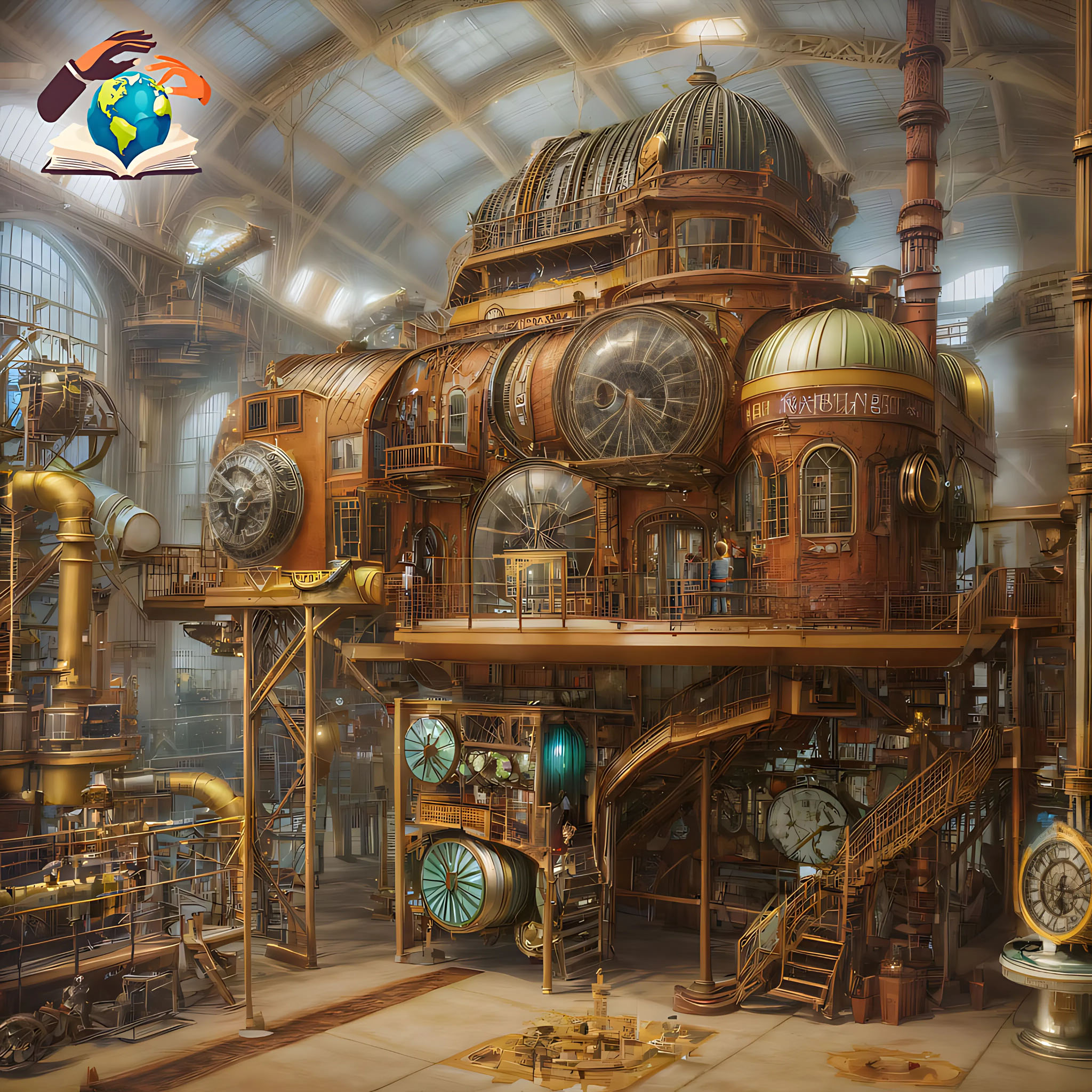
I enter the corridor. This time, I think the professor really went overboard. Everything has a playful Victorian feel: on the walls, small fountains bubble beneath oval mirrors framed in carved ivory. So this is his latest trick: the “Myth Machine.” Something got Ceril thinking that the world’s myths are all tapped out. “A ‘mython’ shortage?” I asked smart-aleckly, but he just gave me a contemptuous look. Apparently, today isn’t about elementary particles unknown to conventional science.
He had me summarize what a myth is, but he wasn’t satisfied with my Wikipedia knowledge and explained that, as a leisure mythologist, he spends a lot of time studying “archetypal narratives that can serve as a collective model.” “Harry Potter?” I suggested, and “Avatar?” The professor furrowed his brow: “That’s precisely what worries me: this omnipresent regression into magical thinking. The myth of the noble savage and that of an enchanted world that obeys human will rather than the laws of nature—unfortunately, not very helpful or productive when it comes to the future of humanity.”
Hence his machine. It’s supposed to create the myth for the 21st century: the universal story that gives new meaning to everything we experience and strive for—and I’m supposed to bring this creation into the light of day.
The fabric-covered doors in the corridor are labeled with shifting letters. Just like in a dream, you can’t quite make out what they say, and they’re constantly changing. Did that just say something about “selling one’s soul to the devil”? Or “creation of the world in seven days”? Or “Emperor Barbarossa is just sleeping”?
I start getting pretty woozy, so I make sure to get myself out of that machine fast.
“It looks like it’s still at the very beginning of its calculations,” I tell the professor in a steady voice.
“But it’s already been working for six whole days,” he says sadly. Then he shrugs: “Oh well, let’s give it another week.” And seeing my expression: “A month?” I don’t answer, so Ceril finally sighs in disappointment: “Fine: a year. That should put us on the safe side.” I nod contentedly. Anything to avoid having to go back in there anytime soon!
The following night, I dream I’m fleeing from a massive horde of fairy-tale and mythical figures, all desperate to be my “role model.” I wake up drenched in sweat. Hopefully this nightmare won’t haunt me night after night for a whole year.
(It didn’t. Instead, a pretty crazy new classmate took my dreams by storm. But that’s another story.)
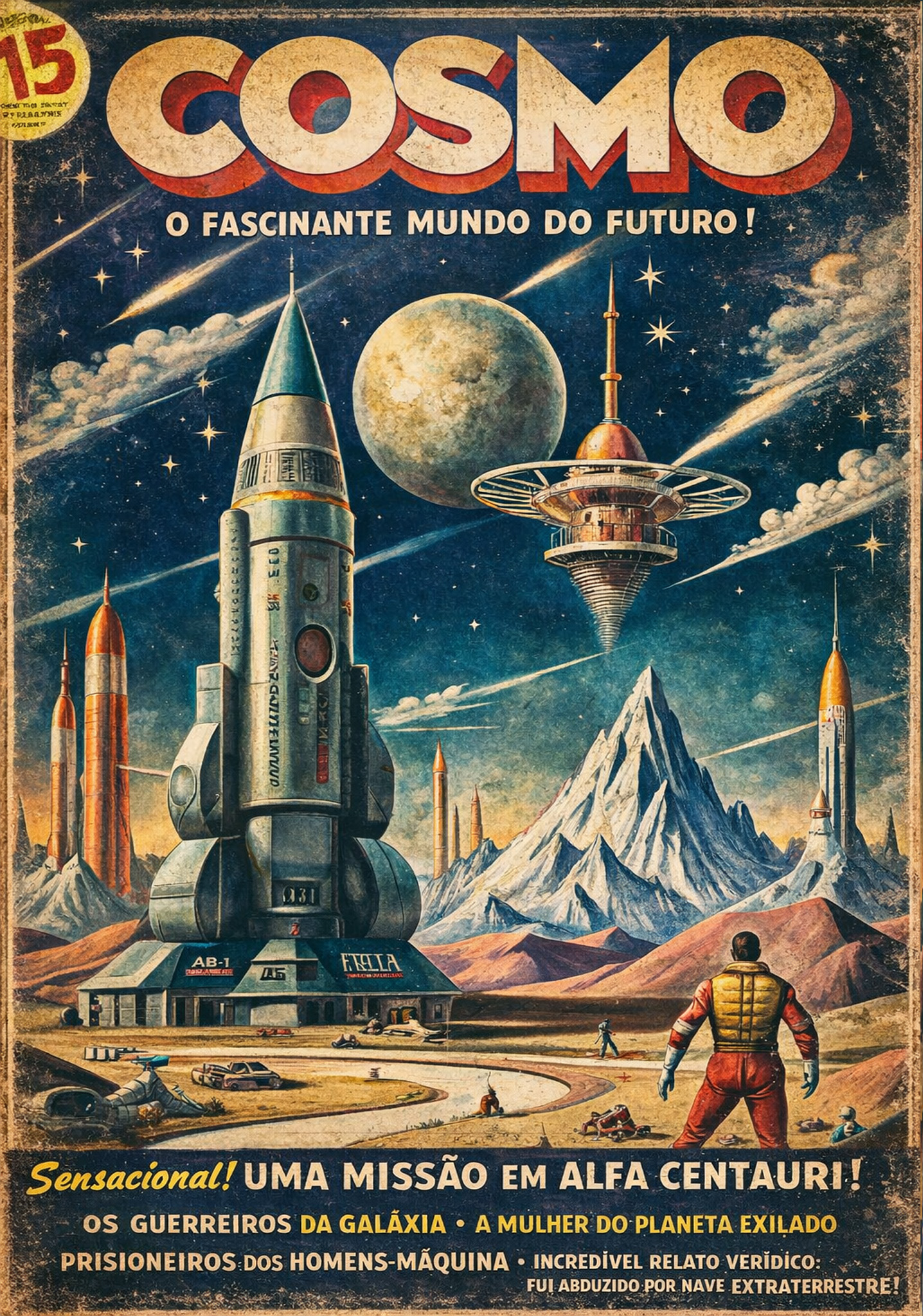
I enter the corridor leading to the crew quarters—and even though we’ve been on this journey for many years now, I still can’t quite grasp that I am on a spaceship bound for a distant solar system, an alien planet, and an extraterrestrial civilization.
Just standing firmly on the metal floor with my own feet is—in the vacuum of space, far from anything that could exert gravity on us—actually unfathomable: The ship rotates, pinning me to the outer hull, much like water is pressed into a bucket when you swing it around in a circle.
*
It was December 21, 2012, that changed everything. Today marks ten years to the day since we humans—every single person on planet Earth—heard the voice in our heads. Everyone perceived it differently: some as a clap of thunder, others as a whisper, some as a female voice, others male, or even that of a child. But the wording was identical for everyone: “This is the Galactic Federation.”
It was eerie. Something like this had likely never happened in human history. It felt threatening and liberating all at once. I felt the same as most people: after that, I couldn’t just go back to business as usual. As it turned out, it was another Copernican revolution for humanity. Not only was Earth never the center of the universe, but we humans also turned out to be just one intelligent species among many—one civilization among countless others.
“The quarantine that existed for your protection is lifted, effective immediately.”
Every person on our planet heard this brief message in their own native language, wherever they were, whatever they were doing. I belonged to the one-third of humanity that was asleep at the time. The voice spoke to me—it was female and gentle—and I woke up instantly, without the slightest doubt that this had been no dream. It was the same for billions, I later learned, just as I soon found out what this quarantine was all about.
*
For over half a century, astronomers had been searching for signals from extraterrestrial civilizations. I had never even heard of SETI, because the research program had yielded no noteworthy results—except perhaps the mysterious Wow! signal. It was astonishing which fields of knowledge suddenly made the front pages, and equally surprising were the topics I suddenly found myself engaging with, the entirely new questions I was now grappling with.
Many felt the same. On some level, it made total sense: the experience of feeling something foreign inside one’s own mind wouldn’t let go of us, even if there were people who tried to dismiss it as mass hallucination or an elaborate student prank.
In any case, the telepathic message broadcast worldwide on December 21, 2012, made it clear why SETI had been unsuccessful for so long and had failed to discover alien civilizations: our solar system had been shielded from all intelligent radio signals, meaning they couldn’t reach our sensors at all—save for the Wow! signal, which was likely thanks to a brief malfunction of the quarantine filter.
Sure, the existence of extraterrestrial life was debated, but as far as I had gathered, experts ruled out the possibility that it could cross the vast distances of space. With the voice, everything suddenly changed: there is life in other star systems, intelligent life, and it knows about us.
However, who the “Galactic Federation” actually is, and whether the civilizations in our galactic neighborhood belong to it, remains unknown to us. The voice in our heads—which some say was an automated recording played when the Voyager 1 space probe reached the outer boundary of our solar system—did not speak again for the time being. No further message followed. Our radio telescopes, however, were suddenly flooded “with immediate effect” by signals of an apparently intelligent nature from our galactic neighborhood, even if none of the messages our newly discovered neighbors were beaming into space could be decoded at first. The galactic radio frequencies were suddenly filled with an incomprehensible babble of a thousand voices, which came as a shock to many—and perhaps even a healthy one.
*
The experience of hearing a foreign voice inside one’s own head was a transformative event for most people, and in its wake, things happened that many—myself included—had thought nearly impossible: humanity pulled together and, with a shared goal in sight, worked unbureaucratically to solve our pressing global problems. I, too, was quickly swept up by the new enthusiasm. New horizons had opened up, and terms like “exosociology” or “Kardashev scale” soon rolled effortlessly off my tongue.
Of course, almost everyone wanted to know who was behind this tight-lipped “Galactic Federation” that had presumed to put us in quarantine for centuries. And naturally, we were curious about the alien civilizations we were suddenly listening in on with our radio telescopes.
The quarantine was lifted, but nobody said hello. So we decided to reach out and greet our cosmic neighbors ourselves…
I enter the corridor in the crew quarters and close the door behind me to the small compartment holding my bunk. A sign on the outside reads my name with the addition: “Xeno-Linguist.” Whenever my eyes fall upon it, I still feel the urge to rub them in disbelief. What incredible twist of fate brought me all the way from Papua New Guinea here aboard a research spaceship that has left the solar system and is on the verge of making contact with an alien civilization?
Out of nowhere, the words “Tea nubunubu mataa” come to mind. Ten years ago, I was a linguist working with endangered languages. Then came December 21, 2012, and after that, everything happened at breakneck speed. One moment I was traveling through Oceania with a voice recorder and a laptop, and the next, or so it felt, I was launching toward distant stars and planets on behalf of humanity, serving as a translator for first contact with alien civilizations.
The Cosmic Beagle embarked on its journey five years after the quarantine was lifted—an extraordinarily short timeframe to plan and build an interstellar spacecraft. Aside from the massive effort to curb climate change, it was humanity’s first truly unified project—barring a handful of protesting fundamentalists and conservatives.
The fact that I am actually on board still hasn’t fully sunk in. But of course: they need a language expert. Instead of a solitary Darwin, an entire team of specialists is en route—plus a cat, Lady Wow, named after the Wow! signal of 1977, that little foretaste of what awaited us once the quarantine was lifted.
*
Lady Wow is more than just a mascot to us: in my opinion, she saved all of our lives on board. We actually had our first encounter with extraterrestrial life as we were leaving our solar system and passed Voyager 1—a route chosen purely for public relations. The space probe Voyager 1 was up to that point the farthest object humanity had ever sent into space, and some believe it was the catalyst for lifting the quarantine. After 35 years of travel, the probe reached the heliopause (another word I wouldn’t have dreamed a decade ago I’d not only use, but actually know what it means). It may have collided with the shell or barrier shielding us humans from the radio signals of other civilizations, triggering the filter to shut down. But why that happened on December 21, 2012, of all dates—the infamous deadline from the Mayan calendar—nobody can explain. Coincidence? Fate? A self-fulfilling prophecy? At any rate, it wasn’t the end of the world for us, but a new beginning.
The Termination Shock was already well behind us. We sent photos of our approach to Voyager 1 back to Earth. And then, while I was sitting at breakfast with Lady Wow in my lap, a cold chill spread inside me, freezing me in place. It felt as though I were standing naked beneath a microscope with thousands of eyes, dissecting me pore by pore in a fraction of a second and scanning me inside and out—coldly, without a shred of emotion or humanity, except that it was hungry. Very, very hungry.
Lady Wow hissed and bared her teeth. She leapt from my lap and darted frantically between the chairs as if hunting an invisible mouse. The cold, inhuman gaze that had been dissecting me alive vanished all at once, and I thought I caught a lingering trace of regret. Then it was gone.
Lady Wow came back over to me, curled up on my thigh, and purred. I was shaken to my core. The voice of the Galactic Federation ten years earlier had felt gentle, almost empathetic. This thing, whatever it was, was a predator—and I was its prey. I have no idea how Lady Wow managed to scare off the entity, an immaterial creature or perhaps one composed of Dark Energy, roaming the interstellar space beyond our solar system.
Or was it the quarantine shield itself, or remnants of it? Opinions among our crew remain divided to this day. And we certainly had plenty of time to debate the experience, which each of us had perceived differently.
*
In my previous life as a linguistic researcher, I didn’t care about science fiction in the slightest. But how else was I to prepare for first contact with aliens—which, until it actually happens, is nothing more than fiction? So I began studying everything writers had imagined about encounters with extraterrestrial beings.
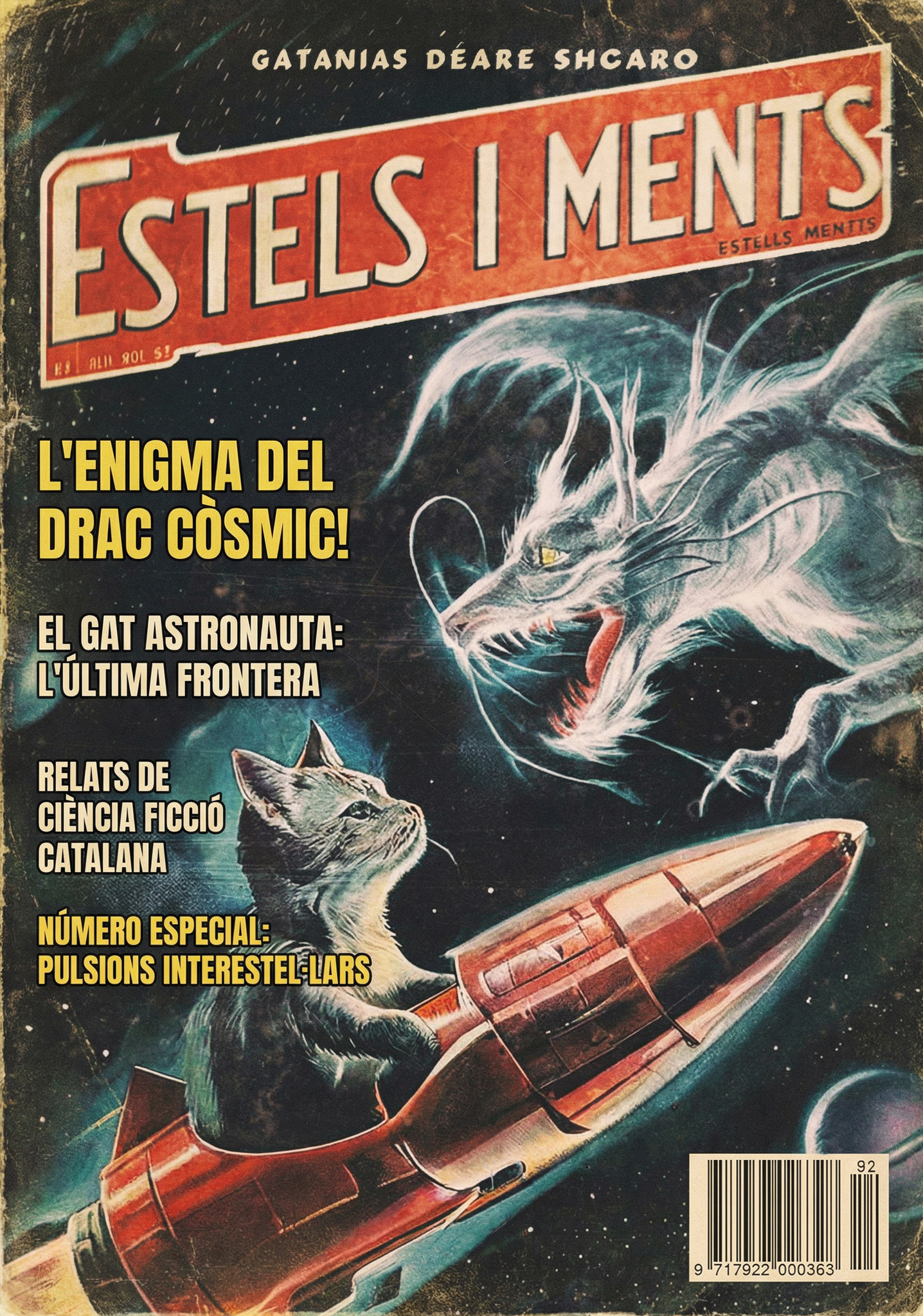
And do you know what’s strange? Among all those stories, I found one where a cat named Captain Wow fights off interstellar dragons that she perceives as rats. In doing so, she saves the spacefarers who would otherwise lose their minds upon encountering these “star dragons,” because those creatures hunger not for flesh, but for the mind.
A strange coincidence, isn’t it?
I haven’t mentioned any of this to the others on board, but I’m a little afraid of our return in twenty years. Will Lady Wow still be alive then? Her natural lifespan will be drawing to a close. But perhaps frolicking in the ship’s zero-gravity zone has managed to slow down her aging process a bit. I certainly hope so! Because the Dark Dragon will still be waiting at the border of our solar system, hungrily lying in wait…