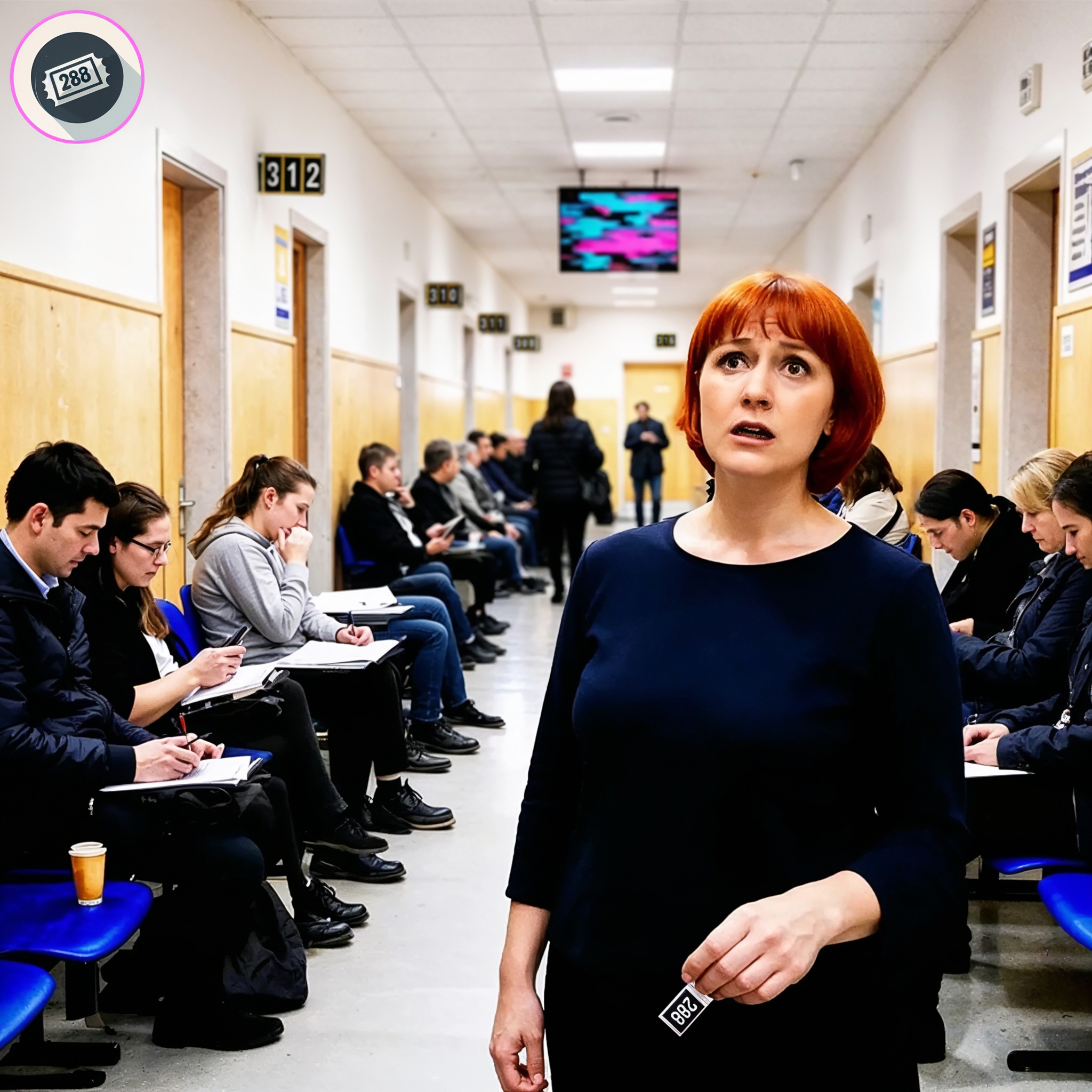
I enter the corridor: chairs for those waiting line the walls between the doors, each door topped by a digital display. Every seat is taken. I read 312 on one of the displays, 313 on another, and the third one is just skipping from 311 to 315. I glance at the slip of paper in my hand. 288. I shouldn’t have dawdled! In any case, I’ve obviously missed my call.
I turn around, wanting to go back and draw a new number in the foyer. However, above the door I just used to enter the corridor, there is another display: 314. For a moment, I’m confused. There’s no other exit, and—I look around once more with a searching eye—no ticket machine either. But I’m not giving up that easily.
The 314 above me clicks over to 316. A young man stands up. This is my chance. But when he realizes that I’m trying to squeeze through the doorway with him, he flashes me a disdainful look and blocks the crack in the door until the very last second. He pulls the door shut behind him with deliberate force, fast and hard.
I size up the others waiting there. Most of them are staring into space. Some absentmindedly roll their slips into tight little tubes or fold them up. A few teenagers are in the mix, engrossed in their smartphones or furiously mashing the buttons on a PSP with their thumbs.
A chair opens up. I take a seat, quickly dismissing the idea of stealing someone else’s number. The displays only go up to three digits. Eventually, they’ll hit 999. And then everything will start all over again. I clutch my slip tightly. My time will come.
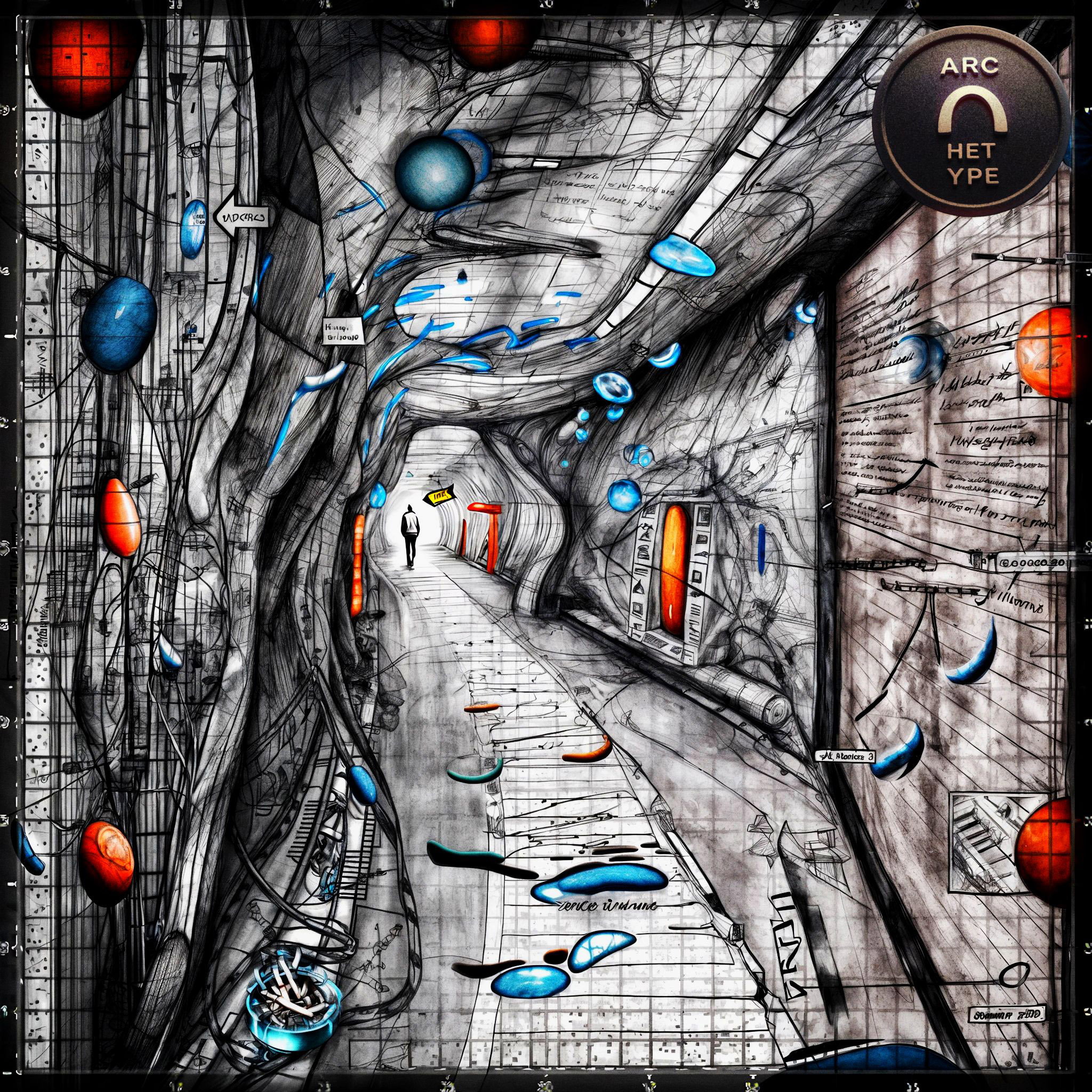
I enter the corridor. And, strangely, for some reason, the archetypal nature of the situation suddenly stands before my eyes—as if I were seeing myself and my circumstances from the outside:
I—the self-assured, reflective human being; the Cartesian, sovereign ego; feeling and acting separate from the world; thinking it through; proactive.
The act of entering—at once a birth process and a willful decision to move forward, for progress and development. Resonating here: the human thirst for knowledge, the craving for adventure, the insatiable curiosity, and the undaunted spirit of discovery that seeks to traverse new spaces and expand the reach of power and knowledge to the very limits of the doable and the thinkable.
The corridor—as birth canal, transit station, life path, and an opening into the possibilities of choice: doors branch off, leading to new spaces, new hallways, new rooms, new…
The vision that so unexpectedly and involuntarily overcame me breaks off. I am standing in a corridor. It is dusty, uninvitingly furnished, poorly ventilated, and dim. On a ledge, an overflowing ashtray. It reeks of stale smoke. Wrinkling my nose in disgust, I bolt.
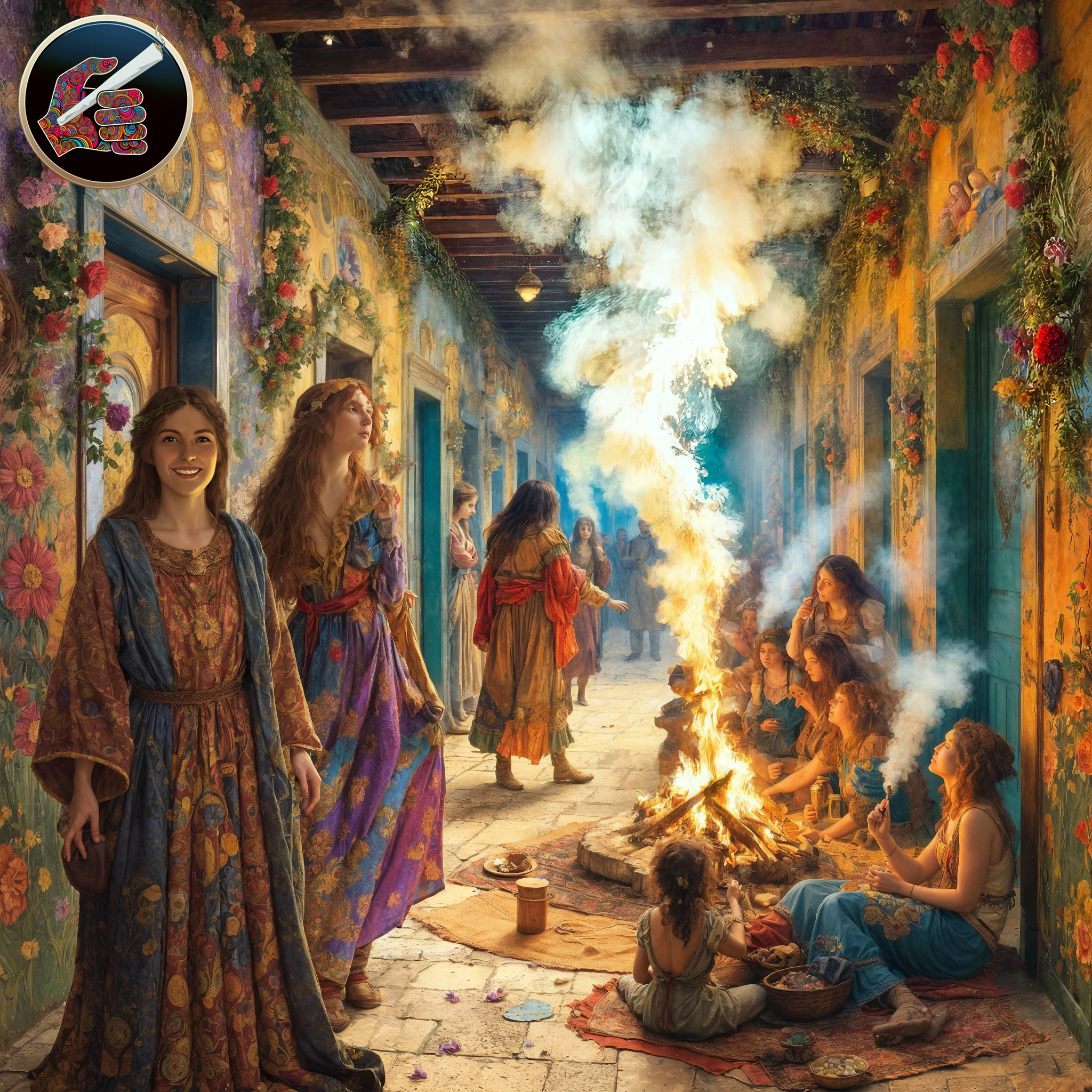
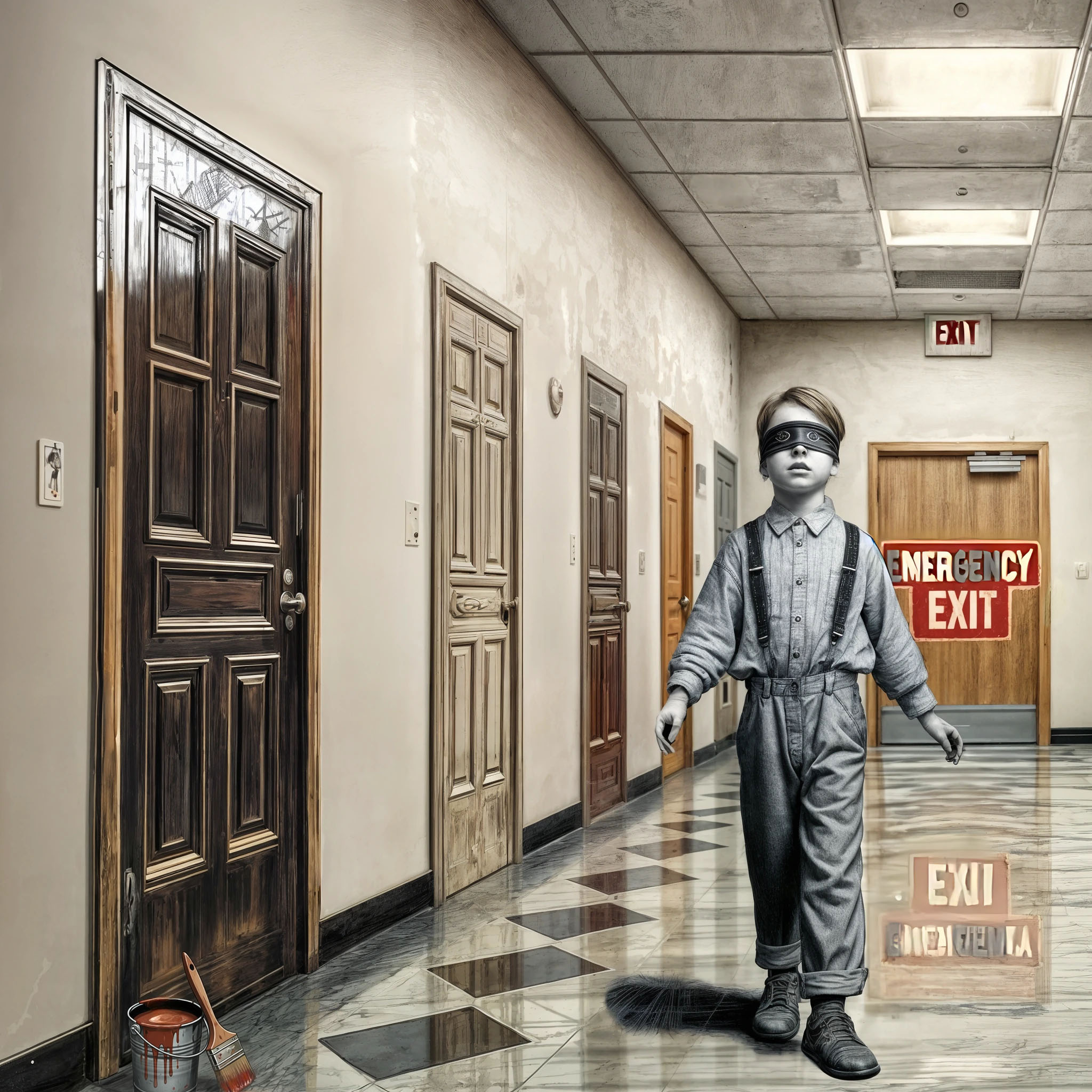
I enter the corridor. A lively bustle reigns here. A woman in colorful, flowing robes greets me with a smile and a kiss on the forehead. She leads me to her friends, who are gathered with some children around a fire, singing, dancing, and roasting marshmallows. I clearly please other women in the group as well. They feel me, nestle against me, and weave flowers into my hair. As I try to move on, one of them pulls me to the ground and offers me a smoldering little roll of paper. The corridor doors—I see now—have been painted with fantasy worlds, mandalas, and floral garlands.
I promised my people I would not halt my search until I recovered the Tjurunga, without which our shaman is powerless. And yet: Can I not linger for a moment to recover from the rigors of the trek? Perhaps I should learn the language of these people and find out what awaits me at the end of the corridor—and behind the many doors they haven’t opened in years, decades, or perhaps ever. The cheerful mood of these people is infectious. Yes, I’ll stay. I nod to the women, letting them know I accept their kind invitation. Perhaps I will find the Tjurunga here among them after all. A wave of dizziness washes over me from all the new impressions. The smoldering paper stem has burned down, and somehow, I know the smoke will never taste bitter again.
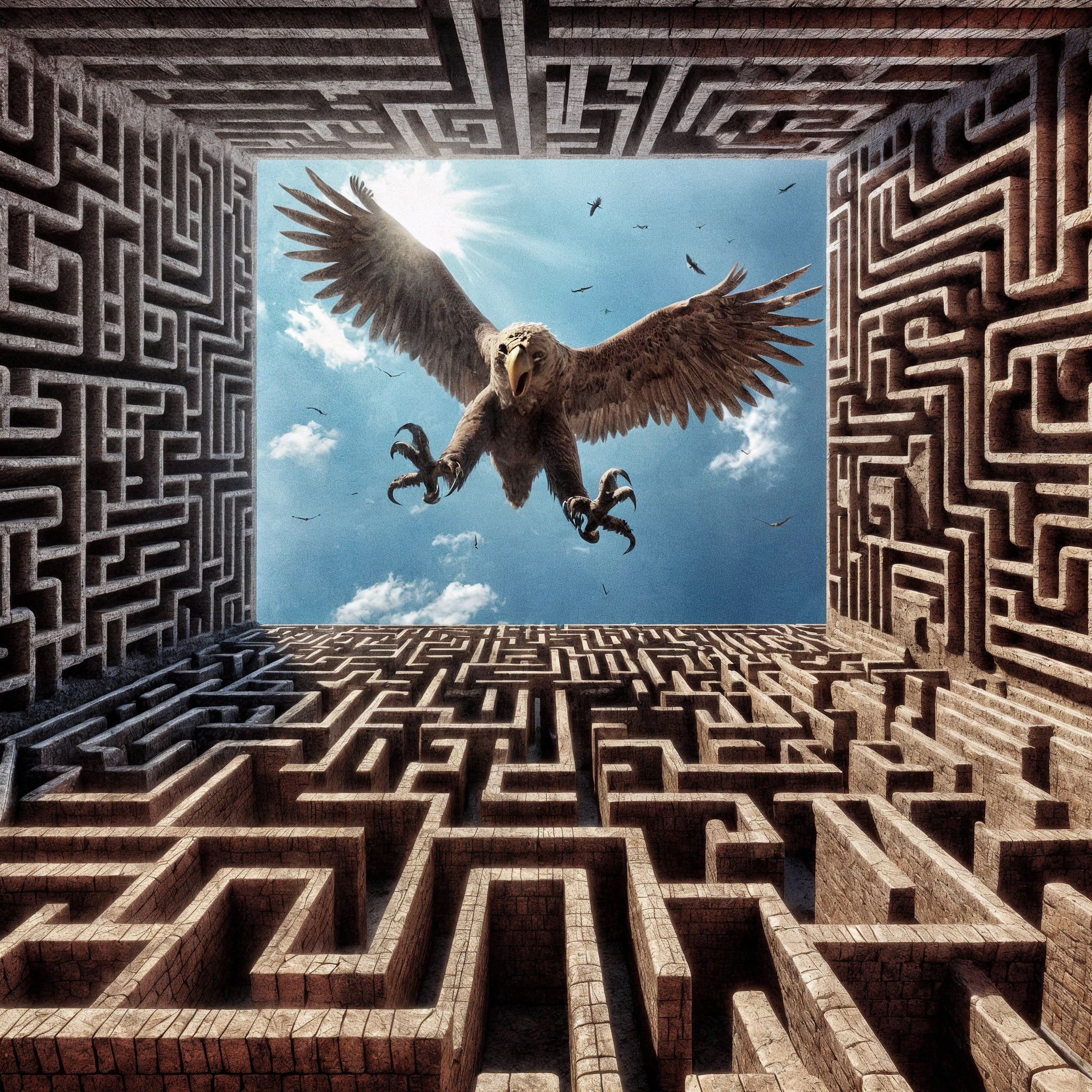
I enter the corridor. Somehow, I suspect the islanders want to be rid of me, and I am on my guard. I imagine they dislike my large ears, my sturdy legs—my otherness. Unadorned, roughly plastered stone walls rise on both sides; since there is no roof, the sun streams in. I scan my surroundings warily. Is a pitfall awaiting me? Will spears, triggered by my steps, shoot from the walls to pierce me? There is a pungent odor here. Apparently, the islanders usually drive goats through this passage.
Carefully, I place one foot in front of the other. Suddenly, a shadow eclipses the sun. Looking up, I see a gigantic bird plummeting toward me. In the narrow corridor, I cannot turn quickly enough. And where would I go, anyway? I become easy prey for its outstretched claws, each of them as large as a full-grown leopard. They seize me, and with a few powerful wingbeats, the majestic bird soars back into the air.
Apparently, it wants me alive. Below me, the islanders have gathered in the square before the Temple of the Formidable Naked Mole-Rat; they wave their arms and dance as spirited drum music rises up. I trumpet in protest.
The giant bird heads toward a mountainside. I spot an immense nest where four enormous, gaping beaks reach upward. The hungry squawking of the chicks makes my blood run cold.
I enter the corridor, one of dozens. Or was it hundreds by now? But something is different this time. The doors! They are merely painted onto the walls on either side. Deceptively real, to be sure, but when I reach for the handle, my hand meets seamless stone. The passage at the end: another trompe-l’œil. And as I run back to the entrance, plagued by a grim foreboding, all that awaits me there is the mere likeness of the archway through which I entered. I pound my fists against it, kick at the mock doors until my feet ache, but the truth remains: This is my final corridor. The comfortable illusion that it would go on forever shatters against the hard, cold stone, where my fingernails don’t even leave a scratch.
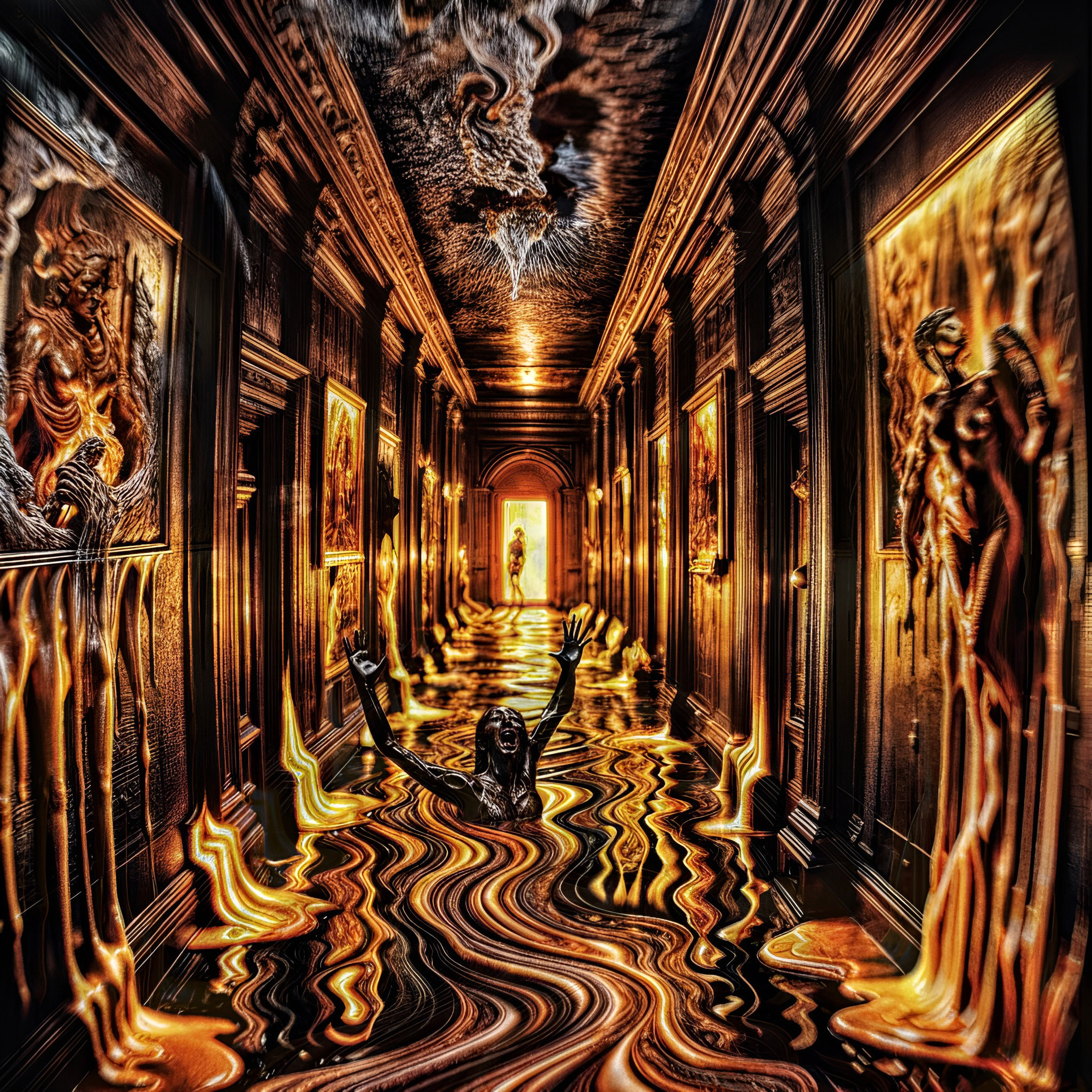
I enter the corridor, which initially strikes me as wild and expressionistic, reminding me of van Gogh’s Corridor in the Saint-Paul Asylum in Saint-Rémy. But just a few moments later, it begins to melt, and everything dissolves as in a painting by Dalí. Initially, it’s the oil paintings on the walls that slowly start to drip down. Then the doors, too, begin to buckle, losing their consistency and flowing sluggishly into the corridor. Meanwhile, as I try to escape—to get away from here, where everything seems to be disintegrating!—I increasingly lose my ability to move, and my body stiffens and solidifies. I can still stretch an arm with my last strength, but I’m already frozen, turned into stone. Slowly, I sink into the amorphous mass that was a respectable art gallery in Venice just moments ago.
Later, after centuries, they will retrieve me from the sea and mistake me for an ancient statue, whose horrified expression an old, nameless master had masterfully captured.
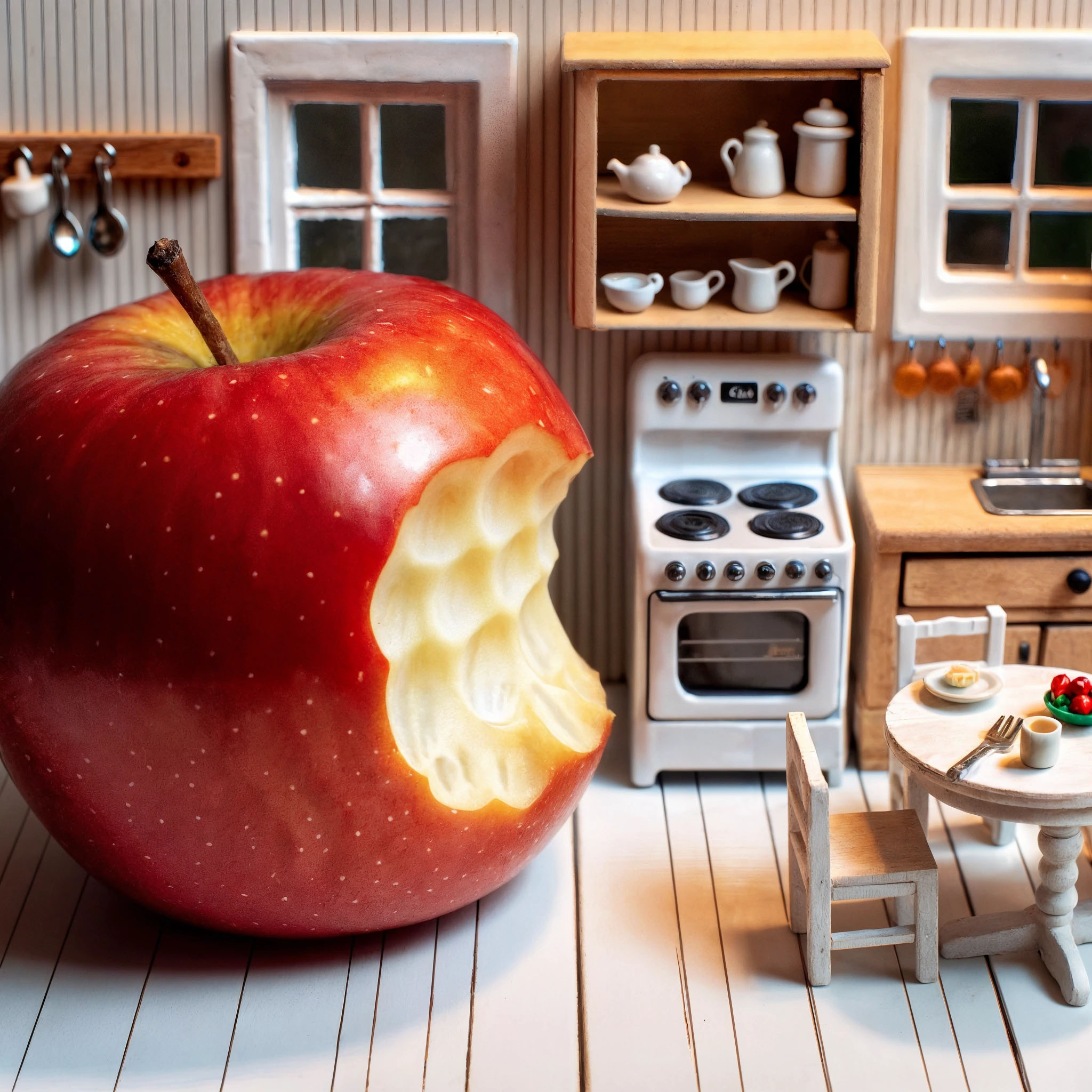
I enter the corridor of the dollhouse to make my way to the kitchen. The utensils there are comically oversized, but I don’t want to completely abandon civility. Rather than shoveling my food into my mouth, I prepare it to the best of my ability. If I already look like an uncivilized forest dweller, I want to maintain at least some dignity internally and in my daily actions.
Because ever since my courtesan bewitched me with a voodoo spell and shrunk me to the size of a thumb, I am completely at the mercy of her adolescent daughter. She sees me as a toy and, for her amusement, forces me to perform all kinds of tricks. Although I unroll the poster I painted with the word “Hunger” almost daily and let it hang from the bedroom over the partially open entrance hall, she only occasionally thinks about putting a lettuce leaf or a slice of fruit in the vestibule for me.
Worse than the daughter though is the mother, who sometimes secretly takes me at night and lies with me in bed. Despite her grotesque gigantism, it almost feels like before, except now she forces me to crawl over her naked body and pluck out all the unwanted hairs sprouting from it. For me, it means laborious foot marches and hard work. It’s even more humiliating as she’s using me to make her more desirable for her new lover, while for me, no knife is sharp enough to shave or even trim the now matted mane that reaches down to my knees.
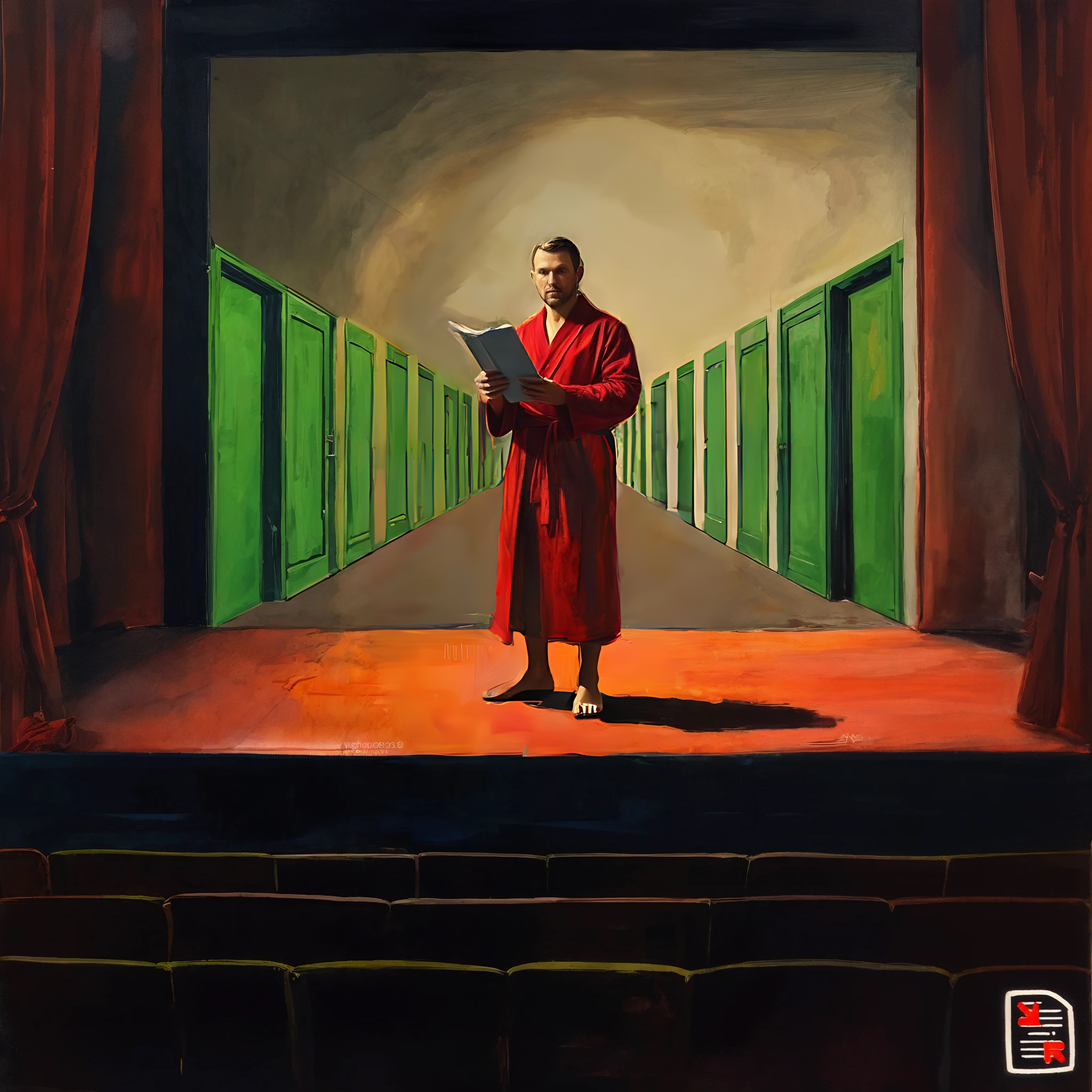
“I enter the corridor from which there is no return”—these are the powerful words that begin my great stage monologue. I stand in front of a door that, to the audience, seems to open onto a long, perhaps even endless corridor, I imagine, and I turn my head back to the other actors on the set. Then I deliver my moving farewell speech, and, in the end, I make my announcement come true and fearlessly enter the dark corridor of no return, the door slams shut behind me, and that will be the last thing that can be seen of me. At least until the final applause.
The play is going to make a splash; I can feel it. Granted, the director seems to have passed his peak, and it is only a small independent theater where we perform. But I can sense the power that the text holds and I am certain tthat we will significantly shake up the current, rather staid theater scene.
It is nothing new, actually: as a patchwork of text fragments from the Theater of the Absurd, it brings authors such as Pirandello, Artaud, Cocteau, Beckett, Ionesco, Sartre, and Camus into dialogue with one another—a remix! To be honest, I still haven’t figured out exactly which play and which dramatist this monologue stems from. But isn’t that ultimately irrelevant?
Finally, I’ll be back on stage! The project does not boast any stars, but relies on skilled second or third-tier actors in order to be convincing with the force of its story. At a boisterous meet-and-greet fueled by plenty of Chablis, the director explained his vision to us. It’s not about whether the Theatre of the Absurd imitates the absurd or, rather, turns what it imitates into the absurd. No, it concerns the definitive myth for our era, the mythical theater of postmodernism, and the only fitting depiction of the human condition: absurdity itself.
On stage, I represent all of humanity—the individual who crosses the point of no return. Confronted with a senseless world, they knowingly and voluntarily choose the path of madness and loss of reality, not without commenting on this with powerful, profoundly existential words that are sure to resonate with the audience. At least that is what my gut feeling tells me. It gives me chills just reading it.
“Forget me!” I shout at the end, or perhaps I’ll just whisper it with fervent passion: “I am lost to your world of feigned order and decency, and what is more, I am a danger to the children and fools who still have eyes and ears and could discover that there is a way behind the scenes you have erected, the Potemkin villages, the beautiful facades and shams with which you inadequately cover up and disguise the maelstrom of meaninglessness. Better if you just forget me, erase me from your memory and your church books, destroy everything that could remind you of me, deny and repress me as thoroughly as you negate the actual essence of being. Root me out, lock, stock, and barrel! I am leaving, and there is nothing left that connects you and me. All bridges behind me are burned. Adieu!”
I believe that the “definitive myth for our era” that the director wants to bring to the stage lies in precisely these words that penetrate deep into the heart of human existence, affect it, stir it up, and perhaps never truly let go of it again. I am proud to be allowed to embody and inhabit this role, and I can feel that this monologue will be the culmination of my professional career, maybe even my life’s work.
Addendum: During rehearsals for the play, the director came to the conclusion that some necessary text cuts had to be made. Ultimately, he retained only the opening words of my grand monologue. I should, he says, incorporate the rest emotionally as I exit the quite minimalist stage setting—without a door, without a corridor—off to the side, with the few but memorable words “I enter the corridor.”