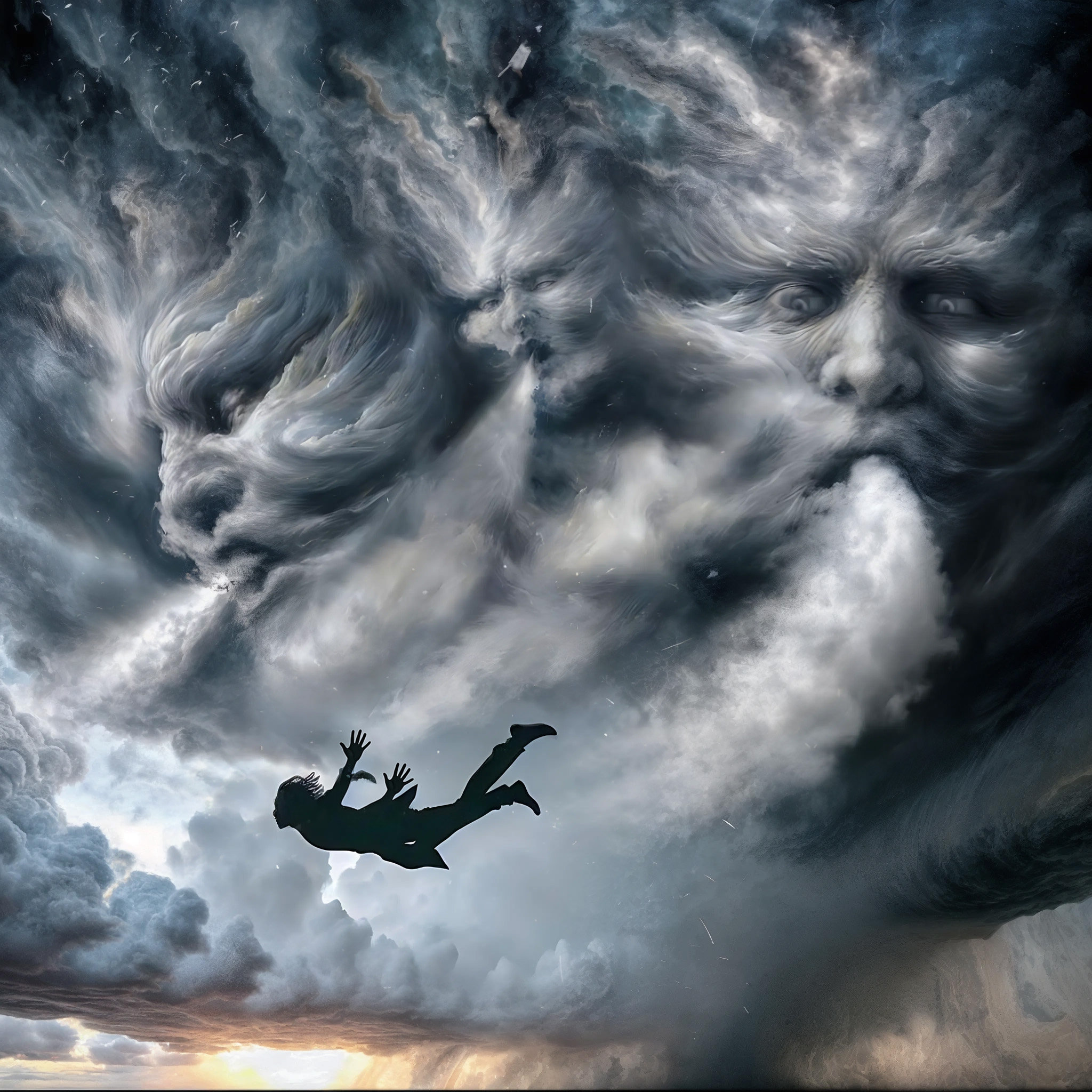
I enter the corridor. Oh, if only I’d considered it was a castle in the air! The ground gives way beneath my feet, and now the winds—led by Apheliotes, though Lips is doing his fair share—make a game of blowing me through the sky. Finally, Kaikias takes pity; he carries me away from his unruly companions and lets me sink—not exactly gently—into a harbor far to the northeast.
Reykjavík.
Not exactly my dream destination in the dead of winter. But word is it’s got a hopping nightlife.
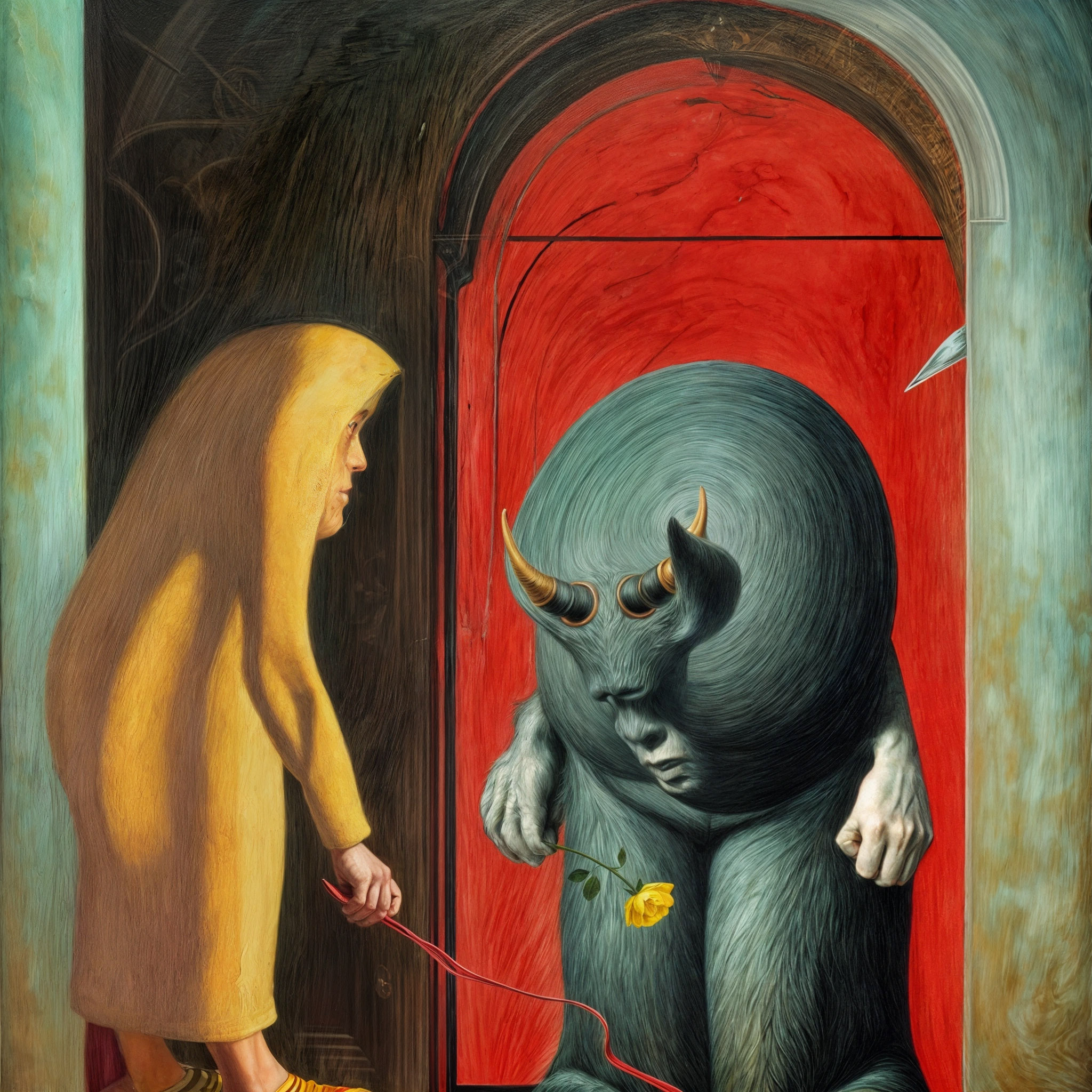
I enter the corridor, guided by the red thread. I stumbled across it by chance while wandering through this endless, labyrinthine palace. There must be someone else here! And if this someone is laying a thread, then it will either lead me to them—providing a welcome change in my monotonous diet—or it will lead to the entrance through which they came. And what is an entrance for them is an exit for me!
So I follow the thread through the labyrinth. And sure enough: daylight and the distant roar of the sea. How I have missed the sun during these lonely years! At the end of the corridor, I see blue sky. And a figure. It is a woman. I have to blink. She looks familiar. “Sister!” I say. My voice sounds strange and rusty—I haven’t used it in a long time.
“You have no place out here,” she replies. She has aged. Do I see streaks of gray in her hair?
“I followed the thread.”
“That was Daedalus’s design.” I might have guessed. She sees my gaze fall on her black armband. “Father…” she says, and swallows.
“Then I am king now.”
“Fat chance,” says a new voice behind me. A sharp pain shoots through my back, and I see the gleaming tip of a sword protruding from my chest. I want to say something, but my lungs refuse to fill with air. My legs buckle, and I sink to my knees.
From here, I can see the sun, now blindingly consuming the world that just moments ago stood open to me, until my sister steps toward me, casting her shadow over me as she leans down, and a merciful, all-encompassing darkness embraces me.
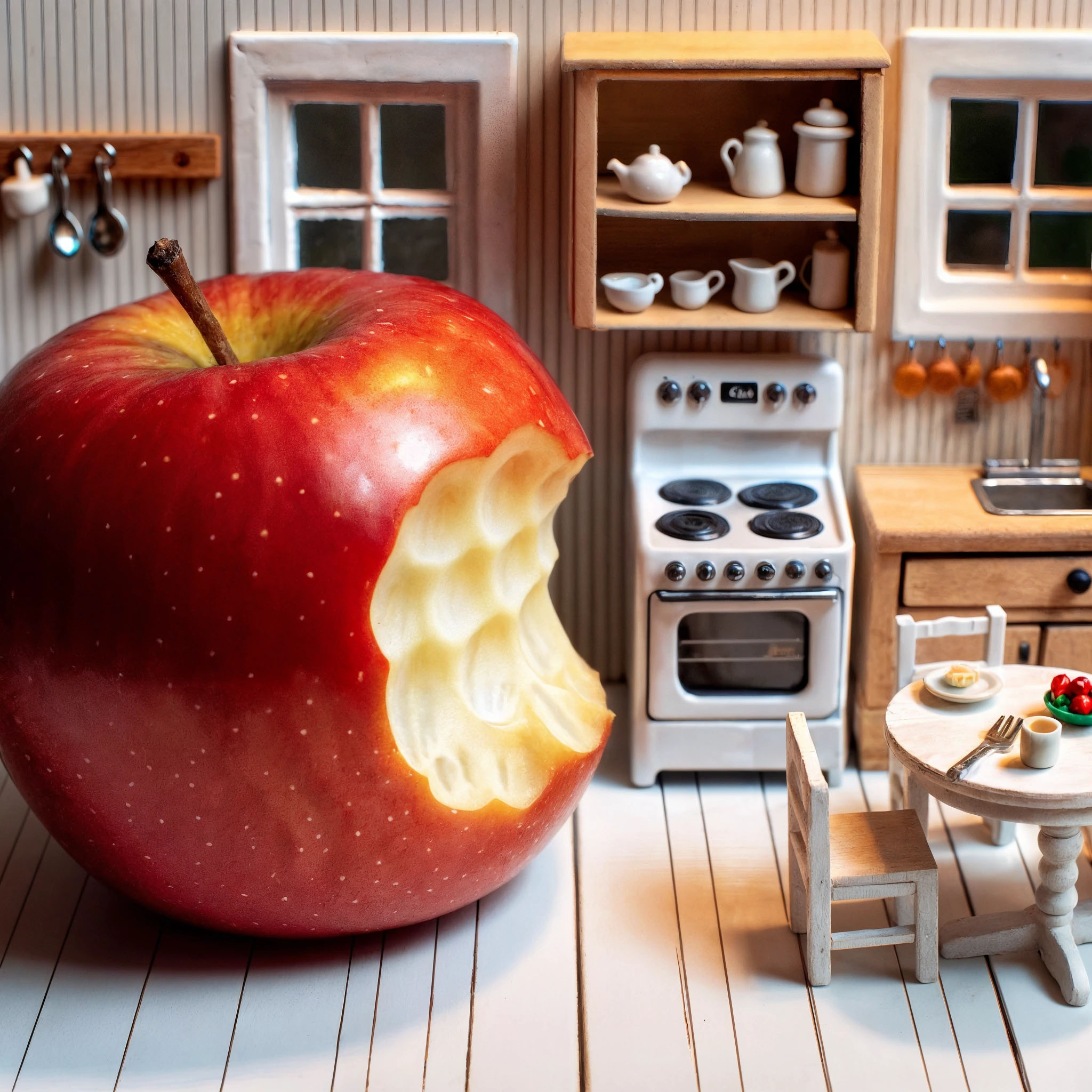
I enter the corridor of the dollhouse to make my way to the kitchen. The utensils there are comically oversized, but I don’t want to completely abandon civility. Rather than shoveling my food into my mouth, I prepare it to the best of my ability. If I already look like an uncivilized forest dweller, I want to maintain at least some dignity internally and in my daily actions.
Because ever since my courtesan bewitched me with a voodoo spell and shrunk me to the size of a thumb, I am completely at the mercy of her adolescent daughter. She sees me as a toy and, for her amusement, forces me to perform all kinds of tricks. Although I unroll the poster I painted with the word “Hunger” almost daily and let it hang from the bedroom over the partially open entrance hall, she only occasionally thinks about putting a lettuce leaf or a slice of fruit in the vestibule for me.
Worse than the daughter though is the mother, who sometimes secretly takes me at night and lies with me in bed. Despite her grotesque gigantism, it almost feels like before, except now she forces me to crawl over her naked body and pluck out all the unwanted hairs sprouting from it. For me, it means laborious foot marches and hard work. It’s even more humiliating as she’s using me to make her more desirable for her new lover, while for me, no knife is sharp enough to shave or even trim the now matted mane that reaches down to my knees.
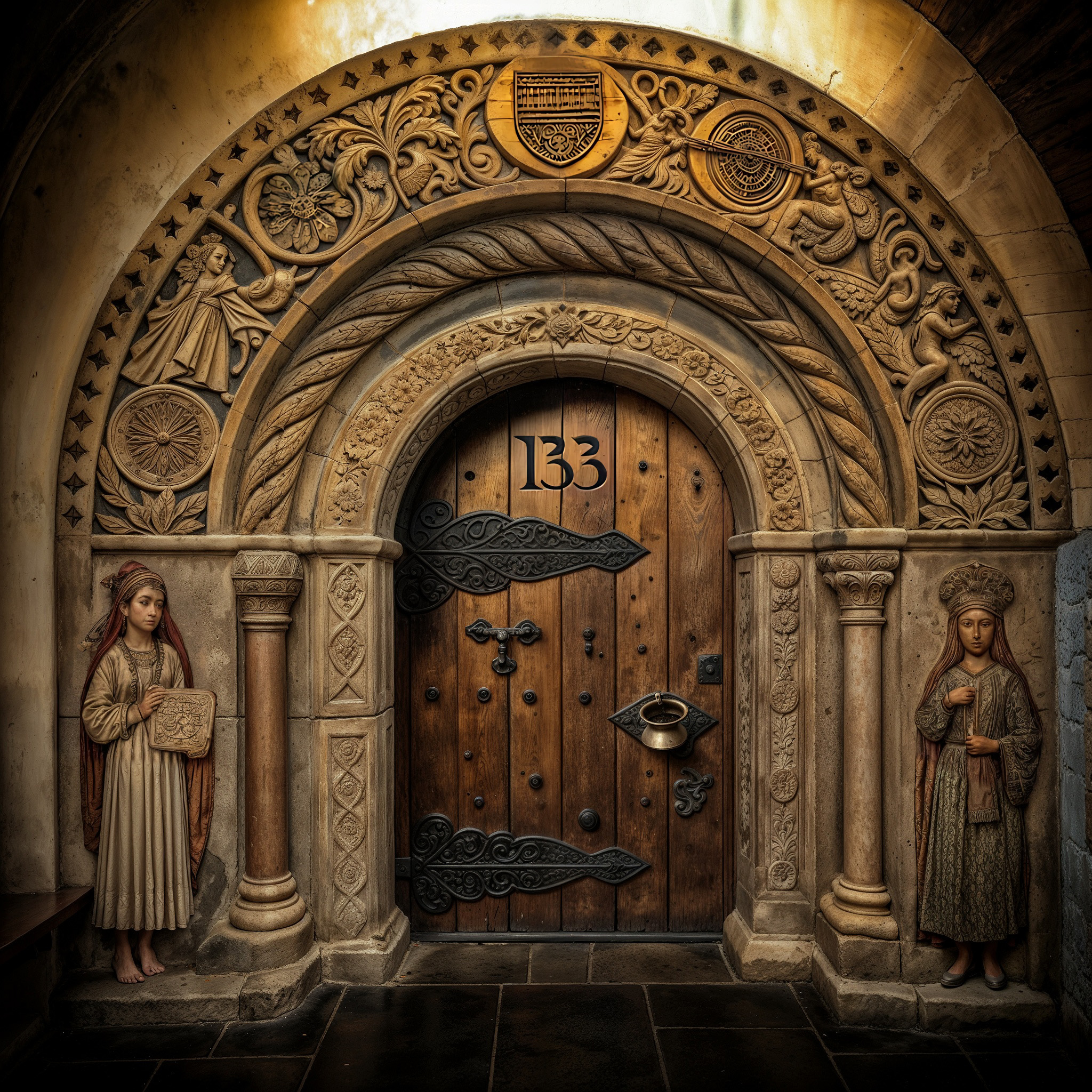
I enter the corridor of the Aesir. I have traveled a long way to reach the Senior Residence of the Retired Gods, and to be granted entry, I had to hand over my entire travel budget to the director. (n her defense: Since these gods are mostly just crossword clues now, homes like this are starved for subsidies.)
I am plagued by the concern that I might run out of ideas, after more than a hundred and thirty entries for a collection of texts opening with the same sanctimonious words: “I enter the corridor.” (The collection is intended to comprise nearly 400 of these accounts, which means I haven’t even finished a third.) Here, however, I hope for new inspiration and a cornucopia of equally surprising and profound ideas; it should be more than worth the effort to seek advice and support from the old, worldly-wise goddess of sagas and stories. It’s likely been a long time since a skald visited her.
“Sága” is written on the small sign next to the door. I have reached my destination and knock boldly. After a moment, I hear footsteps, and a sharp female voice asks if I have brought an offering. “No,” I call out through the door. I come, I add by way of explanation, from an enlightened, scientific age.
“No offering, no information,” is the reply, and the tone leaves no room for argument. The footsteps move away.
Rats!
In this, the old and the new gods are much alike: they always wind up throwing you back on yourself.
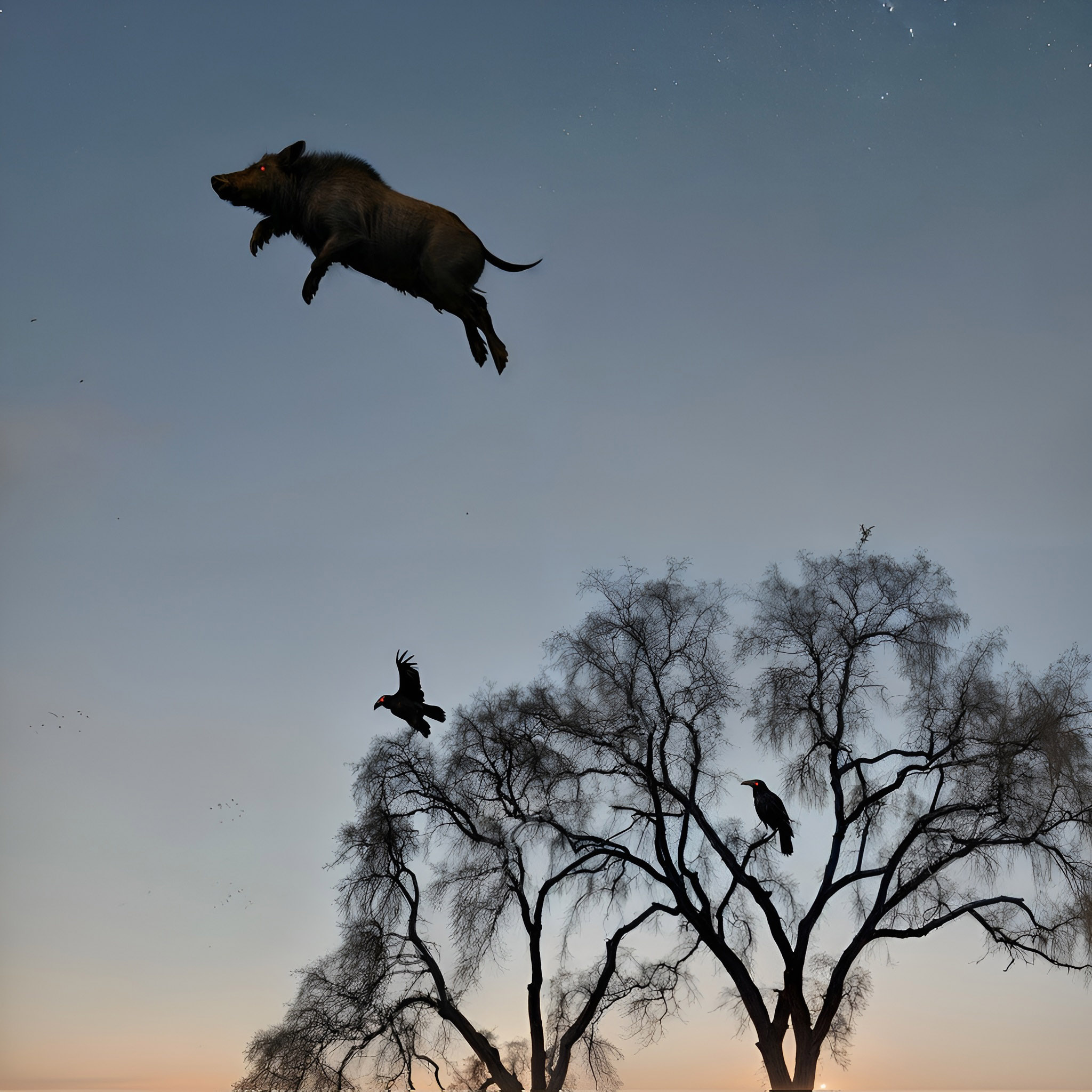
I enter the corridor. The hunters are already searching for me here as well. Before they can pounce on me, I dart aside. A long staircase begins here, for which my four legs are actually too short, but mortal terror propels me upward. The warriors are following me. In front of me, I see a man opening a heavy timber door. I follow him, run between his feet, knock him over unintentionally, and huddle in a corner of the room, trembling.
“Close the door, cook!” thunders a voice. Obediently, the man rises from the floor. Outside the door, a few of the Einherjar stand silently, staring in. The cook closes the door and turns around. His face is blackened by soot. I recognize him! He’s the cook who set the hunters on me and wants to throw me into his cauldron.
I do not know the other man, the one standing by the window opening. Two ravens sit on his shoulder, but now they flap their wings and fly off, croaking into the open air.
“My Lord, the boar…” the cook begins and falls silent.
“I see.” The man at the window has just one healthy eye. It fixes on me. My entire body trembles as I try to make myself as small as possible.
“The boar didn’t want to go into the forest today to be hunted. It ran back to the fortress, and then… obviously…” Again, the cook falls silent.
“Obviously straight to me. Spare me explanations for things that are plain to see. Maybe the boar doesn’t want to be hunted; maybe he doesn’t like that?” The cook nods.
“Maybe he doesn’t want to be butchered and cooked? Only to rise again from his bones the next morning, only to be hunted, butchered, cooked, and devoured again by warriors, valkyries, and my wolves? Day after day, week after week, year after year?” The cook stands motionless. “Or would you, perhaps, find pleasure in such a fate, cook?” The man with the soot-blackened face shakes his head. He, too, seems to want to make himself as small as possible.
“So let us deliver him from his fate.” The man at the window steps aside and takes a gleaming spear from the wall.
“But my Lord!” the cook interjects. “What am I to serve at the feast tomorrow? What are the Einherjar supposed to eat in the future? And what should your wolves feed on?” He ventures forward, but suddenly realizes whom he’s reprimanding and bows deeply, moving backward until he backs into the double doors.
The man by the window laughs. “Tomorrow, cook, when he is restored to life, the boar will know nothing of the fact that his god had promised him deliverance.”
And with that, he throws the spear. Everything happens too quickly for pain. Suddenly, I am entirely weightless, and I gaze down on the world from far above. I can see everything from up here. It seems a massive feast is approaching, where rivers of mead will flow. And under a large cauldron, the cook stokes the fire…
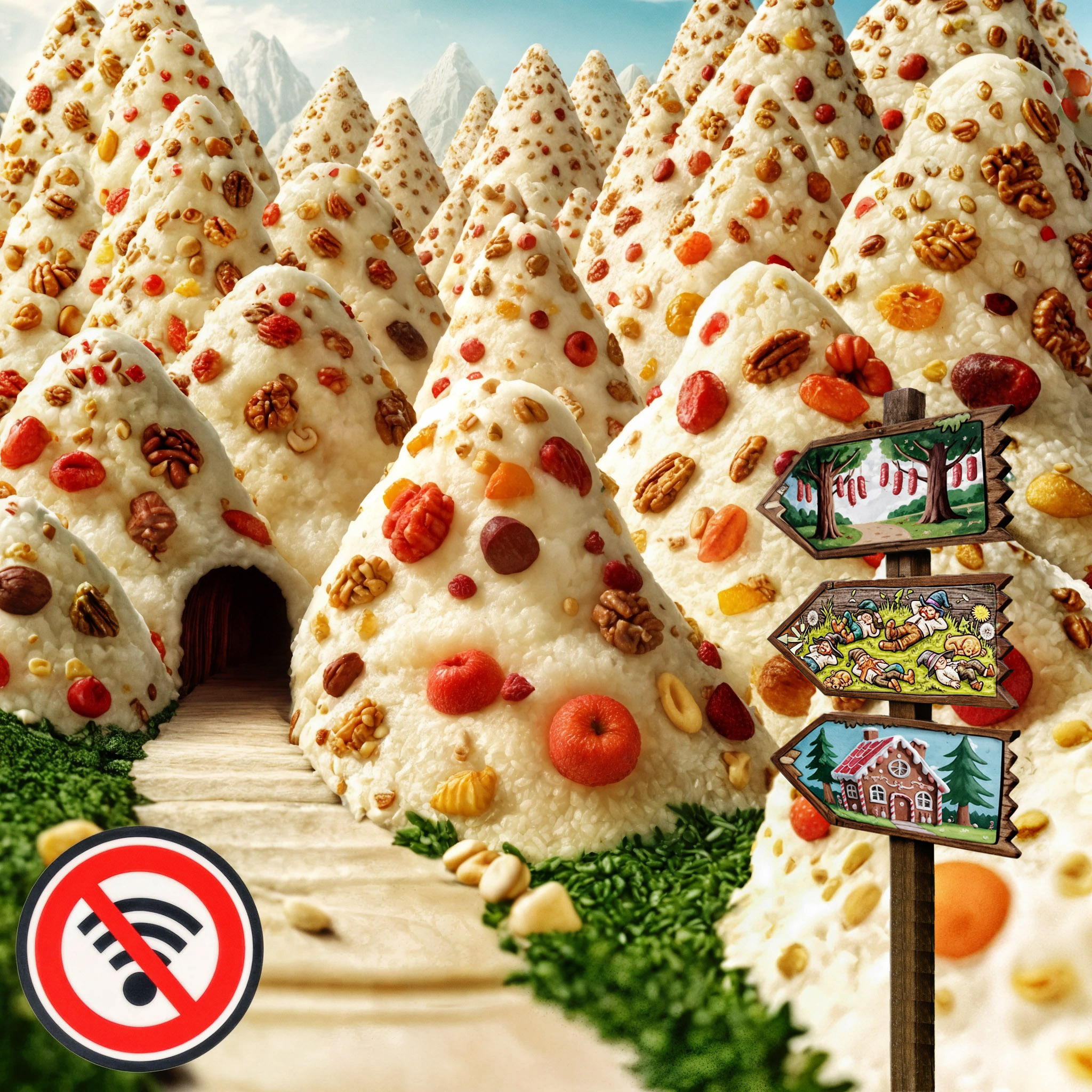
I enter the corridor that other wanderers before me have chowed into the mountain of rice pudding. Side passages branch off, but I scurry along the main tunnel, trying to outpace the viscous mess slowly oozing down.
Once I make it to the other side of the mountain, a fantastic world unfolds before me. I always thought it was just a fairy tale: the land where roasted pigeons fly right into your mouth and a quick “Psst!” makes fish leap into your hand. But it’s real! Around every house is a fence woven from bratwurst, you get a guilder for every hour you sleep, and yawning earns you a double thaler on top!
Still, as much as I wander around searching, I can’t find a single hotspot. Not even a modem connection can be found. When it comes to tech, this place is a real backwater—or back-mountain, if you will. Well, back I go, I guess. Hopefully, the tunnel through the rice pudding is still passable.
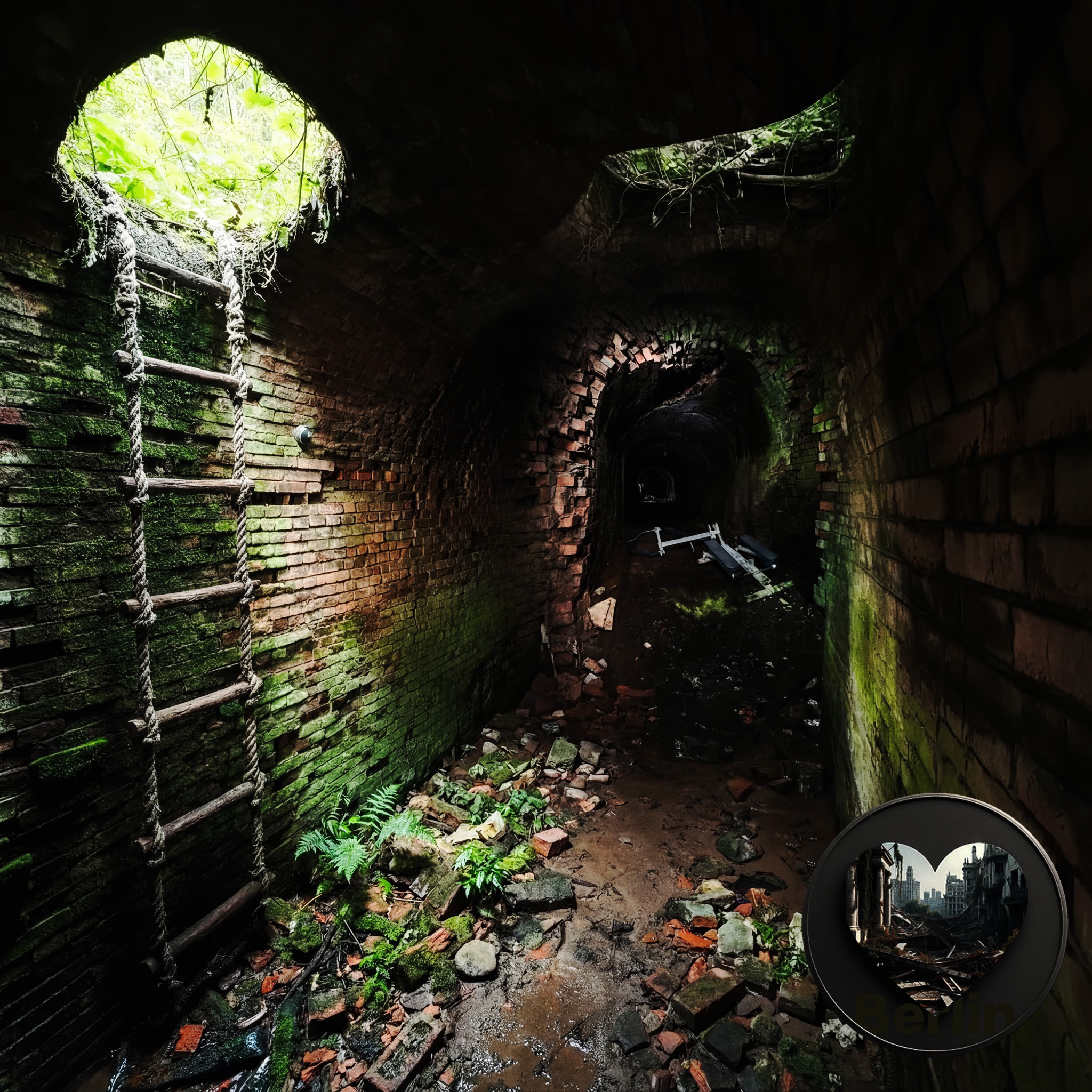
I enter the—corridor might be the wrong word here, since it suggests this passage is intended for human use. Though I wish that were the case, it’s not true of a canal, or more precisely, a sewer. It is a man-sized brick tunnel where other canals converge from both sides—a tunnel network beneath the city.
A deceased human body may decompose in a few weeks or months, depending on external conditions. With the metabolism of a city made of stone, metal, glass, and the artificial materials of its time, it takes centuries or millennia for nature to completely reclaim what humanity had wrested from it.
They call us corpse scavengers—and indeed, we like to compare the object of our investigations to a body, a human body. Since the city has been abandoned for a long time, it is a dead body. In essence, we perform an autopsy akin to pathologists, albeit without investigating the cause of death. That is apparent. We are searching for any viable organs that might remain.
The city’s sewer system, my field of expertise, serves as its excretory organ. No wastewater has flowed through its intestines, hidden deep in the ground, for a long time. That’s why it doesn’t stink here anymore, as some might think, who turn up their noses at my task. I know I’m not exactly well-regarded. But I take my task seriously and do my best.
It’s always the same. After a long march, we suddenly arrive, the whole troop. We encounter no resistance—aside from overgrowth and buildings on the verge of collapse. We noisily invade the otherwise silent city, reach its center, disperse, each assigned to their personal task. A few hours later, we gather again in the main square, and shortly afterward, the dilapidated city lies dead again, as if we had never been there.
A living body requires air and sustenance. Nerve pathways, veins, and a lymphatic system run through it. Food is digested, producing energy used for activities and communication. An immune system and various repair mechanisms fend off foes, resisting decay, wear, and excessive growth for as long as possible.
All this applied to the grand cities as well. In homage to ancient healers who once specialized in the various organs and systems of the human metabolism, we have given ourselves names, nicknames referring to our respective specialties. I am the “Proctologist.”
The old cities are considered cursed places, and that curse clings to us, the corpse observers. We are outcasts, accused of being in league with demons. Therefore, we’re forced to keep to ourselves. At times, we plunder women. Even I am reaching the age where I should start a family. I’ve set my sights on the “Neurologist.” But how can I impress her? I would need to make a significant find, yet what can be discovered in the sewer channels?
We seek unique artifacts, objects whose meaning and purpose are lost to us. From each city, we take only one of these items and, often through perilous routes and great efforts, bring it back to our fortress. There, in the mountain, we’ve established a vast underground museum, where these objects, labeled with the city of origin, are displayed—and no one but us knows about it.
Despite being seen as mere plunderers and cursed with vile names, we are, in truth, custodians, holding great reverence for the dead cities and their former inhabitants—the creators of all the wondrous yet enigmatic devices that our expeditions uncover.
I’ve been walking through the channels for many hours now. It’s time for me to return. My unerring sense of direction is why I’m tasked with traversing the drains and catacombs of the dead cities. I’ve never gotten lost, and even if my torch were to extinguish, I would find my way back.
There! In the flickering light, I spot something I must have missed on the way in. It’s a metal frame with a handle made from the past ones’ artificial materials. It’s black, pliable, and feels surprisingly pleasant, almost how I imagine a woman’s skin feels. I stand the frame upright, its short crossbars holding it steady on the ground—similar to one of those pedal-driven contraptions the past ones used. But it has no wheels or saddle. Even so, it looks like something you could climb on: two platforms, slightly larger than my feet, are fixed side-by-side at the bottom. Apparently, you’re meant to climb on while holding the tall handle. I’m excited; I’ve never seen anything like it. Is it dangerous? Recklessly, I step onto the footboards. My breath catches in my throat with fright: They move—one tilts away, simultaneously pushing the other upwards. The frame creaks. I put my weight on the raised foot, and its platform sinks slowly and heavily, while the other foot rises.
I can walk on it—walk in place! Weird. But a great find. I have no idea what it’s for.
It is heavy. I shoulder it and make my way to our meeting point. It makes me proud to bring something back from my excursions.
Our Elder examines the artifacts. He lingers in front of mine for a long time. Then he gestures for me to demonstrate it. I step onto the platforms and slowly start moving them with my feet, shifting my weight. It creaks as I start walking in place, like I’m climbing stairs. I hear murmurs from the others but only have eyes for the Neurologist, who regards me and the device with astonished glances—and smiles when the Elder makes his choice. She smiles at me! I step off and feel as if I am floating.
Our Elder crafts a small plaque in the dead language and script, which I’m allowed to attach to my find. “Berlin.” We set out. The Neurologist helps me carry the artifact. From the hushed whispers of the others, I realize they’ve noticed whom she’s chosen. The “Proctologist”—who’d have guessed?
In any case, I proudly carry the device with her—the one you can walk in place on. We have a long way to go, but I feel light and full of energy. I’ve found a museum piece… and a companion!
I enter the corridor, amazed and a little spooked. How can it be that after all these years I’m discovering a corridor that leads away from my bedroom? But then, I’ve never pushed against the back wall of my closet before. Now I’m entering rooms that were completely unknown to me before, rooms that I didn’t even know I didn’t know about.
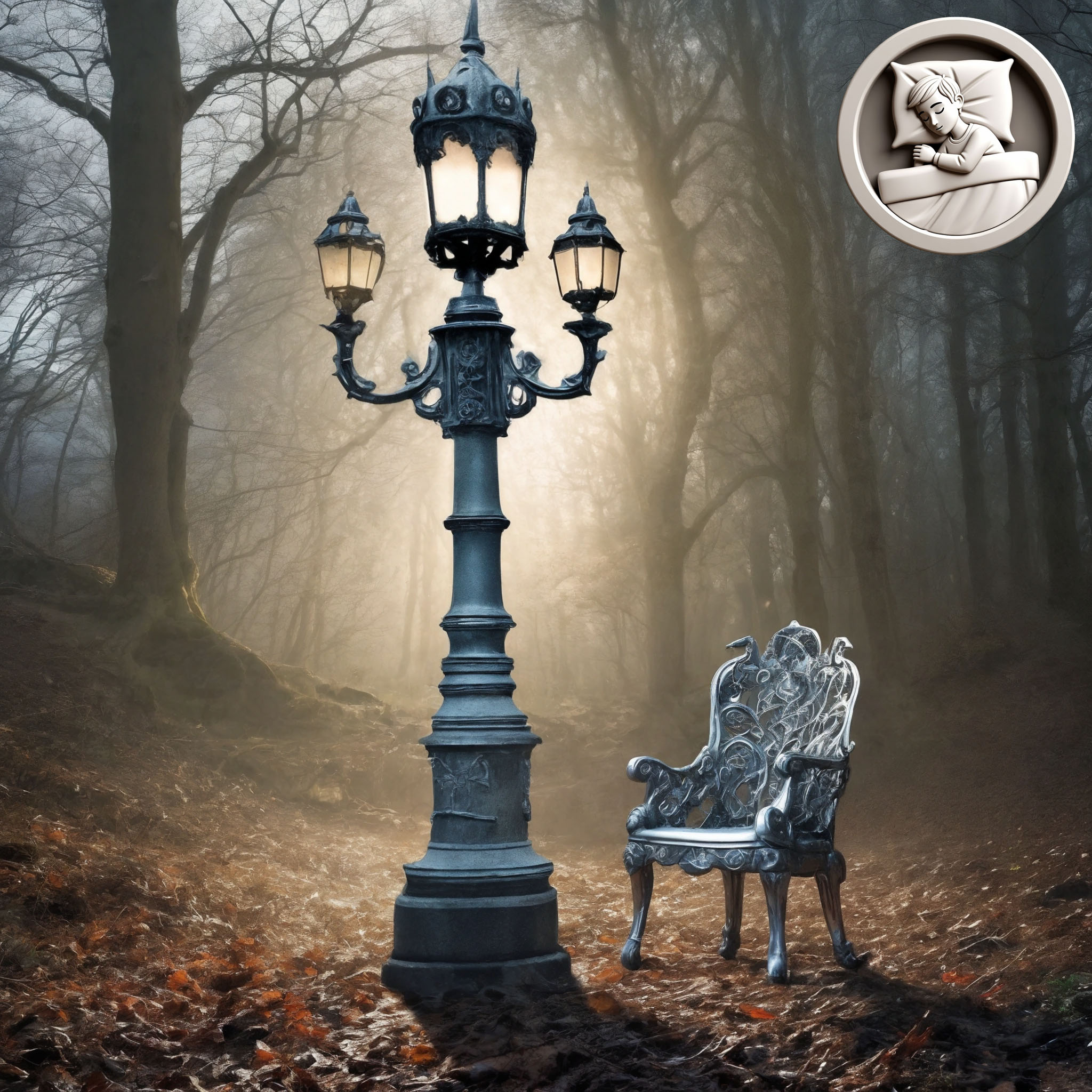
I decide to equip myself better for this expedition, instead of venturing out in pajamas without any gear. I turn back and lie down in bed to make sure that I am well-rested for the adventure. When the alarm clock beeps in the morning, I only have hazy memories of “something with my wardrobe and a gas lantern in the woods,” which I soon forget.
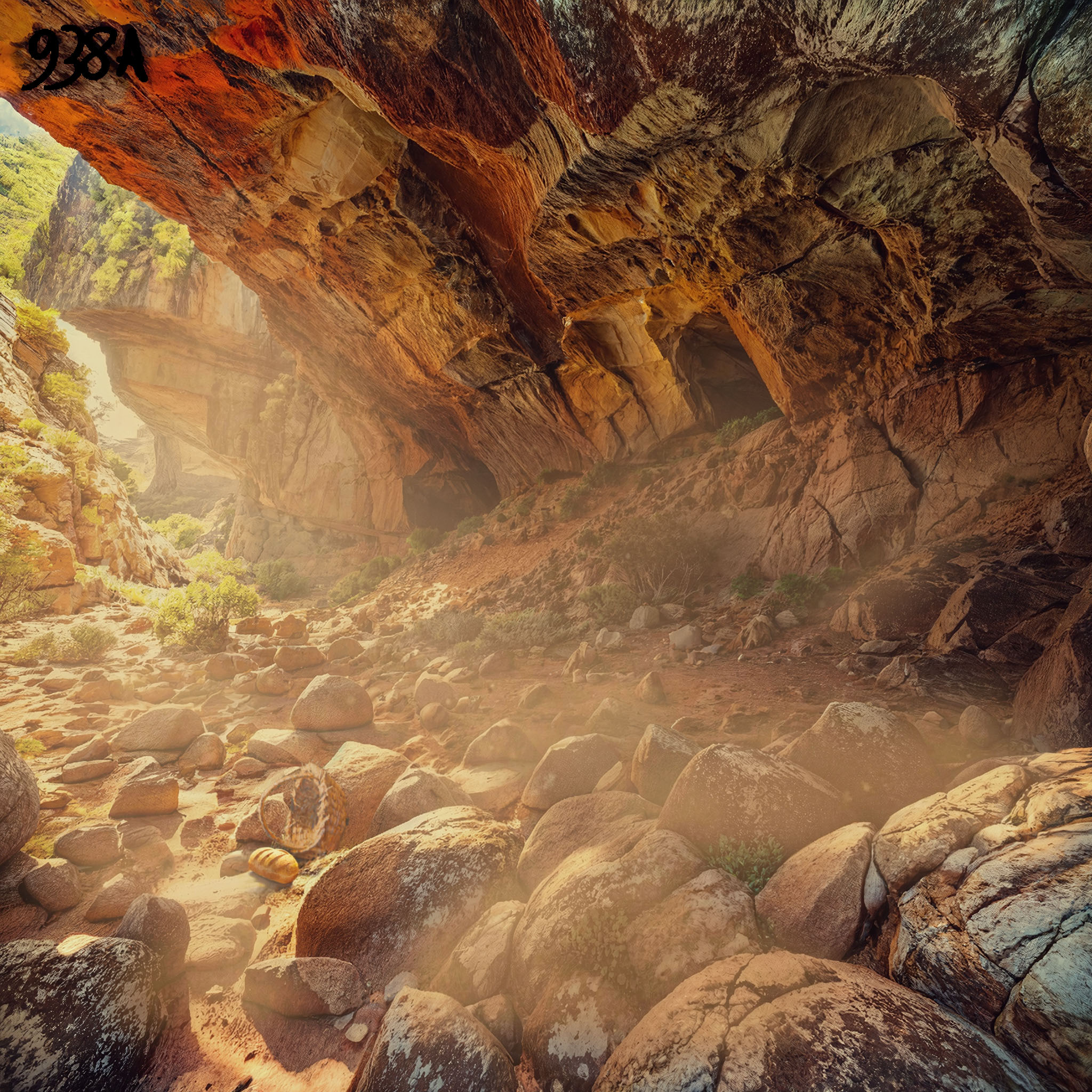
I enter the corridor, clutching a loaf of homemade bread. Misfortune dogs my every step, but today, I intend to turn the tide of my destiny. I will finally confront the Fate who has plagued me with disasters of every kind throughout my life. Will I succeed in winning her over? Will my offering soften her heart?
Ignoring the countless side passages, I follow the main corridor hewn into Mount Dikti. It leads deep into the mountain’s heart, where the Fates are said to dwell. But even here, I sense impending doom. She will not leave me in peace, not even here! The familiar, hateful constriction tightens in my chest, growing stronger and stronger—a sure sign that she intends to make life miserable for me and everyone around me once again.
With what this time? Wild beasts? A flood? A drought followed by famine? A plague? Pirate raids? Defeat in war?
No.
An earthquake. The mountain roars and shudders, throwing me to the ground as the bread slips from my grasp. Terror-stricken, I crawl back toward the daylight. I narrowly escape the falling debris, and no sooner have I made it out onto the rocky ledge than the corridor leading to the Fates collapses. I hear screams—or is it the screech of shattering stone?
Suddenly, all is quiet. Only a few small stones trickle down the mountainside. I can hardly believe it: the oppression that has ruthlessly shadowed me my entire life has left me. It feels as though it will never return.
Filled with new courage, I begin the journey back to the city—to the palace, to my deformed brother, and to my family.
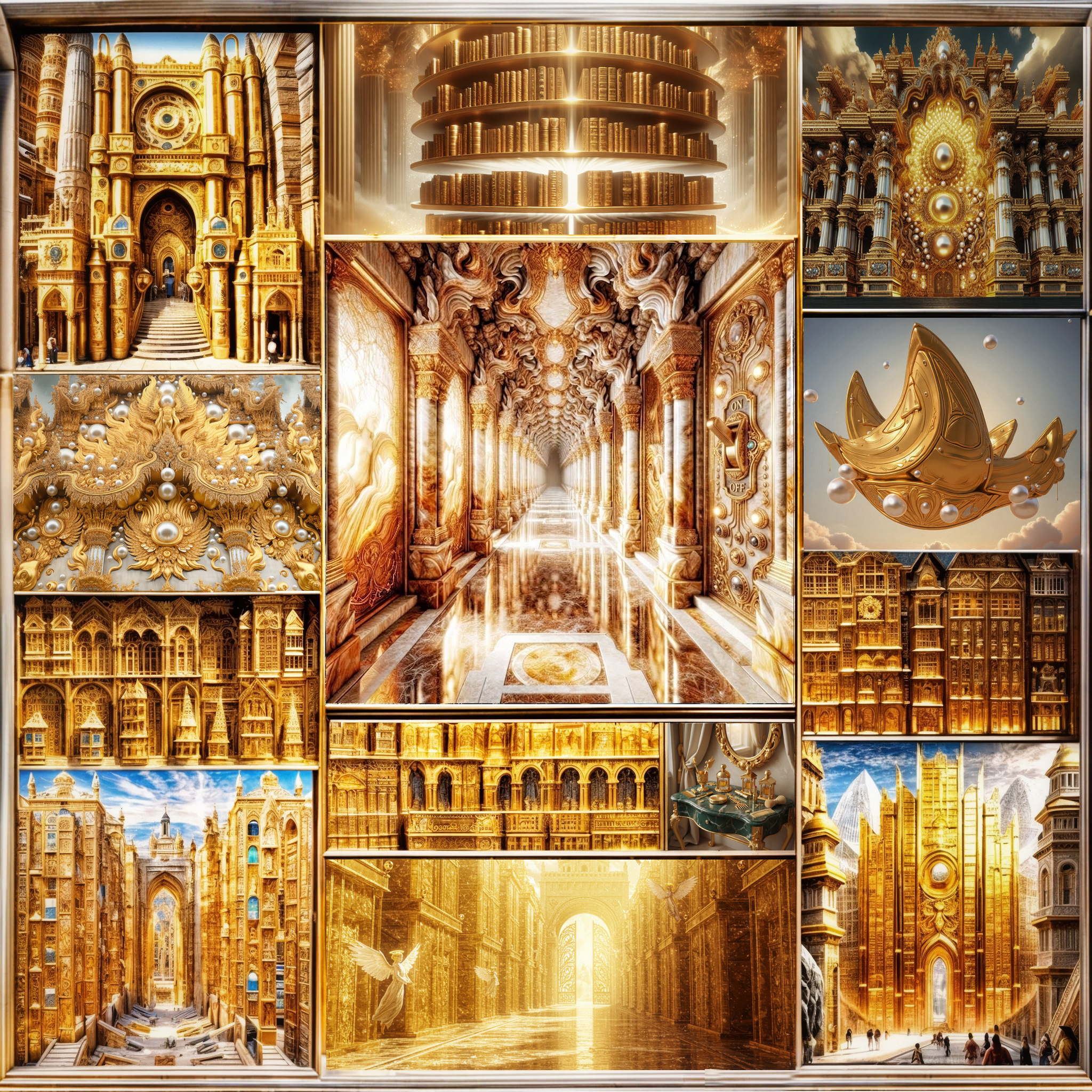
I enter the corridor with its walls of jasper and doors of golden glass, still completely dazed by the fact that the earth I knew is gone forever. In my hand, I carry one of the leaves from the Tree of Life, meant for the healing of the heathens—has it worked? I still feel like I’m stuck in some B‑movie produced by Bible fundamentalists.
Who would have thought? The Apocalypse, the last book of the Bible: so it turns out the Book of Revelation wasn’t some symbol-laden fantasy of revenge and apocalyptic fire after all, but one of the few prophecies in human history that actually came true—down to the very last jot and tittle. Oh well, hindsight is 20/20, and now, once I get settled in a bit, I’ll have plenty of time to think about it.