Korridorium

1x täglich Kurzprosa mit Soundtrack vom 11/11/11 bis 12/12/12

31/398

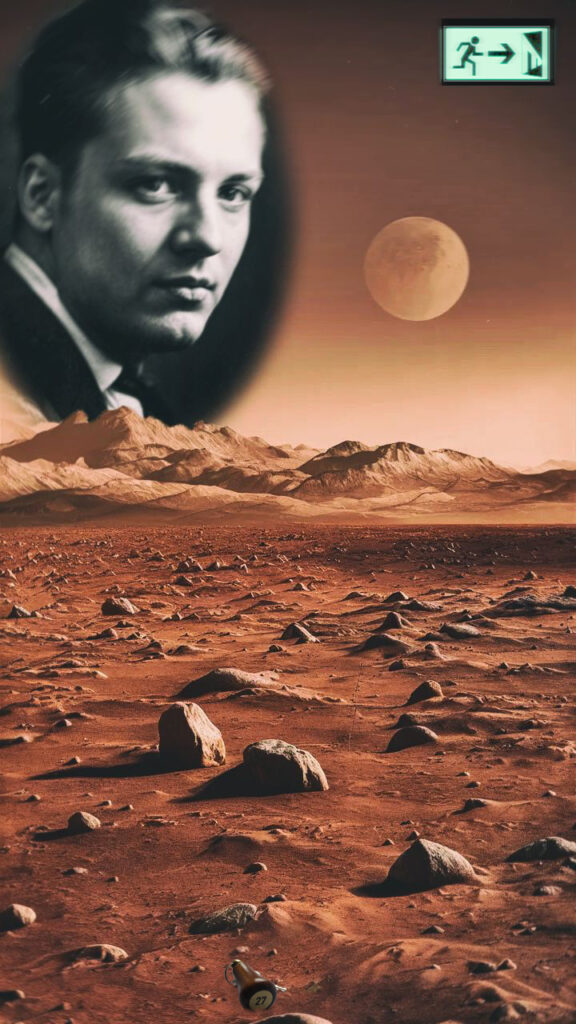
The cover art shows the portrait of a man in front of a barren, rocky Mars landscape with a large moon in the sky. In the upper right corner, a kind of green emergency exit sign is superimposed. A key lies in the sand, its fob bearing the number 27.

♫ Mare Chro​ni​um​––​Con​tem​pla​ting ♫


31/398

LogoSwitch language

I enter the cor­ri­dor, car­ry­ing a tray with two meals. It is Coq au Vin, and it smells deli­cious.

Our guest has reques­ted that I serve it five minu­tes past mid­night. He is a nice older gen­tle­man with gray stub­ble, who has alre­ady paid for ever­y­thing in advance. „K. K. Kori­an­der“ he wrote on the regis­tra­tion form and repea­tedly con­firmed that the recep­tion at our small coun­try hotel is indeed staf­fed around the clock and that room ser­vice is abso­lut­ely punc­tual. The night­time recep­tio­nist and room ser­vice, tha​t’s me, and it’s pre­cis­ely five past mid­night. I knock on the door of Room No. 27.

The door opens: „Come in. That smells deli­cious.“ Mr. Cori­an­der isn’t alone. The​re’s a young man there, per­haps thirty years old. He’s wea­ring a suit, and his hair is slightly dis­he­ve­led.

Mr. Kori­an­der ges­tu­res toward the table. I place the pla­tes in front of them, set down cut­lery and nap­kins, and pour two glas­ses of still mine­ral water. The young man smi­les at me. I feel some­what pecu­liar. How did he get in here? I was stan­ding at the recep­tion the whole time. Or did he arrive in the minu­tes when I was in the kit­chen get­ting the Coq au Vin?

„Please stay,“ Mr. Kori­an­der tells me, „in case we need any­thing else.“ I nod and step next to the bed. If someone were to unex­pec­tedly need some­thing from me at this hour, the​re’s a call but­ton at the recep­tion.

The two men clink glas­ses of water, and while the young man eagerly tucks into his chi­cken, the older one starts asking ques­ti­ons. They con­verse in Eng­lish, and Mr. Kori​an​der’s guest is appar­ently Ame­ri­can. As far as I can under­stand, they’re tal­king about Mars and some life forms there.

„Tweerl?“ Mr. Kori­an­der asks, or at least tha​t’s how it sounds. The young man laughs and says that humans can’t pro­no­unce it, so he can’t eit­her. Mr. Kori­an­der is quite inte­res­ted in some­thing he calls non-human con­scious­ness. It’s all very strange what the two of them are tal­king about – the young man, who keeps che­wing and swal­lo­wing before ans­we­ring, and Mr. Kori­an­der, who does­n’t eat at all, but makes notes in a small note­book.

They talk about this crea­ture with the unpro­no­un­ceable name as if it were in the room. Mr. Kori­an­der wants to know how it evol­ved and what hap­pened to the other „Thots.“ I’m quite con­fu­sed because, on one hand, they seem to be tal­king about some sort of bir​d—​with a „beak“ in its lite­ral meanin​g—and on the other hand, about an Egyp­tian god who is said to have taught the anci­ent Egyp­ti­ans how to read and write.

The young man tos­ses the last gna­wed bone back onto the plate and wipes his hands with the nap­kin.

„I would have liked to dis­cuss Venus with you as well,“ Mr. Kori­an­der says reg­retfully, „and the intel­li­gent plants there.“ It seems very eccen­tric, what the two of them are dis­cus­sing in the middle of the night. The young man shrugs. „Yum­mie,“ he says and wipes his lips, which must mean he enjoyed it.

Mr. Kori­an­der turns to me: „We’re finis­hed. You can clear the table.“ So, I do. I leave them the water.

It’s strange, I think, as I ride our aging ele­va­tor down­s­tairs. „Tweerl“ goes through my mind once more. Wha­te­ver it is, it must be a very pecu­liar crea­ture that thinks quite dif­fer­ently from ordi­nary peo­ple. But then again, those two weren’t exactly ordi­nary peo­ple.

A short time later, Mr. Kori­an­der approa­ches the coun­ter and hands me his room key. „Would you like to go out?“ I ask, bewil­de­red because at this hour, ever­y­thing in the vil­lage is fast asleep. But Mr. Kori­an­der wants to check out. He lea­ves a gene­rous tip on the coun­ter. I thank him and watch him with asto­nish­ment. It’s just past one in the mor­ning.

And only then do I remem­ber the young Ame­ri­can. But somehow, I alre­ady know that he’s no lon­ger in the hotel. He must have dis­ap­peared the same way he appeared.

The Coq au Vin, which Mr. Kori­an­der had not touched, still tas­tes incre­di­bly deli­cious, even when cold.

32/398

Das Titelbild zeigt einen bunt bemalten Wegweiser mit Schildern in alle Richtungen vor einem kunstvoll verzierten Torbogen in einem historischen Gebäude. Ein digitaler Button in der oberen linken Ecke zeigt das Piktogramm eines sich drehenden Derwischs.

♫ Meta­phras­tes ♫


32/398

LogoSwitch language

I enter the cor­ri­dor bet­ween the cells. A great honor! How I have asked, beg­ged, and prayed to have the chance of spea­king with the old mas­ter poets, to seek their advice, to bene­fit from their wis­dom! Finally, after leng­thy nego­tia­ti­ons, I am gran­ted admis­sion to the Aka­sha Palace. Here, not only are their tim­e­l­ess works are safe­guarded, but also their per­so­na­li­ties from that time remain in per­pe­tual pro­tec­tive cus­t­ody. Not­hing fades, not even the spi­rit of our ances­tors who stand ready to ans­wer us—if we can find the way to them.

I have been allo­wed into the Cor­ri­dor of Poets—​there isn’t one for short prose wri​ter​s—and for those who weren’t con­fi­ned to poetry alone, their cells are said to open onto other cor­ri­dors: tra­ge­dies, epic poems, come­dies, cho­ral odes, astro­lo­gi­cal trea­tises…

But this is just a spe­cu­la­tion, not a cer­tainty. The kee­pers here are­n’t very forth­co­ming. In any case, it seems that the cri­ter­ion for admis­sion to the inma­tes is the kiss of a muse. Here, per­haps, it was Euter​pe’s. I read names on the name­pla­tes on the doors, names like Mil­ton, Dante, Bolo, Orpheus, Neid­hart, Brant, Shiki, Bukow­ski, Ver­gil, Yeats, Tyr­taios, Tao Yuan­ming, and many others I have never heard of. Euterpe was dili­gent. Or was it Erato?

Who should I ask here? I don’t have much time. I am allo­wed to ask one of the poets behind the heavy woo­den doors a ques­tion. For years, deca­des, I have been able to con­tem­p­late this one ques­tion. I know it inside and out. It is the ques­tion, the key to the ans­wer behind all ans­wers.

The guard alre­ady looks impa­ti­ent. From Bukow​ski’s cell, a howl seems to come, but maybe it’s the wind of time trap­ped in these end­less, twis­ting cor­ri­dors. My gaze falls on the name­p­late Rumi. Yes! He will be the one! He will know the ans­wer and gladly tell me. Intern­ally, I rejoice as I slide the small woo­den panel in the door to the side. Yes, who could give me bet­ter infor­ma­tion than the Per­sian mas­ter poet and visio­nary of mys­ti­cal love and spi­ri­tual ecstasy!

„Jala­lud­din?“ I call into the dark­ness of his cell. Dimly, I see a man wea­ring a tur­ba­ned der­vish cap, spin­ning in place with outstret­ched arms. He radia­tes an infi­nite sere­nity, bey­ond all descrip­tion, and at the same time, an unspeaka­ble joy shim­mers out from him in spi­rals, pier­cing deep into my heart.

 don’t know if I stood there for a sin­gle breath or an eter­nity. The hand of the guard pushes the small woo­den hatch to Rumi’s cell shut. He gui­des me back. When I finally stand out­side again and the guard has clo­sed the gates of the palace behind me, I begin to spin, slowly on my axis, with outstret­ched arms.

33/398

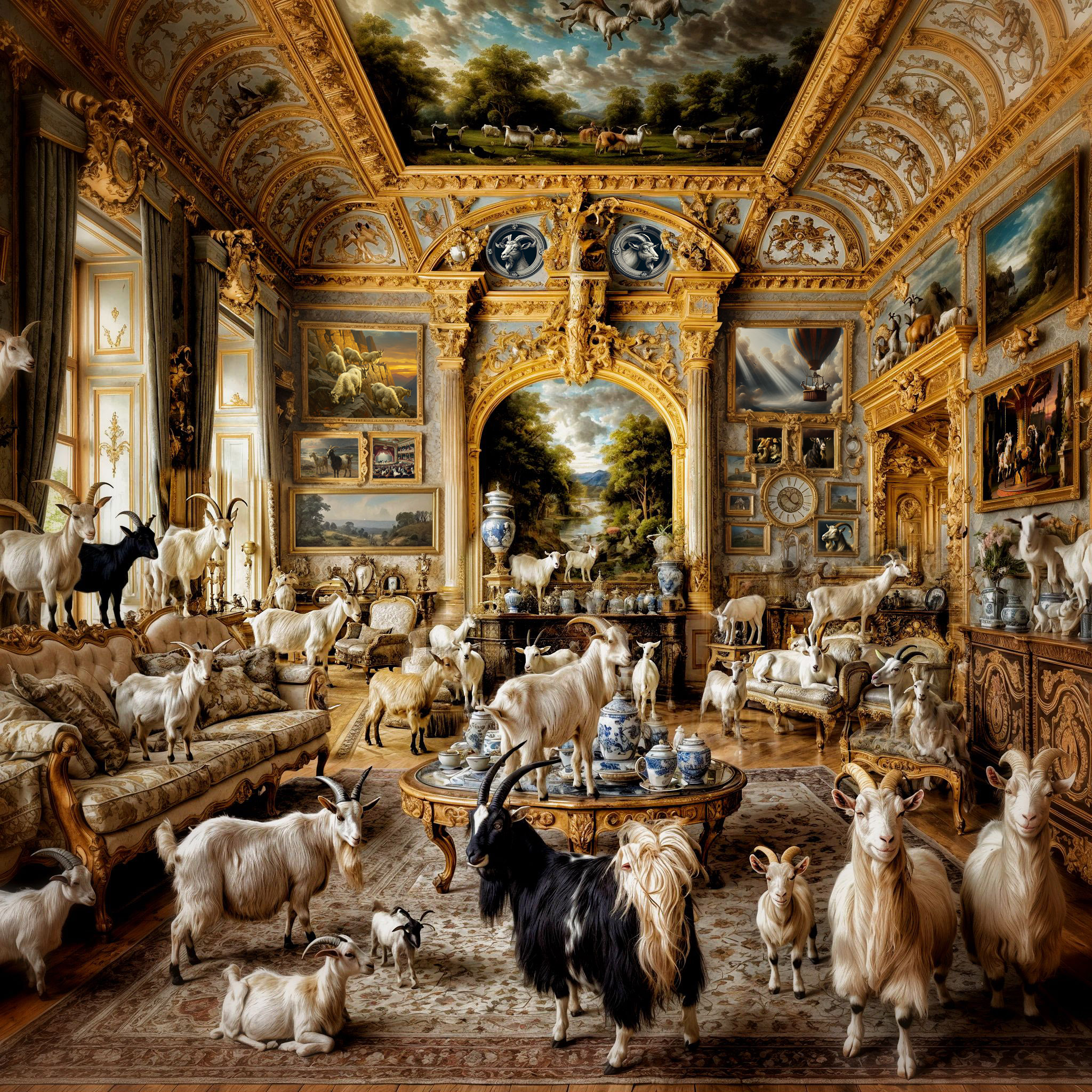
The cover art depicts a lavish room, adorned with gilded stucco, featuring a multitude of paintings lining the walls and a ceiling fresco. Amidst this opulent setting, numerous goats of varying sizes are scattered, resting or standing on the furniture and rug.

♫ Push’em Up! (Year of the Goat Mix) ♫


33/398

LogoSwitch language

I enter the cor­ri­dor that the set desi­gners have con­s­truc­ted in pla­s­ti­cky bright colors on the game show stage, bathed in the hot glare of the spot­lights. The stu­dio audi­ence holds its breath. But it’s always the same: one door hides a luxury limou​si​ne—​the rest, a goat each. And as always, when I’ve made my choice, the game show host opens one of the other doors, and as always, the​re’s a goat behind it. Of course, whe­ther I recon­sider my choice or insist on it, just like always, I never manage to win the grand prize.

You know, I don’t want to bleat, but: What am I sup­po­sed to do with all these goats?

34/398

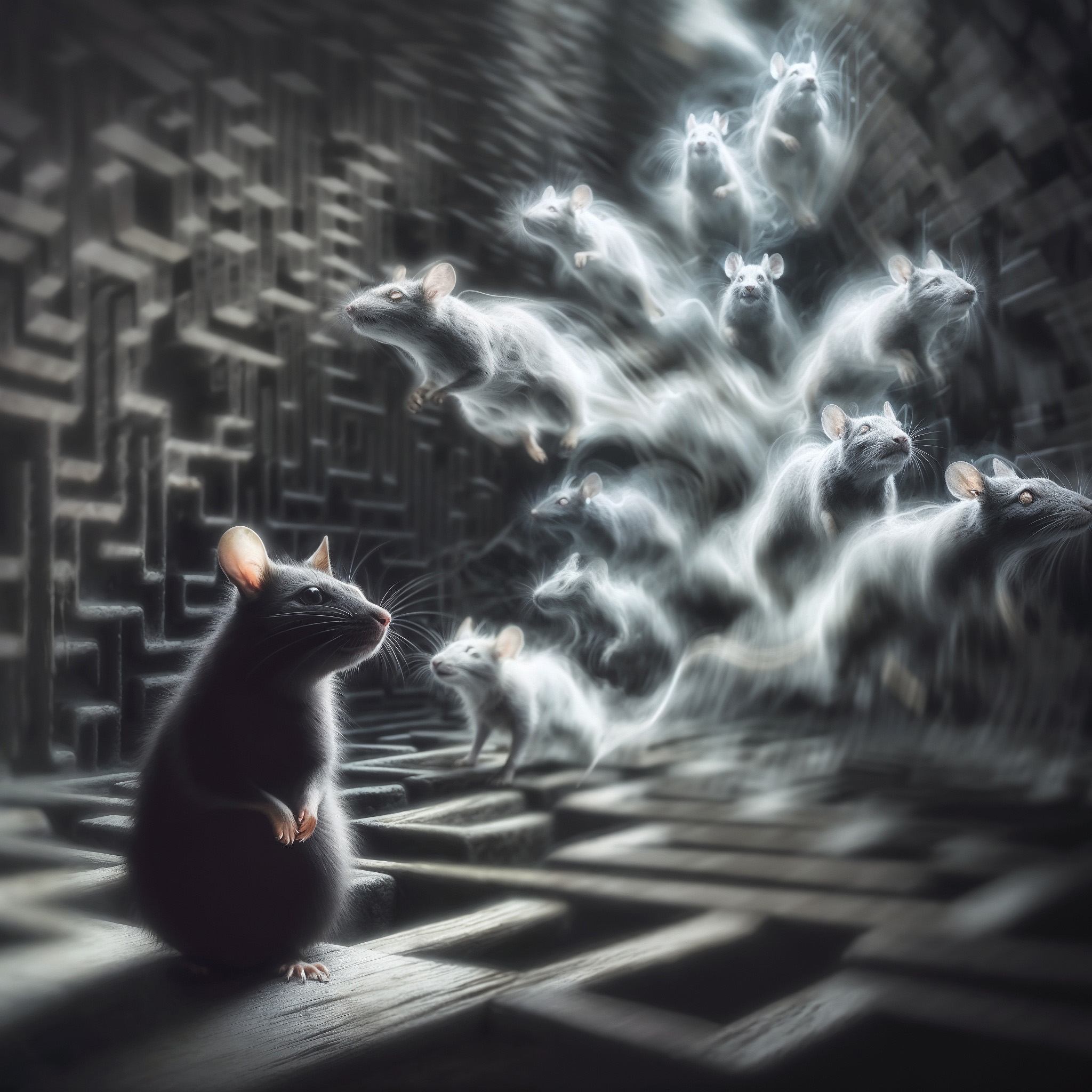
The cover art features a black mouse or rat amidst a maze that also covers the walls.. Ethereal, ghost-like members of its species hover behind it.

♫ Keep the Focus ♫


34/398

LogoSwitch language

I enter the cor­ri­dor of sli­ding pla­s­tic walls. The rese­ar­chers start their stop­watch. They want to test if I know some­thing I should­n’t: if so-cal­led mor­phic fields form from the lear­ning expe­ri­en­ces of indi­vi­du­als, which other mem­bers of the same spe­cies can then access.

I, for my part, do not know the way through this maze. But count­less other rats wan­de­red through it until they could memo­rize the shor­test route to the food. Some of them are now dead and dis​sec​te​d—​they accom­pany me invi­si­bly with their know­ledge, hel­ping their unwit­ting com­rade, giving me impul­ses to go right here, left there, or to ignore forks in the path.

At the end of the course, I savor the can­ned mea​t—my rewar​d—​while the rese­ar­chers record their results in a table.

All living beings have ances­tors who help them. Even the rese­ar­chers. It’s just that, much like they must pro­tect their hair­less bodies from the cold with skins and fabrics, they also keep all inklings at a distance. Their brains have likely swol­len so much for this pur­pose that none of these faint inklings can pene­trate into the sen­si­tive depths within.

So they often go astray, again and again, befo​re—if they are very lucky—​they reach the desti­na­tion of their desi­res.

35/398

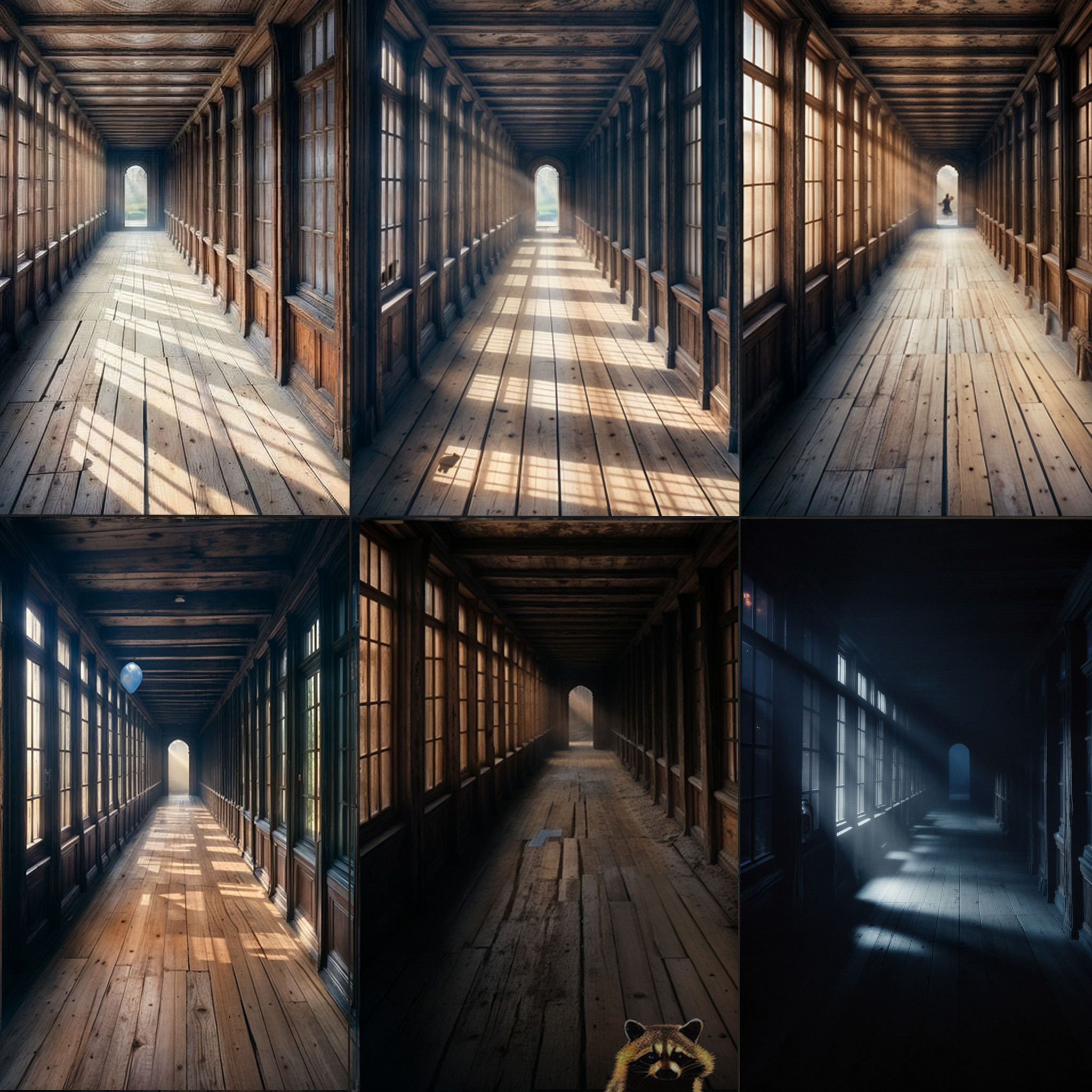
The cover art shows six shots of a long, narrow, wooden corridor with windows on one side and changing light patterns on the floor, each once with a person at the end, a balloon, and a raccoon at the very front.

♫ New in the Area ♫


35/398

LogoSwitch language

I enter the cor­ri­dor. Once again. It’s almost as if I do it anew every day, step­ping into the same cor­ri­dor repea­tedly: the one lea­ding to the phi­lo­so­phy faculty. But is that even pos­si­ble? No. It just seems that way. The self is no lon­ger the one from yes­ter­day, and even less so from last year. And alt­hough the cor­ri­dor looks like the one I know and is very fami­liar to me—​com​plete with the scuff marks left by the metal fil­ing cabi­nets on the tiles when the secre​ta​ry’s office moved, and inclu­ding the stale smell from the time when smo­king was still allo­wed here—it also can­not be the same one as yes­ter­day.

The illu­sion is per­fect. I could swear that I’ve alre­ady taken these exact steps here before, that these exact thoughts have crossed my mind. Even at gun­point, I could not be forced to per­ceive all of this as new and unspoi­led. Alt­hough: in a life-threa­tening situa­tion or kno­wing that I am ente­ring this cor­ri­dor for the last time and will lose my life in a few moments, maybe then?

For, as the anci­ent say­ing goes, „One can­not step into the same cor­ri­dor twice. Even the souls rise, as it were, from the cor­ri­dors by exha­la­ti­ons.“

36/398

The cover art depicts four women, adorned in traditional Chinese attire, gathered around a baby carriage within a room graced by intricate wooden latticework and vibrant, painted floral walls. Unseen, a colossal rat watches them.

♫ Jiǎ Píy­ǐn­gxì ♫


36/398

LogoSwitch language

I enter the cor­ri­dor, which was once an air duct, to reach the multi-story shop­ping dis­trict we built inside Tai He Dian, the Hall of Supreme Harm­ony. Here, spread across many levels, mil­li­ons of us live. The young peo­ple in these streets and on the cur­ved bridges regard me with a cer­tain rever­ence: an old man. They may suspect that I am a relic, belon­ging to the very first gene­ra­tion of New Chi­nese, the pio­neers of the Great Recon­s­truc­tion. The idea that the For­bidden City could accom­mo­date nearly three bil­lion of us moved into the realm of tech­ni­cal fea­si­bi­lity back then; indeed, I was one of the sci­en­tists who pro­po­sed to the Natio­nal Peo​p​le’s Con­gress that we shrink our peo­ple to con­serve our con​ti​nen​t’s resour­ces and allow our nation a long, happy future of pro­spe­rity.

Alt­hough we com­ple­ted the New China pro­ject with great gra­vity and meti­cu­lous care, I am no lon­ger cer­tain today if that large-scale minia­tu­riza­tion was a good idea. While we—​now mea­su­ring only a thir­tieth of our ori­gi­nal size—​con​sume barely a hundredth of our pre­vious resour­ces, our plan to set a noble exam­ple for the other nati­ons of the world has fai­led. With the most hono­rable inten­ti­ons, we have tur­ned the giant empire of China into a king­dom of dwar­ves. Quite apart from the rat pro­blem we have here in the For­bidden City​—​which, though hus­hed up, per­sists despite the pro­tec­tion of our 13,844 anci­ent car­ved dra​gons—​not only did no other coun­try wish to join our Com­mon March to True Great­ness, but we are no lon­ger respec­ted or taken seriously. In the eyes of the world, we Chi­nese have shrunk to an insi­gni­fi­cant and, at best, cute curio­sity.

37/398

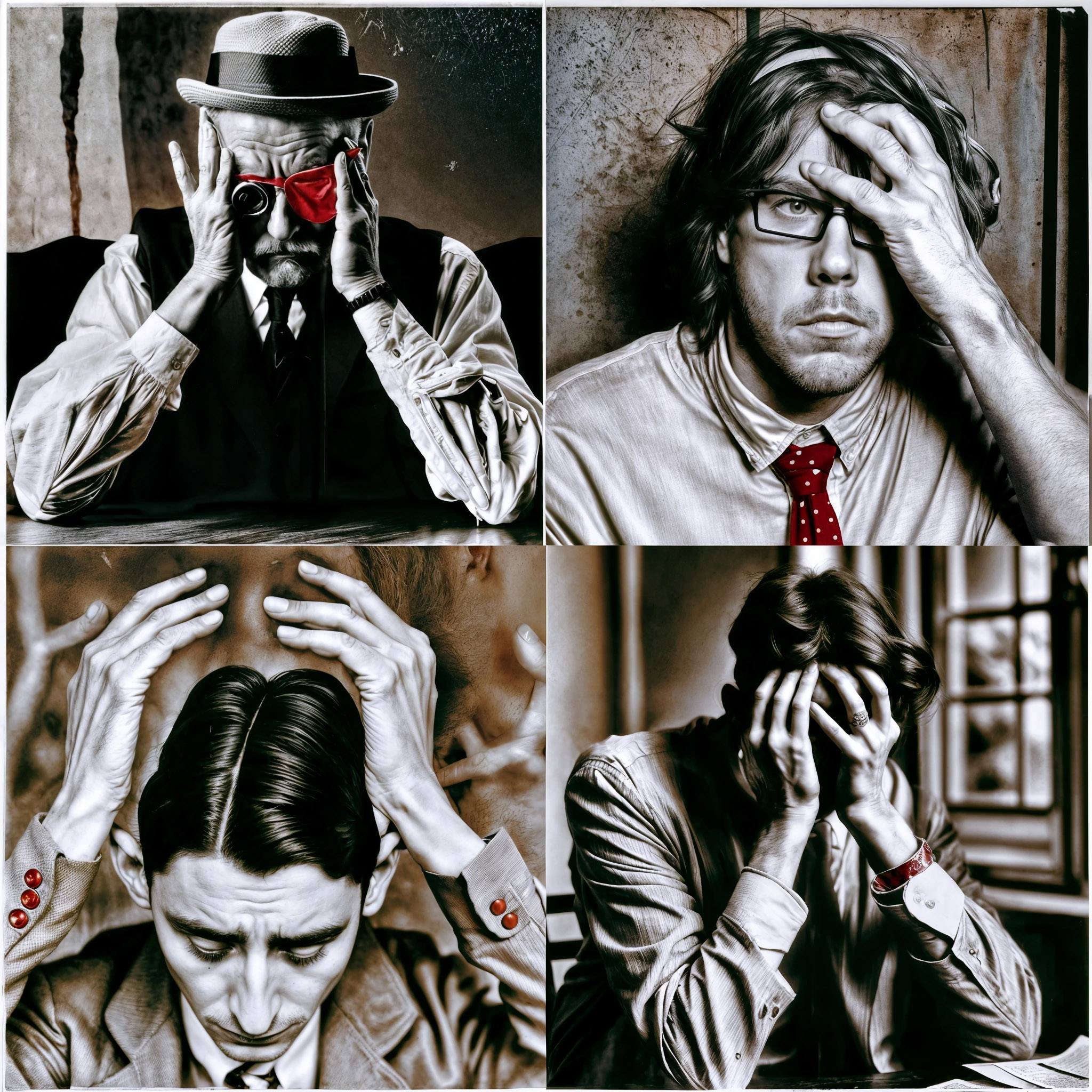
The cover art shows four black-and-white portraits: James Joyce with a red eye patch, David Foster Wallace with a red tie, Franz Kafka with red jacket buttons, and a person covering their face with their hands.

♫ Si on n’a pas ce qu’on aime ♫


37/398

LogoSwitch language

„I enter the cor­ri­dor“ sim­ply isn’t a good first sen­tence, or so many of the rejec­tion let­ters claim—e​ven and espe­ci­ally those from publishers with a more artis­tic bent. I don’t quite see it. This sen­tence is a) simple and unam­bi­guous, b) full of move­ment, c) evo­kes an image in the rea​der’s mind, and d) stirs expec­ta­ti­ons of events to come. Does​n’t it pos​ses​s—or am I mista​ken​?—even more poten­tial than, for exam­ple,

  • „river­run, past Eve and Adam’s, from swerve of shore to bend of bay, brings us by a com­mo­dious vicus of recir­cu­la­tion back to Howth Castle and Envi­rons“—where one could cer­tainly argue over a)—or
  • „I am sea­ted in an office, sur­roun­ded by heads and bodies“—where b) is likely spread rather thin—or per­haps
  • „It was late evening when K. arri­ved“—an ope­ning sen­tence that, in turn, is a bit too simple for c).
  • That lea­ves d), and with it the hope of maybe fin­ding reso­nance some­where after all…

    38/398

    The cover art depicts two anthropomorphic pigs in military uniforms on a stage under spotlight; one is mid-scream, mouth agape, while the other wears a look of bewildered dismay.

    ♫ Lime­light Hogs ♫


    38/398

    LogoSwitch language

    „ ‚I enter the cor­ri­dor.‘ Pri­vate?“
    „Yes, Colo­nel. You enter the cor­ri­dor.“
    „Don’t play stu­pid with me.“
    „Yes, Colo­nel.“
    „Well?“
    „Uh, what? Colo­nel.“
    „ ‚I enter the cor­ri­dor.‘ “
    „…is a main clause, Colo­nel.“
    „In a com­plete sen­tence, damn it!“
    „ ‚I enter the cor­ri­dor‘ is a main clause, Colo­nel.“
    „And what else? Do I have to drag every little thing out of you?“
    „ ‚I enter the cor­ri­dor‘ is a main clause wit­hout inver­sion, fea­turing an accu­sa­tive object and a pre­di­cate in the first per­son sin­gu­lar, pre­sent active indi­ca­tive, Colo­nel.“
    „Is that all, Pri­vate?“
    „Or it con­ta­ins…“
    „The! Whole! Sen­tence!“
    „ ‚I enter the cor­ri­dor‘ could, depen­ding on the con­text, also have its verb in the sub­junc­tive mood, Colo­nel.“
    „Now was that so dif­fi­cult, Pri­vate?“
    „No, Colo­nel.“
    „Dis­missed.“
    „ ‚Dis­missed‘ is a past par­ti­ci­ple ser­ving as a ver­bal impe­ra­tive—“
    „Dis­missed!!!“
    „Yes, Colo­nel.“ Salu­tes and exits.

    39/398

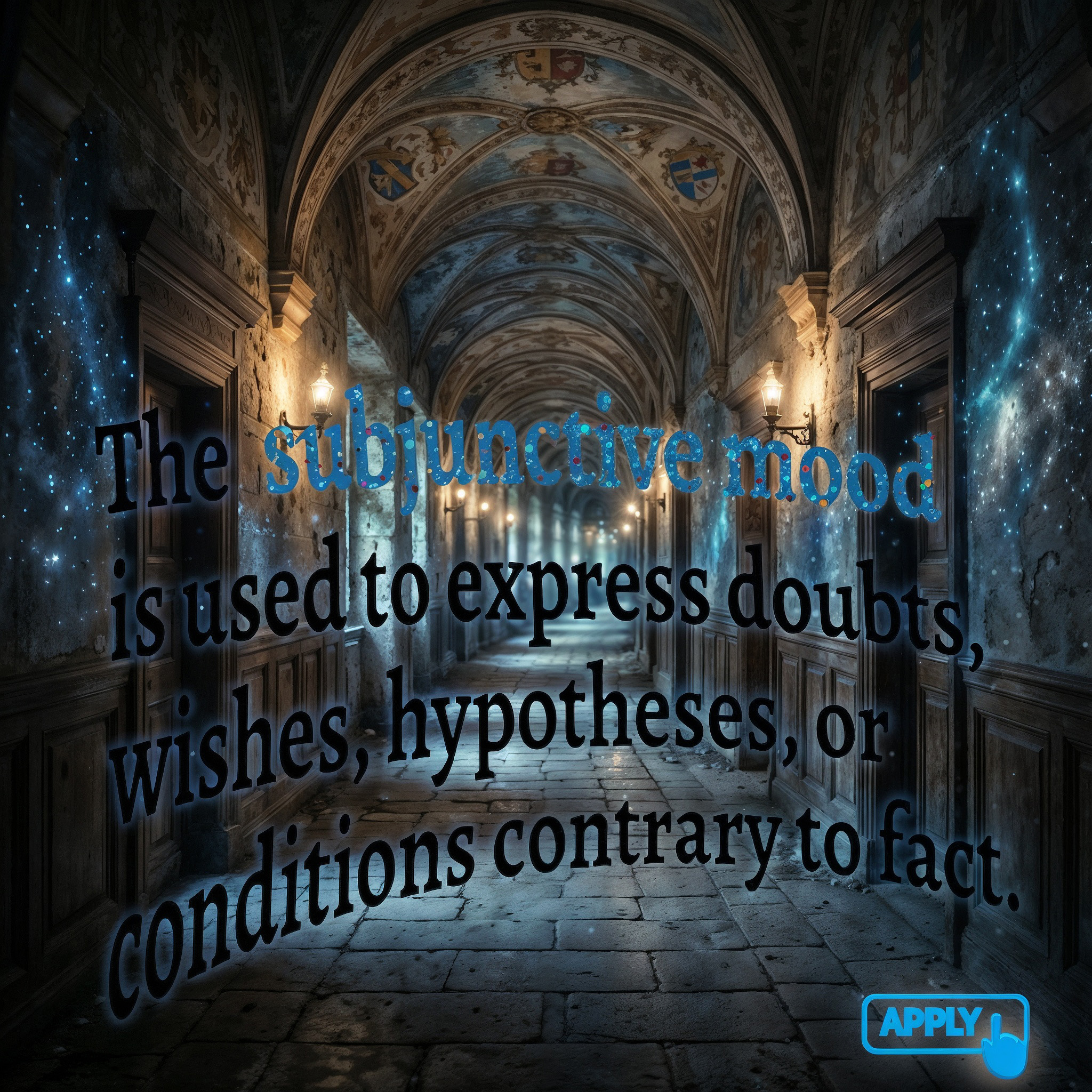
    The cover art shows a long, arched hallway with ornate ceilings and walls, illuminated by wall sconces. Floating text in blue and black lettering explains the use of the subjunctive mood. An 'Apply' button hovers in the bottom right corner.

    ♫ Mis­no­mer ♫


    39/398

    LogoSwitch language

    I enter the cor­ri­dor and am—​sup​po​sedly—o​ver​whel​med by the choice of doors, or so „usually well-infor­med cir­cles“ claim. As if they knew any­thing! (Bes­i­des, to avoid con­fu­sing fact with hear­say, they really should have used the past sub­junc­tive: „as if I were ente­ring“…)


    40/398

    The cover art depicts an antique, open book resting on a wooden table. Behind it, a circular room's wall is lined with towering shelves, packed to capacity with venerable tomes. The book itself mirrors this scene, presenting an illustration of a book-laden chamber, yet minus any single volume left ajar.

    ♫ Mal­trä­t­a­rium ♫


    40/398

    LogoSwitch language

    I enter the cor­ri­dor. Its walls are com­po­sed almost enti­rely of book spi­nes. (Not like Matej Kré​n’s instal­la­ti­ons or Ishwori Sap​ko​ta’s book­s­tore in Kath­mandu, where books are seam­lessly sta­cked hori­zon­tally, some­ti­mes even mir­rored to create end­less, walka­ble tun­nels, but den­sely packed ver­ti­cally.) Til­ting my head, I study the titles in bewil­der­ment. Someone seems to have made a self-refe­ren­tial joke here.

    Back to back, there are, among others,

    • • Im Kor­ri­dor der Sterne by Alex­an­der Kai­ser,
    • • Le deu­xieme cou­loir by Geor­ges Bar­guet,
    • Cor­ri­dor of Storms by Wil­liam Sara­bande,
    • The Cor­ri­dors of Time by Poul Ander­son next to
    • Cor­ri­dors of Time: 1,700,000,000 Years of Earth at Grand Can­yon with an intro­duc­tion by Carl Sagan,
    • Har­lan Elli​son’s Dream Cor­ri­dor Volume 2 (where is volume one?),
    • Kor­ri­dor der Bli­cke by Camill Lebe­rer,
    • Cor­ri­dors of Light by Ele­a­nor G. Brown, Ph. D.,
    • Petits bruits de cou­loir by Phil­ippe Guil­lard,
    • Il decimo cor­ri­doio by Marco Meini,
    • L’ul­tima stanza in fondo al cor­ri­doio by Ales­san­dra Bri­sotto,
    • Cor­ri­dor de Vie by Camille Saba­tier,
    • Cor­ri­dors of the Mind by Caro­line Lup­fer Kurtz,
    • The Locked Cor­ri­dor by Mari­lyn Ross,
    • The Cor­ri­dors of Fear by Cla­rissa Ross,
    • Der lange Kor­ri­dor – ein Arzt­ro­man by Cathe­rine Cook­son,
    • The Sil­ver Cor­ri­dor by Har­lan Elli­son (here per­haps? No!),
    • The Gol­den Cor­ri­dor by Jody and Ric Hor­nor,
    • The Smoky Cor­ri­dor: A Haun­ted Mys­tery by Chris Gra­ben­stein,
    • La mistica nel cor­ri­doio by Luis Casa­sús Latorre,
    • the comic Sun­set Cor­ri­dor by Régis Franc,
    • Der dunkle Kor­ri­dor – klas­si­sche Erzäh­lun­gen aus Russ­land by Hanjo Kes­t­ing,
    • Yao ye hui lang by Julian Lee,
    • Night Cor­ri­dor by Joan Hall Hovey,
    • Cor­ri­dors by Cand­le­light: A Family Album with Words by Anna Clyde Plunkett,
    • The Black Cor­ri­dor by Michael Moor­cock,
    • Flucht aus dem Grauen Kor­ri­dor by Clark Darl­ton,
    • Les cou­loirs de l’e­s­poir by Corinne Vom­scheid,
    • The Cor­ri­dor of Mul­lah-Kajar and Other Sto­ries by J. M. DeMatt­eis and Roy Tho­mas,
    • Tumit­hak of the Cor­ri­dors by Charles R. Tan­ner,
    • Il cor­ri­doio del fla­mi­nio by Aldo Tof­foli,
    • Le cor­ri­dor des inv­en­dus by Ber­nard A. Che­va­lier,
    • Cor­ri­dor of Whis­pers by Edwina Noone,
    • Dans les cou­loirs du laby­rin­the by Emma­nuel Mata­teyou,
    • Echoes Down the Cor­ri­dor by Arthur Mil­ler,
    • L’En­fant dans le cor­ri­dor by Yves Thi­bault,
    • L’homme assis dans le cou­loir by Mar­gue­rite Duras,
    • The Ladies of the Cor­ri­dor by Doro­thy Par­ker,
    • Série X numéro 122: Dans le cou­loir de l’a­mour by Tracy O’Toole,
    • La fille au bout du cou­loir by Jac­que­line Remy,
    • Ma prin­cesse dis­pa­rait dans le cou­loir by Bri­gitte Sma­dja,
    • Mon père s’est perdu au fond du cou­loir by Phil­ippe Gar­nier and
    • La vérité est au bout du cou­loir by Sam Richez,

    in bet­ween are the scripts for

    • Kor­ri­do­ren by Bengt Bratt, Bengt Fors­lund and Jan Hall­d­off,
    • White Cor­ri­dors based on a novel by Helen Ash­ton,
    • Cor­ri­dor of Mir­rors after a novel by Chris­to­pher Mas­sie,
    • Les cou­loirs du temps: Les visi­teurs 2 by Chris­tian Cla­vier and Jean-Marie Poiré,
    • Whis­pe­ring Cor­ri­dors by In Jung-ok and Park Ki-hyung, as well as
    • Shock Cor­ri­dor by Samuel Ful­ler

    plus a video­cassette with the hand­writ­ten label

    • En el cor­re­dor de la muerte,

    then more books:

    • Cor­ri­dor Eco­logy: The Sci­ence and Prac­tice of Lin­king Land­scapes for Bio­di­ver­sity Con­ser­va­tion by Jodi Hilty et. al.,
    • Cor­ri­dor naar de Rijn by Hen Bol­len,
    • Ost­preus­sen und der Pol­ni­sche Kor­ri­dor by Wil­helm Deu­ti­cke,
    • Club és foly­osó: Poli­ti­kai ötle­tek és raj­zok by Kál­mán Mik­száth,
    • The Per­sian Cor­ri­dor and Aid to Rus­sia by T. H. Vail Mot­ter,
    • Le cou­loir de Dant­zig by Géné­ral Gomer Cas­taing,
    • Der Gansu-Kor­ri­dor: Bar­ba­ren­land dies­seits und jen­seits der Gro­ßen Chi­ne­si­schen Mauer by Sabira Stahl­berg,
    • L’île au bout du cor­ri­dor by Marie-Antoi­nette Liau­det,
    • Camera e stanze – Il cor­ri­doio rac­conta by Lucio Tisi,
    • Kubis­mus im Kor­ri­dor by Susanne Friedli et. al.,
    • a pho­to­gra­phy coll­ec­tion Cor­ri­dors of the World – Places of Arri­val and Depar­ture,
    • Au-delà du cou­loir by Marion Bro­deau,

    even a volume titled

    • Ana­ly­sen der Ver­kehrs­wege zwi­schen dem alten und neuen Bun­des­ge­biet dar­ge­stellt am Kor­ri­dor Rhein-Main und Thü­rin­gen-Sach­sen,
    • from Die Span­nen­den Geschich­ten Nr. 71, Deut­sche Pan­zer durch­bre­chen den Kor­ri­dor,
    • Le cor­ri­dor des Pan­zers (Vol. 1 et 2),
    • Kory­tarz śmierci by Perry Moore,
    • Through the Cor­ri­dor by Daniel Pear­son,
    • Run­ning Through Cor­ri­dors: Rob and Toby’s Mara­thon Watch of Doc­tor Who by Robert She­ar­man and Toby Hadoke,
    • Im Kor­ri­dor geht der Mond by Eli­sa­beth Alex­an­der,
    • „Cun­ning pas­sa­ges, con­tri­ved cor­ri­dors“: Unex­pec­ted Essays in the History of Lexi­co­gra­phy by Michael Adams,
    • Voci dal cor­ri­doio del­l’­anima by Trotti Nardo,
    • Le cou­loir de la pieu­vre by Oli­vier Des­cosse,
    • Meine Freunde zie­hen mit einer fahr­ba­ren Plas­tik­maus über den Kor­ri­dor by Tho­mas Böhme,
    • God in the Cor­ri­dors of Power by Michael Ryan and Les Swit­zer,
    • Mes­sa­ges de vie du cou­loir de la mort by Roger W. McGo­wen,
    • Memo­rias del cor­re­dor de la muerte by Joa­quín José Mar­tí­nez,
    • Chi­me­ri­cal Cor­ri­dors by S. Vasuki,
    • El ent­ren­a­mi­ento del cor­re­dor de ori­ent­a­ción by the Spa­nish Minis­te­rio de Edu­ca­ción,
    • Por­tals and Cor­ri­dors: A Visio­nary Guide to Hyper­space Tra­vel with a fore­word by Terence McKenna,
    • Cor­ri­dor of Uncer­tainty by Paul Hill,
    • Para­nor­mal n12: Le cou­loir sans fin by Engle, and finally
    • 100+ Stairs and Cor­ri­dors from the 100+ Tips, Ideas series by Fer­nando de Haro and Omar Fuen­tes.

    I should­n’t have curiously pul­led that last one off the shelf; it unex­pec­tedly gives way, col­lap­ses, and buries me beneath it.

    After I’ve finally extri­ca­ted mys­elf from all these cor­ri­dors, I decide (since I’m alre­ady here) to arrange the fal­len books alpha­be­ti­cally by aut­hor. (Maybe, while I’m at it, I could tran­scribe some pas­sa­ges and publish them online—​per​haps as a daily blog?)