I enter the corridor and close the door behind me. I must overcome a thousand dangers before I can reach you. But now I’m safe. You have no television*, no radio, no telephone*. If I want to know the time, I have to check inside the games cabinet or behind the photo albums on the bookshelf. Even then, there’s no telling what time your clock shows.
You have all the time in the world for me, an almost perpetually good mood, comforting words from time to time, and occasionally really nice people visiting. I enjoy the quiet with you, and when my heart brims over, you are the most attentive listener.
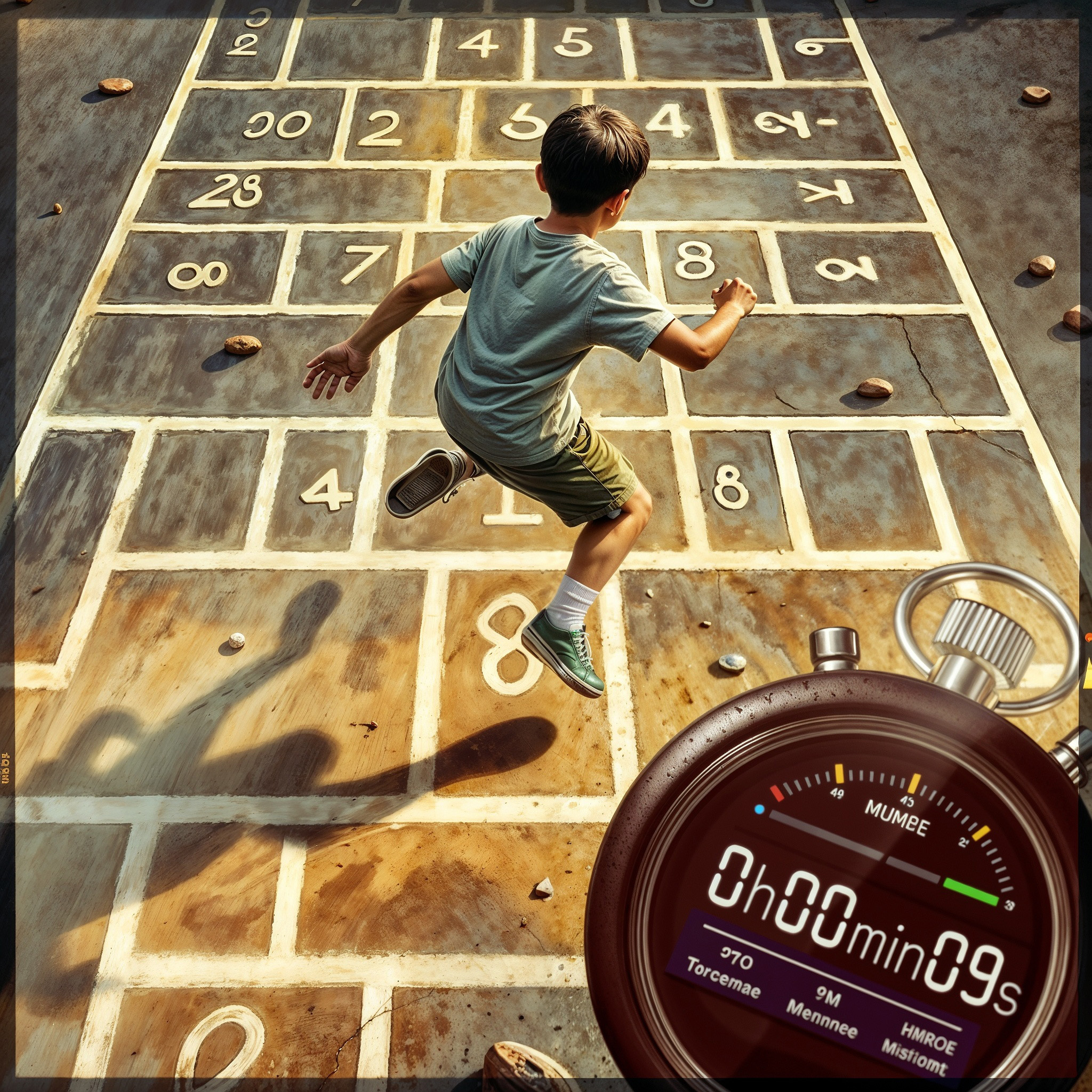
Your tea is the most delicious; it must be because of you and your “Wupp.” (“Wupp” was what we called the goal in hide-and-seek and the safe zone in tag where I grew up.) And the sun always seems to shine in. Or the moon.
And yet—why, I wonder—I find myself drawn back to the streets, back to life. You may calmly accept it, but I can’t seem to understand myself anymore.
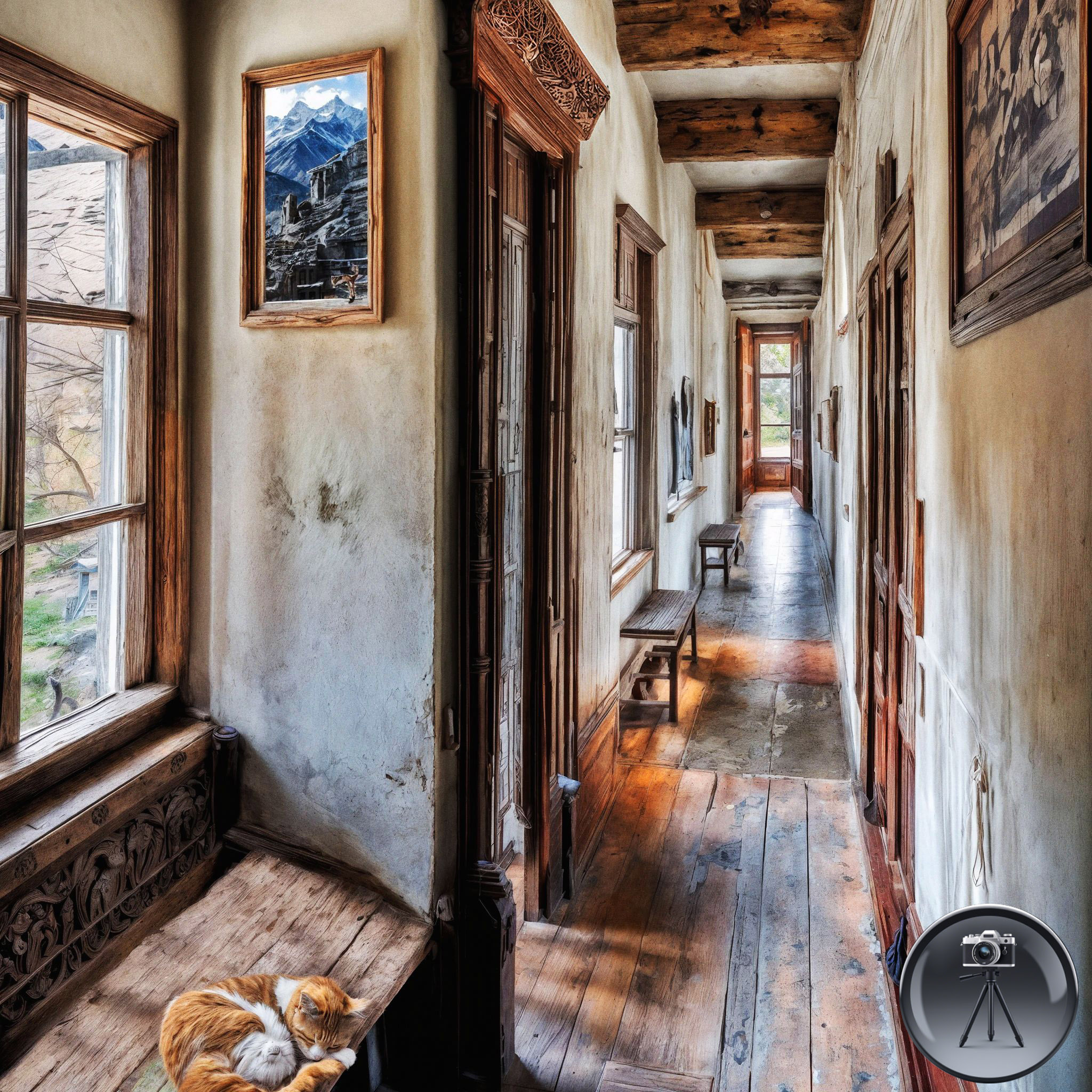
I enter the corridor. A cat is sleeping in a patch of sunlight on the windowsill. Old, time-darkened paintings on the walls depict bucolic scenes and fox hunts on horseback. I look for a good spot for my tripod to take pictures for my photo book titled “Corridors of the World—Places of Pause and Pivot.”
I enter the corridor: chairs for those waiting line the walls between the doors, each door topped by a digital display. Every seat is taken. I read 312 on one of the displays, 313 on another, and the third one is just skipping from 311 to 315. I glance at the slip of paper in my hand. 288. I shouldn’t have dawdled! In any case, I’ve obviously missed my call.
I turn around, wanting to go back and draw a new number in the foyer. However, above the door I just used to enter the corridor, there is another display: 314. For a moment, I’m confused. There’s no other exit, and—I look around once more with a searching eye—no ticket machine either. But I’m not giving up that easily.
The 314 above me clicks over to 316. A young man stands up. This is my chance. But when he realizes that I’m trying to squeeze through the doorway with him, he flashes me a disdainful look and blocks the crack in the door until the very last second. He pulls the door shut behind him with deliberate force, fast and hard.
I size up the others waiting there. Most of them are staring into space. Some absentmindedly roll their slips into tight little tubes or fold them up. A few teenagers are in the mix, engrossed in their smartphones or furiously mashing the buttons on a PSP with their thumbs.
A chair opens up. I take a seat, quickly dismissing the idea of stealing someone else’s number. The displays only go up to three digits. Eventually, they’ll hit 999. And then everything will start all over again. I clutch my slip tightly. My time will come.
I enter the corridor. My old joints ache, but I never falter in making my daily rounds, leading me through the secret corridor deep into Olympus, where a hidden vaulted hall lies. Here, in a seven-thousand-year slumber, lie elves, dwarves, dragons, gnomes, trolls, unicorns, the roc, cyclopes, centaurs, genies, and guardian angels. They are waiting out the reign of humans—uncouth, dim-witted, lumbering figures who create disorder and sow discord on the surface of the Earth.
Sometimes, one of the Ancient Beings opens its eyes, thinking it is caught in a heavy dream. I then sit by its side and sing one of the old lullabies. It won’t be long now, and the age of humans will come to an end. Once they are gone and the rightful guardians of the Earth have wiped the sleep from their eyes, my ninth life will finally draw to a close. I will walk through the corridor one last time on aching paws, leading the way to show them the hidden exit from which they can descend from Olympus.
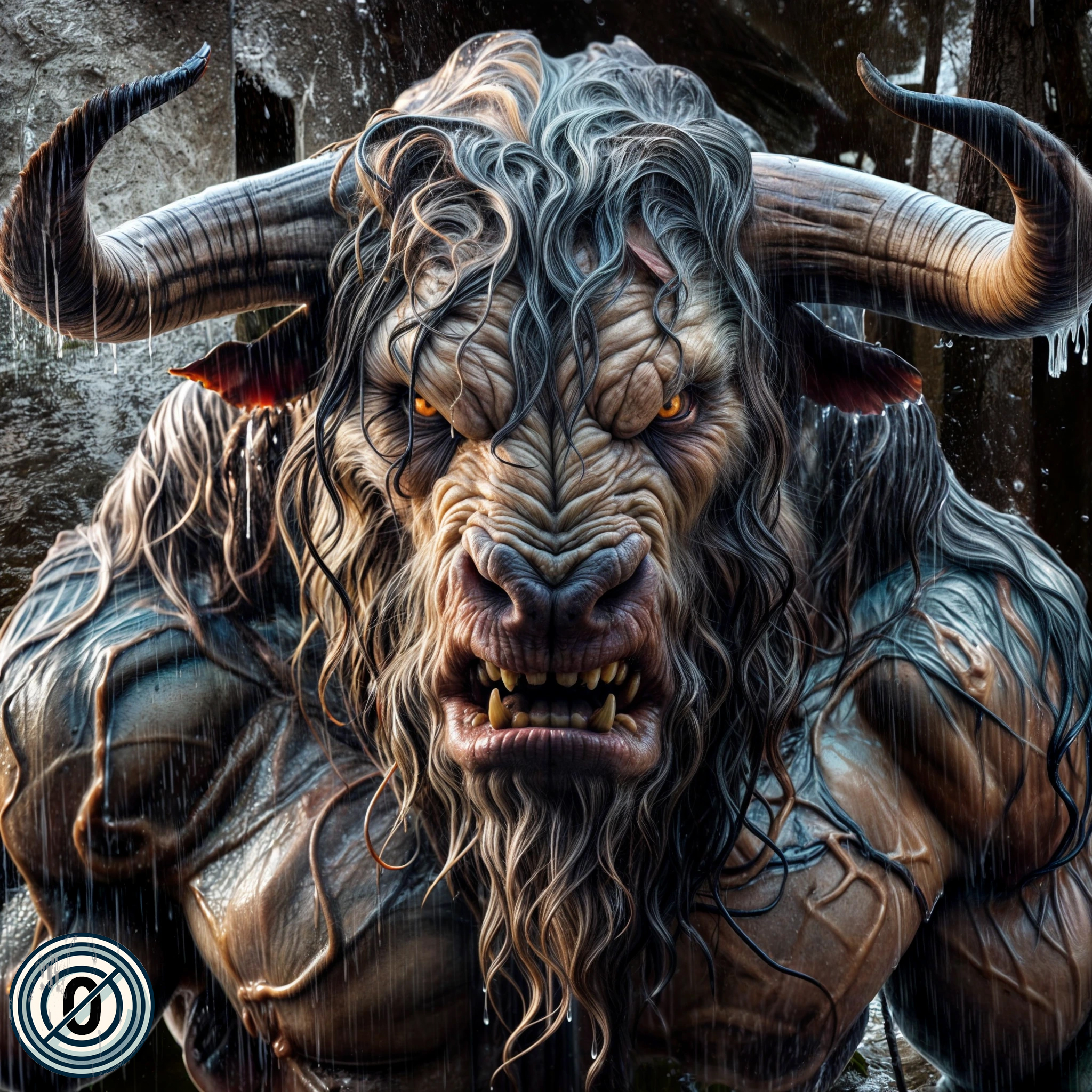
I enter the c… What fiend did this, balancing a water bucket high up that ajar gate?! Dares he trifle with me—the Beast—with such a silly prank? I shake my matted mane and thunder a deafening blast that rattles my palace’s hallways. I shall find ye! Let’s see if they’re acquainted with this labyrinth better than I, the man-eater.
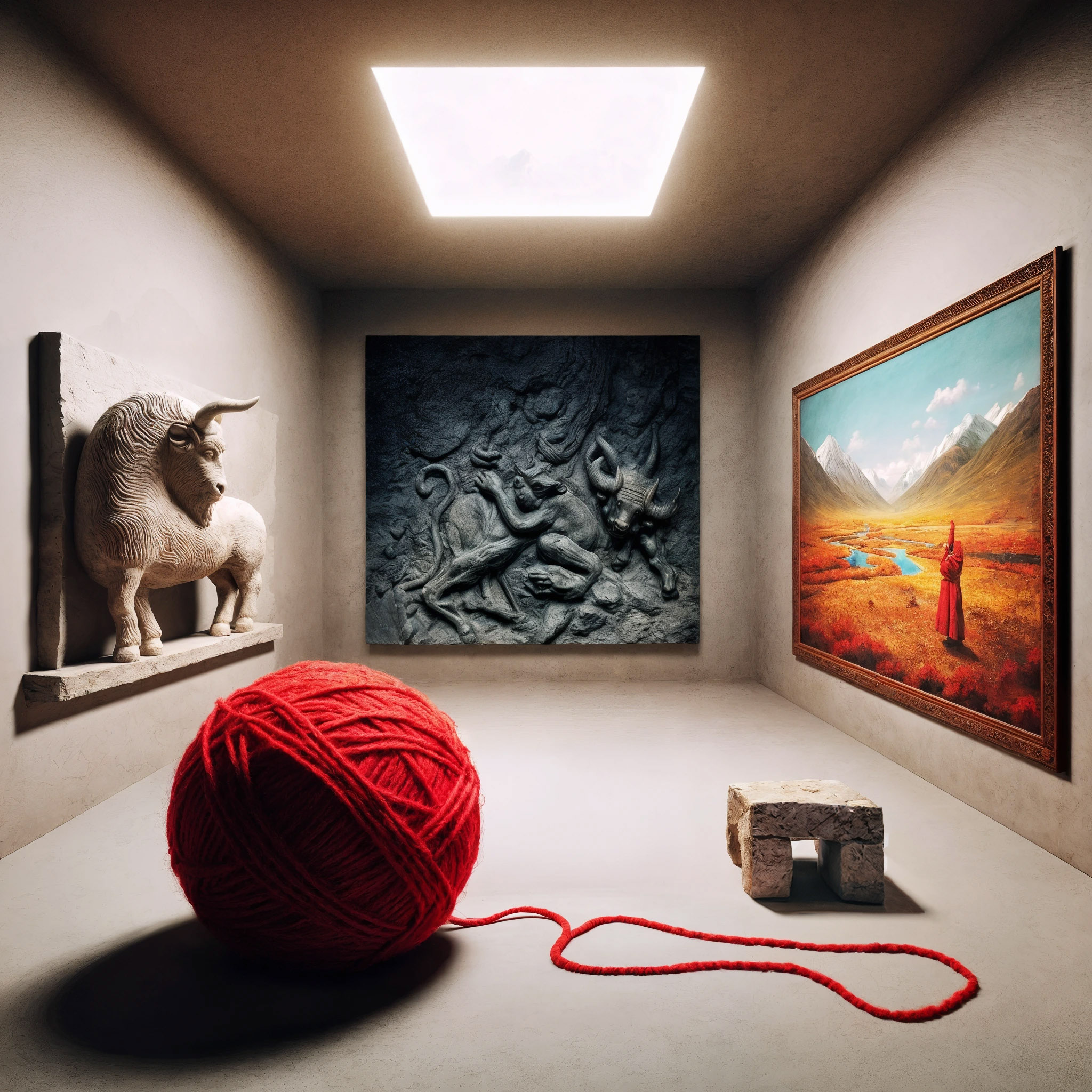
I enter the corridor. The thread running through it, I wind tighter and tighter; I already have a substantial ball in my hand. I see the thread disappearing under one of the doors. Here I will find her; here she is waiting for me! I toss the ball aside carelessly and rush to the door, which is indistinguishable from the countless others. As I open it and hurry through with her name on my lips, a creature with a bull’s head confronts me. With one of its horns, it tears open the flesh of my chest, laying bare my heart. I fall to the ground. “He is my brother, after all,” I hear her voice, very close to my ear.
How many before me? And how many more will they lure? And all that endless blood… The waterfall in my ears grows louder and louder, until there is only an all-consuming roar that mercifully takes me in.
I enter the corridor. And, strangely, for some reason, the archetypal nature of the situation suddenly stands before my eyes—as if I were seeing myself and my circumstances from the outside:
I—the self-assured, reflective human being; the Cartesian, sovereign ego; feeling and acting separate from the world; thinking it through; proactive.
The act of entering—at once a birth process and a willful decision to move forward, for progress and development. Resonating here: the human thirst for knowledge, the craving for adventure, the insatiable curiosity, and the undaunted spirit of discovery that seeks to traverse new spaces and expand the reach of power and knowledge to the very limits of the doable and the thinkable.
The corridor—as birth canal, transit station, life path, and an opening into the possibilities of choice: doors branch off, leading to new spaces, new hallways, new rooms, new…
The vision that so unexpectedly and involuntarily overcame me breaks off. I am standing in a corridor. It is dusty, uninvitingly furnished, poorly ventilated, and dim. On a ledge, an overflowing ashtray. It reeks of stale smoke. Wrinkling my nose in disgust, I bolt.
I enter the corridor, whistling a cheerful tune. I already know who I’ll encounter here so early in the morning on my way from the bedroom to the bathroom and then straight to the study. It’s you. You, yourself—yes, yes, search your memory, and then you’ll know where you’re hanging around in your dreams just before you wake up. In my hallway! And I am genuinely grateful for that because you are my quality control.
So I waltz in, in my pajamas with my hair all messed up, and there you stand, looking serious, asking, “And?” (Does any of this ring a bell?)
I enthusiastically gush about my ideas from the night—for more great corridor stories, for example: “A short sketch about a Chinese man who can’t pronounce the letter R—starts with ‘I entel the collidol!’ ” And you stand there shaking your head with that typical, ever-so-slightly dismissive smile. (Is it starting to click yet?)
I don’t let my euphoria be dampened: “Fine, fine, not that one. But how about the corridor story using our secret childhood language: ‘Itefy entefen-tertefer thetefe cortefor-ritefi-dortefor’!” As expected, you roll your eyes: “Dumtefumb” (Quite quick-witted of you.)
“Okay, then, the Pope,” I say, running my hand through my disheveled hair as I try to remember what I’d come up with. “At first, of course, you don’t know who it is. He walks step by step toward the balcony, where an immense crowd awaits him along with TV cameras and microphones. In his mind, he’s formulating his address—a scathing indictment of his congregation, accusing them of behaving like foolish sheep, unable to use their God-given minds to steer human history in a halfway sensible direction. Then he steps up to the railing, smiles at the sea of people looking up at him expectantly, and then just says ‘Urbi et orbi’ yet again! Well?” For a brief moment, you stare at me as if you’re about to burst into tears. You open your mouth, but nothing comes out. “Not good?” I ask with sad puppy-dog eyes, which, as usual, gets me nowhere because you just slowly and firmly shake your head. (By now, at least a few memories should be coming back to you.)
“Alright, then let’s take the boy in high school who enters the corridors between the classrooms with a rifle, contemplating the best way for his shooting spree to…” Your reaction makes me pause: you’re biting your fist. I assume that means: unbearable and completely off the mark. Too bad. “Could be a tweet,” I add pleadingly, “very short.” But your brief, dry laugh, tinged with no small amount of despair, tells me the problem with this idea isn’t its length. (Go ahead and check the knuckles of your right hand for bite marks. Is anything showing up?)
“Then I have a Jewish concentration camp prisoner to offer,” I suggest, and at this point, your expression is simply priceless: that expectation of something terrible, and how you fervently hope it isn’t true. But of course, I continue relentlessly: “He enters the corridor on his way to the gas chamber and…” A sound escapes your throat, a mixture of a gasp, a gurgle, and a sob, only very brief—I stop, because I don’t want to overstep. The best moments are when you roll your eyes to the heavens and raise your hands, as if some power from above could dry up this incessant torrent of half-baked or entirely ill-conceived ideas, finally silencing me and thereby bringing the world redemption. You do that really well. A sight for the gods, so to speak.
Of course, you sometimes nod graciously when one of my ideas doesn’t strike you as silly, adolescent, or tasteless. Otherwise, this blog wouldn’t exist. (To be honest, I sometimes sneak things past your strict quality control. Like this little story right here.)
You wouldn’t have thought so, would you? You and me, early in the morning in the corridor between my bedroom and my bathroom—and all the nonsense you have to listen to every time. Actually, you aren’t supposed to remember it at all, because otherwise you’d already know everything that appears here on the blog. That’s probably exactly why we forget almost everything from our nightly dreams: otherwise, life would just be boring.
I enter the corridor. This is the last one that hasn’t been sterilized yet, according to the display on my hardsuit sleeve—soon these wretched Kxax will be history on my ship! I grip my zapper tighter, scanning the shadows in the corners of the hall. A sharp pain stabs into my left ankle. A Kxax stinger has punctured the hardsuit. I take aim. The searing blast doesn’t just shred the attacker, but takes half of my left leg along with it—yet the alien secretion is faster: The diabolical poison of the Kxax has already reached my heart. I knew the risk; I know they’ll hail me as a hero. It’s just a shame I won’t be around to reap the rewards.