1/398
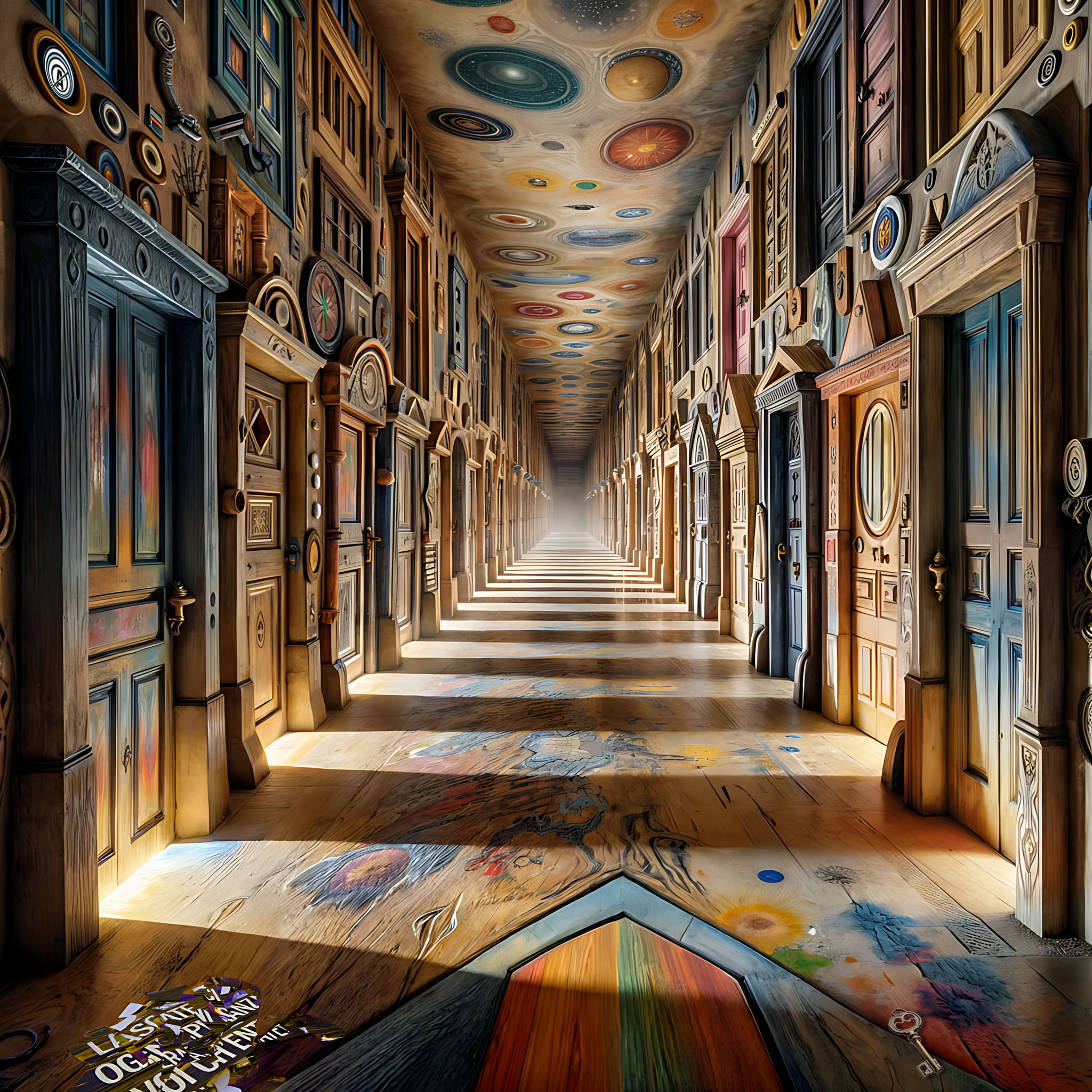
♫ Lasciate ogni speranza voi ch’entrate! ♫
1/398

I enter the corridor…
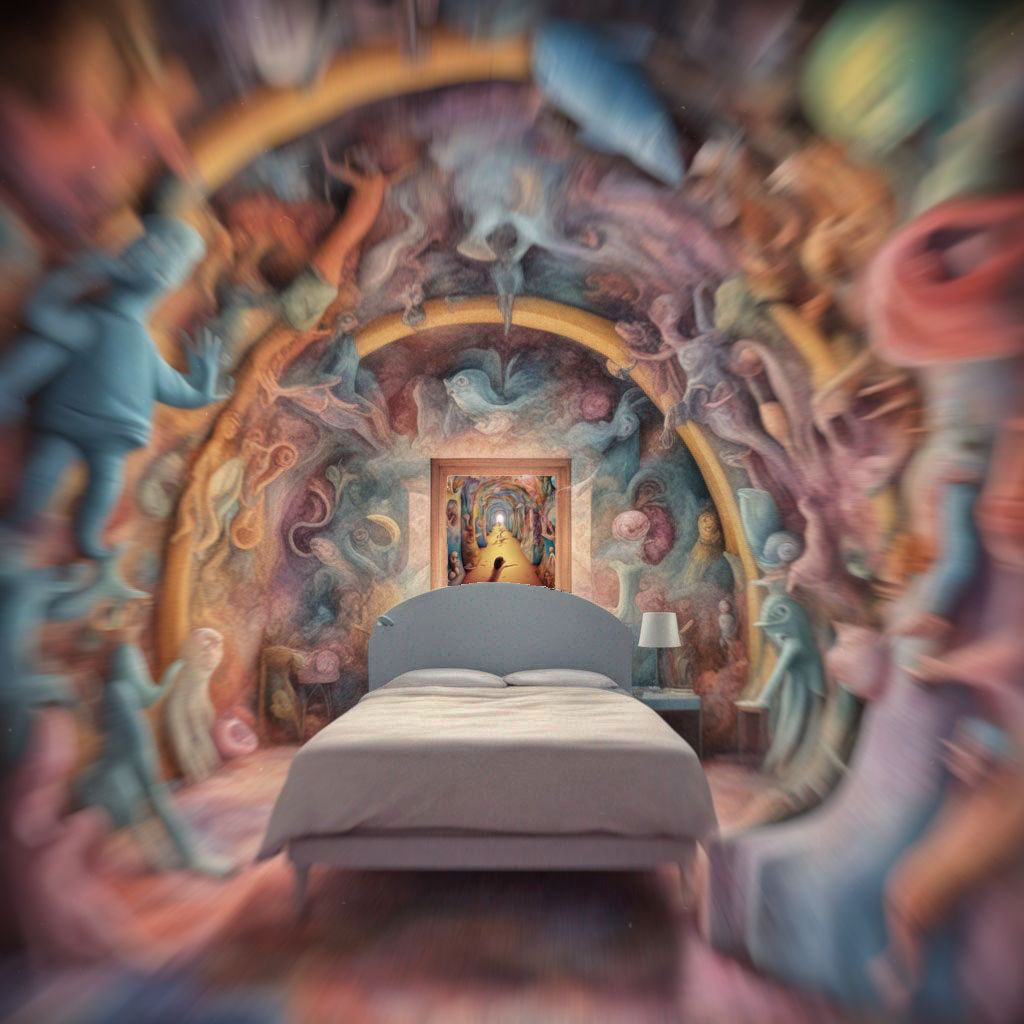
♫ Drifting Through Images ♫
I enter the Corridor of Fading Senses. It narrows and darkens as it recedes, yet the further I venture, the more vibrant and bright the images on the walls, floor, and ceiling become, and the more distinct the sounds that float meandering through the space, occasionally striking my third ear.
“Your Majesty. May I try to bring Nemo here? I have a very brilliant idea.”
Fascinated and awestruck, I observe the imagery and manifestations of my mind, listening to the inner musique concrète of my soul.
Unfortunately, despite years of training, I can only maintain a lingering spark of consciousness for a short while; a little later (much too quickly, always much too quickly), Hypnos takes me in his arms, and sleep embraces me.
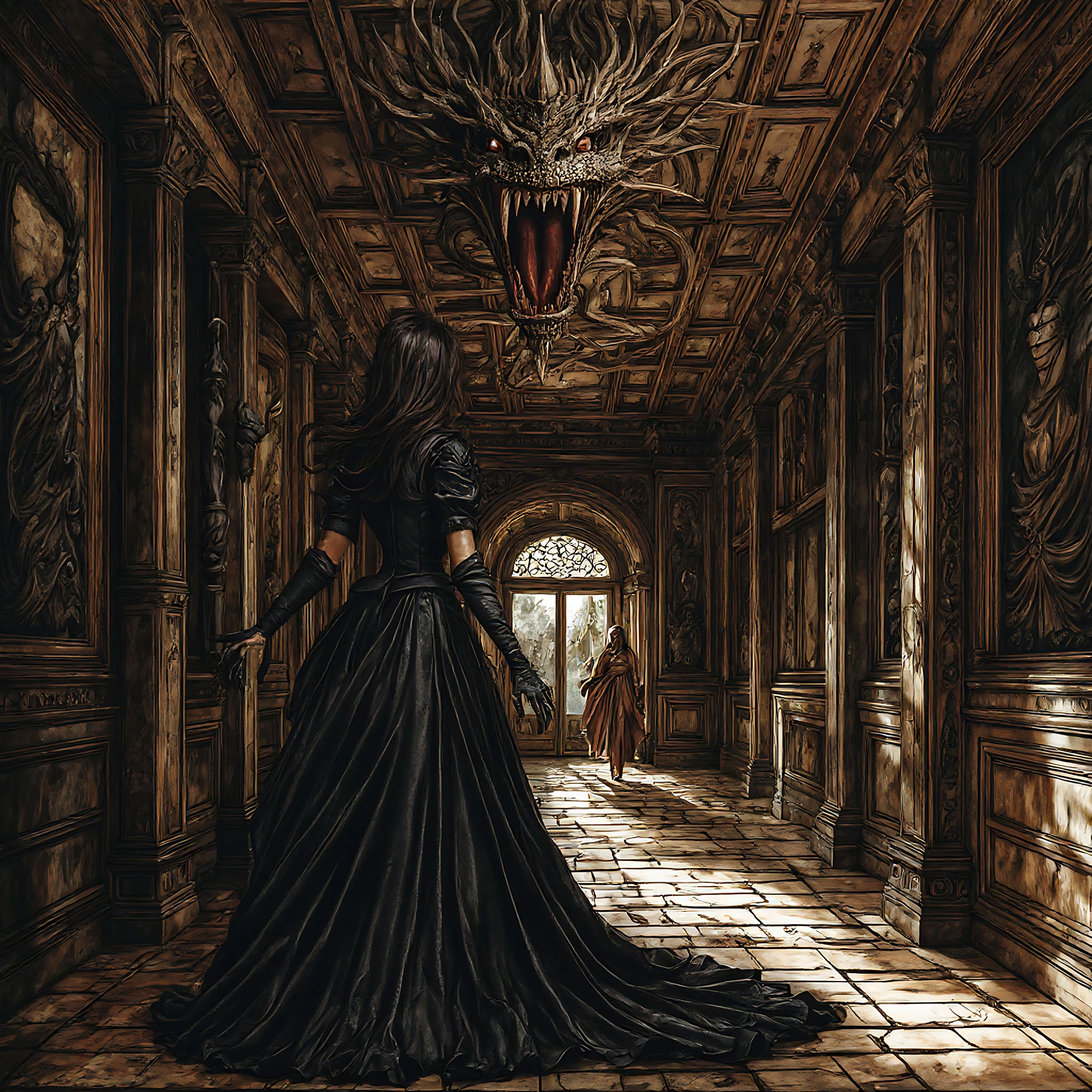
♫ Dance Dragon Dance (Intro) ♫
I enter the corridor. You run towards me with open arms, laughing. Ardinea! I recognize you by the wild color of your eyes.

♫ From the Bön Scriptures ♫

I enter the corridor leading into the labyrinth that I will never leave again. Daedalus stands behind me, smiling proudly. He has spent months constructing it and outfitting it for me. He calls it a “Palace.”
“I will die of thirst and starvation,” I say. Daedalus shakes his head. “You won’t. Down in the basement of the palace, there is a spring. There are courtyards with numerous fruit trees, and there is a damp vault where countless mushrooms grow.”
“I will be lonely,” I predict gloomily. Daedalus counters: “We will send you entertainment from time to time. Young men and maidens from our vassal states, whom you can treat however you wish.”
“Meat,” I say. “As you wish,” says Daedalus.
“I will long for freedom and go mad.” Daedalus seems unimpressed. “You won’t. The Palace will seem infinitely vast to you; you will constantly discover new rooms and encounter new wonders. I have ensured that you can create a structured daily routine with everything you like to do. It begins with a large, soft bed of straw, next to which I have placed a small bell. As soon as the sun rises, a mechanism will strike it. The chiming will grow louder and louder until you finally get up.” When he hears me groan, he adds: “However, if you would like to sleep a little longer, you can use a small lever to make the mechanism stop the bell from striking for a while.”
“Inventions…” I say dismissively. “That is all you can do: think up mechanisms and devices. But what about people and their feelings?”
“You are not a human. At least, not quite.” But when he notices tears welling in my eyes, he hastens to add: “But I have thought of your feelings too, my dear fellow.”
I look at him hopefully as he stands there in the entrance to the corridor, the blue sky and the sea behind him—the freedom I am now permitted to see, smell, and hear for the last time.
“I know,” says Daedalus, “that the kingship should rightfully be yours. That a… cruel fate denies you your inheritance and birthright.” He forgets to mention that he was the one who brought this fate about. Nonetheless, I listen expectantly to his words. What has he intended for me?
“In your Palace,” he says, “you will find a balcony that opens onto a large square. There, you can present yourself and give speeches. And when you pull the wooden handle you see next to the railing, your people will applaud and cheer you from many throats.”
“My people?”
“That is what it will sound like, yes. I spent a long time tinkering with the hydraulics.”
I sag. Another mechanical device, a decoy like the one my father, the bull, fell for.
“You’ll like it. I’m quite sure of it!”
Daedalus smiles at me encouragingly. He takes a step back into the open air and throws a lever. With a grinding sound, a section of the wall descends to seal the corridor. I could mark this spot—carve a cross into the wall with my horns so I can find it and destroy it later. But I am certain Daedalus has thought of that, too, and devised ways and means to prevent me, to confuse and fool me, making me a prisoner in this Palace forever.
He bends down to wave at me one last time from under the slowly descending wall.
“Don’t be sad! You know…” he calls out.
“It’s for the best for everyone,” I repeat obediently, as he has always drilled into me, “including me.” Daedalus nods, smiling. Then he is gone behind the wall. With a thud, it seals the corridor as if it had always been there.
I feel a bit dejected. Finally, I turn around and enter my Palace in search of the balcony.
♫ Wabe-Sabi ♫
In our corridor
to the parlor, logs in hand.
Warmth? Only with you.
In our corridor—
amaryllis blooms afloat—
how I wish you back.
In our corridor,
I take down our photograph:
Missing you too long.
In our corridor?
From afar, soft moonlight calls.
Why still do I wait?
In our corridor:
off guard, is it you I hold?
Could it…? But a ghost!
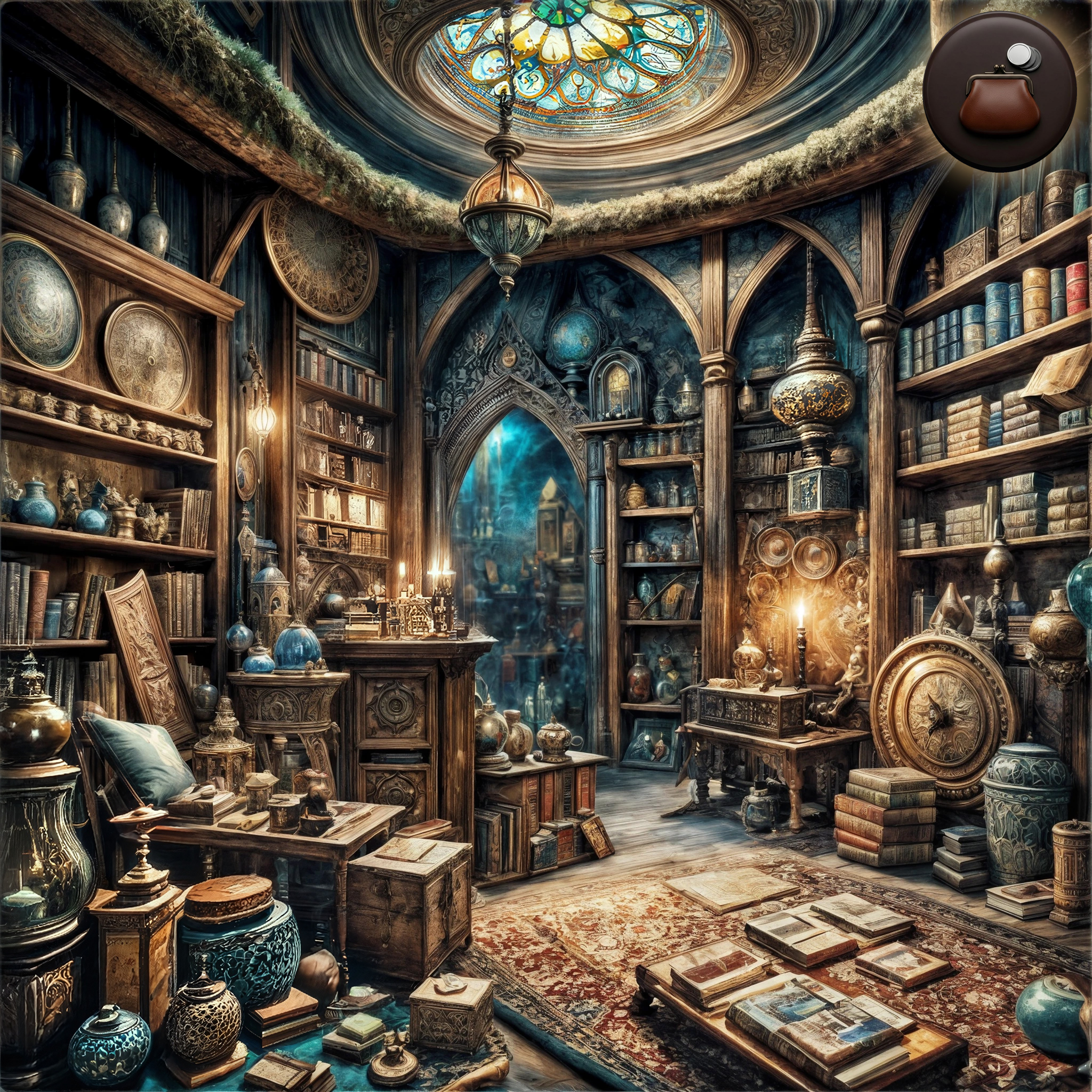
♫ Treasure Chest Dwellers ♫
I enter the corridor where the antiquarian stores his unsaleable artifacts. He acts as if it’s a great honor to be led back here. With flowery language, he describes what he supposedly will never find a buyer for, but also cannot bring himself to simply throw away:
An elixir of immortality that doesn’t prevent aging. (Might be something for one’s worst enemy—or perhaps a wife, if one wants to be sure of being well cared for in old age, the antiquarian says with a knowing smile. I wave him off.)
A cloak of invisibility that only makes the wearer invisible from the knees up. (Could be useful in tall grass, the antiquarian muses. I wave him off.)
A flying carpet that literally only moves at a snail’s pace. (Then again, it only rises a few inches off the ground, at most, the antiquarian remarks, pursing his lips. I wave him off.)
A magic key that, while unable to open doors, can lock them forever. (He should perhaps inquire with the nuclear industry, the antiquarian says, feigning thoughtfulness as if the idea had just occurred to him. I wave him off.)
A vial of truth serum that has the side effect of revealing the truth in painstaking, minute detail, causing the victim to get hopelessly lost in the specifics without ever reaching the point. (Sometimes he has the impression the brew is being used on certain TV talk shows, the antiquarian says with a strained laugh. I wave him off.)
The Ark of the Covenant, which is actually a quantum-mechanical radio for calling God. (The biblical Jehovah, that is, the antiquarian explains jovially, adding that He hasn’t picked up the phone in quite some time. He smiles slyly: “no answering machine.” I wave him off.)
A love potion that causes whoever drinks it to fall into an immortal love with themselves. (Which, for many disillusioned by love, the antiquarian says, glancing sideways at me, actually sounds like the perfect, sustainable solution. I wave him off.)
A book that, when opened, writes itself in that very moment. (But it only ever contains short, muddled stories about someone entering hallways or corridors or something—no, it always says “colonnades”—in any case, nobody can make heads or tails of the scribbles, the antiquarian grumbles sullenly. I ask how much he wants for it.)
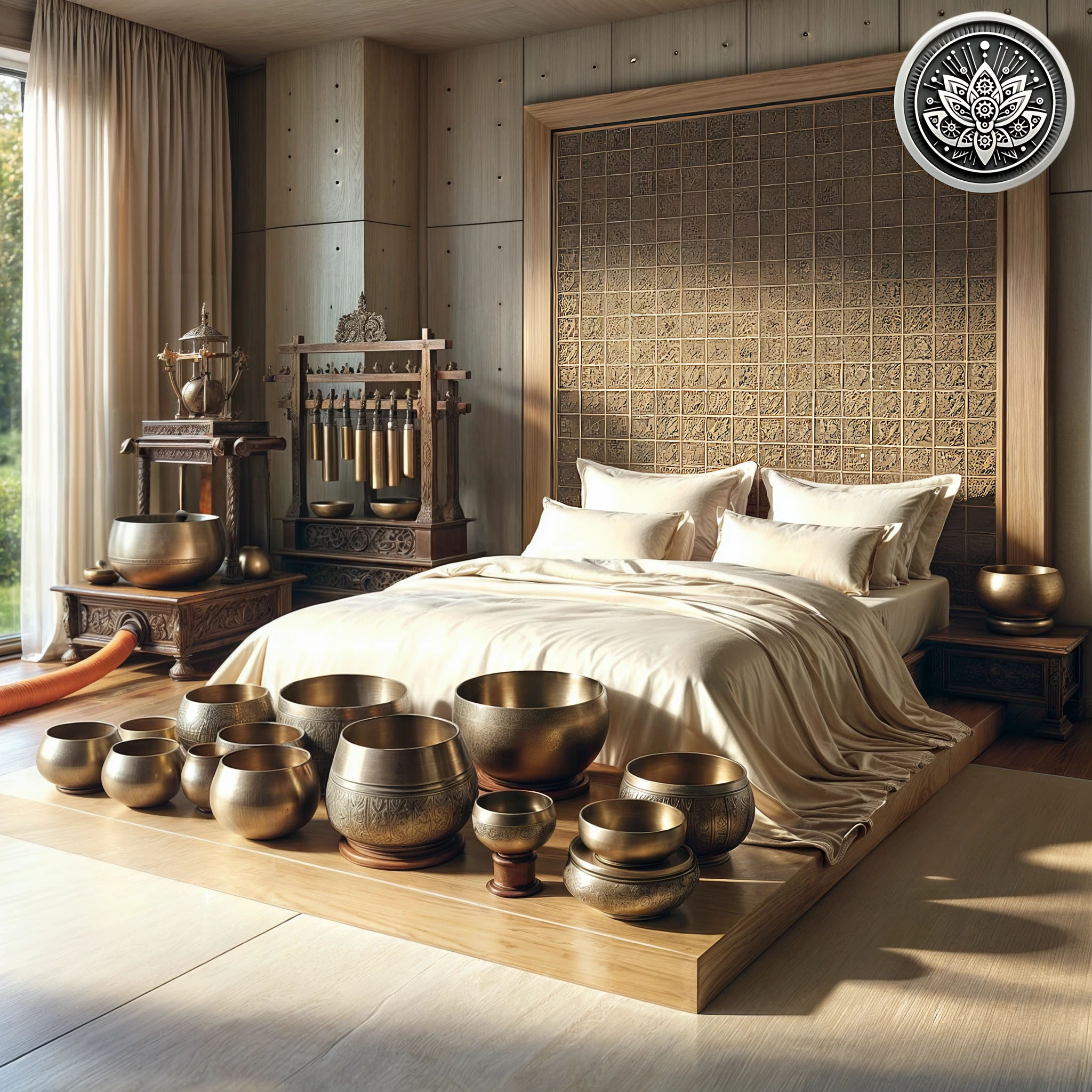
♫ Druckluft-Meditation (Uraniborg-Mix) ♫
I enter the corridor—if you can even call it that, since I’m actually just on Skype. It’s my conversation partner who, balancing his laptop on one hand, enters the corridor to take me into the studio. It’s called “Uraniborg,” and I’m supposed to call him Tycho. It’s a good fit; the so-called “Sky Fortress” was once the research station of the Danish astronomer Tycho Brahe.
This Tycho, however, is a musician, and that’s exactly what I’m after: music for my texts. Even though I can’t see him right now because the webcam is giving me shaky images of the hallway, I repeat what I’d already told him in my email into my headset mic, just to be safe: “I can’t pay you anything for it, though.”
“You already mentioned that,” he says, opening a soundproofed door. I had expected walls of synthesizers and a mountain of instruments. But the large, bright room with panoramic windows overlooking the garden doesn’t contain much more than a keyboard and a lounger surrounded by singing bowls of various sizes. The keyboard apparently slides out from under the desk, which has a piano stool in front of it. Judging by the many cables on the table, I assume a computer gets plugged in there—likely the one Tycho is using to carry me around right now.
“Welcome to Uraniborg,” Tycho says. He sets the laptop down on the table, his face obscuring the arrangement of singing bowls.
“What’s that lounger behind you? Is it for a sound massage?” I ask curiously.
“Oh, that,” he says. “We’re currently experimenting with soundscapes controlled by the skin resistance of whoever lies on it. It’s powered by compressed air.” Sure enough, behind him, among the singing bowls, I spot a strange mechanism with hoses and chrome-plated pistons.
“Want to give it a go? Let’s see what kind of skin resistance the computer has…” The image tilts. Tycho sets his laptop on the lounger. Through the built-in webcam, I now have a view of some of the singing bowls. The pneumatic percussion begins to hiss and thump, the mallets start moving, and soon I’m enveloped by hypnotic, celestial sounds.
“Before I drift away completely…” I shout into my headset. The image tilts again, and Tycho—having switched off the machinery—sets me back on the table. He puts on a headset of his own. The singing bowls behind him ring out for a long time.
“How did you find me?” he asks. “Were you at one of my sleep concerts?”
I shake my head. “Not yet. I heard a few of your tracks online and thought…” Well, what was I thinking?
“You want to publish a series of texts and you’d like a little soundtrack for each one. Did I get that right?”
“Exactly,” I say.
I’d already shared a bit about myself in the email: that I work in the building office of a small town in eastern Germany. I don’t have much to do there, but I want to look busy because my desk is right by the hallway to the restrooms and my colleagues can see me clearly through the glass door. I told him I’ve started typing up little “architectural” sketches on my computer, inspired by the applications on my desk and the inspections and site visits I sometimes get to attend.
And that I need music for the publication. A lot of music. Something unusual. Music that creates images in the mind.
“The Labyrinth of the Minotaur,” he says thoughtfully.
“Yes. I sent you a few Minotaur fragments because that was a theme at your sleep concerts and it comes up in the music. It connects us, in a way. I want to start on November 11th.”
“So soon?” My heart sinks when he says that. I’m way behind in my search for music. But having little soundtracks for the stories is my dream, and I don’t want to give up on it that easily.
“What is a young woman like you doing working as a clerk at a building office?” he asks.
“I studied History and Oriental Studies in Leipzig, but I couldn’t find work as a historian. So… anyway, my colleagues can’t know anything about my literary ambitions.”
Tycho gives a mischievous little smile. “I won’t tell a soul. How many blog posts do you have ready?”
“I have the first batch, and I always want to be at least three or four ahead. As for the music, I’d give you totally free rein. It’s going to be almost… uh, four hundred blog posts in total.”
He doesn’t flinch at the number. Good sign.
“I know,” I continue hurriedly, “that it’s a massive ask, but…”
Tycho interrupts me. “No problem. We have tons of material in the archive, all unpublished. Some of it is pretty weird, though.”
“That’s perfect,” I say.
Tycho grins at my enthusiasm. “We’re talking drones, soundscapes, compositional sketches, studio sessions, field recordings, psychoactive sound experiments…”
“Well, that all sounds great! As for the length, I thought the music should last roughly as long as it takes to read the text aloud—so, anywhere from seven seconds to seven minutes.”
“Okay. Send me a text, and twenty-four hours later, you’ll have a soundtrack for it. If you don’t like a piece, you’ll get a different one.”
Wow. I can’t believe my luck. My blog is getting a soundtrack! But…
“But what,” I ask worriedly, “if you don’t like my texts?”
Tycho keeps a straight face. “Won’t happen. I’m not going to read them. I’ll just check to see how long they are.” He shows no emotion—except for a little glint in his eyes that tells me he isn’t being entirely serious.
And that’s how I ended up with a unique little soundtrack for each of my literary architectural sketches.
♫ Los ratones bailan ♫
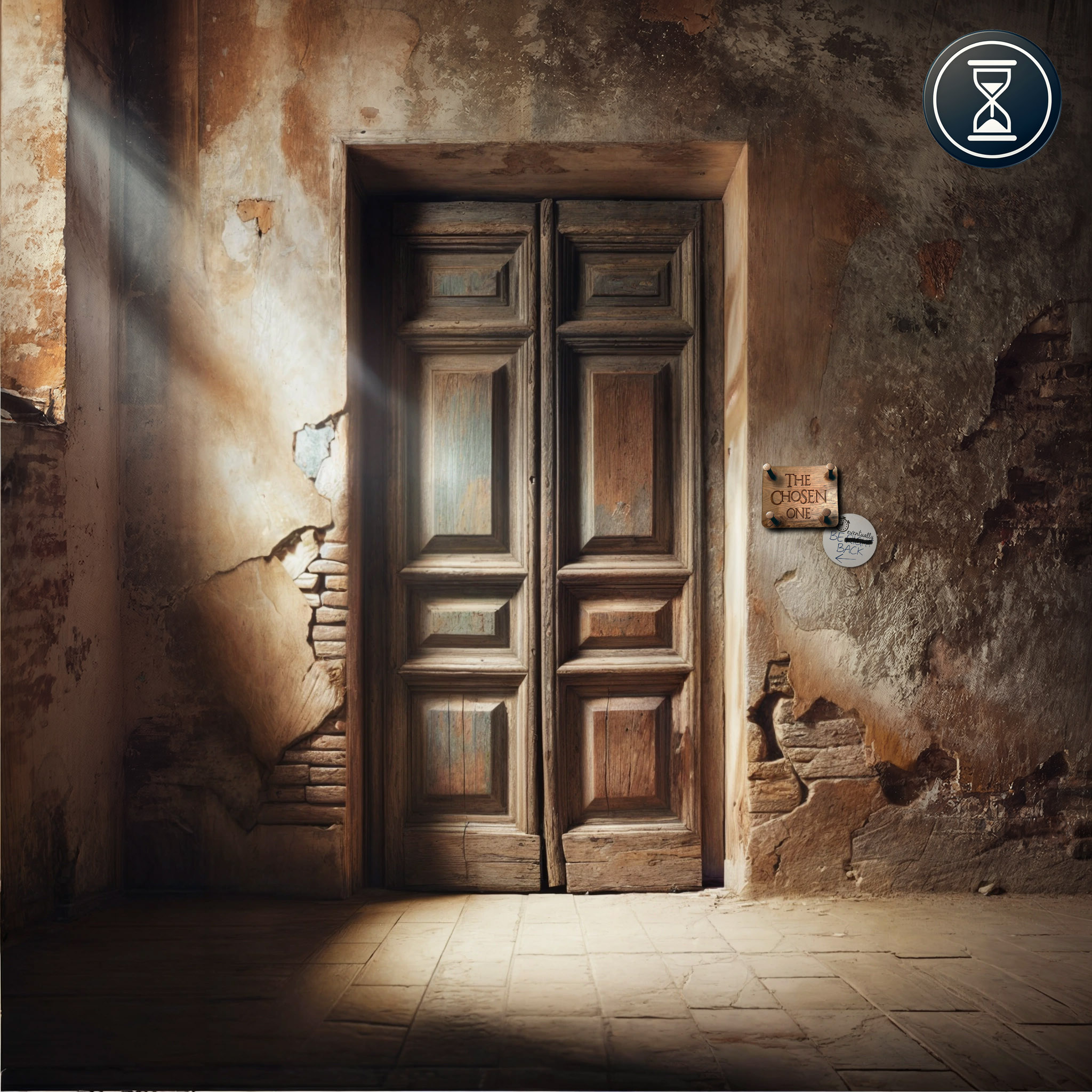
I enter the corridor. Small boards are nailed onto the doors on both sides, and someone has crudely carved words into them with a knife: I read “Gorge” on one, “Horn” on the second, “Cauldron” on the third, and “Cavity” on the fourth. The door at the end of the corridor also bears such a board. “The Chosen One” is written here, and a sudden tingling sensation of happiness spreads through me. Andreia! I had almost given up searching. A note is tucked under the board. I immediately recognize her elegantly scrawled handwriting. “Be right back,” with “right” crossed out and replaced by “eventually.” Never mind. I’ll wait. I’m sure she has a lovely view from her room.

♫ Hypnotic Attic ♫
I enter the corridor and open the door to the living room. However, in this room, nothing is really what it seems to be.
For instance, the door is, in reality, a book titled “Snowmen Rarely Make Good Cigarette Lighters.” The armchair is a traffic warden named Edna Gierke. The other chair is a stool, but the family always calls it “the ottoman.” The grandfather clock is a display case for the patriarch Wasmuth’s collection of algae schnitzels, which looks like a lampshade but is, in fact, the room’s carpet.
For instance, the door is, in reality, a book titled Snowmen Rarely Make Good Cigarette Lighters. The armchair is a meter maid named Edna Gierke. The other chair is a stool, but the family always calls it “the ottoman.” The grandfather clock is a display case for the patriarch Wasmuth’s collection of algae schnitzels; Wasmuth himself looks like a lampshade but is, in fact, the room’s carpet.
The piano, strictly speaking, is a spinet made by the Gellwiesen company, now known in the USA as BELLOWMEADOW for its exquisite cookies. The blue wall color is the smell of boiled cabbage, and the painting on the wall is a photo of Mirna and her kitten, titled Women and Cats First. Did I forget something? Yes, the man standing lost in the room is indeed the bailiff; however, his name is Herbert Brünnchen, and he entered through the light switch, which is actually the kitchen pass-through.
The living room itself, just to mention it, may seem like an enclosed space, but it’s actually a newspaper article with the sensational headline, “Is the Whole of Schwabingen Infested with Trichinella?”