21/398
♫ Jólagjöf ♫
21/398

I enter the corridor. 24 little doors. Behind the last one, a piece of chocolate awaits me. I already know that from the past few years.
♫ Jólagjöf ♫
I enter the corridor. 24 little doors. Behind the last one, a piece of chocolate awaits me. I already know that from the past few years.
♫ Inside the Temple of Braga ♫
“I enter the corridor just like everyone else,” said the Master to his visitor, who had asked how he might find his way through life.
“Are you, then, a seeker like me?” the visitor further inquired.
But the Master shook his head. “The path forks; there are many passages to choose from—long, short, straight, sharp-turning, leading up and down stairs—and most end in dead ends.”
“That is precisely the trouble,” the visitor lamented. “In this labyrinth, I cannot find my way.”
Once again, the Master shook his head. “Labyrinth? That would be a single, winding passage that leads to the center through many loops, but without any branches. What you are describing is a maze.”
The visitor hesitated. “And how, then, do I find my way through the maze?”
For a third time, the Master shook his head and repeated, “I enter the corridor just like everyone else.” Then he smiled. “But beneath my steps, the maze transforms into a labyrinth.”
♫ Smṛti ♫
I enter the corridor. But don’t assume that I just slip in and out quickly. No. I take my time. Initially, I make sure not to read any words, not even accidentally. Instead, I start the soundtrack and listen to it with half-closed eyes. Then, when I’ve developed a feel for the sounds, without evaluating or categorizing them, with a beginner’s mindset, so to speak, I dare to take a first look at the text—at the first words, the first sentence.
Is it the one I expect? Yes. The beginning is always the same. Nice. Carried by the accompanying music, I venture further down the corridor. Confident on one hand, but also a bit fearful because around every bend, an unnamed terror may lurk.
Yet, as in a dream, all misfortune will be mere imagination. Slowly and with delight, I feel my way forward, exploring cautiously. Most corridors are short, much too short. Sometimes, however, they continue within me, before my mind’s eye, in the rhythm of the accompanying music and the flow of my thoughts and feelings. The first step is always the same. But all the others…
The soundtrack fades away. I open my eyes. And step into life.
♫ Uppgötvun ♫
I enter the corridor. This is where we agreed to meet, should we lose each other. And sure enough: the urn is on the windowsill.
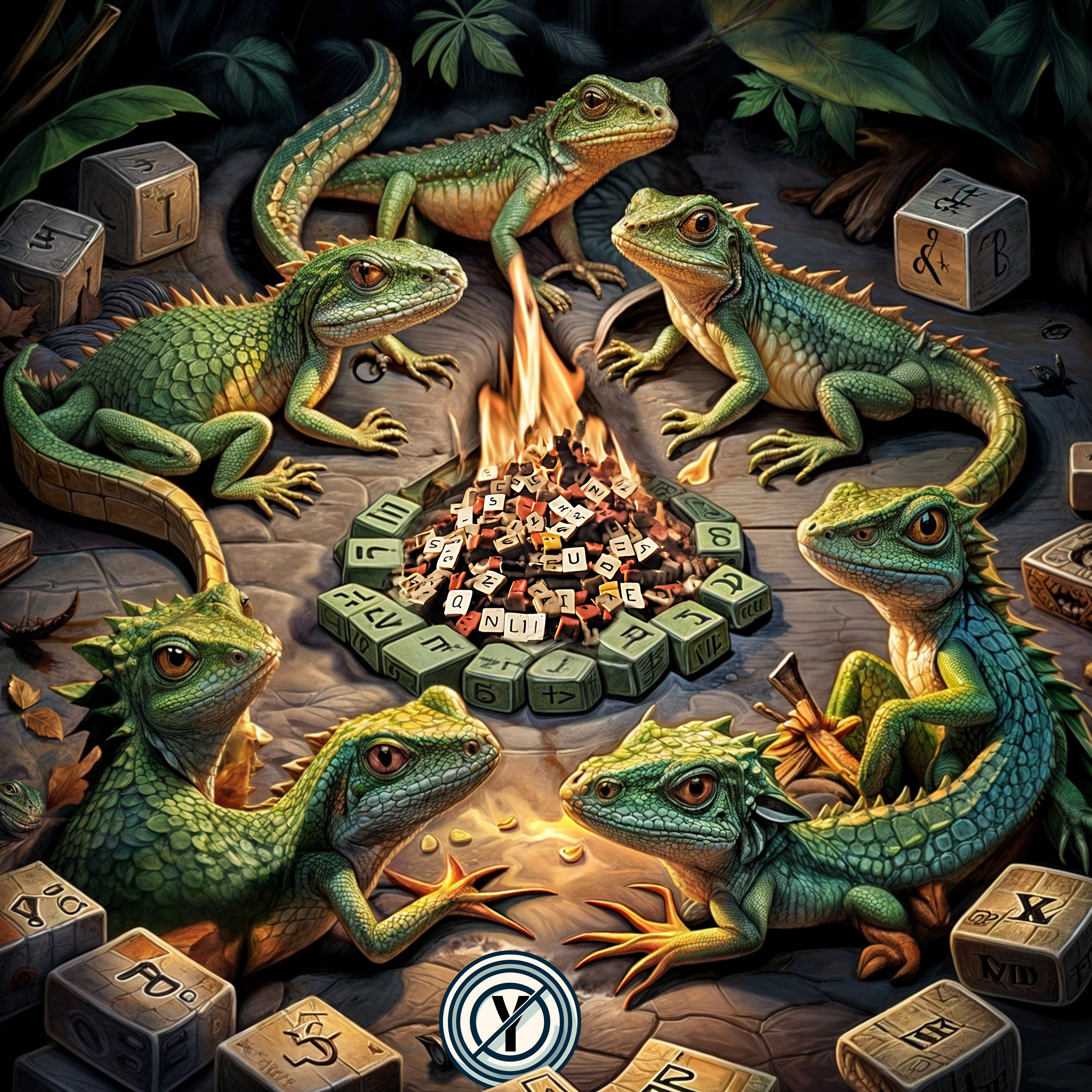
♫ The Campfire Lizards ♫
I enter the corridor.
[Notes for the translator:
The sentence with which everything begins is a lipogram excluding the letter A. Similar lipograms include:
and finally text 25, excluding the last of the vowels.]
♫ Enmeshed in Clouds (Woodstock Mix) ♫
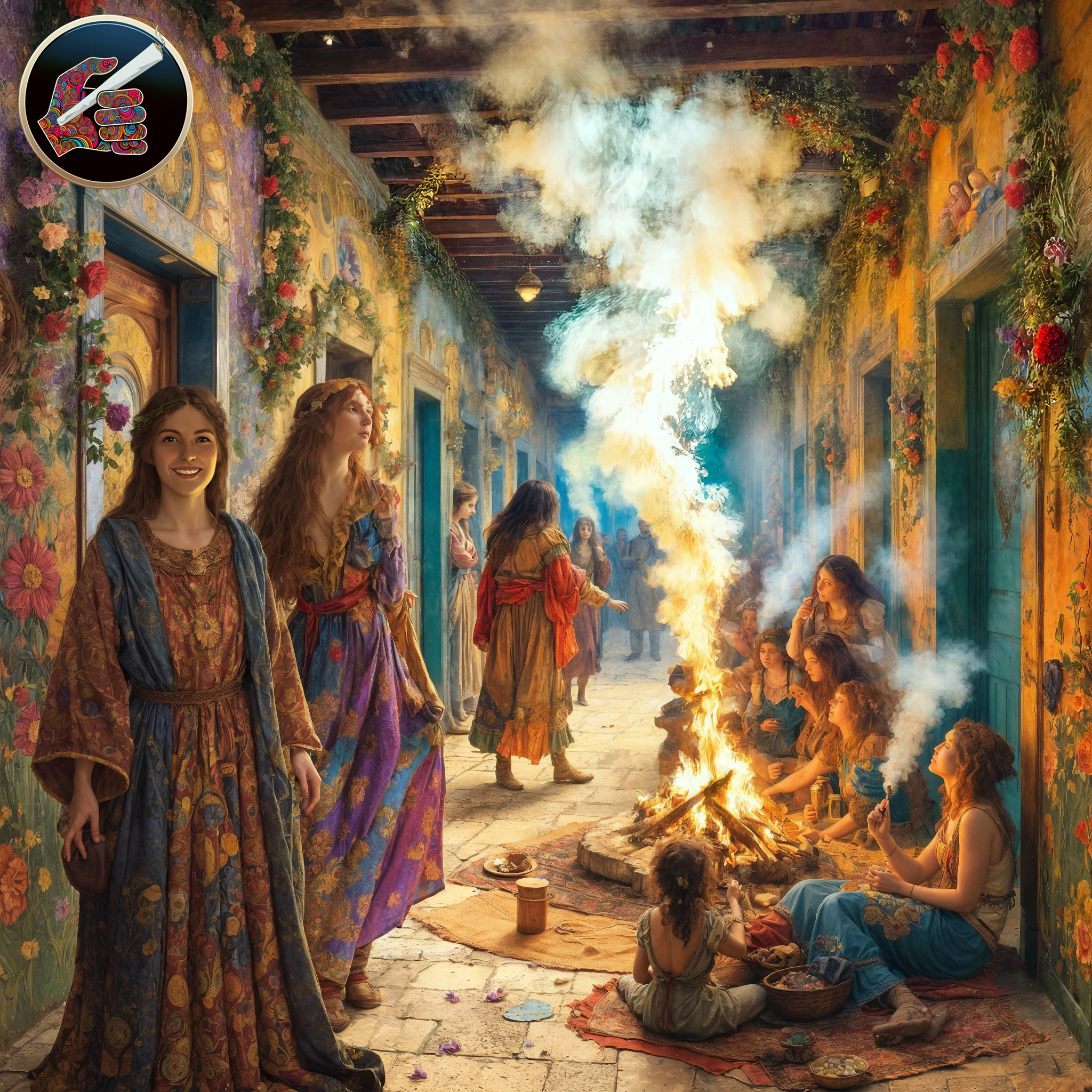
I enter the corridor. A lively bustle reigns here. A woman in colorful, flowing robes greets me with a smile and a kiss on the forehead. She leads me to her friends, who are gathered with some children around a fire, singing, dancing, and roasting marshmallows. I clearly please other women in the group as well. They feel me, nestle against me, and weave flowers into my hair. As I try to move on, one of them pulls me to the ground and offers me a smoldering little roll of paper. The corridor doors—I see now—have been painted with fantasy worlds, mandalas, and floral garlands.
I promised my people I would not halt my search until I recovered the Tjurunga, without which our shaman is powerless. And yet: Can I not linger for a moment to recover from the rigors of the trek? Perhaps I should learn the language of these people and find out what awaits me at the end of the corridor—and behind the many doors they haven’t opened in years, decades, or perhaps ever. The cheerful mood of these people is infectious. Yes, I’ll stay. I nod to the women, letting them know I accept their kind invitation. Perhaps I will find the Tjurunga here among them after all. A wave of dizziness washes over me from all the new impressions. The smoldering paper stem has burned down, and somehow, I know the smoke will never taste bitter again.
♫ Moravec’s Paradox ♫
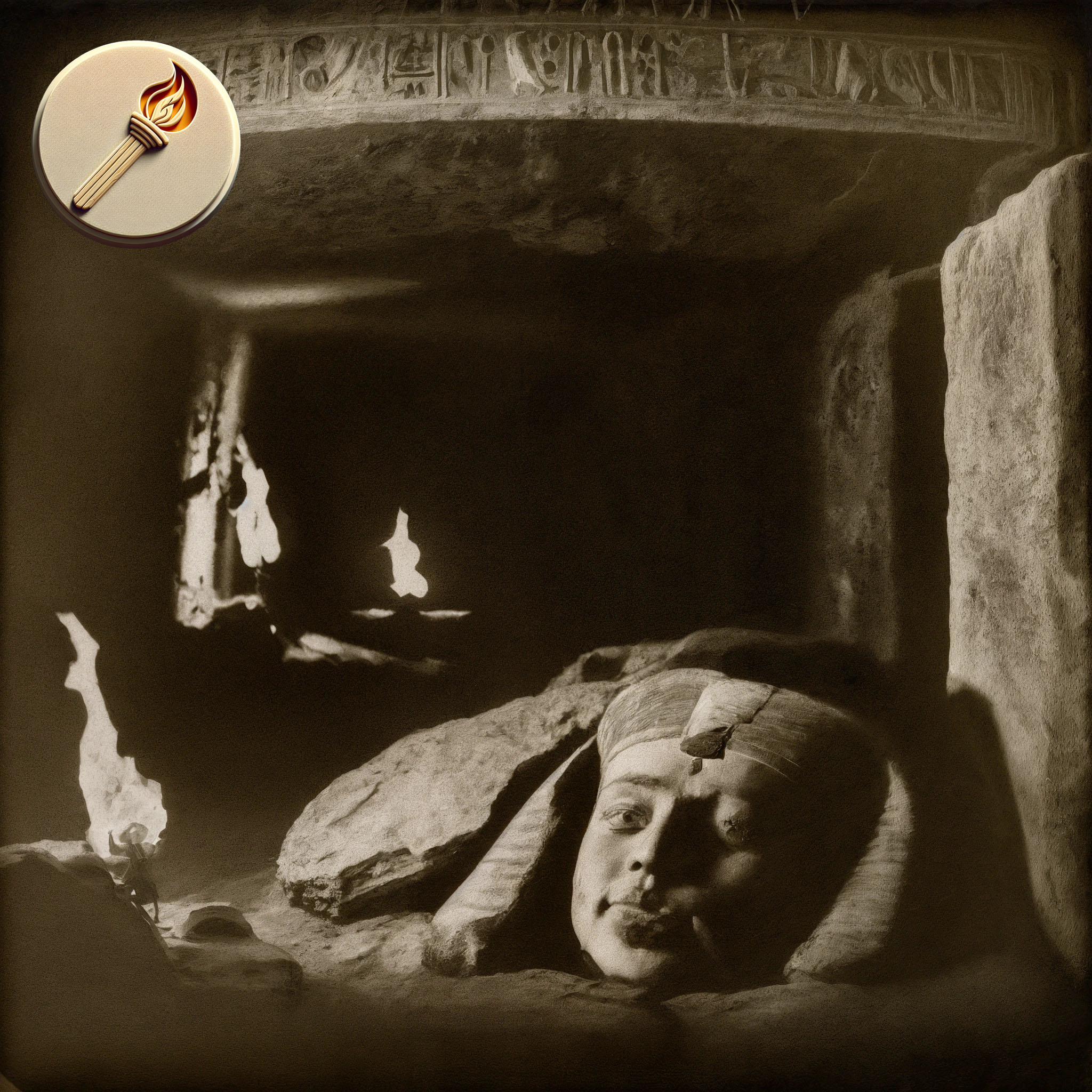
I enter the corridor, illuminating the low vaulted ceilings with my torch. As a talisman, I carry the ancient “Scroll of the Hidden Chamber” with me. The drawings on the walls are faded, but otherwise completely preserved. I am looking for the pharaoh’s cartouche. It must be here somewhere. I decipher, “Behold my works, ye Mighty, and despair!” Ozymandias? But the tomb of Ramses the Great was already discovered here in the Valley of the Kings a long time ago! Perhaps one of his sons is buried here.
My musings are interrupted: A muffled sound causes me and my Egyptian helpers to whirl around. The ground beneath us trembles. The gigantic stone slab, whose purpose we had puzzled over during the excavation, has slid down behind us. The entrance is sealed. Even with dynamite, we wouldn’t be able to get out now.
My helpers, after a brief, desperate panic, collapse to the ground, whimpering. I, however, walk on. An unopened tomb that has eluded grave robbers for millennia – and I am the discoverer! As long as there is air to breathe, I want to discover if the burial treasures are truly untouched. Perhaps I will behold the hoped-for riches with my own eyes before my torch is extinguished forever.
♫ Infinity Shuffle ♫
I enter the corridor and immediately jot it down in my journal: “I enter the corridor.” Since I started using a tablet instead of a notebook and pen, I can record what I do and experience—how I spend my day—much more directly and in real-time. I can also share everything important as a tweet right away. Before going to sleep, I can retrace my daily routine on my Twitter account, divided into small fragments.
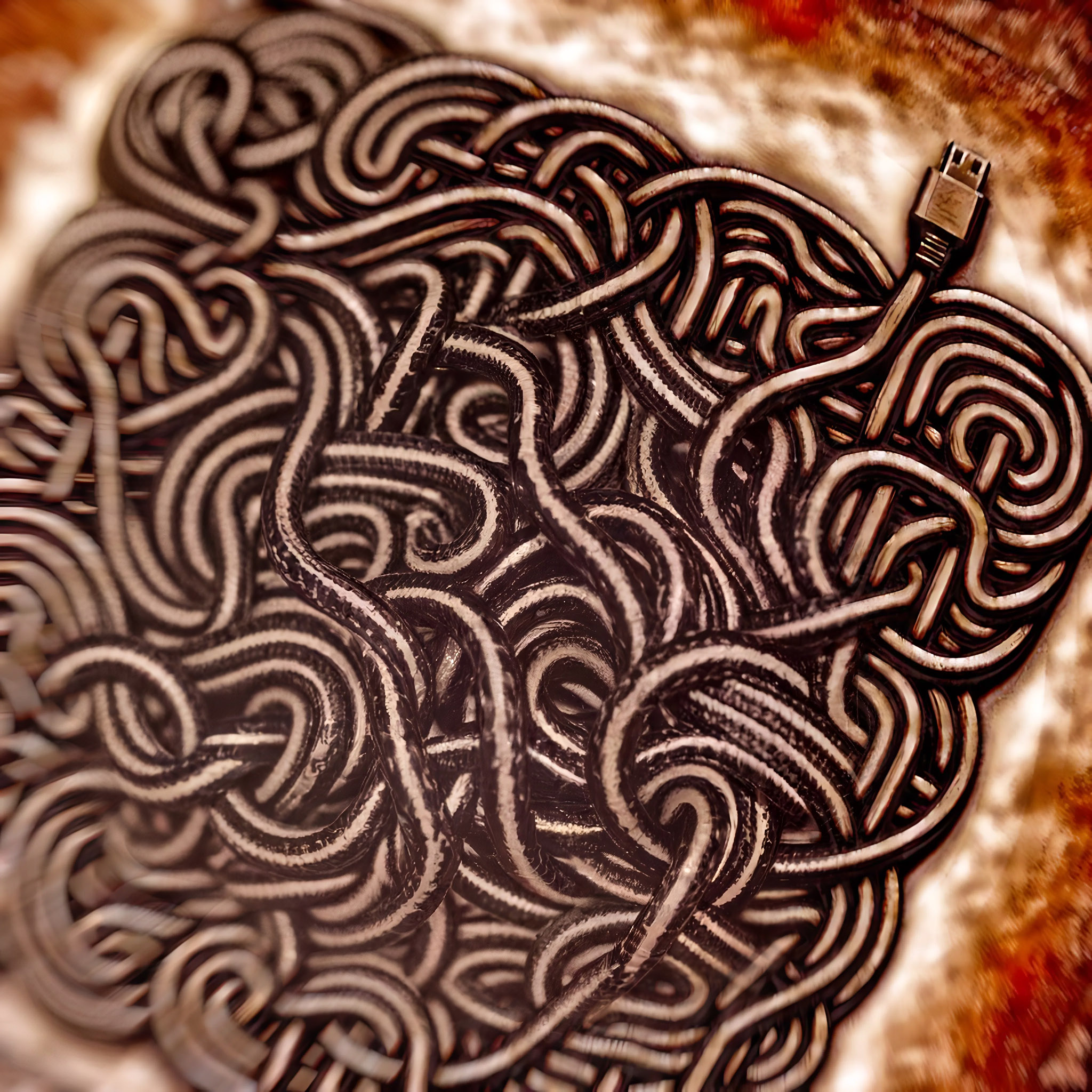
What did I come in here for? Oh, right, I’m looking for the tablet’s charging cable. It says so right here: “I’ve misplaced the tablet charger. Maybe it’s in the kitchen.” I can’t find it anywhere in the kitchen. “But in the kitchen, I can’t find it…” But now the tablet makes a strange electronic noise, dropping in pitch, like a disappointed “Oohch.” I’d love to note and tweet that, since I’m hearing it for the first time and it obviously needs to be documented, but now the thing won’t accept input on the virtual keyboard; instead, it saves the text as a last-resort emergency measure and shuts down.
What now?! How am I supposed to write this down? In the kitchen, there’s a roll of paper towels, and in a drawer, I find a pen next to some tealights. I need to record all of this! But the pen won’t write on the paper towel. I lick it, shake it, the whole nine yards, but it just won’t work. All of this is at risk of being lost because I can’t write it down. My eyes fall on the cutting board. Could I carve something into it with a knife? At least some keywords? So much has happened already. Prepping paper towels, licking the pen, considering the cutting board… How am I supposed to remember all of this? And on top of that, trying to memorize the act of memorizing! I need to find that cable; that much is clear. All my thoughts, the excitement, my actions—just when things are finally getting dramatic and life is really popping off, I can’t write it down, let alone tweet it!
I finally discover the charger while searching for a pen and paper in the bedroom, plugged into the outlet by the nightstand. With fingers already trembling slightly, I plug it in, and the tablet comes back to life.
I type as fast as I can to catch up with my life again.
♫ GameLAN-Party ♫
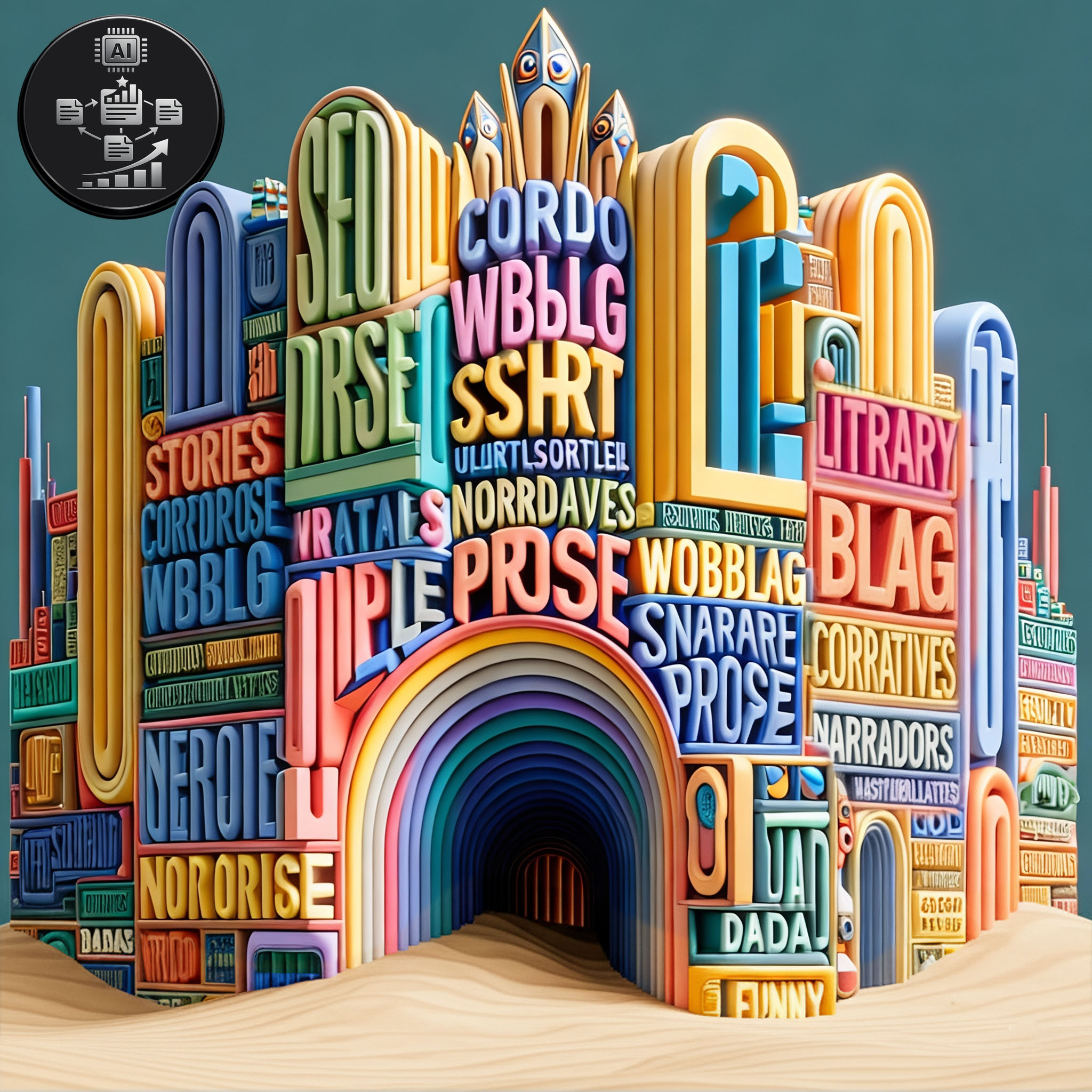
I enter the corridor—the one designed to boost my short prose blog’s Google ranking, plunging right into a search engine-optimized, or SEO, copy. This text aims not so much at its readers but primarily at Google’s search ranking algorithm, seeking to feign being informative by focusing on crucial keywords like “corridor” and “short prose.” In reality, its sole purpose is to repeatedly and subtly insert and vary the search-relevant keywords (such as “short prose” and “corridor”) throughout its content. The goal is to trick Google and its mystery-shrouded ranking algorithm into believing it’s a vital contribution to the field (e.g., corridor short prose or short prose corridors), thus earning a high PageRank and a coveted spot at the top of Google’s search results.
However, we mustn’t succumb to a narrow corridor or tunnel vision: Attention-grabbing websites shouldn’t overdo the “corridor” keyword in their text, and definitely shouldn’t resort to repeating key phrases (e.g., “short prose, shortest prose, ultra-short prose”) in white text on a white background at the bottom of the page ad nauseam. This is no longer even considered advertising poetry or prose but simply shortsighted, because Google now penalizes that with devaluation and relegation to the lower, forgotten reaches of its search results corridor.
In short: “Prose” of this kind is counterproductive and plays into the hands of the competition. In other words, the corridor is long, the prose short. Or, to put it even more blandly: Here you will find what you’re looking for and can finally follow your destiny (of which you probably had no inkling) and enter the short prose Korridorium.
♫ This Sudden Hallelujah Feeling ♫
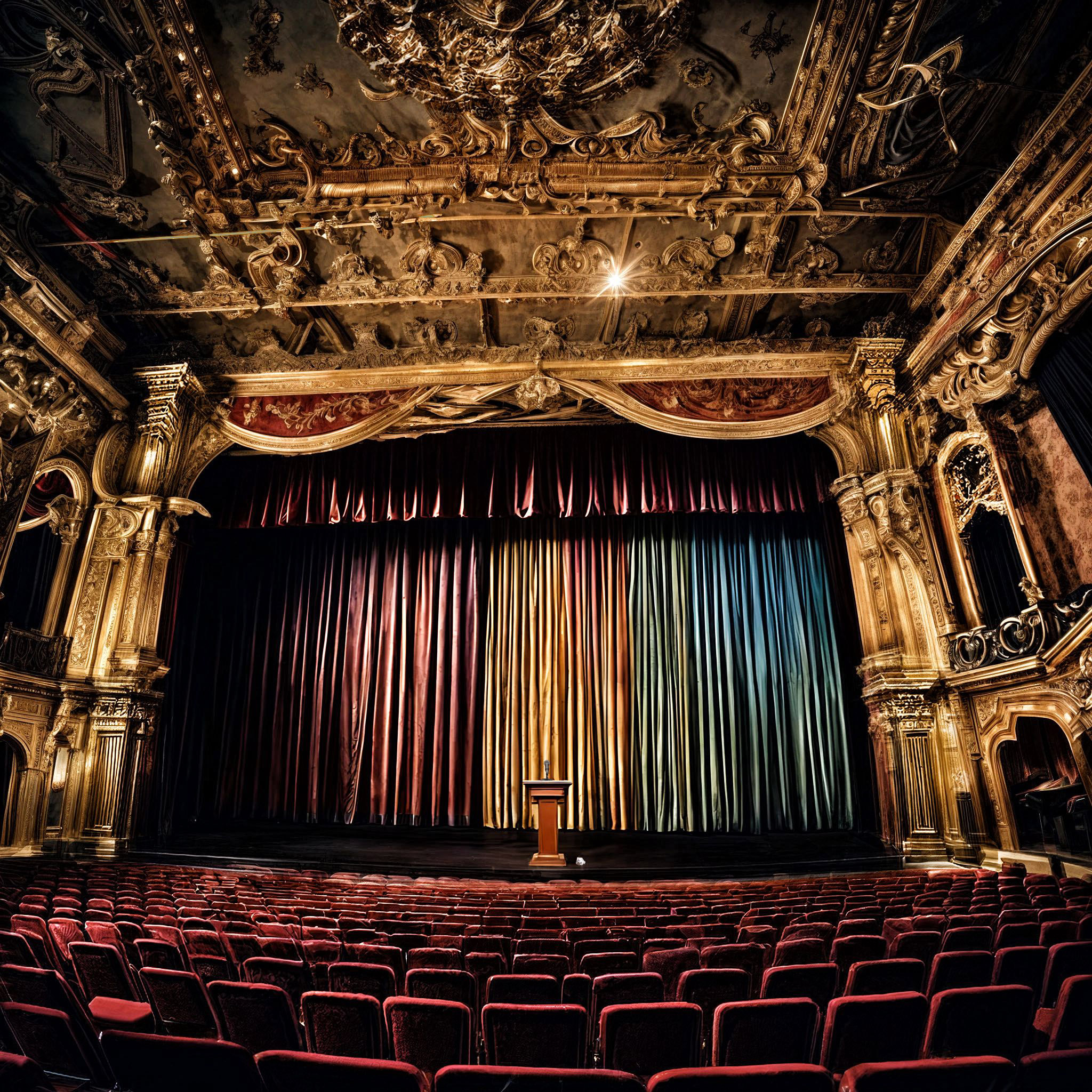
Ich betrete den Korridor. Einen Moment lang bin ich hier allein. Gleich wird mein Name fallen, und ich soll raus auf die Bühne treten. In dem Leih-Frack ist mir unwohl. Mit der Fliege am Revers fühle ich mich wie zum Karneval verkleidet. Ich schwitze in dem ungewohnten Aufzug, und als ich mir über die Stirn wische, sind da auch schon die ersten Schweißperlen. Oh Mann! An meinen Magen darf ich gar nicht denken. In was für eine Situation habe ich mich da nur gebracht?
Dabei – führe ich mir vor Augen – habe ich doch jetzt endlich die Chance, viele Menschen zu erreichen. Aber was soll meine Botschaft sein? Wie kann ich etwas bewirken, nicht nur in der Presse und der Blogosphäre, sondern ganz handfest in der Welt?
Meine schweißfeuchten Finger umklammern den Zettel in der Fracktasche mit den Notizen für meine Dankesrede. Dies ist die eine von zwei Versionen, die offizielle, die ich mit den Veranstaltern absprechen musste. Die andere, inoffizielle, geheime, existiert nur in meinem Kopf: eine Kampfansage ans Establishment, ein flammender Aufruf gegen die allgegenwärtige Profitgier und die gedanken- und gnadenlose Plünderung unserer Ressourcen – der literarischen und mythologischen, die unseren Kindern eine leere und lebensfeindliche Welt aus lauter Worthülsen hinterlassen wird.
Vom Saal her dringt gedämpft Applaus zu mir. Gleich ist es soweit. Ich zerknülle den Zettel in meiner Fracktasche und innerlich den mit den Notizen für meine Revolutionsrede. Ich werde da rausgehen, den Korridor verlassen und die Bühne betreten, um dann einfach das zu sagen, was mir einfällt – indem ich mit dem Satz anfange, den vermutlich alle von mir erwarten, ob sie’s wissen oder nicht, und dann improvisiere, wie ich es immer tue, immer schon getan habe.