I enter the corridor where the antiquarian stores his unsaleable artifacts. He acts as if it’s a great honor to be led back here. With flowery language, he describes what he supposedly will never find a buyer for, but also cannot bring himself to simply throw away:
An elixir of immortality that doesn’t prevent aging. (Might be something for one’s worst enemy—or perhaps a wife, if one wants to be sure of being well cared for in old age, the antiquarian says with a knowing smile. I wave him off.)
A cloak of invisibility that only makes the wearer invisible from the knees up. (Could be useful in tall grass, the antiquarian muses. I wave him off.)
A flying carpet that literally only moves at a snail’s pace. (Then again, it only rises a few inches off the ground, at most, the antiquarian remarks, pursing his lips. I wave him off.)
A magic key that, while unable to open doors, can lock them forever. (He should perhaps inquire with the nuclear industry, the antiquarian says, feigning thoughtfulness as if the idea had just occurred to him. I wave him off.)
A vial of truth serum that has the side effect of revealing the truth in painstaking, minute detail, causing the victim to get hopelessly lost in the specifics without ever reaching the point. (Sometimes he has the impression the brew is being used on certain TV talk shows, the antiquarian says with a strained laugh. I wave him off.)
The Ark of the Covenant, which is actually a quantum-mechanical radio for calling God. (The biblical Jehovah, that is, the antiquarian explains jovially, adding that He hasn’t picked up the phone in quite some time. He smiles slyly: “no answering machine.” I wave him off.)
A love potion that causes whoever drinks it to fall into an immortal love with themselves. (Which, for many disillusioned by love, the antiquarian says, glancing sideways at me, actually sounds like the perfect, sustainable solution. I wave him off.)
A book that, when opened, writes itself in that very moment. (But it only ever contains short, muddled stories about someone entering hallways or corridors or something—no, it always says “colonnades”—in any case, nobody can make heads or tails of the scribbles, the antiquarian grumbles sullenly. I ask how much he wants for it.)
I enter the corridor and immediately jot it down in my journal: “I enter the corridor.” Since I started using a tablet instead of a notebook and pen, I can record what I do and experience—how I spend my day—much more directly and in real-time. I can also share everything important as a tweet right away. Before going to sleep, I can retrace my daily routine on my Twitter account, divided into small fragments.
What did I come in here for? Oh, right, I’m looking for the tablet’s charging cable. It says so right here: “I’ve misplaced the tablet charger. Maybe it’s in the kitchen.” I can’t find it anywhere in the kitchen. “But in the kitchen, I can’t find it…” But now the tablet makes a strange electronic noise, dropping in pitch, like a disappointed “Oohch.” I’d love to note and tweet that, since I’m hearing it for the first time and it obviously needs to be documented, but now the thing won’t accept input on the virtual keyboard; instead, it saves the text as a last-resort emergency measure and shuts down.
What now?! How am I supposed to write this down? In the kitchen, there’s a roll of paper towels, and in a drawer, I find a pen next to some tealights. I need to record all of this! But the pen won’t write on the paper towel. I lick it, shake it, the whole nine yards, but it just won’t work. All of this is at risk of being lost because I can’t write it down. My eyes fall on the cutting board. Could I carve something into it with a knife? At least some keywords? So much has happened already. Prepping paper towels, licking the pen, considering the cutting board… How am I supposed to remember all of this? And on top of that, trying to memorize the act of memorizing! I need to find that cable; that much is clear. All my thoughts, the excitement, my actions—just when things are finally getting dramatic and life is really popping off, I can’t write it down, let alone tweet it!
I finally discover the charger while searching for a pen and paper in the bedroom, plugged into the outlet by the nightstand. With fingers already trembling slightly, I plug it in, and the tablet comes back to life.
I type as fast as I can to catch up with my life again.
I enter the corridor between the cells. A great honor! How I have asked, begged, and prayed to have the chance of speaking with the old master poets, to seek their advice, to benefit from their wisdom! Finally, after lengthy negotiations, I am granted admission to the Akasha Palace. Here, not only are their timeless works are safeguarded, but also their personalities from that time remain in perpetual protective custody. Nothing fades, not even the spirit of our ancestors who stand ready to answer us—if we can find the way to them.
I have been allowed into the corridor of poets—there isn’t one for short prose writers—and for those who weren’t confined to poetry alone, their cells are said to open onto other corridors: tragedies, epic poems, comedies, choral odes, astrological treatises…
But this is just a speculation, not a certainty. The keepers here aren’t very forthcoming. In any case, it seems that the criterion for admission to the inmates is the kiss of a muse. Here, perhaps, it was Euterpe’s. I read names on the nameplates on the doors, names like Milton, Dante, Bolo, Orpheus, Neidhart, Brant, Shiki, Bukowski, Vergil, Yeats, Tyrtaios, Tao Yuanming, and many others I have never heard of. Euterpe was diligent. Or was it Erato?
Who should I ask here? I don’t have much time. I am allowed to ask one of the poets behind the heavy wooden doors a question. For years, decades, I have been able to contemplate this one question. I know it inside and out. It is the question, the key to the answer behind all answers.
The guard already looks impatient. From Bukowski’s cell, a howl seems to come, but maybe it’s the wind of time trapped in these endless, twisting corridors. My gaze falls on the nameplate Rumi. Yes! He will be the one! He will know the answer and gladly tell me. Internally, I rejoice as I slide the small wooden panel in the door to the side. Yes, who could give me better information than the Persian master poet and visionary of mystical love and spiritual ecstasy!
“Jalaluddin?” I call into the darkness of his cell. Dimly, I see a man wearing a turbaned dervish cap, spinning in place with outstretched arms. He radiates an infinite serenity, beyond all description, and at the same time, an unspeakable joy shimmers out from him in spirals, piercing deep into my heart.
don’t know if I stood there for a single breath or an eternity. The hand of the guard pushes the small wooden hatch to Rumi’s cell shut. He guides me back. When I finally stand outside again and the guard has closed the gates of the palace behind me, I begin to spin, slowly on my axis, with outstretched arms.
I enter the corridor, which was once an air duct, to reach the multi-story shopping district we built inside Tai He Dian, the Hall of Supreme Harmony. Here, spread across many levels, millions of us live. The young people in these streets and on the curved bridges regard me with a certain reverence: an old man. They may suspect that I am a relic, belonging to the very first generation of New Chinese, the pioneers of the Great Reconstruction. The idea that the Forbidden City could accommodate nearly three billion of us moved into the realm of technical feasibility back then; indeed, I was one of the scientists who proposed to the National People’s Congress that we shrink our people to conserve our continent’s resources and allow our nation a long, happy future of prosperity.
Although we completed the New China project with great gravity and meticulous care, I am no longer certain today if that large-scale miniaturization was a good idea. While we—now measuring only a thirtieth of our original size—consume barely a hundredth of our previous resources, our plan to set a noble example for the other nations of the world has failed. With the most honorable intentions, we have turned the giant empire of China into a kingdom of dwarves. Quite apart from the rat problem we have here in the Forbidden City—which, though hushed up, persists despite the protection of our 13,844 ancient carved dragons—not only did no other country wish to join our Common March to True Greatness, but we are no longer respected or taken seriously. In the eyes of the world, we Chinese have shrunk to an insignificant and, at best, cute curiosity.
I enter the corridor with the amphibians. My father has thought of everything—even providing tanks for the creatures that spend part of their lives in water but wouldn’t survive the Great Flood. The cages are small, but there has to be room for everyone. Despite the constant drumming of rain on the wooden deck above, I can hear the lions in the big cat corridor. They have been hungry for days. My father hadn’t accounted for that. Yesterday, we discussed which animals we should feed to our carnivores. It’s a difficult decision because no matter what we choose, those animals will be extinct after the flood.
I defended the cute rabbits, the lively squirrels, the adorable goats, and even the naked mole rats tooth and nail. Let Dad take the ugly Nasobames. They smell horrible and are of no use to anyone. He seemed to agree, but I suspect he’s going to start with the unicorns after all. He’s had it in for them ever since the mare, right in the middle of a feeding, gouged out his left eye.
I enter the corridor, followed by my squad. An infernal heat blasts us; the corridor is a single sea of flames. Well, the treasure of all treasures may be well-guarded, but I’ve brought help. My two fire salamanders step forward. They salute and venture into the blazing hell to reach the opposite side, where they shut off the fuel to the flamethrowers. The path is clear. We march on between walls that are soot-blackened and still glowing hot.
The next portal and the passage beyond are completely filled with earth—this is a job for my mole brigade. They don their helmets and get to work. A short while later, we are able to pass.
We come across a staircase leading down, flooded with water. I’ve thought of that, too. Of course, the most elemental of all treasures—one that has eluded grave robbers for millennia—isn’t going to make it easy for us. The swamp turtles start their march and dive down the steps. They must find the drain quickly, because suddenly the water level drops. A final watery belch echoes through the stairwell, and we are able to descend, though the steps are still quite slick and we have to be careful not to take a spill.
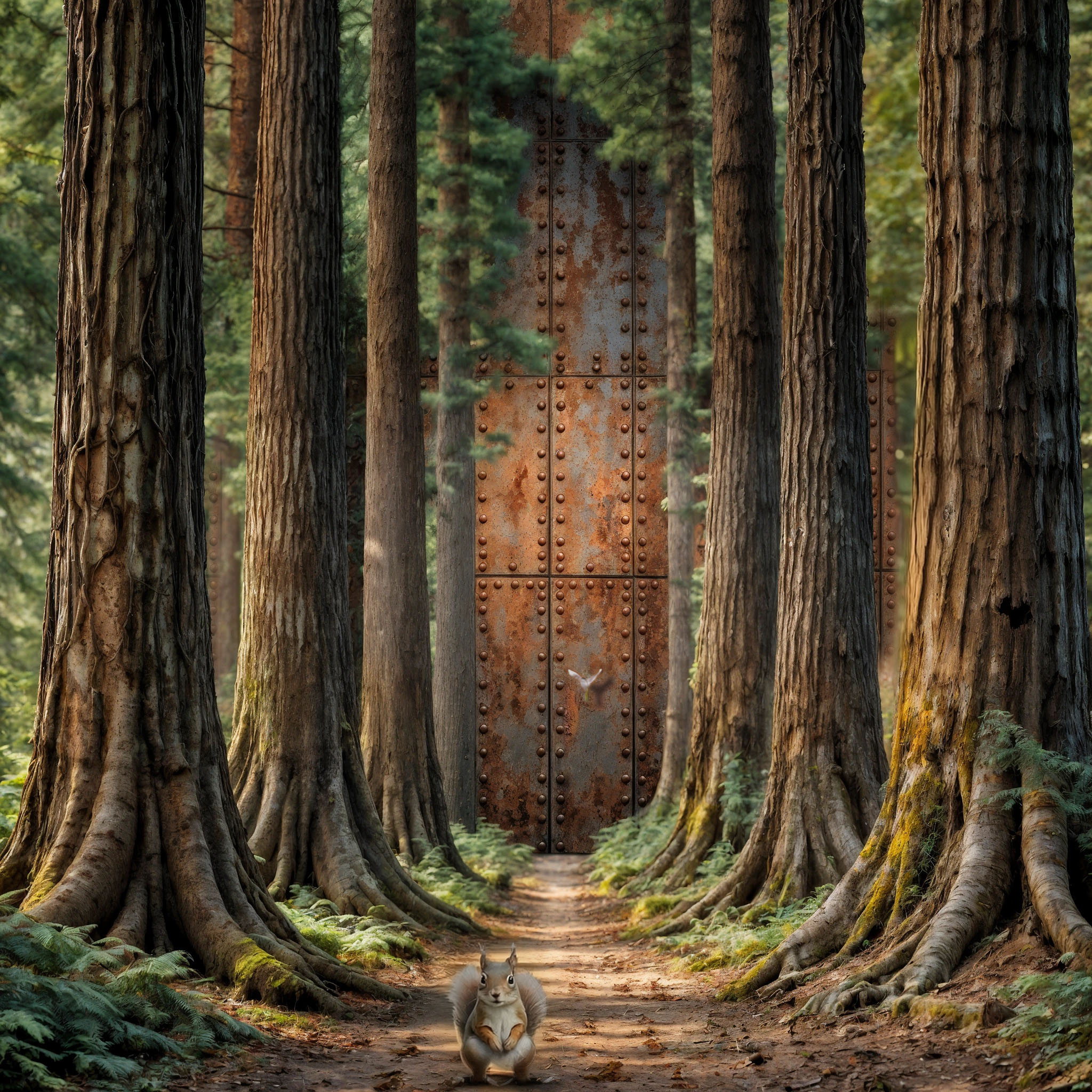
In the next corridor, giant redwoods grow so close together that there is no getting through. I can’t even wedge my hand between the trunks. Wood? I was expecting air. Or Aristotelian ether. But wood? The termites diligently set to work. Yet, even though they give it their all, they don’t make much progress. It takes days for them to process the trees into sawdust. The morale of the troop sinks. Some no longer believe in our success and turn back, despite my impassioned appeals not to give up. Now, only a fraction of those who set out with me remain.
The last corridor—for according to ancient lore, there can be no more than five—is filled once again. But not with air or ether; this time, it is metal. The portal opens onto solid iron, perhaps poured into the corridor in liquid form and allowed to cool. Those of us left look at one another. This caught us all off guard. I cast a desperate glance at our motley crew. None of us is a match for this material.
A chirp. I look up. A small bird flies in, paying us no mind. For a moment, it hovers, fluttering before the massive iron wall, briefly whets its beak against it, and flies off again. At the spot where it—for the umpteenth time, probably—sharpened its beak, the squirrel spots a tiny indentation in the metal and alerts us with a squeak.
So, there is some truth to this legend as well. But now, even my last loyal followers throw in the towel and turn back—evidently not blessed with the patience and persistence of a little bird from Pomerania that pecks at the iron once every hundred years. Only I, the last of the treasure hunters, sit down before the bare metal with my arms crossed. I’ve come this far. The prospect of waiting doesn’t daunt me anymore, even if it might take a little while.
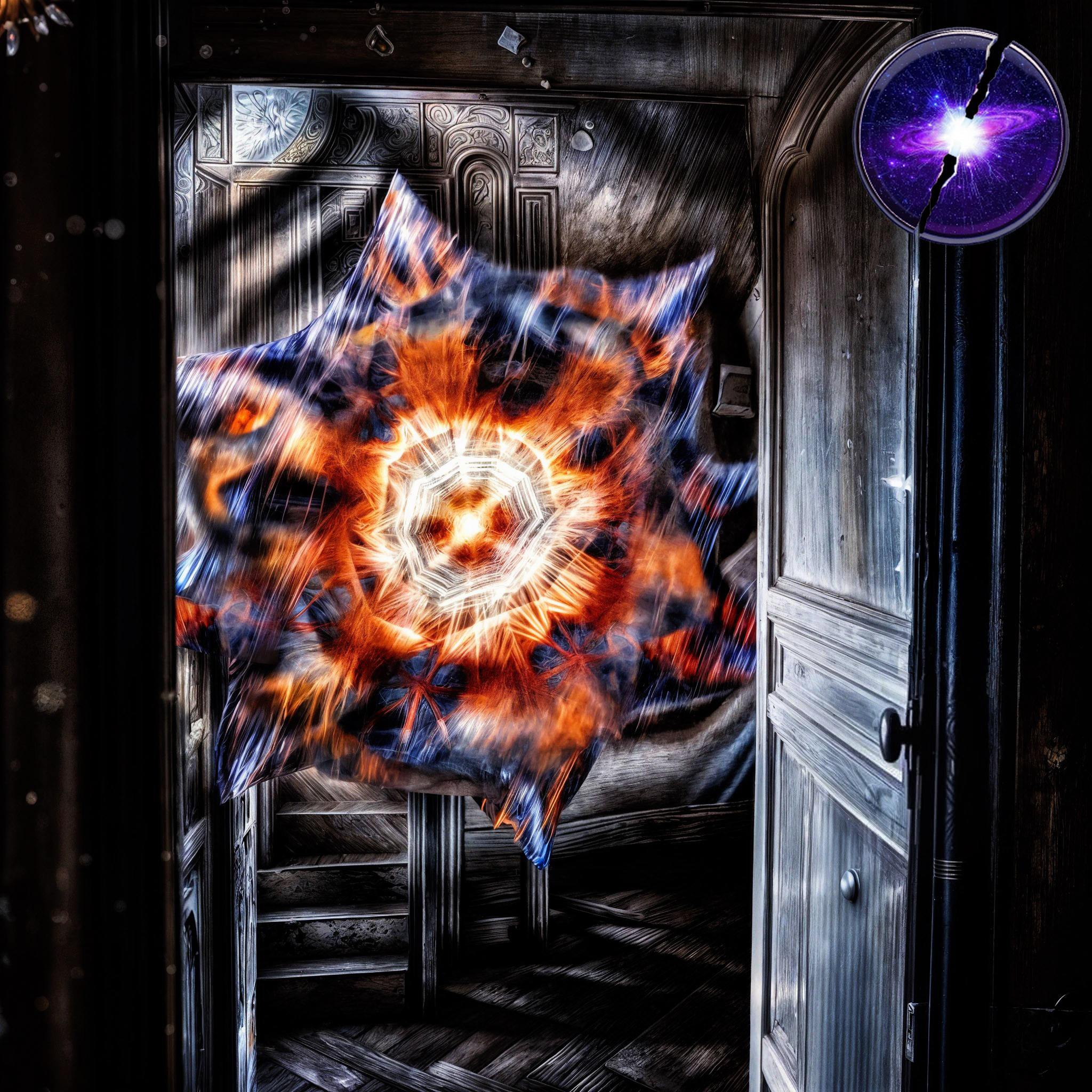
I enter the corridor because I heard a strange noise. At eye level, a blinding light flashes at the front door—two, three times. Is someone welding it from the outside? It flashes glaringly again, three times, like a knock, but utterly silent. Without a second thought, though I’m standing there only in my pajamas, I rip the door open.
In the shadows of the entryway stands—something. Or rather: it hovers. It looks like a three-dimensional kaleidoscope whose luminous shards constantly migrate inward, until they suddenly shift direction and flow outward from the center like molten iron.
The voice is very soft and gentle, and it feels like I’m hearing a familiar, beloved lullaby. It says, “You caused a spiral arm of the galaxy to vaporize.”
I stare at the apparition. Words fail me. I want to run away, hide, or just faint. But it’s as though my thoughts no longer find resonance within my body—no anchor to trigger a physical act. I remain stone-still before this thing.
“You built a machine,” says the voice.
A machine? Yes, there was something. But it wasn’t me. Just a dream. For weeks, I’ve been waking up at the exact same time in the middle of the night, at 2:22 a.m., and I always remember a vivid dream in which I’m some sort of engineer, obsessively building an incredibly complex machine—it fills nearly the entire warehouse I rented, using powerful Hadron lasers and a kind of miniaturized fusion reactor to manipulate gravity and rupture the space-time continuum. Dream by dream, I completed my work, even though I secretly knew the device could have uncontrollable side effects. Until last night, when I finally activated the finished machine. I can’t say what it did because the moment it started running and revved up, I woke up. That was yesterday. It was 2:22 a.m.
Even now, in the middle of the night, it could be 2:22 a.m. But this is not a dream.
“You built a machine,” the voice repeats, as I’m hypnotized by the slow flow of liquid metal and a sense that the being with its gentle singsong is about to tell me something terrible.
“Your machine pierced the dimensions of the world, shattered your planet, and dragged many, many stars and planets in the vicinity into destruction.”
“But that’s nonsense! The Earth didn’t perish just because I dreamt something!”
The kaleidoscope pattern changes, but I can’t say how. The voice now seems more stern. It says, “The world in your dream was real. As real as this one. We had hoped you would decide not to activate the machine at the last moment, but to destroy it.”
“I had no idea what it would do!” Really? No, I did. In the dream, I knew very well the risk I was taking. I just kept pushing it away.
“Many civilizations had to die,” says the voice.
Because of me? Am I supposed to be guilty? “What about you?” I ask, “You’re alive, I assume.”
“A few, like me, were hurled through perforated dimensions into parallel worlds.”
Parallel worlds: In the dream, I repeatedly suppressed the fear that my ingeniously devised machine—intended to tap into vacuum fluctuations for unlimited free energy—might unravel the fabric of time and space. And now, an entity stands before me, thrown into my world through a dimensional rift—perhaps the last survivor of an entire planetary civilization that I have on my conscience. Slowly, the staggering weight of what the entity is telling me begins to sink in.
“If you knew about it, why didn’t you prevent it?” I ask in a hoarse voice.
“You have to do that yourself,” answers the liquid kaleidoscope hovering before me in the entryway.
“How?” I ask, bewildered.
The being slowly floats upwards and fades away. It has delivered its message and now retraces its path—wherever the destination may be. “How should I do it?” I call out.
The being vanishes. I hear no more answers, but in my mind, a thought forms, saying, “Dream a new world into being.”
A profound despair seizes me. It wasn’t me! I scream internally. It was that deluded engineer!
But the being is right: I was the man in the dreams, the one who decided to take the risk. I have the deaths of humanity and a multitude of other civilizations on my conscience; I have, with my obsession and greed for fame, led billions of people to their deaths, and a substantial chunk of our Milky Way along with them. I want to push it away, deny it, blame someone else. But although they were just dreams, deep inside, I know that my visitor is correct in his accusation. I was that obsessed engineer who disregarded all the ominous premonitions and set the machine in motion.
As I close the front door, my hand trembles. I must prevent it! I think, and at the same time, I laugh bitterly: How can I prevent something that has already happened?
But couldn’t a space-time fabric that includes parallel worlds also include the possibility of turning back time? Did the kaleidoscope being perhaps speak of this when it said, “You have to do it yourself”?
If it’s true—if it’s true that through my fault, humanity and a handful of other civilizations were destroyed—then I will thwart this dreadful act at any cost! Numbers, equations, and circuits race through my mind. The long nights as an engineer have paid off. Slowly, an image solidifies in my mind: a device, a time-and-world machine with a single purpose, meant for one-time use. It will be a kind of ark. But I won’t fill it with animals or people: It will transport me to a place and time that will allow me to prevent myself from punching holes in the cosmic fabric. I will undo it, thoroughly and physically! It must be possible.
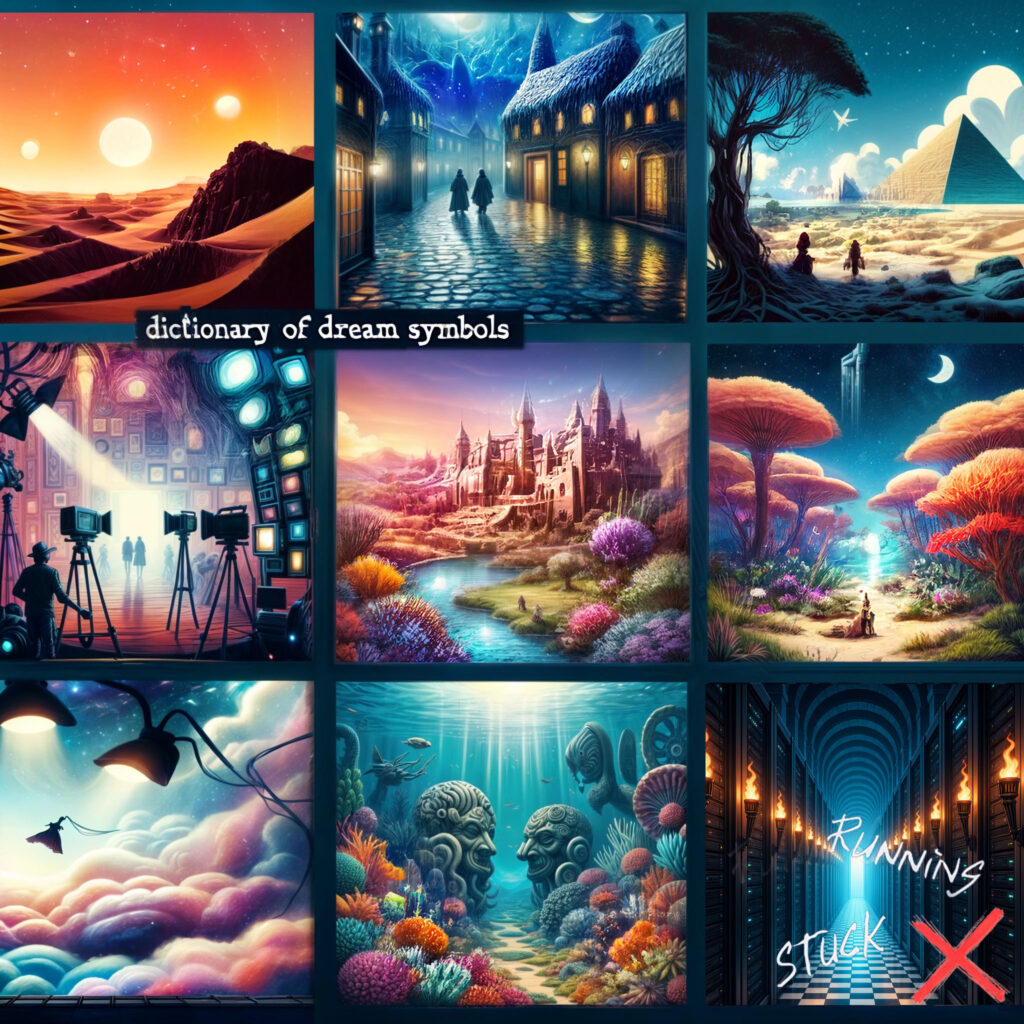
“I enter the corridor,” you write, dear S., “and although I run with all my might, I never reach the other end, though I long for it so much. What is this meant to tell me?”
Dear S., we all know such dreams in which an unknown force prevents us from reaching our goals. A corridor could represent our life path, the side doors or passageways symbolize possible or already missed opportunities, and the desired end of the corridor might signify our greatest wish, our “golden dream” that guides us through life.
But do we ever reach it?
A corridor in a dream without doors could mean that external circumstances or other people are forcing you to follow a certain path, leaving you with no alternatives.
A corridor with many doors that are locked might convey the message to you: Stay focused on your current path and do not deviate from it.
And a corridor where you simply can’t seem to make progress might symbolize a period in your life where everything feels stagnant.
Your dream, dear S., seems to be saying to you: No matter how hard you try, you will never reach your goal.
So, is it hopeless for you? Is your dream self telling you to finally give up because you don’t stand a chance? I think not. On the contrary, I believe that your dream self is trying to show you a way to achieve your goals even despite all your futile efforts.
You try to run. But perhaps your dream corridor gets longer and longer the faster you run. Or it’s like in Lewis Carroll’s Alice Through the Looking Glass:
“‘Well, in our country,’ said Alice, still panting a little, ‘you generally get somewhere else if you run very fast for a long time as we have been doing.’ ‘A slow sort of country!’ said the Queen. ‘Now, here, you see, it takes all the running you can do, to keep in the same place. If you want to get somewhere else, you must run at least twice as fast as that!'”
So, running twice as fast? That would be bad advice. Your dream seems to signal to me: Pause; take a break; linger for a while.
Dreams are full of magic: Perhaps your dream corridor will shorten, and the other end will come within reach, so that you only need to stroll leisurely, or perhaps even take a single small step!
It’s worth a try—in both life and dreams, isn’t it?
In any case, thank you very much, dear S., for your question. Similar dream experiences affect many people, and often the interpretation and solution is similar to yours. Keep us updated, and write again if a shift in mindset leads to new and completely different dream experiences.
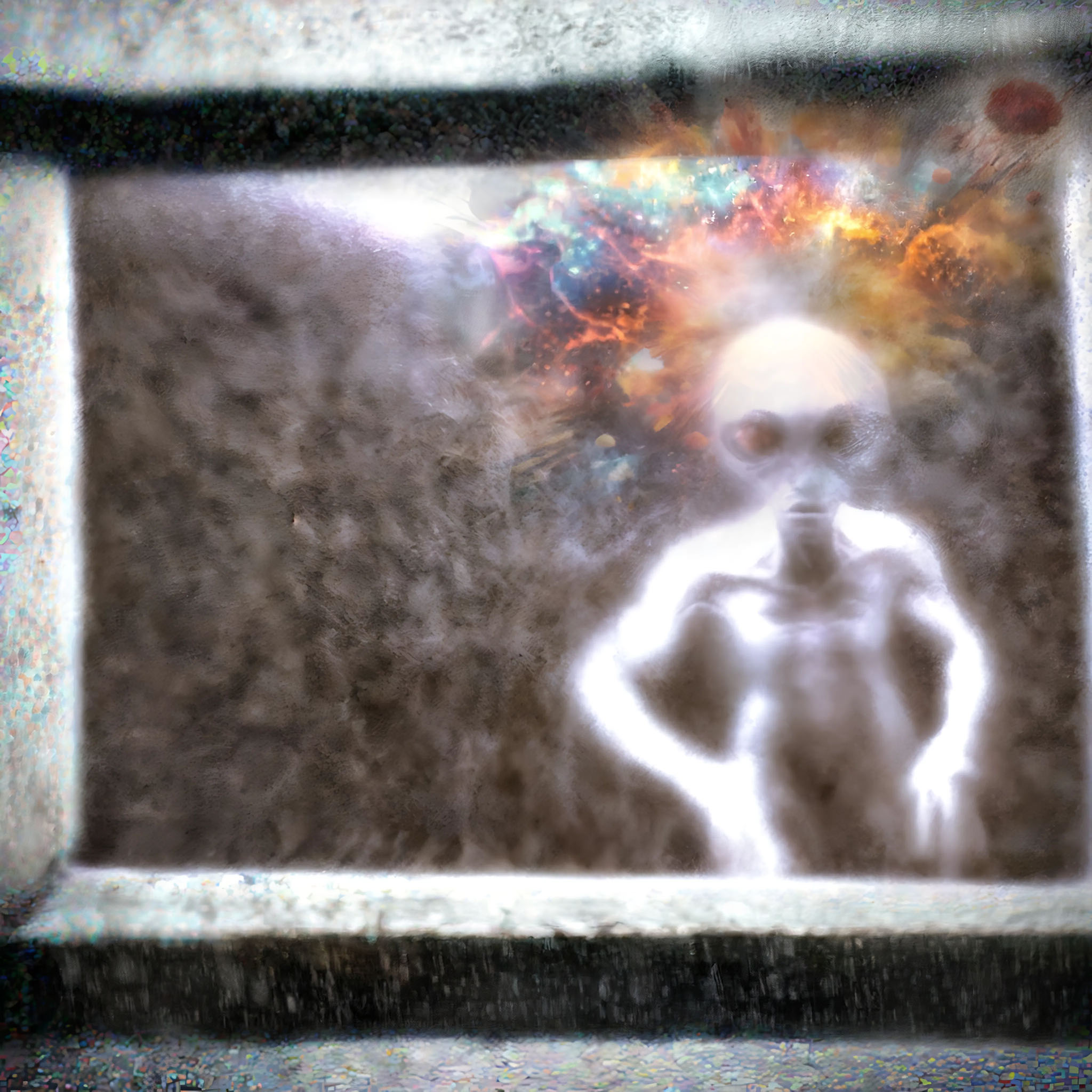
I enter the corridor where, behind a massive glass pane at the end, the one who summoned me is supposed to be. I’ve been x-rayed, scanned, patted down, had blood drawn, and was interrogated for hours. They’ve archived a cotton swab with my DNA, and my fingerprints. Now that the security checks are behind me, our encounter is imminent. The limited information they gave me suggests that only one of the original five extraterrestrials the US military picked up in the last seventy years remains. And he specifically requested me!
Why the intelligence agency honored the alien’s request is beyond my understanding. Probably a deal. Secret, of course. It can’t have been easy to track me down. The officer who just briefed me treated me with cold disdain. “They communicate telepathically with the scientists,” he said. “Most can’t handle it and go crazy, despite years of training to prepare them for something utterly foreign invading and tampering with their minds.” But if he really asked for me, it probably wasn’t to turn me into a case for the loony bin. I hope.
As far as I can make out in the twilight behind the glass, he is small and wrinkled like E.T. Before I consciously register any details, an explosion in my head hurls me to the ground. While I lie there, twitching helplessly, the detonation turns into massive, glowing symbols that mercilessly sear themselves in all areas of my brain like branding irons. It’s not a voice but a cosmic thunder that tells me to write something down, a message for the world, an unprecedented manifesto, a beacon, and it should begin with… I lose consciousness.
I wake up at home in my bathtub, with a five-day beard, a pounding headache, and nothing but my memories of the security procedures and the telepathic bomb in my head. I’m missing a few days, and even the leap day this year can’t make up for them. The intelligence agency probably planned it that way from the start: I have no evidence in my hands, and no one will believe my tall tale of being abducted, let alone who I faced in a secret military base in southern Nevada.
But that doesn’t really matter.
I try to write down the message, over and over again. Should it really start like this, with this sentence? Did I truly understand it correctly? My mind is probably too weak and fragmented to capture the manifesto’s full significance and world-altering impact on paper. Nevertheless, even if I might be the wrong person picked up by the intelligence agency, or if he overestimated me, it’s the only chance. Again and again, I start anew.