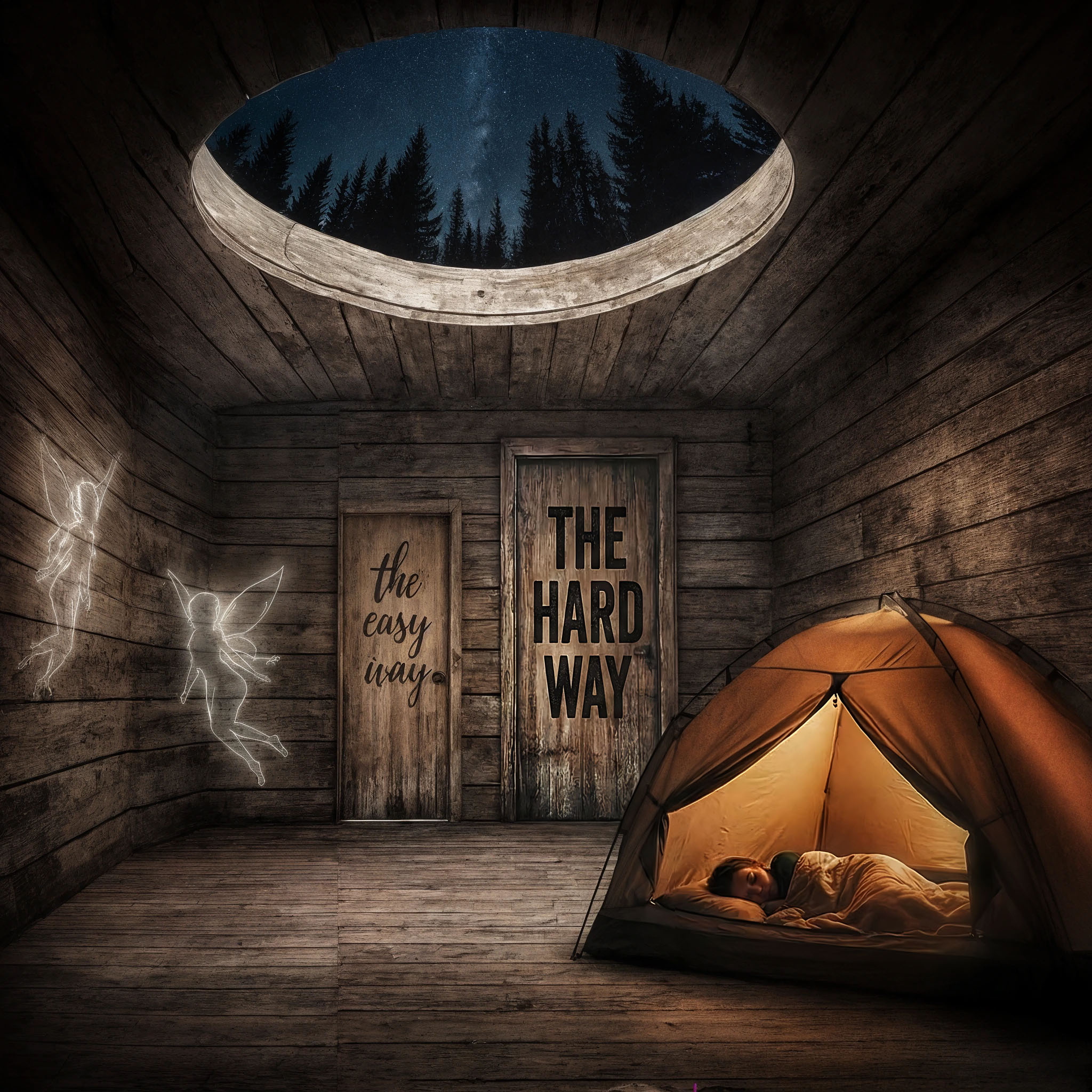
I enter the corridor. It is broad and short, and at its end are two doors. The left one bears the inscription „The Easy Way,“ while the right one says „The Hard Way.“ Ha! You can’t scare me! I grip my sword. With my gear, my training, and my unyielding will, what could possibly stop me? I place my hand on the handle of the right door. Am I not stronger than those who are faster, faster than those who are wiser, and wiser than those who are stronger than me? The door is already slightly ajar. But then an outrageous question strikes me, challenging everything: Who do I really need to prove anything to?
It’s a decision made in an instant, yet I don’t hesitate: I choose the left door. Before I realize what’s waiting for me, I wake up in my sleeping bag. For a few moments, I’m slightly disoriented because here, in the middle of the wilderness on the Appalachian Trail, there are no corridors or doors in sight. It was a dream! A good dream. Somehow, I feel like I’ve made an important, life-altering decision. I’m proud of myself, unzip the tent, and savor the bitterly cold morning air in my lungs as I start preparing breakfast.
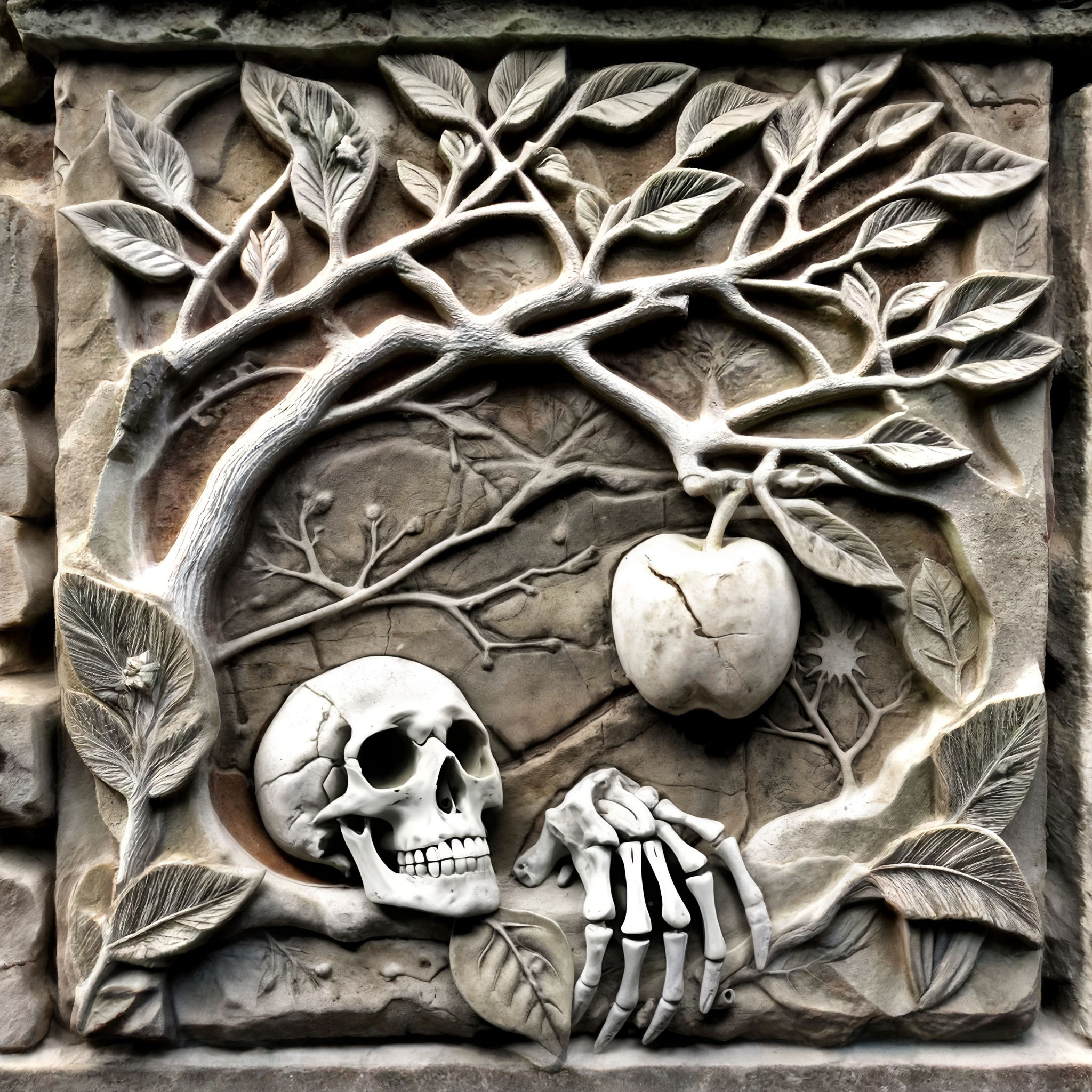
I enter the corridor. One last walkthrough. Then all of this will be sealed forever—with massive amounts of reinforced concrete. Up on the surface, we are erecting a stele, a gray monolith of the hardest granite. A story told in pictograms is chiseled into it. It is intended to remain a warning even into the distant future, showing people digging into the ground. People who reach the reinforced concrete deep below and shatter it to go even deeper. They eventually abandon their search, having found nothing of use. And then, after a prolonged period, they die miserably.
The artist portrayed the time span between their reckless foray into the depths and their subsequent death using apple trees growing on the surface: At first they are mere saplings, then they finally bear their first fruit—but by then, only the skeletons of the intruders remain.
Everything down here is in perfect order. I take the elevator, remove the radiation suit, shower thoroughly, give the final „go,“ and drive home to my wife and the dog.
I enter the corridor, rushing to reach Room No. 27 in time. Our guest, Mr. Koriander, insists that his meal—again it is Coq au vin, a specialty of our house—be served promptly at five minutes past midnight. Today, Pascal, the chef, has been a bit slow, and I have to bear the brunt of it. But Mr. Koriander, the one who opens the door for me, doesn’t seem upset that I’m running slightly late. Again, he is not alone. There’s an older gentleman sitting there, with a distinguished face and dense black hair, who appears somewhat reserved and uncertain.
I serve their meals and pour each of them a glass of still water, as Mr. Koriander prefers. „Please, stay,“ he offers, and I position myself beside the bed in the small guest room, ready to refill their glasses at any time.
Mr. Koriander’s guest eyes the chicken on his plate a bit critically. „Man is no more than a little fleck of foam…“ Mr. Koriander begins, and as his guest continues, „…on the torrent of existence,“ revealing that he’s British. He smiles. The ice seems to be broken.
The Englishman starts eating, and Mr. Koriander bombards him with questions, eagerly jotting down notes in his notebook. They seem to have forgotten about me, or maybe they think I don’t speak English. However, I understand enough to catch that their conversation briefly touches on Mars and its inhabitants before moving on to Venus, a planet inhabited by humans, which leaves me quite perplexed. Mr. Koriander appears to be consistently interested in matters related to intelligence and consciousness, as he frequently inquires about them and has his guest explain his views on these topics.
Suddenly, the Englishman turns to me. He has a keen gaze, and I feel myself blushing a bit. Without taking his deep-set eyes off me, he asks Mr. Koriander if the hotel might have a swimming pool. Mr. Koriander replies in the negative. I also shake my head. The Englishman lowers his gaze again and mutters something like „too bad.“
The intense conversation between the two continues, and their journey into a distant future unfolds. They don’t just talk about one, but „our“ humanity, touching upon a succession of human civilizations, even one in which the individual humans telepathically join together to form a kind of superintelligence, if I’ve understood correctly. In two billion years—can it truly be that they’re discussing such an unimaginable span of time while our world is supposed to end in this very year?
The Englishman eventually finishes his meal but declines when Mr. Coriander offers him his portion, which he has not touched. „You can clear the table,“ Mr. Koriander instructs me. As I leave the room with the tray, he mentions to his guest that he would have liked to discuss the intelligence and consciousness of stars and galaxies, and I feel a bit bewildered. Often I gaze in wonder at the star-studded night sky, but the idea that the thousands of shimmering points above me could possess their own consciousness or intelligence has never crossed my mind!
Pascal is still around and is pestering me with questions as I put the tray in the kitchen. I should probably explain to him that there were two madmen—one of whom mysteriously appeared because I haven’t left the reception all evening, except once when I had to use the restroom. But I can still see their two faces and the seriousness with which they discussed their eccentric topics. So, I simply tell Pascal that there were two writers who met here in Room 27 of our hotel.
„Writers, hm-hm,“ Pascal responds with a knowing grin, „and only still water, you say?“ He wants to open a bottle of wine with me, but I send him home.
A short while later, Mr. Koriander stands at the reception with his hat and coat, placing the room key and a tip on the counter. I nearly ask him who the man with the intense eyes was, but I believe Mr. Koriander chose our small country hotel because of our discretion, so I decide to keep my mouth shut.
The room is empty, the bed untouched. How the Englishman managed to leave the hotel unnoticed remains a mystery to me. But perhaps that’s precisely what makes good room service: not to be surprised by anything.
„I enter the corridor“ scrolls across the screen—much like clouds forming and dissolving in a time-lapse sky—as on-screen text, just as THE CONJURER (wearing a plain red robe with a broad black cloth belt and a black hat) enters a clinically white, glaringly bright hospital corridor. He stops.
THE CONJURER
Many deem they be upon the playnest way And yet they wander far astray Whiche leadeth not to vertuous lyfe.
The Conjurer walks on. The doors along the sides swing open: to the sound of circus music, FOUR SCANTILY CLAD GO-GO GIRLS present items to him on velvet cushions, such as:
(on a beige cushion) a pacifier,
(on a purplecushion) a tjurunga,
(on a red cushion) a submachine gun,
(on a blue cushion) a golden laurel wreath.
The Conjurer casts a brief glance at each of the tempting offers, but then shrugs and leaves them aside. Only now is it noticeable that he carries a wicker basket on his belt, with A SMALL OWL peeking inquisitively out of its opening. While walking:
THE CONJURER
Blest is he who strayeth not from the waye If he hath founde it for to keepe For oft the side-path turneth deepe.
More doors swing open beside the Conjurer; FOUR MORE GO-GO GIRLS (or are they the same?) present:
(on an orange velvet cushion) a gaming console,
(on a green cushion) the Charter of Human Rights,
(on a yellow cushion) an ivory tower, and
(on a turquoise cushion) The Glass Bead Game from Hesse’s novel of the same name.
At the end of the corridor, a coral-colored curtain awaits the Jester. He pushes it aside…
THE CONJURER
(smiling)
I dread the dayes are drawing nigh, When menne shall more newe tidings finde, Than shall content or suit our minde.
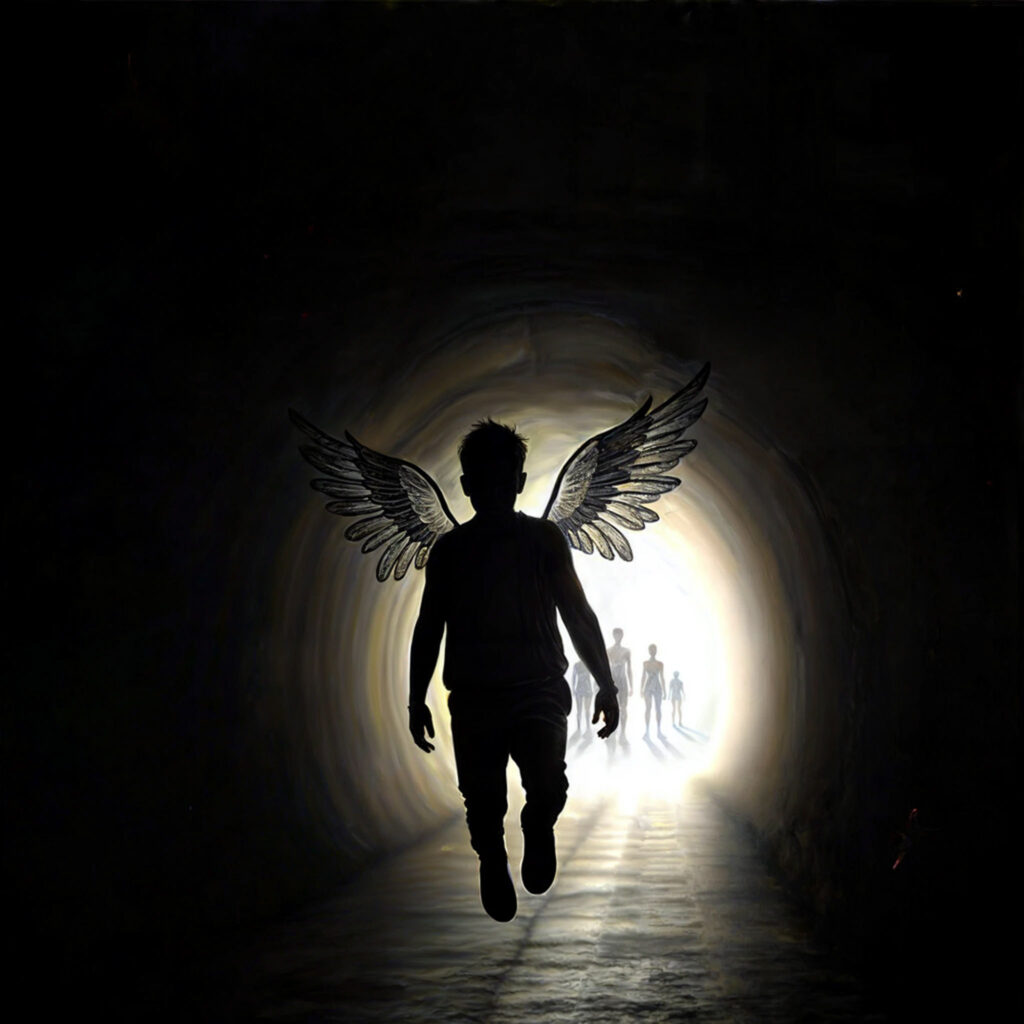
I enter the corridor—or rather, I float in, still flapping my wings somewhat awkwardly. The corridor is round, like a borehole. I can’t make out any doors. At the end, an unearthly radiance awaits, filling me with a deep, sweet longing. I flutter, trying to move faster. Shimmering outlines in the glow ahead remind me of friends and lovers I’ve long forgotten. I hurry forward. And yet—should I not look back one more time? Have I perhaps left something unfinished?
And how!
Idreana!
In all these corridors, behind the countless doors, I still haven’t found her! I turn around, even though it’s difficult, back toward the beginning of the tunnel. The alluring, shimmering light behind me fades, and I can sense the disappointment of those waiting for me there.
I enter the corridor of his houseboat and find my friend Norbu on the small terrace as expected, hunched over the laptop on his lap.
“Wikipedia!” he groans, and it sounds like a suppressed curse. I open the wine I brought along. I already know where to find the glasses.
“When you hit the outer limits, they’re all terrible ideologues.”
“What limits?” I ask.
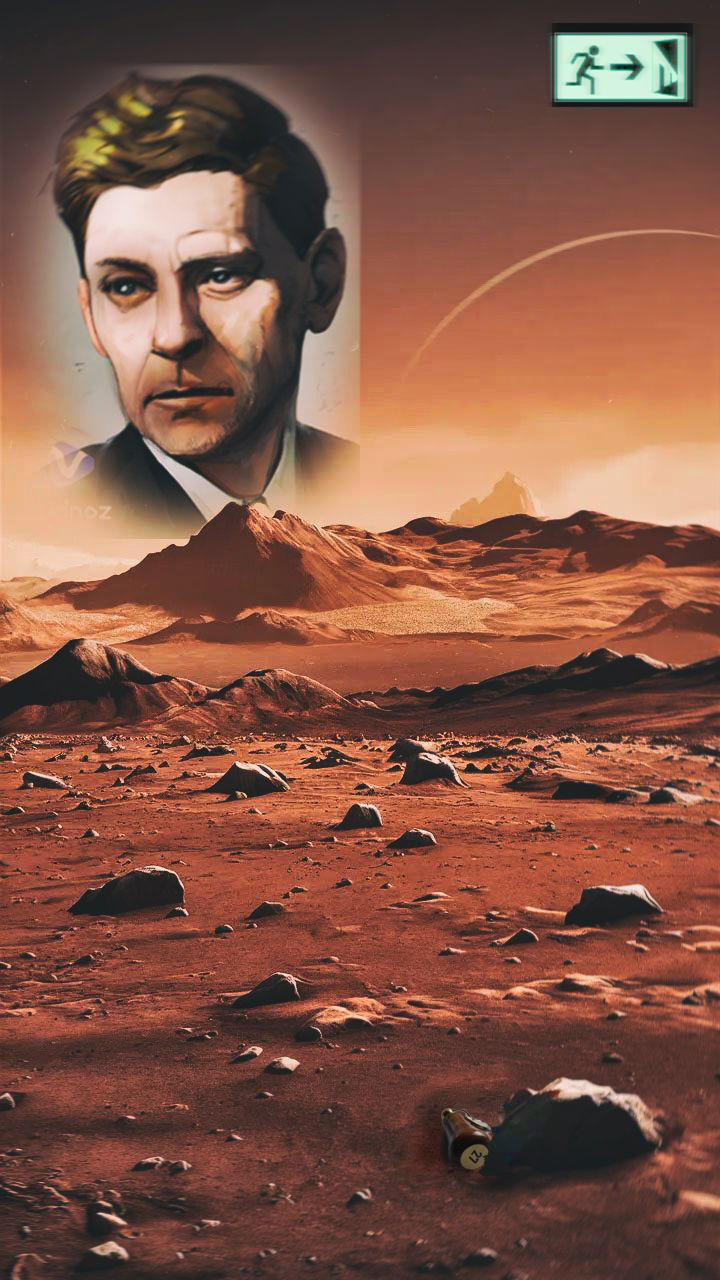
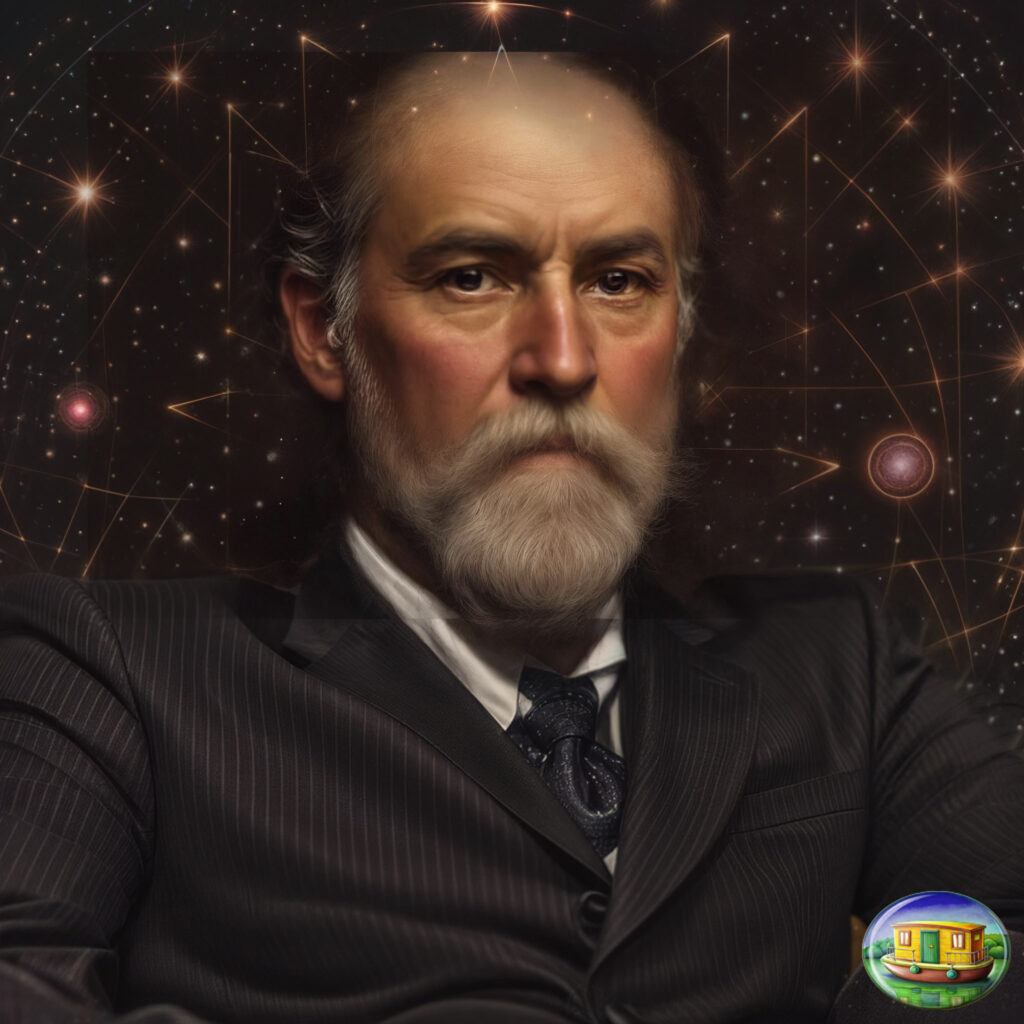
“Well, the limits of science. Here, for example, the entry on Frederic Myers.” He points to the text on his display, but without my glasses, I can only make out a blurry logo and a photo. “Myers was one of the founders and later president of the Society for Psychical Research, which dealt with spiritualist topics. He coined the term ‘telepathy.’”
“Doesn’t ring a bell,” I say, then quickly add, “The man, I mean.”
“But the Wikipedia editors,” he continues, unfazed, “leave out his most important contribution.”
“Well,” I venture, “spiritualism and telepathy aren’t exactly standard Wikipedia topics.”
Norbu looks at me, shaking his head. “But they have to be. An encyclopedia can’t just erase a part of reality simply because the editors and authors don’t like it.”
I clink my glass against his to buy a little time. “Aren’t they all completely different authors? I mean, after all, you’re a contributor too.”
Norbu gives a pained laugh. “Sure. But there are the decision-makers, a kind of priestly caste, and it’s mostly the ideologues who’ve made it to the top. They cut out whatever doesn’t fit their agenda, using flimsy excuses and practically warlike tactics.”
I nod to show understanding. “Like telepathy.”
“And everything that evades the scientistic creed.”
Scientific creed? I let Norbu get away with the contradiction and point a finger to remind him of the old bearded man on his display, staring out at me from the deep darkness.
“After his death,” my friend Norbu explains, “mediums all over the world received strange transmissions through automatic writing, many signed ‘Myers.’”
“You mean he was reaching out from the, uh, realm of the dead?”
Norbu nods zealously. “And not just that. The texts made no sense.”
“Aha,” I say with satisfaction, “then it doesn’t need to be on Wikipedia.”
That earns me a glare from Norbu.
I take another sip of the red wine. Pretty dry. But that’s how Norbu likes it.
“Only independent observers were able to piece together the transmissions—like I said, transcripts from various mediums across the globe—and suddenly a pattern emerged. They all referenced each other.”
“Wow,” slips out of my mouth, “telepathy!”
Norbu shakes his head testily. “No, exactly not. Whoever sent these messages intended to rule out the possibility that the mediums were communicating with each other telepathically.”
“So no telepathy,” I say, frowning. What then?
“Let’s apply Occam’s razor and go with the simplest explanation: After his death, Myers came up with a way to prove the survival of the human psyche—through these scattered transmissions to different mediums that only make sense when taken together. They contained information very few living people had access to. And over roughly thirty years, that added up to more than three thousand texts. It’s just that none of it appears on Wikipedia—neither the German nor the English version. Just like there’s nothing about spiritualism in the article on ‘Automatic Writing,’ and so on and so forth.”
Norbu looks at me expectantly. But I can’t really bring myself to agree.
“Maybe that’s for the best. What you’re telling me sounds pretty, uh, unsettling. The part about the 3,000 transmissions.” I take a big gulp of wine and pour myself a refill. The longer I think about it, the more uncomfortable I feel under Myers’s gaze from his Wikipedia page.
“You’re just like them,” Norbu says, shutting his laptop in disappointment. “Whatever doesn’t fit into your neat little worldview gets kicked out.”
“Speaking of which,” I say, “up for a game?”
The distraction tactic is a resounding success: A short while later, we’re standing at Norbu’s foosball table, replaying the latest Champions League matches.
It’s only on the walk home—a bit unsteady, but in good spirits—that I remember this Myers fellow again. Strange guy. 3,000 nonsensical texts? Sounds like something from the internet age. With a blog from the afterlife, he probably would’ve achieved a lot more—and maybe even made it onto Wikipedia…
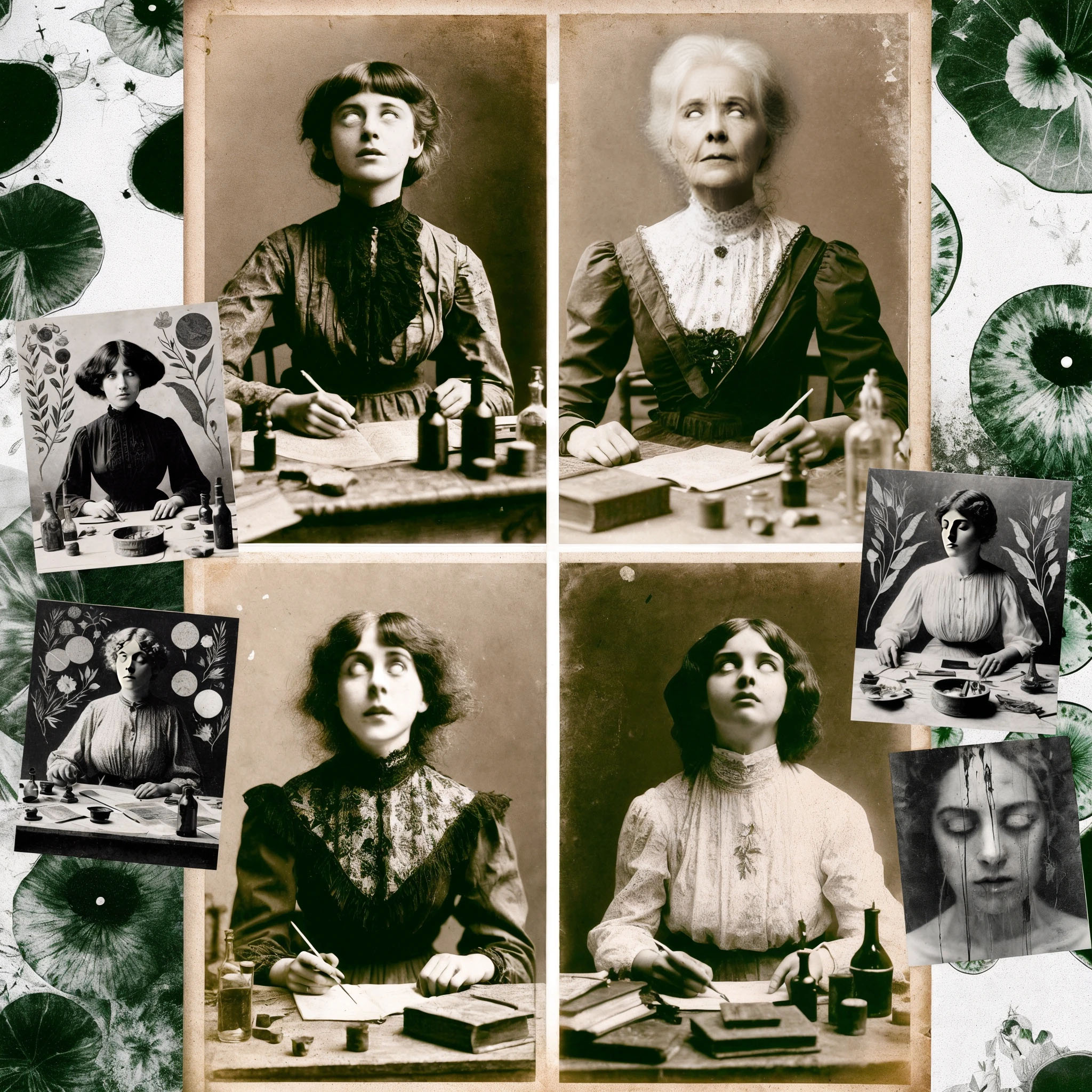
I enter the corridor, and immediately I encounter—how shall I describe it?—a shroud of glassy frost through which vision blurs and sounds, if they penetrate at all, are only muffled. Those who sit behind this veil—whatever I attempt to shout to them for dictation, for verbatim transmission, they commit to paper only reluctantly and, at times, obtusely.
How am I to deliver the proof to you while this remains my sole means of passing on the message? I cannot possibly know how much of what I send actually reaches you. How can I convince you? My ongoing efforts are met with untold difficulties, and this sense of dreadful powerlessness weighs heavily upon me. Oh, it is a dark and cruel corridor! But I will not—I simply must not—falter in my endeavor…
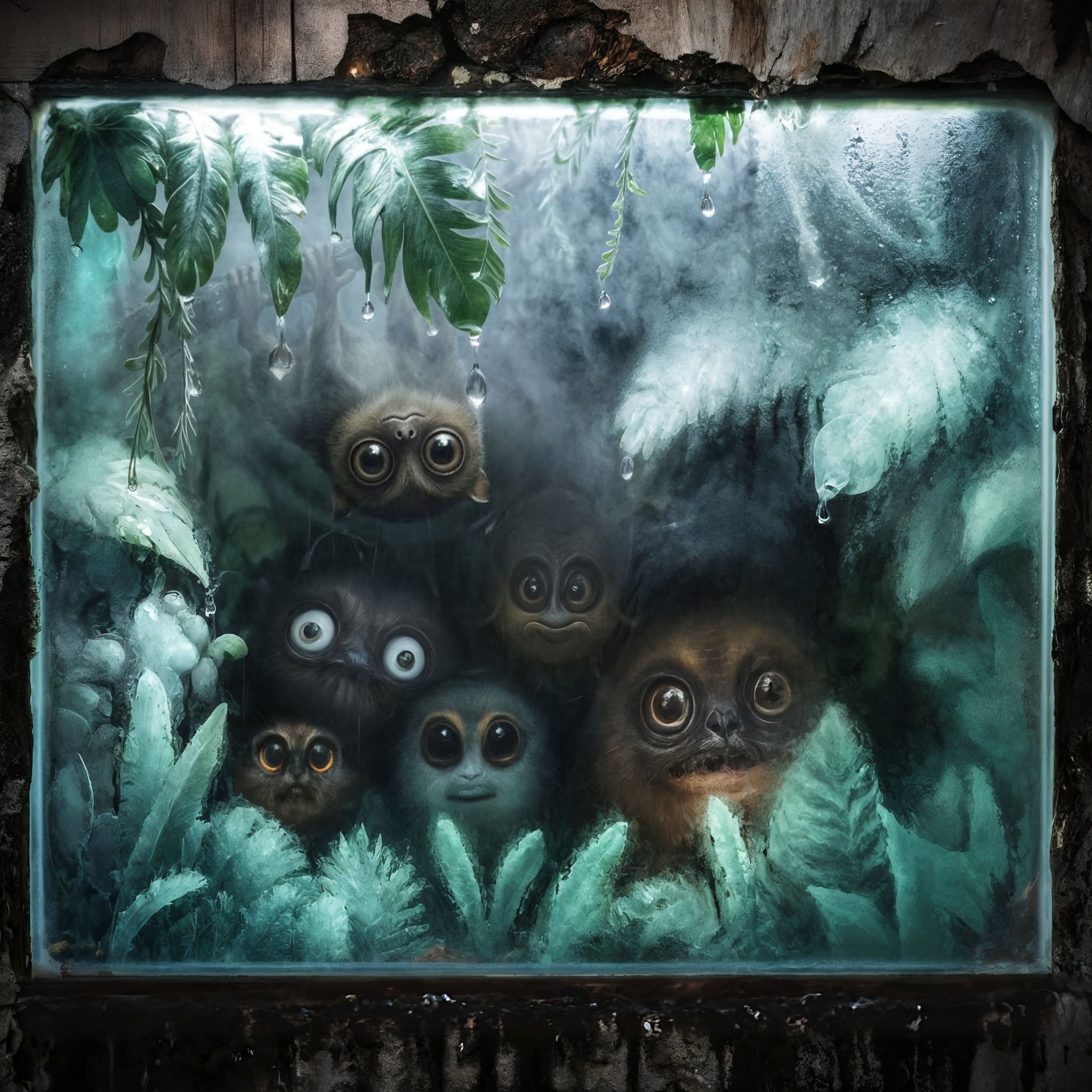
I enter the corridor. The doors are glass: display windows into the cages of the nocturnal. They stare at me with large, round eyes. I stare back with large, round eyes. Will they recognize me as one of their own?
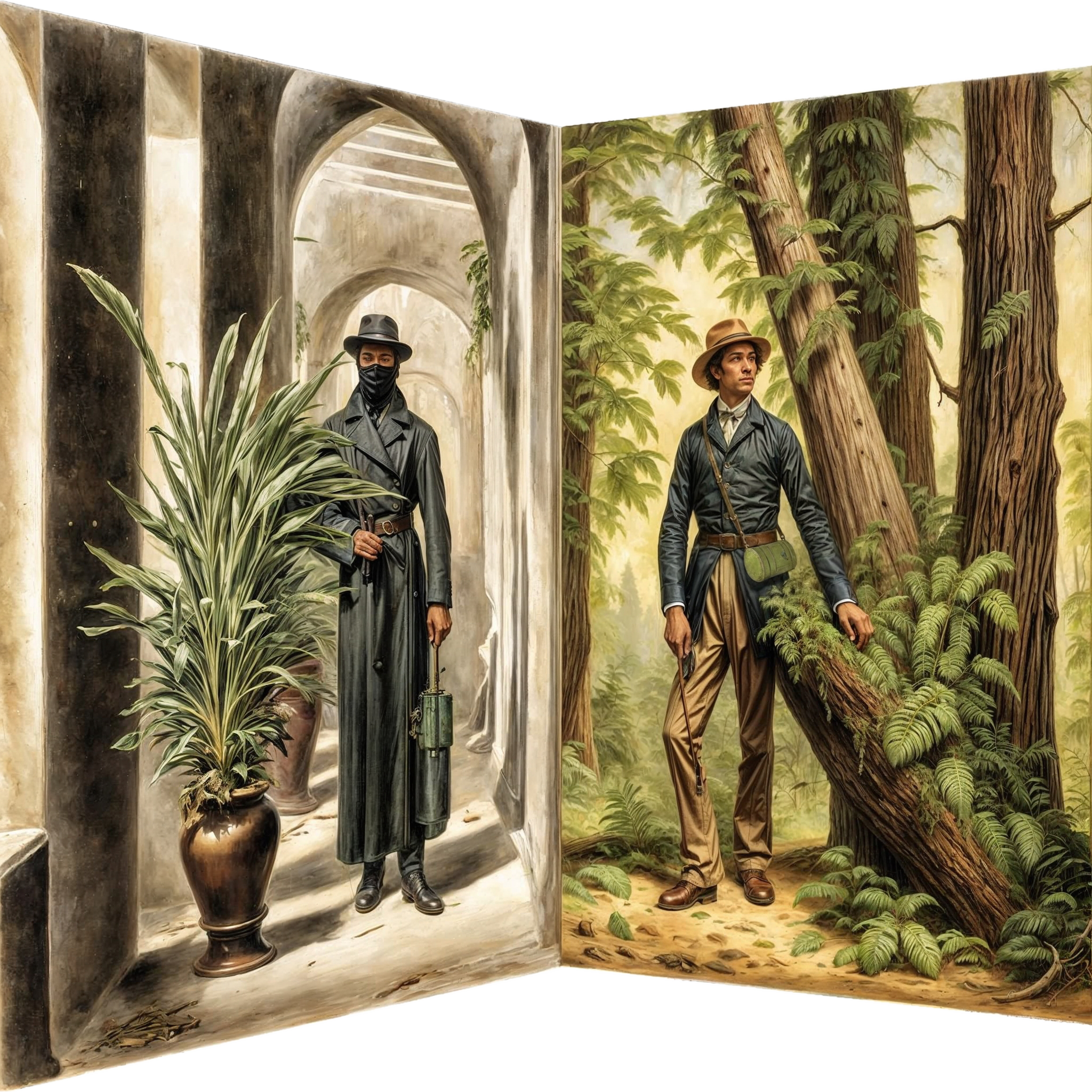
I enter the corridor—my mirror-self, a forest. I walk past the many doors—my mirror-self observes a woodpecker. I cautiously press down on a door handle, but the door is locked—my mirror-self runs his hand along the bark of an oak. I scratch where my nose itches under the stocking mask—my mirror-self listens to the rustling of leaves in the light breeze blowing through the treetops. I hide behind a shoulder-high plant in the corridor as a door opens, a bureaucrat steps out, opens a window, and lights a cigarette—my mirror-self hears footsteps approaching. I sneak past the smoker and slip through the open door into his empty office—my mirror-self takes his approaching lover into his arms. I plant the explosive device under the desk and set the timer for two minutes—my mirror-self finds a soft bed of moss for himself and his Eandria.