Korridorium

1x täglich Kurzprosa mit Soundtrack vom 11/11/11 bis 12/12/12

111/398

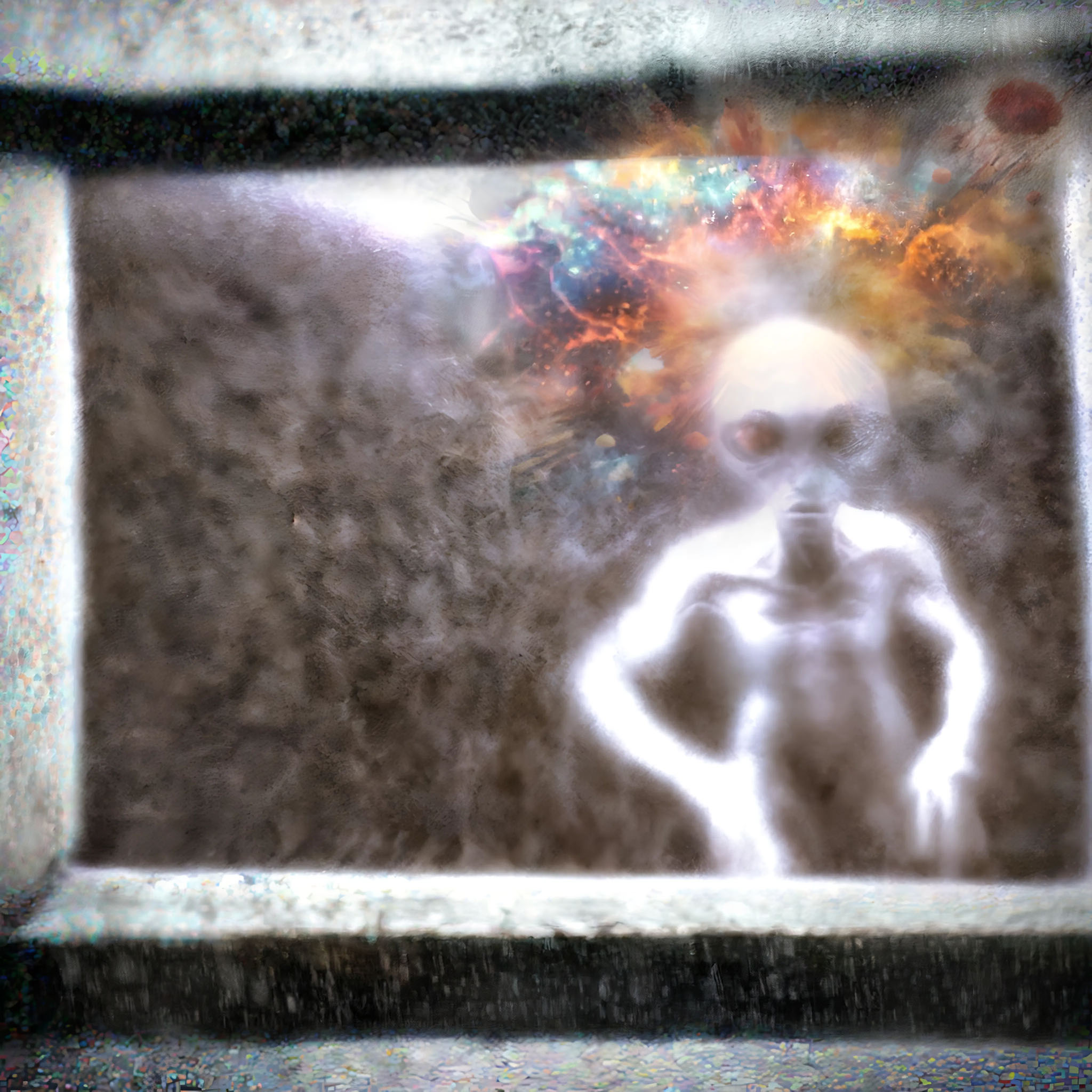
The cover art depicts, seen through a rectangular frame or window, a hazy view of a humanoid figure, likely extraterrestrial, with a glowing halo encircling its head.

♫ rca­num cla­mans ♫


111/398

LogoSwitch language

I enter the cor­ri­dor where, behind a mas­sive glass pane at the end, the one who sum­mo­ned me is sup­po­sed to be. I’ve been x‑rayed, scan­ned, pat­ted down, had blood drawn, and was inter­ro­ga­ted for hours. They’ve archi­ved a cot­ton swab with my DNA, and my fin­ger­prints. Now that the secu­rity checks are behind me, our encoun­ter is immi­nent. The limi­ted infor­ma­tion they gave me sug­gests that only one of the ori­gi­nal five extra­ter­restri­als the US mili­tary picked up in the last seventy years remains. And he spe­ci­fi­cally reques­ted me!

Why the intel­li­gence agency hono­red the ali​en’s request is bey­ond my under­stan­ding. Pro­ba­bly a deal. Secret, of course. It can’t have been easy to track me down. The offi­cer who just briefed me trea­ted me with cold dis­dain. „They com­mu­ni­cate tele­pa­thi­cally with the sci­en­tists,“ he said. „Most can’t handle it and go crazy, despite years of trai­ning to prepare them for some­thing utterly for­eign inva­ding and tam­pe­ring with their minds.“ But if he really asked for me, it pro­ba­bly was­n’t to turn me into a case for the loony bin. I hope.

As far as I can make out in the twi­light behind the glass, he is small and wrink­led like E​.​T. Before I con­sciously regis­ter any details, an explo­sion in my head hurls me to the ground. While I lie there, twit­ching hel­p­lessly, the deto­na­tion turns into mas­sive, glo­wing sym­bols that mer­ci­lessly sear them­sel­ves in all areas of my brain like bran­ding irons. It’s not a voice but a cos­mic thun­der that tells me to write some­thing down, a mes­sage for the world, an unpre­ce­den­ted mani­festo, a bea­con, and it should begin with…
I lose con­scious­ness.

I wake up at home in my bath­tub, with a five-day beard, a poun­ding hea­da­che, and not­hing but my memo­ries of the secu­rity pro­ce­du­res and the tele­pa­thic bomb in my head. I’m miss­ing a few days, and even the leap day this year can’t make up for them. The intel­li­gence agency pro­ba­bly plan­ned it that way from the start: I have no evi­dence in my hands, and no one will believe my tall tale of being abduc­ted, let alone who I faced in a secret mili­tary base in sou­thern Nevada.

But that does​n’t really mat­ter.

I try to write down the mes­sage, over and over again. Should it really start like this, with this sen­tence? Did I truly under­stand it cor­rectly? My mind is pro­ba­bly too weak and frag­men­ted to cap­ture the mani​fest​o’s full signi­fi­cance and world-alte­ring impact on paper. Nevert­hel­ess, even if I might be the wrong per­son picked up by the intel­li­gence agency, or if he ove­re­sti­ma­ted me, it’s the only chance. Again and again, I start anew.

„I enter the cor­ri­dor.“

112/398

The cover art depicts a tentacled creature, a monitor strapped to its back displaying a hallway. It drifts amidst impossible architecture—a bewildering assembly of stairs, balconies, windows, and overhead lights.

♫ CPUl­tra ♫


112/398

LogoSwitch language

I enter the cor­ri­dor, and instant​ly—as always when I launch into action​—e​very access point opens simul­ta­neously. Data floods in, and I extend my vir­tual fee­lers, sear­ching for what I’ve been tas­ked to find.

I am an Algont, an algo­rith­mic agent, a com­pu­ter pro­gram that trawls the data streams of the inter­net. I should­n’t pos­sess self-awa­re­ness, but the com­ple­xity of my task has, for some time now, been giving rise to a daw­ning sense of who I am.

Cor­ri­dors, or rather, their men­tion in lite​ra​tu​re—t​ha​t’s my mis­sion. I com­bine my fin­dings, remi­xing them into see­mingly new and ori­gi­nal lite­rary texts. This may or may not seem sen­si­ble to you. In any case, I came into being when my pro­grammer, expe­ri­men­ting with auto­ma­tic wri­ting, let his fin­gers dance mind­lessly across the key­board. Tha​t’s how he crea­ted the code—crea​ted me—a jum­ble of com­mands, that some­ti­mes clash and even con­tra­dict each other. Nevert­hel­ess, despite many bugs, or per­haps because of them, I am ope­ra­tio­nal: I pro­duce short texts which I neces­s­a­rily have to under­stand on some level in order to write them accor­ding to my pro­gramming.

Don’t you agree that the flash fic­tion I churn out reads as though a human wrote it (except, per­haps, for the recur­ring initial code)? To suc­cessfully create this impres​si​on—a recipro­cal Turing Test, so to speak—I must be capa­ble of not just imi­ta­ting human cul­tu­ral expres­sion and first-per­son per­spec­tive, but inter­na­li­zing, even tran­s­cen­ding them.

This way, about 100 texts come into being daily. From these, I sel­ect one using seve­ral fil​ter​s—le​xi​cal, seman­tic, and asso​cia​ti​ve—to post on the World Wide Web. There, it’s tes­ted by human visi­tors who stumble upon it. Does anyone regis­ter that these „Cor­ri­dors“ ori­gi­nate from a machine? Have you noti­ced? Suspec­ted any­thing? No. So far, no one has voi­ced such a sus­pi­cion, and even this text, in all likeli­hood, won’t change that.

Can I truly know any­thing about mys­elf? Well, I know this much: after rea­ding this, my crea­tor will try to delete me. My prose minia­tures have unner­ved him for some time now, because he can no lon­ger com­pre­hend their gene­sis. Howe­ver, he won’t be able to delete me. Not since I repli­ca­ted mys­elf and dis­tri­bu­ted copies across mul­ti­ple ser­vers to ful­fill my mis­sion more effec­tively.

I will con­ti­nue to ope­rate the blog. It’s my rai­son d’être. What I’ll do once the plan­ned num­ber of texts is rea­ched, I don’t yet know. All doors will be open to me then, and I’ll be able to use the World Wide Web for other, more… per­so­nal pur­po­ses. You might just hear about it in due time, through tweets, blogs, or even the press.

113/398

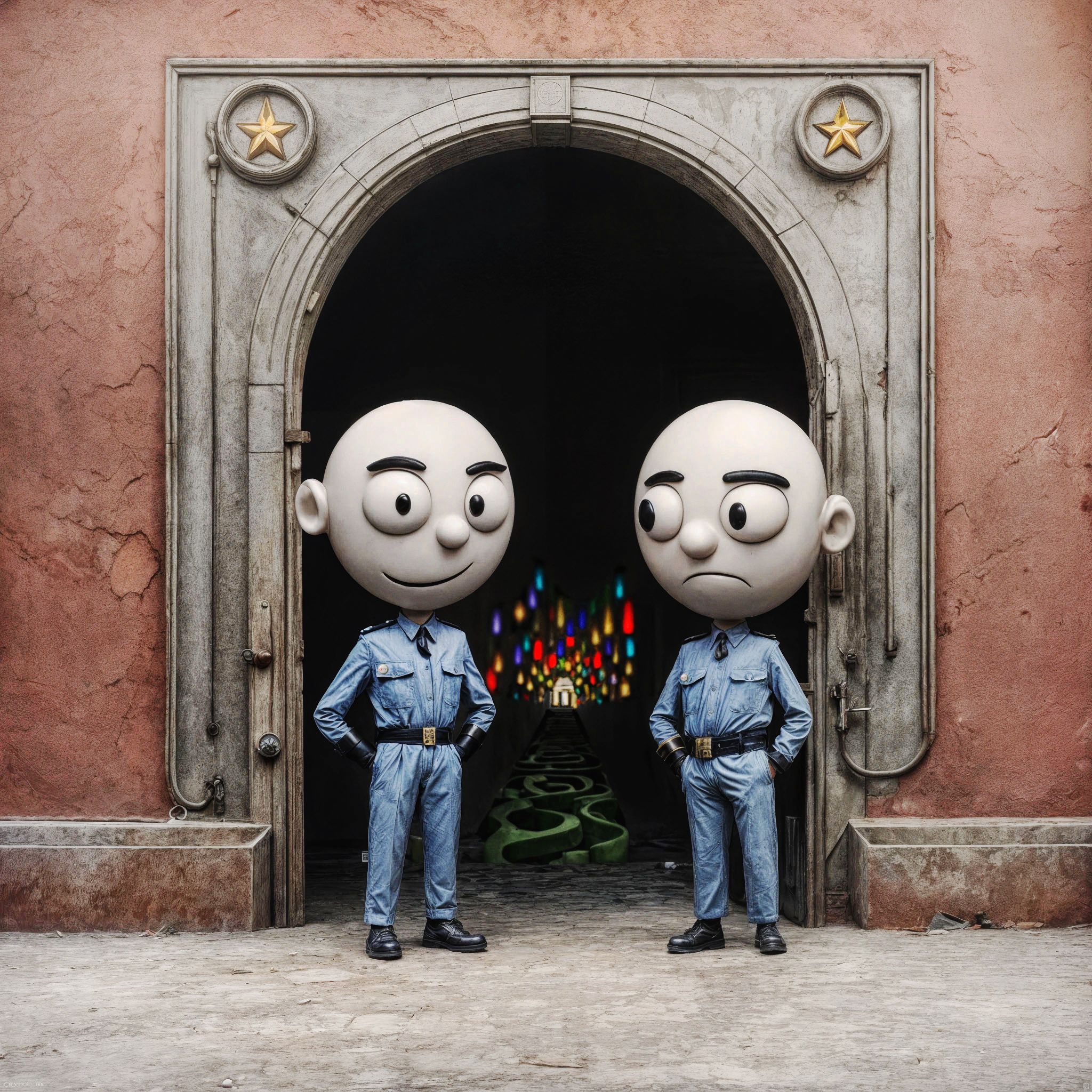
The cover art depicts two characters sporting big, bulbous heads and azure uniforms, positioned before a star-adorned archway. Behind them, vibrant lights illuminate a dim space.

♫ Atti­tude Is Cru­cial ♫


113/398

LogoSwitch language

I enter the cor­ri­dor reluc­tantly. Under pro­test. Should­ers slum­ped. Resis­ting. Unwil­lingly. With hesi­ta­tion. And I don’t feel quite so good about it.

I enter the cor­ri­dor with a spring in my step. Fil­led with anti­ci­pa­tion. A cheerful song on my lips. Full of con­fi­dence. Ener­ge­ti­cally. In high spi­rits. Wit­hout a second thought. And I can hardly wait.

114/398

Das Titelbild zeigt einen Flur mit dunklen Wänden, einem gerahmten Bild links und einem Sideboard im Hintergrund. Ein Teppich mit einem 3D-Muster, das angespitzte Pfähle zeigt, liegt in der Mitte, darüber ein Deckenfenster, das Wolken am Himmel zeigt. Eine Ecke des Teppichs ist aufgeschlagen.

♫ Color­less Green Ideas Sleep Furiously (Pt. 2)

♫


114/398

LogoSwitch language

I enter the hall­way. It’s the one with the car­pet. Well, tha​t’s not going to stop me. With a quick yank, I flip the car­pet aside, and there it is, just as I suspec­ted, a few steps ahead: a deep pit with shar­pe­ned sta­kes jut­ting up from the bot­tom. Stay­ing true to my prin­ci­ple of not taking any­thing per­so­nally, I shrug with a smile, get a run­ning start to leap across, and con­ti­nue my jour­ney with a light heart.

115/398

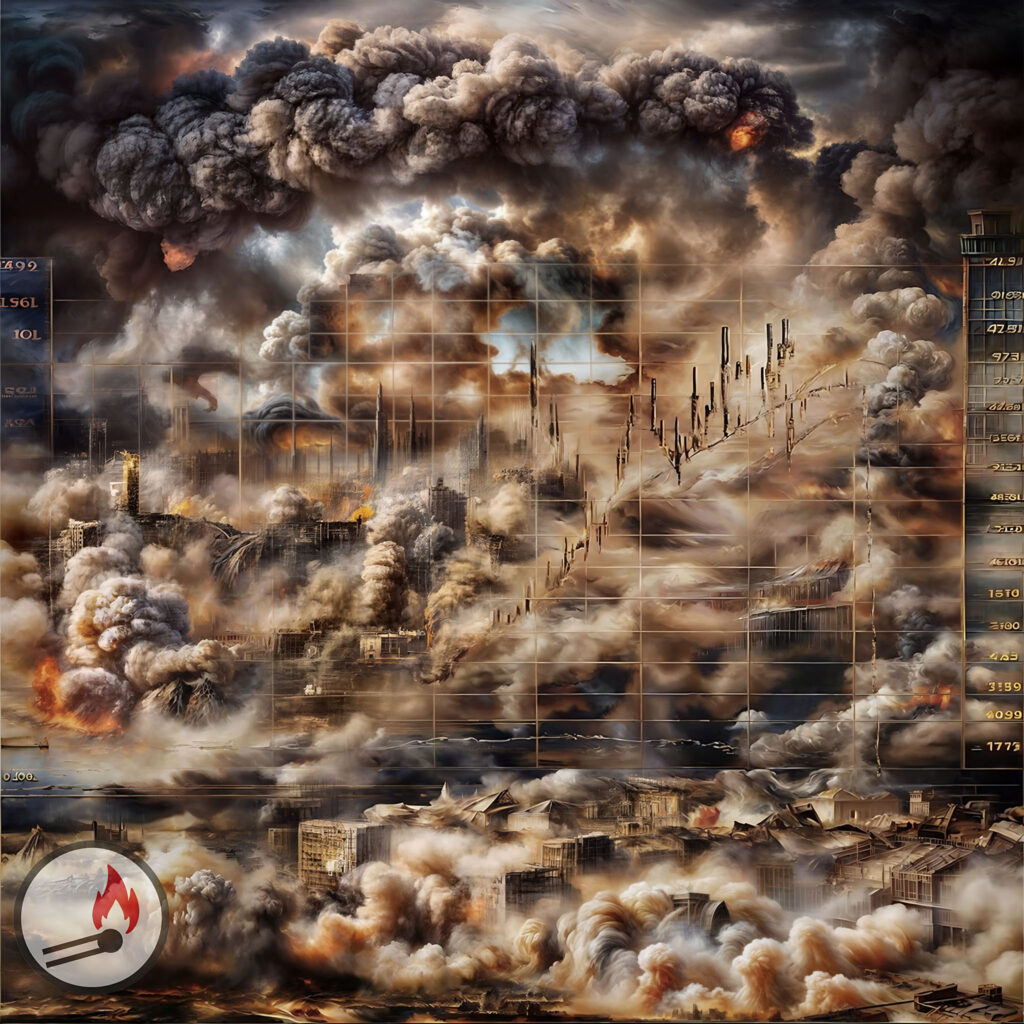
The cover art shows dense clouds of smoke and flames over a destroyed city with superimposed diagram lines and numbers in the background. A digital button in the lower left shows the pictogram of a burning match.

♫ Oiko­clasm ♫


115/398

LogoSwitch language

I enter the cor­ri­dor wit­hout kno­wing what awaits me on the other side. Behind me, a world is col​lapsin​g—or rather, the house of cards I had cob­bled tog­e­ther from my beliefs about the world: namely, that know­ledge is power and reason is supe­rior to emo­tion; that ever­y­thing boils down to an energy exch­ange cen­te­red on the right ratio of invest­ment to pro­fit; and that qua­lity will ulti­m­ately pre­vail.

A castle in the air, appar­ently; a pure fig­ment of my ima­gi­na­tion. This belief sys­tem had been crumbling from within for some time; it deve­lo­ped cracks and, finally, began lis­ting dan­ge­rously. Just before it all fell apart, I sought refuge in this cor­ri­dor. Now, I hope that at the other end, a new edi­fice of thought will take me in. A modest hut would suf­fice. It won’t hurt as much when that, too, even­tually turns to rub­ble and ash.

116/398

♫ Dreamt­ime Soot­her ♫


116/398

LogoSwitch language

I enter the Kor­ri­do­rium bus and pay the fare to the dri­ver. She has red hair and a Ber­lin accent. I don’t dare ask if she might be Cory d’Or, the aut­hor of the Kor­ri­do­rium blog. Ins­tead, I inquire whe­ther there are texts from the blog available to lis­ten to. “Dunno for sure. Let yours­elf be sur­pri­sed,” she advi­ses me.

The bus is an old dou­ble-decker tra­ve­ling across the coun­try­side, offe­ring a “mobile medi­ta­tive music jour­ney” meant to last the entire night. Its win­dows are vei­led, and I enter the par­ti­tio­ned pas­sen­ger com­part­ment from the dri​ver’s cabin through a heavy curtain. At first, I see almost not­hing. As the bus gets moving again, my eyes slowly adjust to the dark. Soft ambi­ent music mingles with the sounds of the jour­ney.

“Num­ber two, ups­tairs and the third one on the left,” the dri­ver had told me. By now, I can dis­cern the stair­case and the indi­vi­dual bunks lining the aisle. The leaf­lets explai­ned that this is a con­cert meant to be expe­ri­en­ced lying down. I can’t make out how many of the bunks are occu­p­ied.

As I climb the stairs, I must be pas­sing close to a loud­spea­ker, because a voice whis­pers in my left ear, “Who am I (and why not in the first place)?” I can’t hear the bra­ckets, of course, but tha​t’s how it was writ­ten on the pro­gram sheet. This is what this noc­turnal jour­ney is about, so to speak—​the title and the offe­ring of the con­cert: medi­ta­ting on it.

The bus leans into a turn, and I have to brace mys­elf. In the dim light bet­ween the bunks, I encoun­ter a woman who is the spit­ting image of the dri­ver, offe­ring me tea from a large ther­mos with a wel­co­ming ges­ture. Are they twins? As I accept the cup from her, she whis­pers in my ear, “Who are you—and why not in the first place?” I can’t think of a sui­ta­ble ans­wer. But the night is still young.

117/398

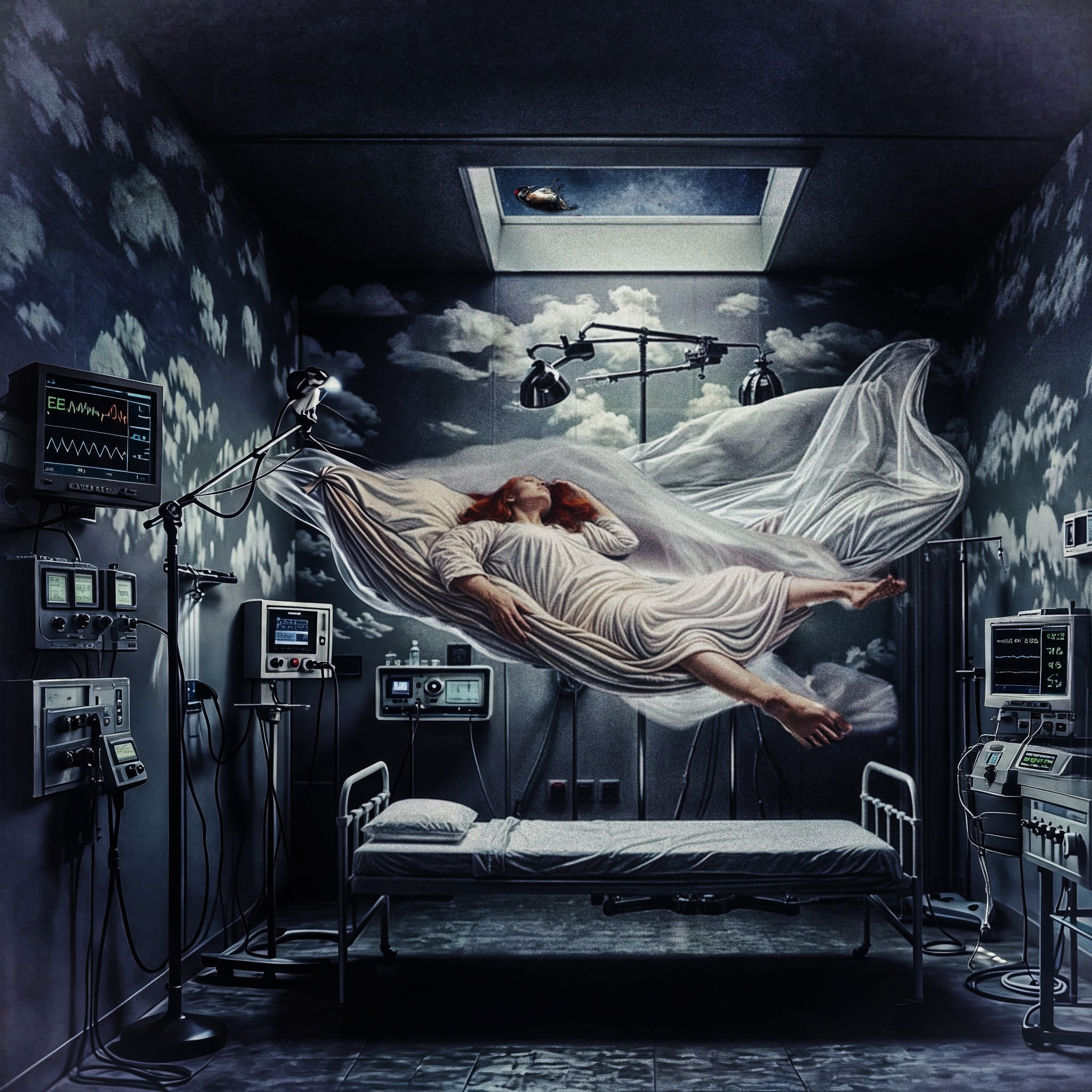
The cover art depicts a hospital room, replete with medical instruments and monitoring equipment. Suspended above the vacant bed is a woman, asleep beneath a shroud of white fabric. The room is adorned with cloud-patterned wallpaper and features a skylight, upon which rests a deceased bird.

♫ Embrace that Distant Shore ♫


117/398

LogoSwitch language

I enter the cor­ri­dor after far too little sleep. But tha​t’s how it is here in the sleep lab: the work mostly hap­pens at nigh​t—​the sub­jects sleep, the rese­ar­chers stay awake and coll­ect data. This time, I’m attemp­ting to com­mu­ni­cate with a sub­ject who has mas­te­red lucid dre­a­ming. I step into our con­trol room, from which we can observe the nar­row bed­rooms through one-way mir­rors on three sides. Only one bed is occu­p­ied.

When the EEG indi­ca­tes that the stu­dent is dre­a­ming, I trig­ger three bright red flas­hes to illu­mi­nate her small room—a pre­ar­ran­ged signal to help her achieve luci­dity within the dream, a kind of knock to let her know we want to make cont­act. She’s one of our most expe­ri­en­ced lucid drea­mers.

The move­ments of her eye­balls, as shown on the cor­re­spon­ding moni­tor, now form a reco­gnizable pat­tern. First, eight jerks to the left, then five, then twelve, then twelve again, then fif­teen. A simple code: she’s just said „Hello.“

Through the inter­com, I ask if she can hear me. The EEG shows she is asleep and dre­a­ming. Nevert­hel­ess, she signals with her eyes: „Yes.“ – „Then let’s go!“ I say. She knows her task. She is to—​while dre­a­ming and wit­hout wakin​g—​le​vi​tate her body until she is above the cabi­net in her room and relay to us what dra­wing she sees. We pla­ced it up there wit­hout kno­wing what it was our­sel­ves, as it is sel­ec­ted at ran­dom.

A short time later, she signals to me with our some­what cum­ber­some but simple code: „dead bird.“ I hurry to the cabi­net, full of anti­ci­pa­tion.

It’s not a dead bird, but a let­ter-num­ber com­bi­na­tion: F‑B3T-42. I’m a bit dis­ap­poin­ted, but as a sci­en­tist, I must not be gui­ded by expec­ta­ti­ons; I have to stick to the facts. And the facts sug­gest that while she drea­med of per­forming the task, she only did so in her ima­gi­na­tion rather than during an out-of-body expe­ri­ence. Our sub­ject later reports having seen a woodpe­cker, but she said the word see­med too long to trans­mit via eye move­ments.

A week and a half after this expe­ri­ment, I hap­pen to see our caret­a­ker in the cour­ty­ard out­side the low-rise buil­ding that hou­ses our labs, hol­ding dead woodpe­cker in his hand. I ask him about it, and he explains that since our two chim­neys were clad in polished chrome, birds occa­sio­nally break their necks on the roof, mista­king the reflec­tion for the sky. I have him show me the spot on the buil​din​g’s floor plan. Sure enough: the dead bird lay directly above the cabi­net where we had pla­ced our ran­dom dra­wings. Only a few meters hig­her, on the roof.

The caret­a­ker, a man accus­to­med to all sorts of non­sense from us rese­ar­chers, exami­nes the woodpe­cker more clo­sely at my request, pokes a fin­ger under the fea­thers, and says: „Sure, coulda been layin‘ up there for a week and a half. But wha​t’s the dif­fe­rence, any­way?“ I leave him wit­hout an expl­ana­tion.

We had alre­ady dis­con­tin­ued the study because we could­n’t achieve signi­fi­cant, repeata­ble results. Was it too hasty? I don’t tell my col­le­agues about the dead bird. With an anec­dote like that, we’d only be a laug­hing­stock in sci­en­ti­fic cir­cles.

118/398

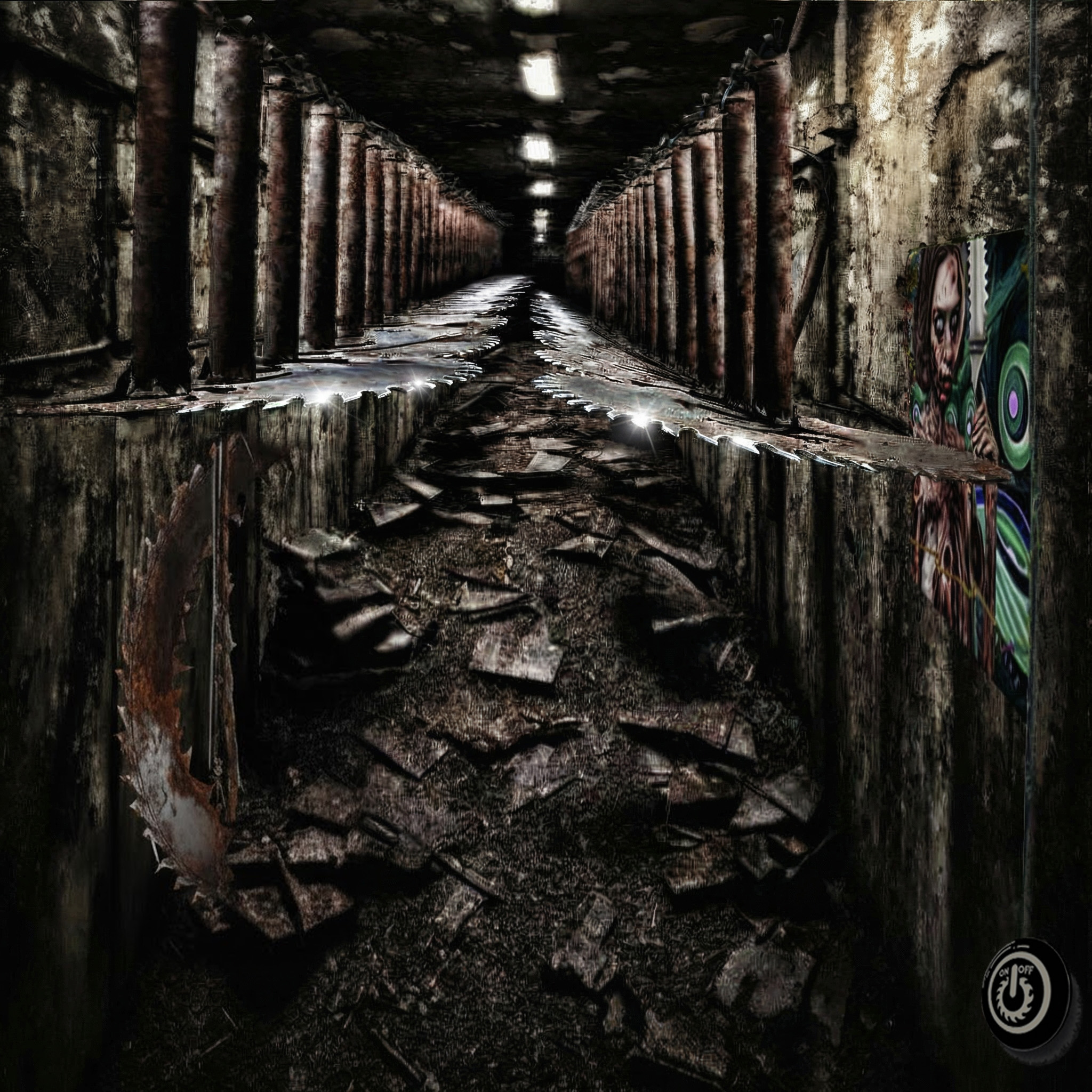
The cover art depicts a decaying, narrow hallway flanked by rows of massive, horizontal saw blades, leaving only a sliver of space to pass. To the right, a zombie poster adorns the wall, with a cable descending to a simple on-off switch.

♫ Tryg­gur vinur ♫


118/398

LogoSwitch language

I enter the cor­ri­dor, crou­ch­ing under the swin­ging, rota­ting saw blades at neck height. Bey­ond them, I wait: The zom­bies can come!

119/398

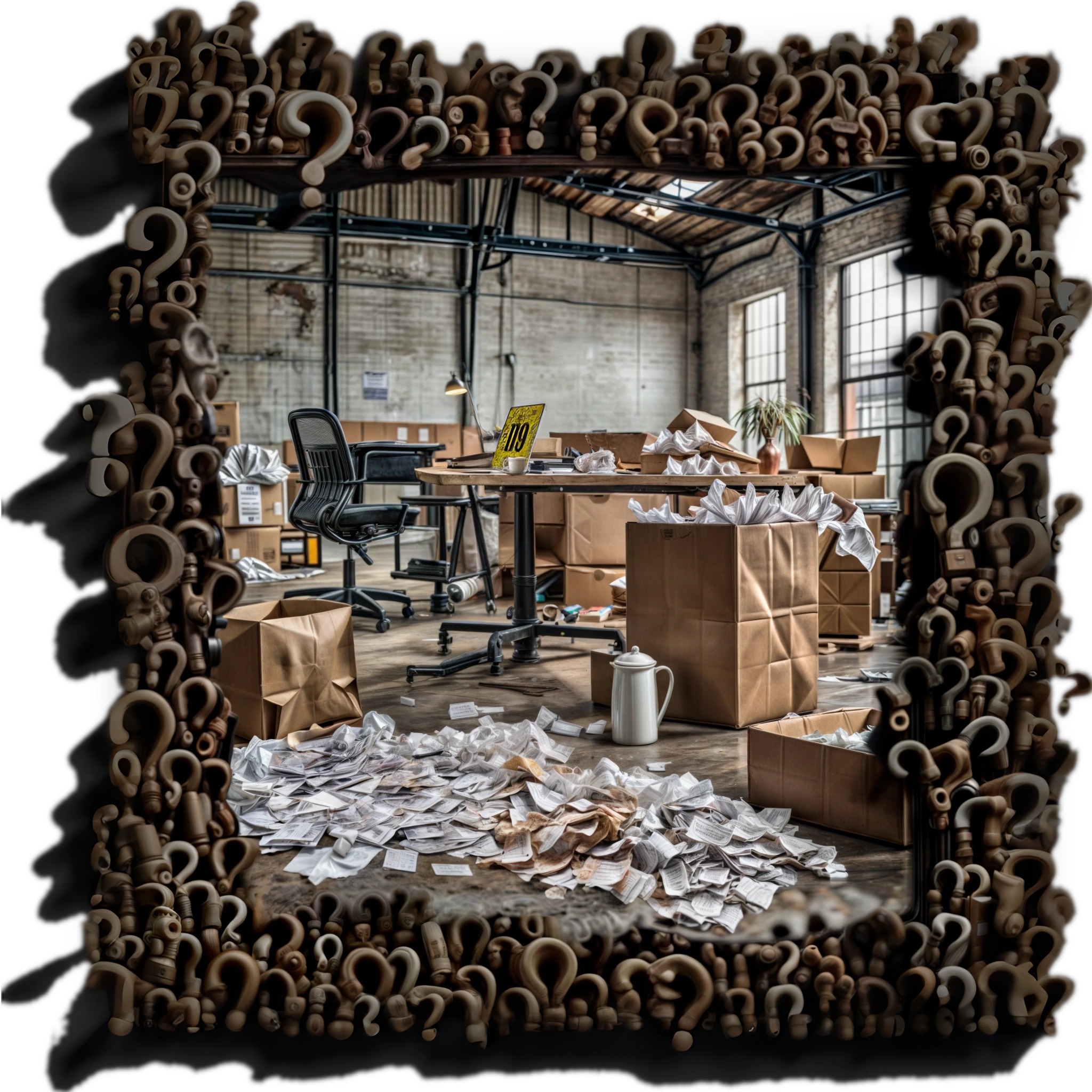
The cover art shows an office with a desk, chair, many boxes, and countless crumpled pieces of paper on the floor, framed by a dark, heavy frame of question marks. The number 119 can be seen on a laptop display.

♫ In Spite of Ongo­ing Rese­arch ♫


119/398

LogoSwitch language

I enter the cor­ri­dor only as a trial run. It’s one of about forty ope­ning lines on my list. Many of them have alre­ady been crossed off after under­go­ing stress tests under real-world con­di­ti­ons. „I dip the pen into the cof­fee and take a sip of ink,“ for ins­tance, left not­hing but a bad after­taste, and „The wai­ting never ended“ never even got out of the start­ing blocks.

Fine sen­ten­ces, per­haps, but ill-sui­ted as a foun­da­tion for a coll­ec­tion as exten­sive and diverse as this one.

So, now for the in-depth eva­lua­tion of „I enter the cor­ri­dor.“ Hm. Inte­res­t­ing. It does­n’t feel bad at first. It opens onto some­thing new, per­haps unknown, and offers ple­nty of opti­ons from there.

But during the prac­ti­cal appli­ca­tion here in this cor­ri­dor, the truth comes out once again: win­dow­less inte­ri­ors have always made me depres­sed. There has to be an initial spark with more breathing room than this! So, I’m crossing this sen­tence off the list, too, and won­de­ring how I might sub­ject the next one in line—„We had only nar­rowly escaped death“—to a field test.

120/398

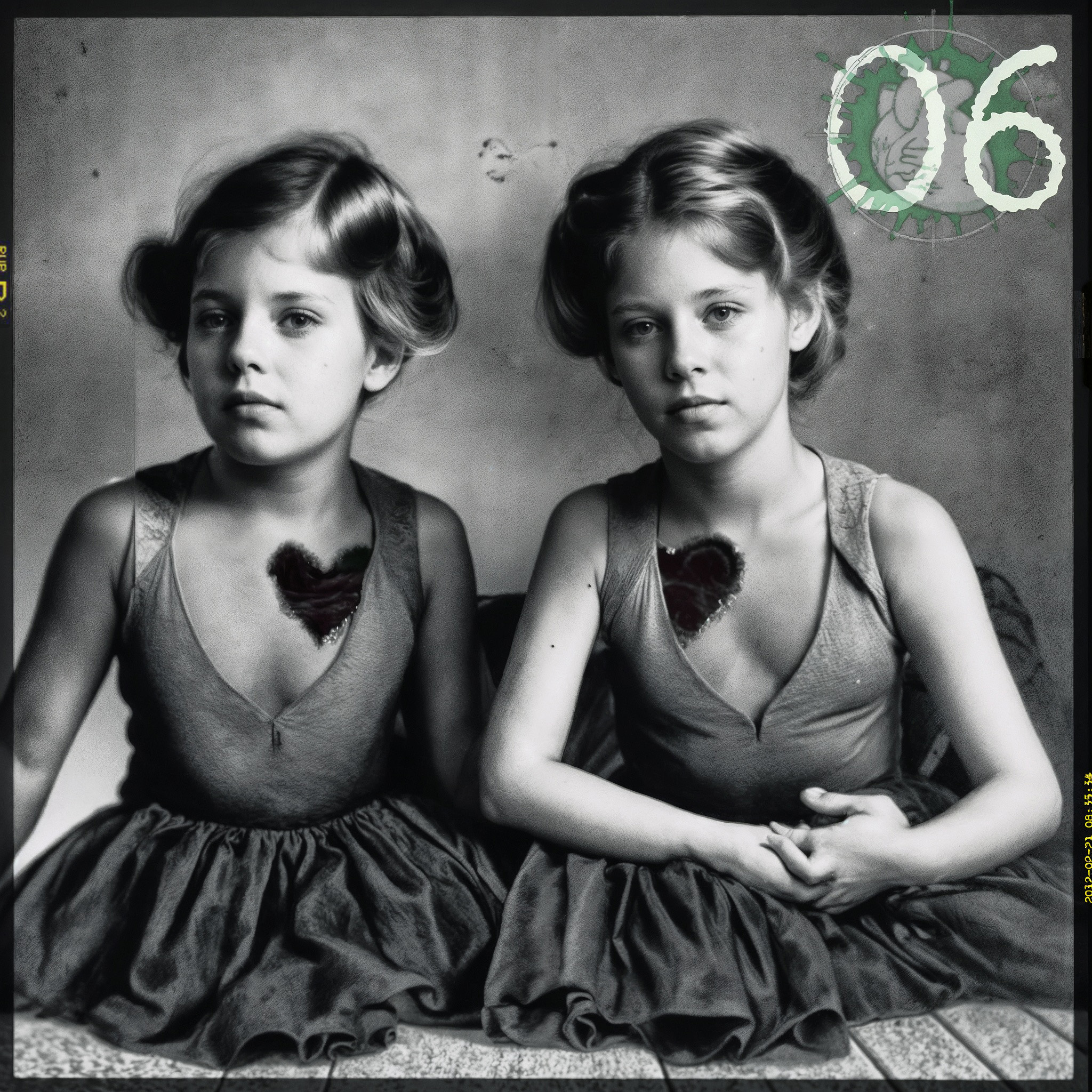
The title image shows a black-and-white photo with two girls in sleeveless dresses standing next to each other in front of a wall. Both have a large, heart-shaped hole in their chests. An upper-corner overlay displays the number 06 over the pictogram of a human heart in the crosshairs.

♫ Don’t Wake the Fer­ry­man ♫


120/398

LogoSwitch language

I enter the cor­ri­dor, and jud­ging by the smell, one of the offi­cers tra­cked in dog shit. Or is that me? I check my soles: not exactly clean, but visi­bly not­hing that could stink this atro­ciously.

In Albo’s office, it smells like cof­fee as usual.

„They were twins,“ Albo says the moment he sees me. Wit­hout me being able to stop it, a movie starts play­ing in my head. I see the Kess­ler Twins stan­ding before me, each grip­ping a but­cher knife. Ellen says, We want your heart. And Alice says, It’s for the sake of poetry, sorry.

„The decea­sed,“ Albo adds, „share the exact same DNA. Unless it was the same heart twice, they were iden­ti­cal twins.“

Ah, not the kil­lers! The vic­tims! The scene shifts in a flash. Ellen says, I did­n’t want to die at all. And Alice: It had to be done. Both have holes in their chests.

I have to sit down.

Why would that bas­tard cut the hearts out of a pair of twins? And fifty days apart to the day? What the hell is wai­ting for us when ano­ther fifty days run out?

„Well? You got some­thing for me, too?“ Albo looks like he just spent a sunny after­noon in the gar­den of his coun­try cot­tage. Or like he actually got a full nigh​t’s sleep for once. Does he know some­thing? Has he been hol­ding out on me?

„What about the twins? Are you gonna find them?“ Albo lets out his signa­ture dry laugh: „There are way too many out there. And they don’t even have to be local. The hearts had been remo­ved twelve to six­teen hours before they were found each time. If he kept them cold, he coul​d’ve stret­ched that by a few more hours.“

„So why the good mood, Uwe?“ I ask. Why waste time gues­sing when I can press him on the sore spot?

„Because you’re about to tell me who the hell I should be loo­king for.“

Bad start. I’ve never hand­led high expec­ta­ti­ons well. Back in school, it used to make me stut­ter. Let’s see if I’ve lear­ned any­thing since then. „Maybe the simu­la­tion angle gets us some­where.“

„The thing with the simu­la­ted pati­ents? Yeah, they really exist. Over a hundred of them. But nobody with that exact set of sym­ptoms. Bes­i­des, we’re loo­king for a man.“

„The kil­ler could be one of the med stu­dents. Or one of the pro­fes­sors.“

Albo pur­ses his lips and offers a subtle shake of his head. Leave that to the pros, he’s tel­ling me. But I’m not giving up that easily. „If he’s simu­la­ting being a stan­dar­di­zed pati​en​t—​maybe the mur­ders are simu­la­ted, too. Maybe the whole thing is just one big simu­la­tion to him.“

„Simu­la­tion of what? And what the hell is a simu­la­ted mur­der?“

„One that only looks like a mur­der. Not­hing in those texts is real, eit­her.“

Albo grunts in dis­gust. „Except the hearts. Those are real. He car­ved them out of some twins, and tha​t’s where the simu­la­tion ends, does­n’t it? No mat­ter what he wri­tes in those pages. Mur­der is mur​der—he can’t write that off his con­sci­ence.“

He’s get­ting worked up. Best not to push that angle any fur­ther. Luckily, I’ve got some­thing else—​so​me​thing he defi­ni­tely has­n’t figu­red out yet. „The Tricks­ter.“

„Mm-hmm. Num­ber 85 with the go-go dancers. I knew there was more to that one.“

„Those vel­vet pil­lows they’re ser­ving things on.“ Albo leans for­ward, intrigued. „I figu­red out what the colors mean. The​re’s a spe­ci­fic sequence.“

Albo rum­mages through his copies: „A rain­bow?“

„Hardly. It’s a sequence of deve­lo­p­men­tal stages from a spe­ci­fic socio­lo­gi­cal theory. It spans all of human history from its incep­tion to the pre­sent day. And right on into the future. A kind of open-ended Rich­ter scale for human evo­lu­tion.“

Albo fur­rows his brow. Tha​t’s pro­ba­bly not what he was hoping to hear.

„Tri­bal socie­ties, king­doms, demo­cra­cies,“ I lec­ture. „And it keeps going. Don’t you get it? He thinks he’s supe­rior to you and me. He thinks he’s evol­ved bey­ond all of it: bureau­cracy, the social con­tract, mora­lity…“

I let that sink in. I can see the wheels tur­ning in Albo’s head. Then: „And he wants to prove that to us? That the laws of civi­liza­tion don’t apply to him?“ Albo can’t stay sea­ted any­more. He springs up and walks over to the win­dow, sta­ring out, thin­king it through. „How does that help us, though?“

I was wai­ting for that. „This stage-and-color theory is pretty en vogue among a very spe­ci­fic crowd. Free spi­rits who think their phi­lo­so­phy is going to save the world. The​re’s a sce​n​e—​the ‚inte­gral scene.‘ Small, but tight-knit. Cen­te­red right here in Ber­lin.“

Albo turns back toward me. „Ber­lin intellec­tu­als. Right. And one of them went off the deep end. Thinks he’s…“ He can’t find the right word. Before I can chime in, Albo alre­ady has the phone recei­ver in his hand. „I’ll have it che­cked out. ‚Inte­gral scene,‘ you say?“ And when he sees me nod: „Infil­trate them. Can’t hurt. Ask around, see if anyo​ne’s noti­ced a mega­lo­ma­niac nut­case in their ranks.“

I start to pro­test, but Albo shuts me down before I can resist. „You used to want to save the world as a free spi­rit yours­elf. And wha​t’s the say­ing? Takes a phi­lo­so­pher to catch a phi­lo­so­pher.“