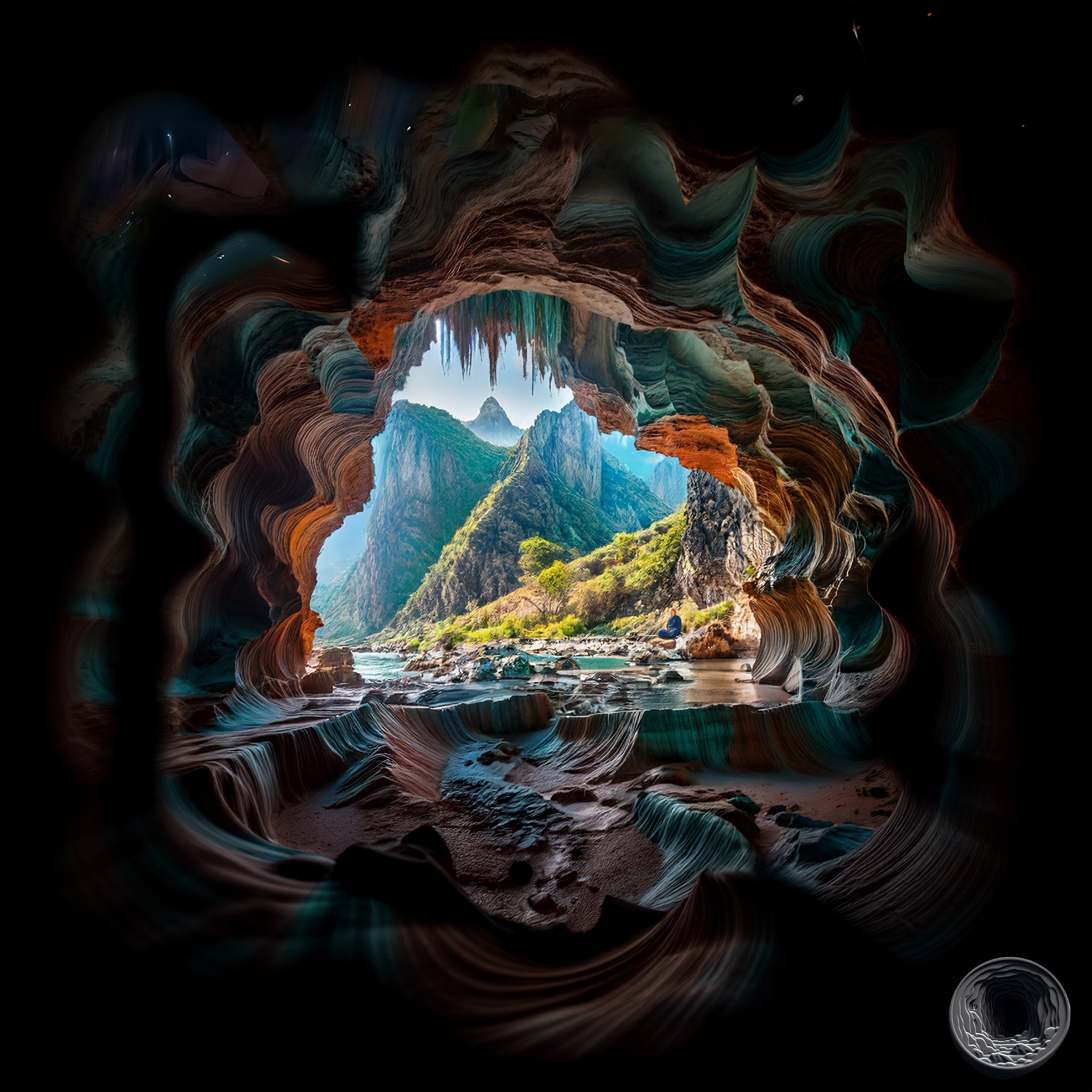
“I enter the corridor just like everyone else,” said the Master to his visitor, who had asked how he might find his way through life.
“Are you, then, a seeker like me?” the visitor further inquired.
But the Master shook his head. “The path forks; there are many passages to choose from—long, short, straight, sharp-turning, leading up and down stairs—and most end in dead ends.”
“That is precisely the trouble,” the visitor lamented. “In this labyrinth, I cannot find my way.”
Once again, the Master shook his head. “Labyrinth? That would be a single, winding passage that leads to the center through many loops, but without any branches. What you are describing is a maze.”
The visitor hesitated. “And how, then, do I find my way through the maze?”
For a third time, the Master shook his head and repeated, “I enter the corridor just like everyone else.” Then he smiled. “But beneath my steps, the maze transforms into a labyrinth.”
»Ich betrete den Korridor«, wiederhole ich folgsam, wie es mir der Meister vorgesagt hat.
»Und nun sage mir«, fordert er mich auf, »was darin der ursprüngliche, unbewegte Beweger ist. Ist es das Ich, der Korridor, das Betreten, das Betreten-Werden oder vielleicht doch das Betreten-Sein?«
Ich bin verwirrt und schweige betreten. Der Meister lächelt zustimmend, und da trifft mich der Blitz der Erkenntnis.
I board the Korridorium bus and pay the fare to the driver. She has red hair and a Berlin accent. I don’t dare to ask if she might be Cory d’Or, the author of the Korridorium blog. Instead, I inquire whether there are texts from the blog available to listen to. She advises, “Dunno for sure. Let yourself be surprised.”
The bus is an old double-decker, traveling across the countryside, offering a “mobile meditative music journey” that is meant to last the entire night. Its windows are veiled, and I enter the partitioned passenger compartment from the driver’s cabin through a heavy curtain. At first, I see almost nothing. As the bus starts moving again, my eyes slowly adjust to the darkness. Soft ambient music mingles with the sounds of the journey.
“The number two, upstairs and the third one on the left,” the driver had told me. By now, I can discern the staircase and the individual bunks lining the aisle. The leaflets explained that this is a concert meant to be experienced lying down. I can’t make out how many of the bunks are occupied.
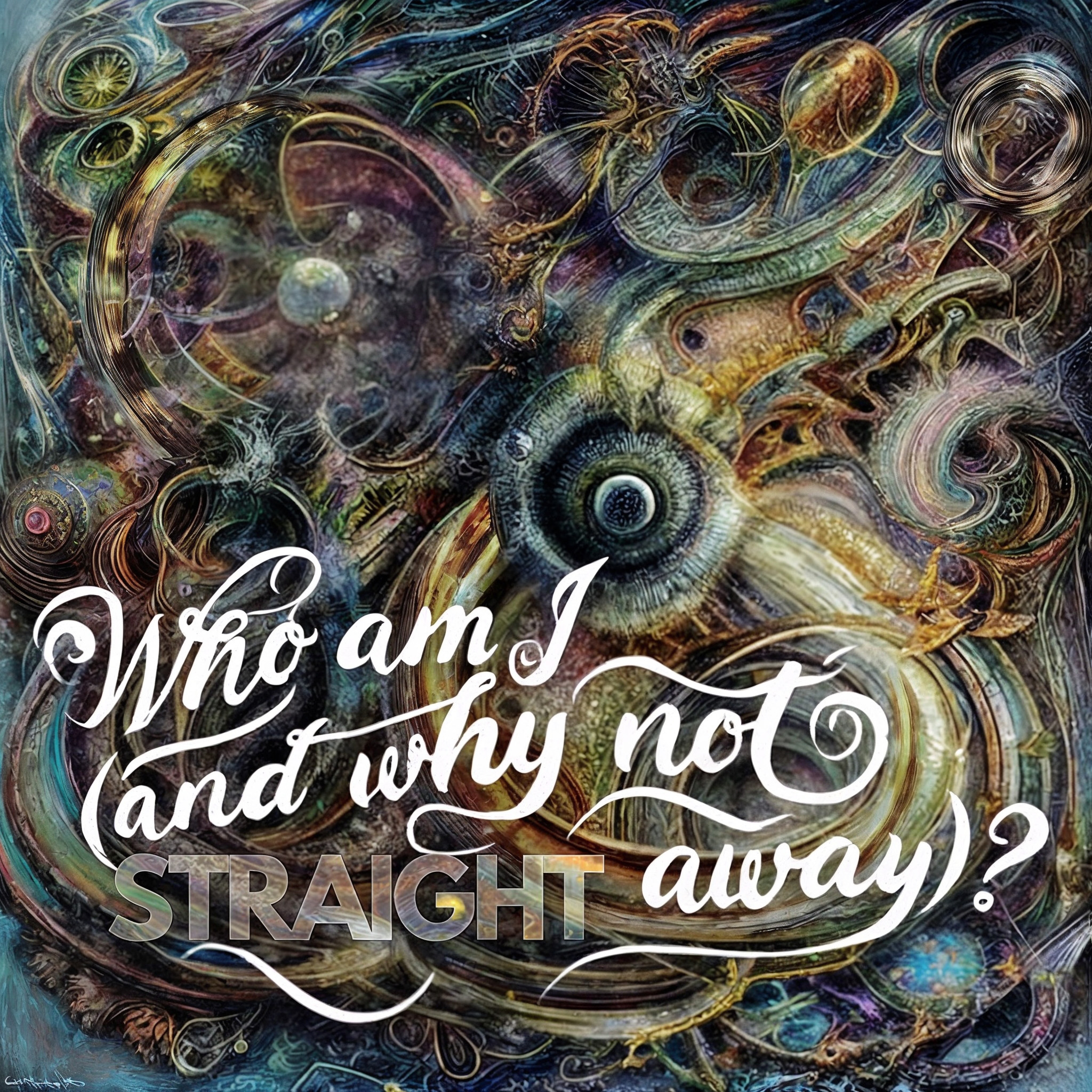
As I climb the stairs, I must be passing close to a loudspeaker, because a voice whispers in my left ear, “Who am I (and why not straight away)?” I can’t hear the brackets, of course, but that’s how it was written on the program sheet. This is what this nocturnal journey is about, so to speak, the title and the offering of the concert: meditating on it.
The bus takes a turn, and I have to hold on. In the dim light between the bunks, I encounter a woman who is the spitting image of the driver, and she offers me tea from a large thermos with a welcoming gesture. Are they twins? As I accept the cup from her, she whispers in my ear, “Who are you—and why not straight away?” I can’t think of a suitable answer. But the night is still young.
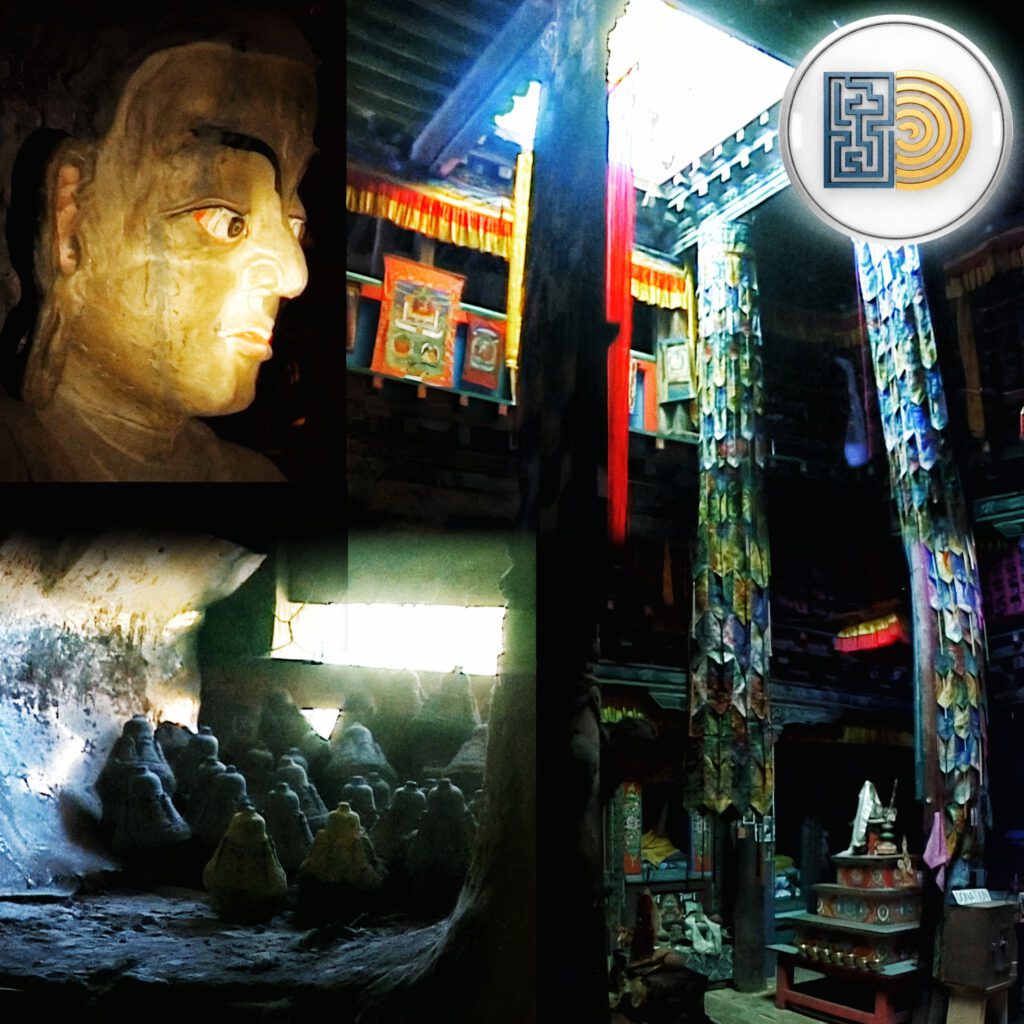
I enter the corridor. It’s a natural fissure in the rock, widened by monks like me over centuries of labor. Along the sides, the passage opens into small cells, yet my path leads deeper into the mountain. I take a deep breath.
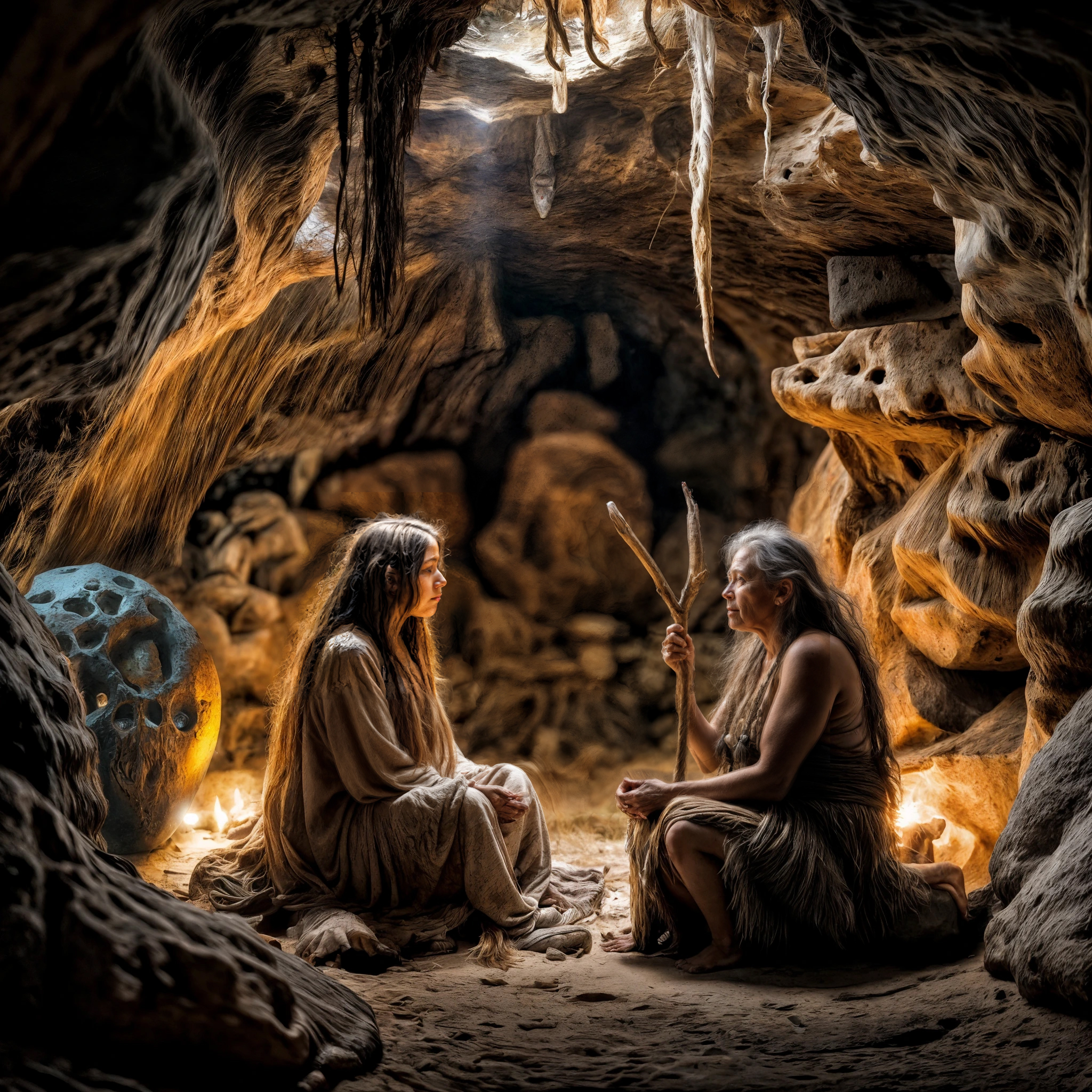
For 49 days, I will sit in darkness, in a place where no ray of light penetrates. I have been warned by other monks. Some meditators have gone mad in there, and it was whispered in hushed tones that some adepts didn’t survive these 49 days.
Descending deeper into the mountain, toward an unknown and frightening place, I realize that I am about to confront what lies deep within me—unknown and terrifying. I break out in a sweat. Nevertheless, I continue to inch forward into the darkness. I don’t want to disappoint my master, and I certainly won’t change my decision.
What will I discover? What will rise from the depths of my being when I sit there in absolute silence and complete darkness? I stumble, and despite my desperate grip on the metal bucket, it slips from my grasp, falls over, and the precious water—the only thing accompanying me into the depths of the mountain apart from my robe—spills onto the bare rock and seeps into the cracks and crevices. I must turn back. Without water, I won’t survive!
Yet, I keep going.
There are no more cells along the sides of the corridor for a long time, not even niches. The passage narrows. I feel lost. It’s better to turn back now than to come crawling out later, half-starved and dying of thirst!
But my master said that I can take this path into the darkness, into the mountain’s interior, only once. If I turn back now, the descent into the mountain is forever closed to me. I start sobbing for no apparent reason. Fear of death seizes me. Yet, I continue to stagger forward. I am deep inside the belly of a mountain, and it feels as if the rock weighs tons on my shoulders.
People I once knew come to mind, hurtful words, thoughtless actions that I regret. I beg the black, cold walls for forgiveness. They do not respond. I am four years old, exploring the basement alone, and an unfortunate coincidence causes the only lightbulb to blow. I scream, and my own voice and its echoes through the mountain send shivers down my spine. I can’t stand myself anymore, yet I have no choice but to endure myself, somehow. It’s as if I’m walking through hell, and hell is me.
There. A glimmer ahead of me. At first, I think I’m mistaken. Then I realize that there must be another monk down here. He must have brought a light, a candle, or a torch. But the light does not flicker.
I’ve actually been ascending for some time now. It’s daylight that awaits me. I have to squint. The deepest and darkest part of the journey, the dark night of the soul, is bright?
I step out into the open. A green valley, bathed in sunlight, stretches out on the other side of the mountain. The master sits on a rock, pouring me a cup of tea. I feel confused. How long was I on the journey? Was it hours? Or weeks? Am I already dead? Am I dreaming?